A Beginner’s Guide to Tennis
Tennis rewards patience, movement, timing, and clear thinking, which helps explain why it remains popular with children, adults, casual players, and serious competitors alike. For beginners, the sport can seem full of strange scores, technical swings, and fast decisions, yet its basic structure is surprisingly learnable. This guide matters because it breaks the game into practical parts. Once the court, strokes, and rhythm of points make sense, improvement feels possible and playing becomes far more enjoyable.
Outline
1. Understanding the court, rules, and scoring. 2. Choosing equipment and learning how surfaces influence play. 3. Building sound technique through grips, strokes, and footwork. 4. Using smart tactics in singles and doubles. 5. Creating a training routine that improves fitness, consistency, and confidence over time.
1. Understanding Tennis: The Court, the Rules, and the Scoring System
For many beginners, tennis feels mysterious before it feels fun. Part of that comes from the scoring, which seems as if someone borrowed numbers from a clock and then changed their mind halfway through. Still, once the logic becomes familiar, the sport becomes much easier to follow and enjoy. Tennis is played on a rectangular court that is 78 feet long. In singles, the court is 27 feet wide, while doubles uses the wider 36-foot court. A net divides the space in half, standing 3 feet high at the center and slightly higher near the posts. These dimensions matter because they shape movement, shot selection, and the amount of court a player must defend.
The point begins with a serve. The server stands behind the baseline and hits diagonally into the correct service box. If the serve lands in, the rally starts. Players then try to send the ball back over the net and inside the lines. A point ends when someone misses long, hits the net, sends the ball wide, or fails to return the shot before it bounces twice. That basic exchange is the heartbeat of tennis, and it is easy to remember: keep the ball in play longer and more accurately than your opponent.
Scoring is where tennis looks strange but is actually quite structured. A game usually moves from 0 to 15, 30, 40, and then game. If both players reach 40, the score becomes deuce. From deuce, one player must win two consecutive points: first advantage, then the game. A set is usually won by the first player to reach six games with at least a two-game lead. At 6-6, many formats use a tiebreak, typically first to 7 points with a two-point margin. Matches are commonly best of 3 sets at recreational levels, though formats vary in clubs, schools, and tournaments.
Singles and doubles are closely related but feel different. Singles rewards endurance, court coverage, and patient rally construction. Doubles places greater emphasis on teamwork, quick reactions, and net play. A beginner should understand both because the same basic rules apply, yet the tactical demands change.
Key ideas to remember:
• The serve starts every point
• The ball must land inside the correct boundaries
• Singles uses the narrower court, doubles uses the alleys
• Matches are built from points, games, and sets
Learning these rules does more than help you keep score. It teaches you how the sport breathes. Each point is a small contest, each game a test of composure, and each set a longer story in which momentum can change very quickly. That structure is one reason tennis is so compelling for both players and spectators.
2. Equipment and Preparation: What Beginners Really Need
One of the most common beginner mistakes is assuming tennis requires expensive gear before a first lesson or first rally. In reality, thoughtful choices matter more than flashy ones. A new player does not need the racket used by a top professional, just as a first-time cyclist does not need a racing bike built for a mountain stage. What helps most is equipment that supports control, comfort, and confidence.
The racket is the obvious starting point. Most adult rackets are 27 inches long, but weight, balance, head size, and string pattern influence how the racket feels. Beginners often benefit from a slightly larger head size, often around 100 to 105 square inches, because it provides a more forgiving hitting area. A moderately light racket can also help with swing speed and reduce fatigue during long practice sessions. Very heavy rackets may offer stability, but they can be tiring for players who are still learning timing and contact. Grip size matters too. If the grip is too small or too large, the hand may tense up, which can affect control and comfort.
Tennis balls also deserve attention. Standard balls are fine for many adults, but lower-compression balls can be excellent for beginners because they move more slowly and bounce in a more manageable way. Many coaching programs use red, orange, or green-stage balls to help players rally sooner. This is not a shortcut; it is a teaching tool that makes proper technique easier to learn.
Shoes are arguably the most important piece of gear after the racket. Running shoes are designed mainly for forward movement, while tennis involves repeated starts, stops, and side-to-side changes of direction. Tennis shoes provide more lateral support and can reduce the risk of slips and ankle strain. Clothing is simple by comparison: breathable fabrics, freedom of movement, and comfort in different weather conditions matter more than appearance.
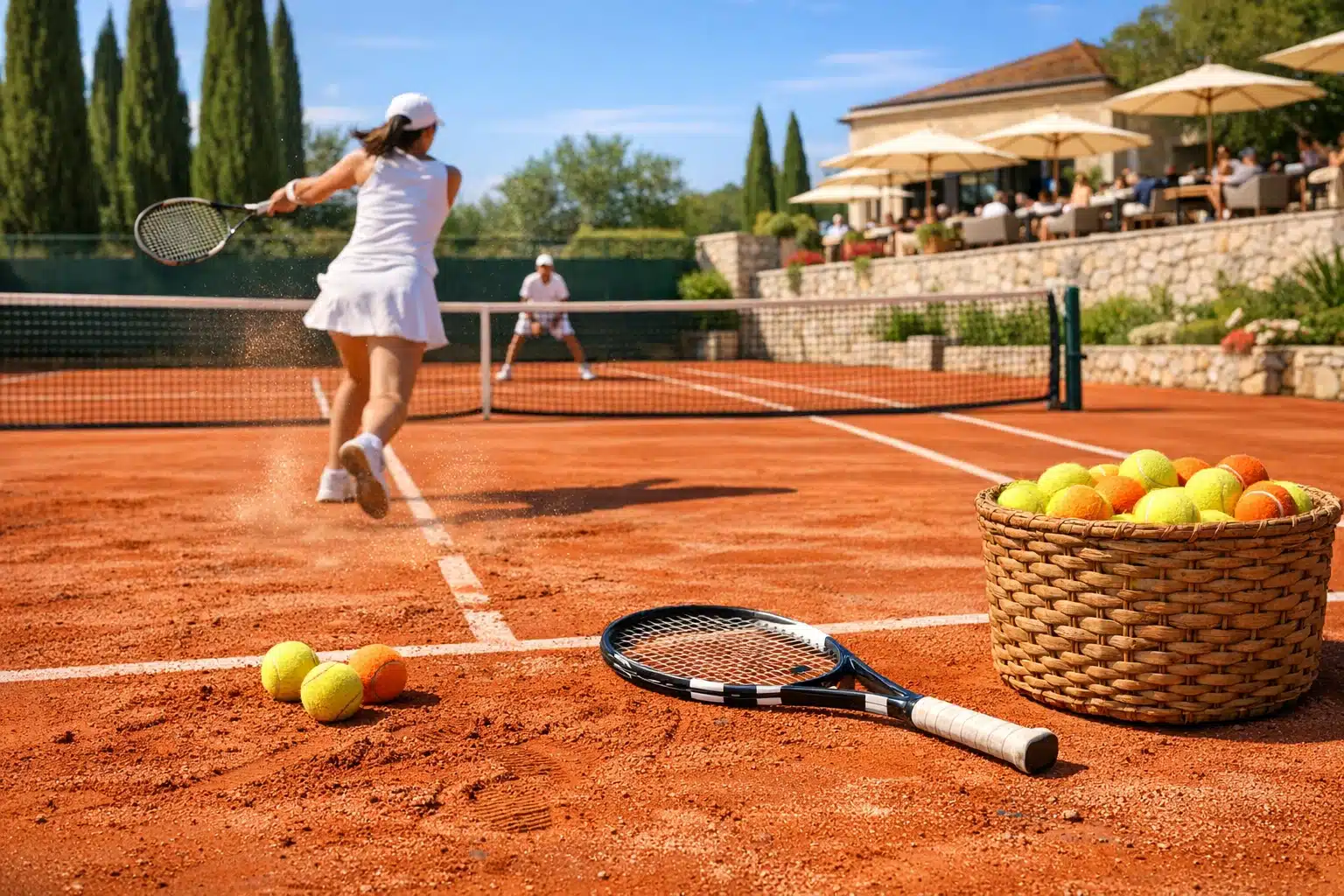
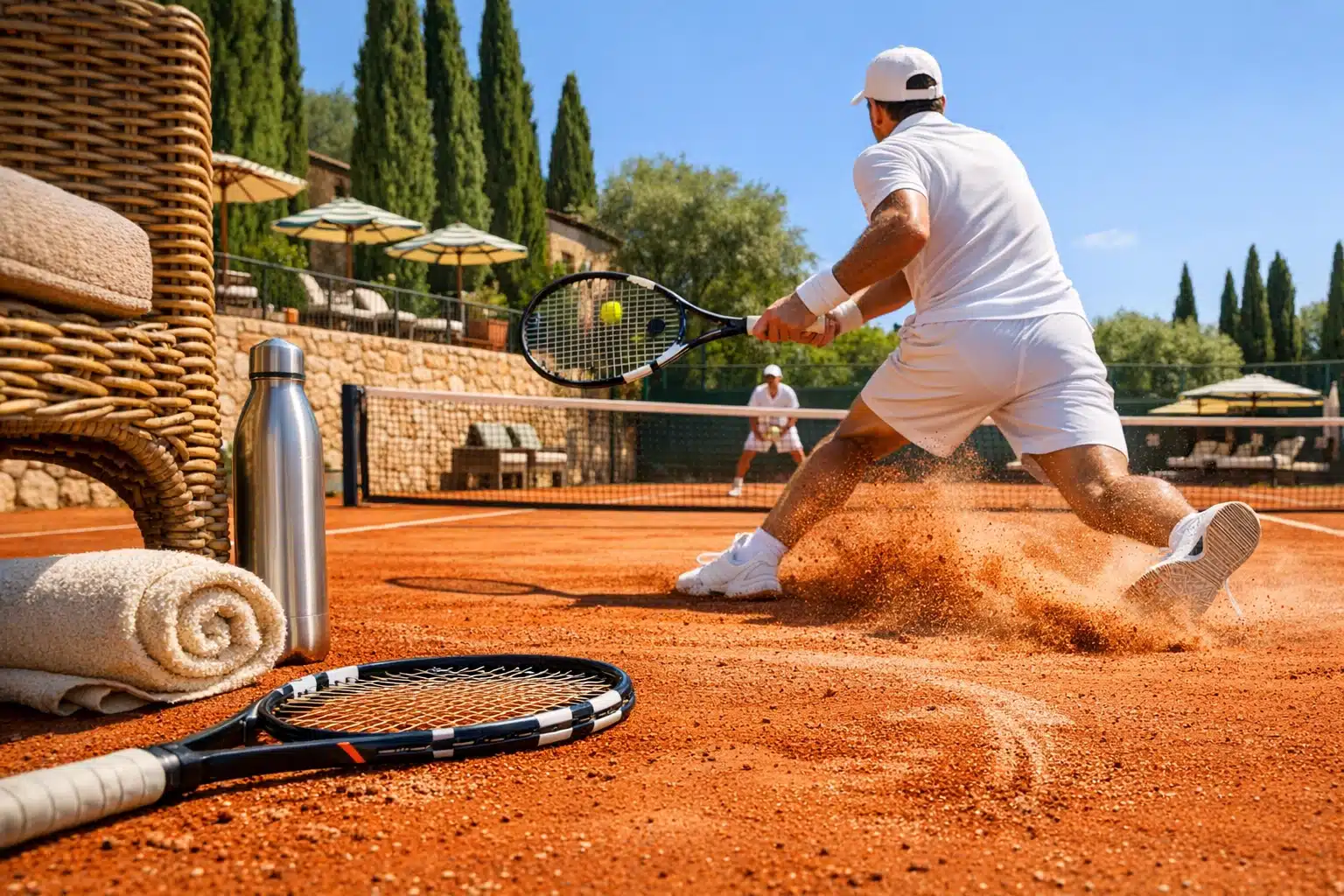
Surface type changes the experience as well. Hard courts tend to offer medium-to-fast bounces and are widely available. Clay courts generally slow the ball and create higher bounces, often rewarding patience and longer rallies. Grass courts are less common and usually faster, keeping points lower and quicker. These differences influence footwork, timing, and strategy, which is why the same player can feel very different depending on the court beneath their shoes.
A practical beginner setup often includes:
• A comfortable, mid-weight racket with a forgiving head size
• Tennis-specific shoes with good lateral stability
• A few balls suited to your level
• A water bottle, towel, and wrist-friendly grip replacement when needed
Good preparation is not about looking like an expert. It is about removing unnecessary obstacles. When your racket feels manageable and your shoes let you move with confidence, you can focus on the real challenge and the real pleasure of tennis: meeting the ball cleanly and sending it where you intend.
3. Core Techniques: Grips, Strokes, Footwork, and the Art of Clean Contact
Tennis technique can seem intimidating because the sport asks the body to do many things at once: track a moving ball, judge its speed and height, move into position, rotate efficiently, and control the racket face at contact. Yet beginners do not need perfect form to start well. They need a few reliable fundamentals. If these are built early, improvement becomes smoother and more enjoyable.
The grip is where technique begins. The forehand grip used by many modern players allows topspin and control, while common beginner-friendly backhand options include the two-handed backhand for stability or the one-handed version for reach and variety. What matters first is consistency, not complexity. A player who changes grip randomly from shot to shot will struggle with timing and direction. Coaches often help beginners settle on a dependable grip pattern so the hand stops guessing and the body can learn repetition.
The forehand is usually the first groundstroke that feels natural. A good beginner forehand starts with a balanced ready position, a unit turn of the shoulders, and a swing path that moves through the ball rather than simply slapping at it. Clean contact in front of the body is crucial. The backhand follows the same principle, even if the mechanics differ. On both sides, many new players improve quickly once they stop over-swinging. Power in tennis comes from coordinated movement, body rotation, and timing far more than from raw arm strength.
The serve is the most technical shot because the player controls the start entirely. There is no incoming ball to react to, yet that freedom creates complexity. A beginner serve does not need to be explosive. It needs a repeatable motion, a controlled toss, and a stable contact point. Early progress often comes from aiming for a large safe target rather than chasing aces. A serve that lands in consistently puts immediate pressure on the returner and lets the point begin on your terms.
Volleys and overheads matter too, especially in doubles. The volley is a shorter punch-like action near the net, using compact movement rather than a large backswing. The overhead resembles a serve in some ways and is used to finish high balls. Returns of serve require alertness, short preparation, and simple intent. Against a fast serve, the smartest return is often not a dramatic winner but a solid neutralizing shot back into play.
Footwork is the quiet engine behind every stroke. Players often think they missed because of poor racket work, when in truth they arrived late or stopped moving too soon. Split steps, small adjustment steps, and recovery back toward a sensible court position make an enormous difference. Tennis is not played from a fixed stance; it is played while constantly reorganizing space.
Helpful technical priorities for beginners:
• Watch the ball all the way to contact
• Move your feet before you move your racket
• Make balance more important than power
• Aim high enough over the net for safety
• Practice repeating simple motions before adding speed
There is a lovely moment in early tennis development when the ball stops feeling like an unpredictable visitor and starts feeling like something you can read. That shift comes from technique, but not from chasing perfection. It comes from learning to prepare earlier, move better, and strike the ball with a calmer, more repeatable action.
4. Beginner Tactics: How to Win More Points Without Playing Risky Tennis
Many beginners assume tactics are only for advanced players, but smart decision-making matters from the first match. In fact, tactics often help new players more than flashy shot-making. Recreational tennis is frequently decided by consistency, positioning, and patience rather than by spectacular winners. If you can keep the ball in play, recover to a sensible spot, and make your opponent hit one extra shot, you will already be using effective strategy.
The first tactical principle is margin. A beginner should aim several feet above the net and comfortably inside the lines. Shots struck too close to the tape or painted toward the sideline may look ambitious, but they produce many unnecessary errors. High-percentage tennis is not boring; it is practical. By keeping more balls in play, you force your opponent to solve more problems. At beginner and intermediate levels, pressure often comes less from speed and more from reliability.
Direction matters as well. Hitting cross-court is usually safer than hitting down the line because the ball travels over the lower middle part of the net and into a longer area of the court. This gives you more space and time. Down-the-line shots can still be useful, but they are often best used when you are balanced and in control of the rally. For a new player, learning when not to attack is as important as learning when to do so.
Court positioning is another major advantage. In singles, staying too far behind the baseline can leave you defending endlessly, while standing too close can rush your preparation. A neutral recovery spot near the center of your likely coverage area is usually best. In doubles, the geometry changes. The net player becomes a major threat, angles appear more quickly, and communication with a partner matters. Simple calls such as “mine,” “switch,” or “yours” prevent confusion and keep both players organized.
Serving strategy for beginners should focus on placement and routine. A serve to the backhand side may draw weaker replies from many players, while a body serve can jam someone who likes big swings. On return, the priority is to neutralize the point. Deep returns are valuable because they make the server hit from a less comfortable position.
Useful beginner tactics include:
• Rally cross-court when under pressure
• Attack only balls you reach in balance
• Recover after every shot instead of admiring it
• Make the opponent hit one more ball
• Use variety carefully, not randomly
Mental discipline belongs in tactics too. Tennis is full of small emotional tests: double faults, missed sitters, lucky net cords, and momentum swings. The players who manage these moments well often outperform more talented but more impatient opponents. A simple between-point routine can help: turn away from the last point, take a breath, choose the next target, and reset. Point by point, this habit steadies the mind and sharpens decisions.
In beginner tennis, clever play usually looks ordinary. It is the deep return, the safe cross-court rally, the patient recovery step, and the refusal to panic after one bad miss. Those modest choices win a surprising number of matches.
5. Practice, Fitness, and Long-Term Improvement: How Beginners Keep Getting Better
Tennis improvement rarely happens in a straight line. One week the forehand feels smooth and effortless, and the next it seems to disappear like a magic trick performed on your confidence. This is normal. Progress in tennis is built through repeated exposure, useful feedback, and patient practice. The key for beginners is to train in a way that develops skills together rather than in isolation.
A balanced practice routine usually includes technical work, rallying, movement training, and point play. Technical sessions help groove mechanics, but endless shadow swings without live balls can feel disconnected from real tennis. On the other hand, only playing casual sets may reinforce the same mistakes. The most effective approach mixes structure and play. For example, a session might begin with short-court rallying for control, move into cross-court drills, then include serves and returns, and finish with practice games. This sequence teaches both execution and application.
Fitness matters because tennis demands repeated acceleration, deceleration, rotation, and recovery. Beginners do not need elite conditioning, but they benefit from a solid base of stamina, lower-body strength, mobility, and coordination. Exercises such as bodyweight squats, lunges, lateral shuffles, planks, and jump rope can support movement on court. Flexibility alone is not enough; the body also needs stability to handle sudden changes of direction safely. Warm-ups should raise heart rate and activate muscles before hard hitting. Cool-downs and rest days help the body adapt and reduce unnecessary soreness.
Injury prevention deserves special attention. Common beginner problems include shoulder discomfort from serving with poor mechanics, wrist tension from gripping the racket too tightly, and knee or ankle stress caused by weak movement habits or unsuitable footwear. Listening to pain signals is wise, not weak. A coach, physiotherapist, or qualified trainer can be helpful if discomfort persists. Good technique is not only about performance; it also protects the body.
Tracking progress gives practice direction. Instead of chasing vague goals like “play better,” beginners can measure useful things:
• Number of serves landed out of 20
• Length of a rally maintained with control
• Percentage of returns put back in play
• Ability to recover balance after each shot
• Comfort level in match situations
Coaching can accelerate improvement, but it is not the only path. Hitting with slightly stronger players, watching reliable instructional material, and recording a few sessions for self-review can also help. The important part is honesty. If a player avoids the backhand in practice, serves only at half speed, or never works on footwork, improvement will stall. Tennis rewards the parts of the game you are willing to confront.
For beginners, the long view matters most. The goal is not to look advanced in a month. The goal is to become a player who can rally confidently, compete with composure, and keep enjoying the sport year after year. Tennis has room for social players, league competitors, weekend learners, and ambitious juniors. If you practice with curiosity and consistency, the game keeps opening new doors.
Conclusion for New Players
If you are just starting tennis, focus on what truly moves the needle: learn the rules, choose practical equipment, build repeatable strokes, and play with high-margin tactics. Improvement does not require perfect technique or expensive gear, but it does require patience and regular practice. Try to enjoy the process of small gains, because tennis often rewards steady habits more than sudden breakthroughs. The sport can challenge your legs, your timing, and your temperament, yet that is exactly what makes it satisfying. Start simple, stay curious, and let each session teach you something new.