Tennis Basics: Rules, Equipment, and Tips for Beginners
Tennis is one of those rare sports that blends strategy, movement, timing, and mental focus into every rally, which is exactly why it remains popular across ages and skill levels. A beginner can start with simple drills and still enjoy the game, yet the sport offers enough depth to reward years of learning. Understanding the rules, the right equipment, and a few practical habits makes the first steps far less intimidating and much more fun.
Outline: this article begins with the basic structure of tennis and the court itself, then moves into scoring and match rules, followed by a practical guide to equipment. After that, it covers beginner technique and smart practice habits. It ends with a focused conclusion for new players who want to build confidence and keep improving.
1. Understanding Tennis: The Court, the Objective, and Why the Sport Stays Popular
At its core, tennis is simple: hit the ball over the net and into the opponent’s side of the court in a way that makes it difficult or impossible to return. That simplicity is part of the sport’s charm. You can describe the goal in one sentence, yet whole matches unfold like puzzles played at running speed. Every shot asks a question. Will the player attack, defend, change direction, use spin, or reset the point with a safer ball? For beginners, understanding this basic idea matters more than trying to copy advanced highlights too soon.
A standard tennis court measures 78 feet in length. In singles, the court is 27 feet wide, while doubles uses the wider 36-foot court. The net stands 3 feet high at the center and slightly higher at the posts. Service boxes divide each side into left and right targets, and these markings are not decorative details; they shape how every point begins. When a player serves, the ball must land diagonally in the correct service box. Once the return comes back, the whole court becomes available within the format being played, either singles or doubles.
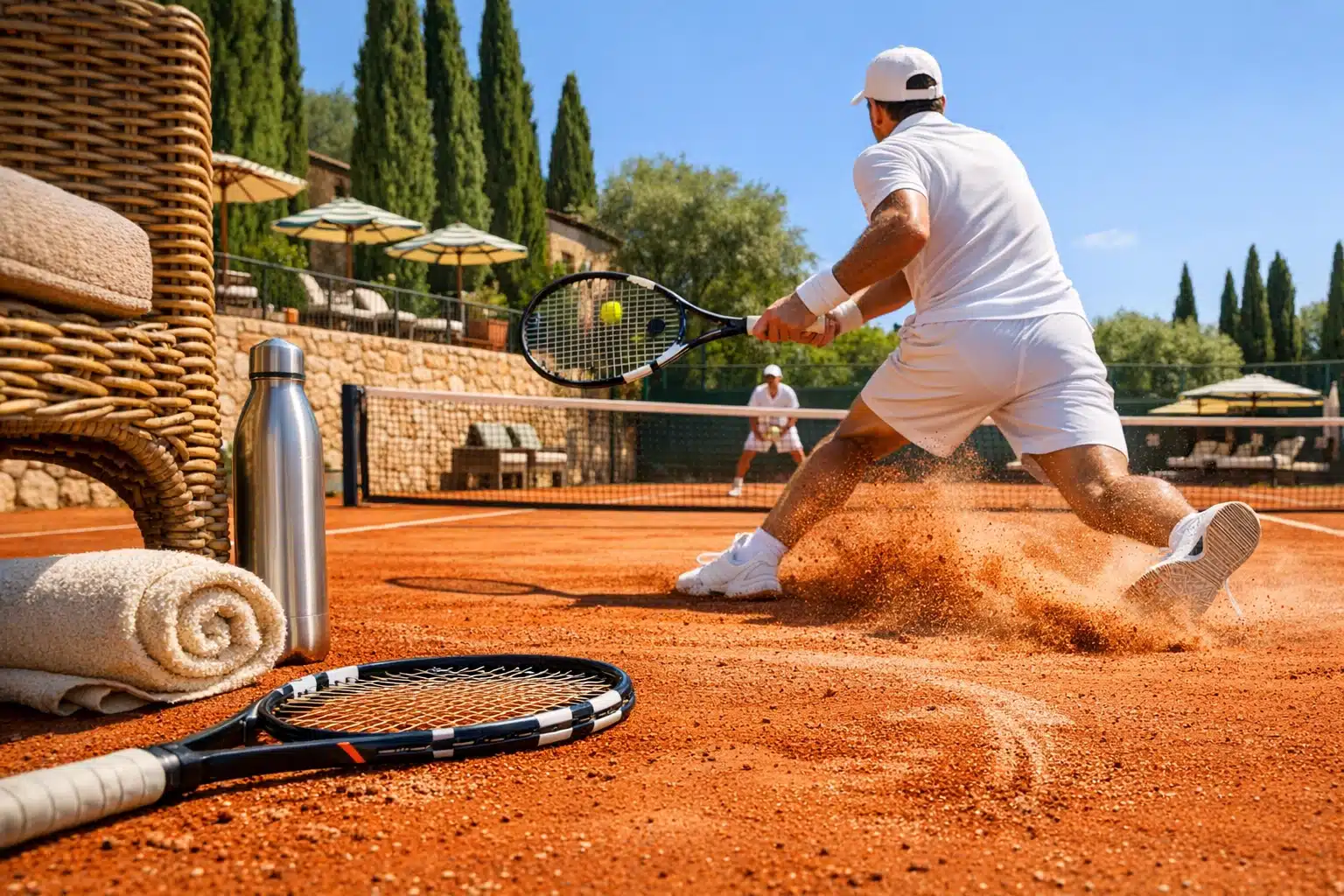
Surface also changes the character of tennis in a noticeable way. Hard courts usually offer a balanced and fairly predictable bounce, which is one reason they are common at public facilities. Clay courts tend to slow the ball and reward patience, movement, and topspin. Grass courts are faster and often produce a lower bounce, encouraging quick reactions and efficient footwork. For a beginner, these differences can feel dramatic. The same swing that works on one surface may need a small adjustment on another.
Tennis stays popular because it offers several benefits at once:
• it can be played recreationally or competitively
• it suits children, adults, and older players
• it builds endurance, coordination, and decision-making
• it works as a social sport in doubles and as an individual challenge in singles
That range gives tennis unusual staying power. One afternoon it is a casual hit with friends; another day it becomes a lesson in patience and problem-solving. A beginner does not need to master every layer at once. It is enough to understand that the court is a map, the rally is a conversation, and each point begins with a fresh chance to learn.
2. Tennis Rules and Scoring: What Every Beginner Should Know Before Playing
Scoring is often the first part of tennis that makes new players pause. The shot-making seems intuitive, but the numbers can sound like a code. A game moves from love to 15, then 30, then 40. If both players reach 40, the score becomes deuce. From deuce, one player must win two consecutive points: the first earns advantage, and the second closes the game. If the player with advantage loses the next point, the score returns to deuce. It is unusual at first, but after a few games, the rhythm starts to feel natural.
Six games usually win a set, but there is an important condition: a player must lead by at least two games. That means 6-4 is enough, while 6-5 is not. At 6-6, many formats use a tiebreak, where points are counted as 1, 2, 3, and so on, usually up to 7 with a two-point margin. Match formats vary. Recreational players may play one set, best of three sets, or use a match tiebreak instead of a full final set. Learning the format before stepping onto court prevents confusion and saves the awkward moment when one player thinks the match is over and the other is just getting started.
The serve begins each point and follows clear rules. The server stands behind the baseline and hits the ball into the diagonally opposite service box. Two attempts are allowed. Missing both is a double fault, which gives the point away. If the served ball clips the net but still lands in the correct service box, it is called a let and the serve is replayed. During a game, the server continues serving until the game ends, then service switches. Players change ends of the court after odd-numbered games, which helps balance sun, wind, and other conditions.
Some of the most common beginner mistakes are rule-based rather than technical:
• serving from the wrong side after a point
• forgetting that the serve must land diagonally
• playing a ball that has already bounced twice
• touching the net during a point
• calling a ball out too quickly without being sure
Good tennis etiquette matters too. On most recreational courts, players call lines fairly on their own side, return stray balls safely, and keep pace between points. That culture of honesty is part of what makes tennis distinctive. The rules give the game structure, but sportsmanship gives it tone. For beginners, that is encouraging news. You do not need to know every tiny detail from day one. If you understand how points, games, and sets build on one another, and you respect basic court etiquette, you already have a strong foundation for real play.
3. Choosing Tennis Equipment: Rackets, Balls, Shoes, and Other Beginner Essentials
Equipment in tennis matters, but beginners often overestimate what they need and underestimate what actually helps. The most important truth is refreshing: you do not need elite gear to start well. A sensible racket, proper shoes, and a few reliable balls are enough for meaningful practice. Expensive equipment cannot replace timing, footwork, or repetition. In fact, a player who learns with balanced, comfortable gear usually progresses more smoothly than someone who buys advanced equipment designed for a much faster swing.
The racket is the obvious starting point. Many beginner-friendly adult rackets fall in a range of roughly 270 to 300 grams unstrung, often with a head size around 100 square inches or a little larger. A lighter racket is easier to maneuver and can reduce fatigue, while a slightly heavier one may offer more stability. Oversized heads tend to provide a larger sweet spot, which helps newer players make cleaner contact. Grip size also matters. If the grip is too small, the racket may twist; if it is too large, the hand can feel restricted. Comfort and control should guide the choice more than brand prestige.
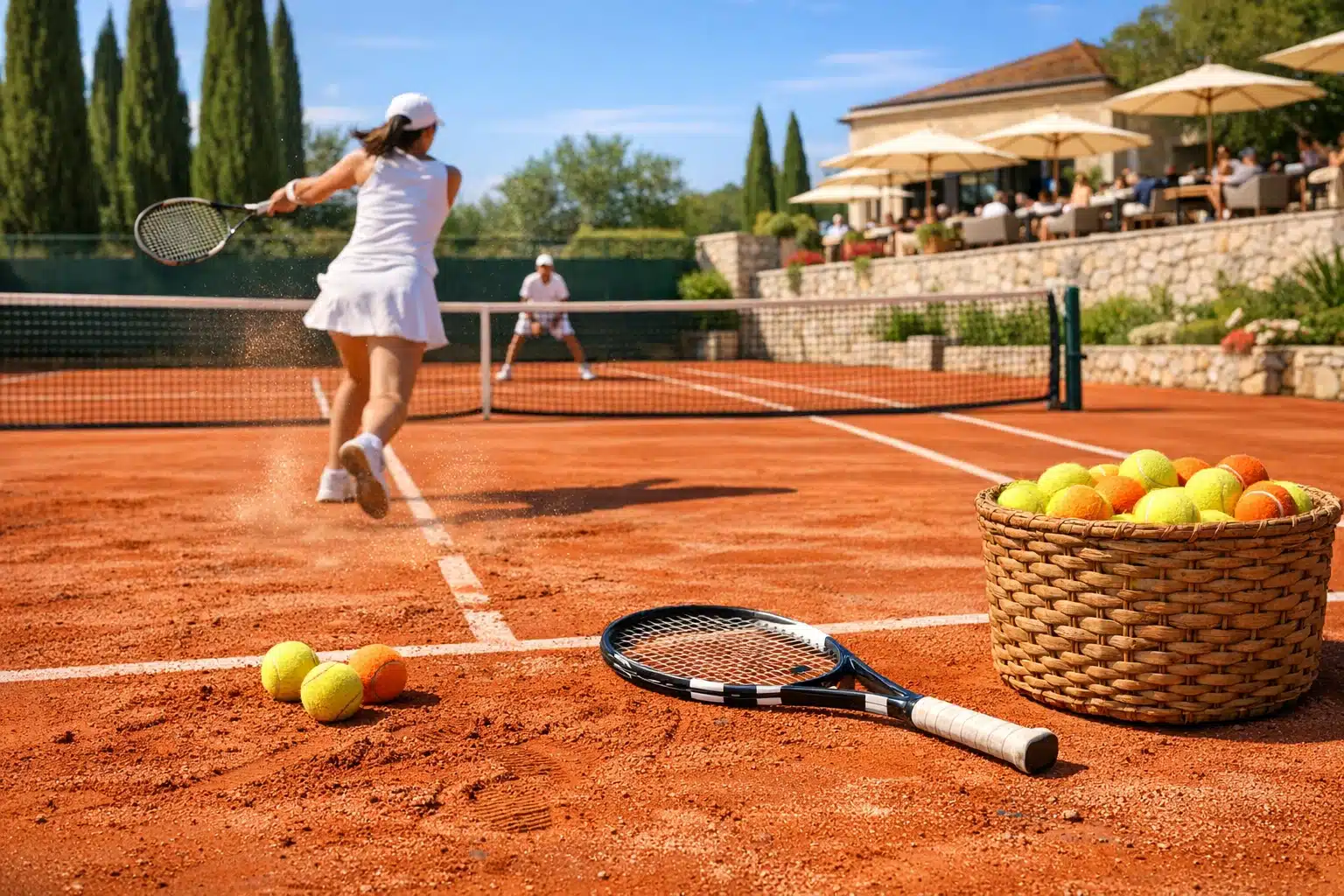
Tennis balls also differ more than many people expect. Standard pressurized balls are common for match play, but beginners often benefit from lower-compression training balls, which bounce more gently and travel a bit slower. That extra fraction of time can make learning strokes less rushed and far less frustrating. Junior players especially use stage-based balls that are adapted to skill and court size. What looks like a small equipment change can have a large effect on confidence.
Shoes are arguably the most overlooked part of a starter kit. Running shoes are built mainly for straight-line motion, while tennis shoes are designed for lateral movement, stopping, and quick direction changes. Using proper court shoes improves grip and support, and it may reduce the risk of slipping or ankle strain. Clothing does not need to be fancy, but breathable fabric and unrestricted movement matter. A towel, water bottle, overgrip, and small bag complete the basics without turning a first session into a shopping expedition.
For a practical beginner setup, focus on:
• a comfortable racket suited to your hand and strength
• balls that match your current level
• tennis-specific shoes for court movement
• simple clothing that allows easy rotation and running
• a few accessories that support hydration and grip
There is something pleasingly honest about tennis equipment. The best choices are usually the ones that help you learn cleanly and stay comfortable long enough to enjoy the process. Good gear should feel like a helpful background actor, not the star of the show.
4. Beginner Technique and Practice Tips: How to Build Reliable Habits from the Start
Early tennis improvement rarely comes from dramatic changes. It comes from small, repeatable habits that slowly turn awkward swings into dependable patterns. The first of those habits is preparation. New players often react late because they wait for the ball to arrive before deciding what to do. A better approach is to get into a ready position as soon as the opponent hits, with knees slightly bent, racket in front, and eyes tracking the ball. That moment of preparation buys time, and in tennis, time often feels like the most valuable currency on the court.
On the forehand side, beginners usually benefit from learning a simple, controlled swing before chasing power. Turn the shoulders, move the feet into position, make contact in front of the body, and follow through smoothly. On the backhand, players may start with either a one-handed or two-handed style, though the two-handed backhand is often easier for beginners to stabilize. The serve is the most technical shot in tennis, so patience is essential. Rather than trying to hit hard immediately, focus first on rhythm, toss consistency, and basic placement. A serve that starts the point is far more useful than a big swing that misses often.
Footwork deserves almost as much attention as stroke mechanics. Many missed shots are not caused by bad hands but by poor spacing. If the ball crowds the body or drifts too far away, even a decent swing breaks down. Short adjustment steps help players find the right distance before contact. This is why beginner drills often look repetitive: mini-tennis, shadow swings, rallying cross-court, and feeding drills teach the body where to be, not just what to do.
Useful practice ideas include:
• rallying slowly to build control before adding pace
• aiming cross-court because the net is lower in the middle and the target area is larger
• practicing split steps and recovery movement after each shot
• using cones or simple targets to improve direction
• recording short sessions to spot recurring mistakes
Mental habits matter too. Tennis can be surprisingly emotional because points are frequent and errors are visible. A beginner who misses three balls in a row may feel as if nothing is working, even during an otherwise solid session. The better response is to narrow the focus. Ask simple questions: Was I moving early enough? Did I watch the ball through contact? Was I trying to hit too hard? This kind of reflection turns frustration into information. Improvement in tennis rarely looks like a straight line; it looks more like a staircase, with quiet plateaus followed by sudden jumps. Stick with the repetitions, respect the basics, and the game begins to open up in satisfying ways.
5. Conclusion for Beginners: A Practical Path to Starting Tennis with Confidence
If you are new to tennis, the good news is that you do not need perfect strokes, deep tactical knowledge, or premium equipment to begin enjoying the sport. You need a clear starting point, a willingness to learn, and enough patience to let the basics settle in. Tennis rewards consistency far more often than flash. The player who learns to move well, serve reliably, and keep a few extra balls in play will usually progress faster than the player chasing difficult shots too early. For beginners, that is not a limitation; it is an advantage, because the path forward is visible.
A smart way to begin is to keep the first phase simple. Play on a schedule you can maintain, even if it is only once or twice a week. If possible, mix casual hitting with some structured instruction, whether that comes from a coach, a club program, or a more experienced friend. Group lessons can be cost-effective and motivating, while private lessons allow for quicker correction of technical issues. Video tutorials can support learning, but they work best as supplements, not as complete substitutes for live feedback.
It also helps to set realistic goals. Instead of saying, “I want to play like an advanced competitor,” choose goals that match your current stage:
• learn the scoring system without hesitation
• rally ten balls in a row at a moderate pace
• make more first serves with controlled placement
• recover to a ready position after each shot
• play practice points without rushing
These goals are measurable, encouraging, and connected to real progress. They also make practice more enjoyable because improvement becomes easier to notice. Tennis has a way of giving back what you put into it. A few thoughtful sessions can sharpen coordination, improve fitness, and introduce a social routine that feels both active and rewarding. Over time, the beginner who once worried about where to stand and how to keep score starts reading spins, choosing targets, and building points with intention.
So if the sport has been sitting on your “maybe one day” list, this is a strong moment to begin. Learn the court, understand the rules, choose practical gear, and trust steady repetition over instant mastery. For new players, tennis is not just about hitting a yellow ball cleanly across a net. It is about discovering a sport that can stay challenging, healthy, and enjoyable for years, one rally at a time.