Explore the world of swimming
Swimming is one of those rare activities that feels playful and serious at the same time. A child can splash in the shallow end, an athlete can chase fractions of a second, and an older adult can move with less strain than on land. Because water supports the body while still providing resistance, swimming matters in fitness, health, safety, and recreation. It is both a life skill and a sport, which is exactly why it deserves a closer look.
Outline: 1. Why swimming matters in everyday life and sport. 2. Physical and mental benefits supported by practical evidence. 3. The main strokes and the technical details that shape efficiency. 4. Training, equipment, and beginner-friendly ways to improve. 5. Safety, access, and the reasons swimming can stay valuable for life.
1. Swimming as a Life Skill and a Global Sport
Swimming occupies a special place in human life because it crosses boundaries that many activities never reach. It is exercise, transport in some environments, a school subject in many regions, a leisure pastime, a competitive discipline, and in crucial moments, a survival skill. That combination gives it unusual relevance. A person may first meet swimming through family holidays, then encounter it again through school lessons, later use it for fitness, and eventually return to it for rehabilitation or stress relief. Few sports follow people through so many stages of life with such flexibility.
Historically, swimming is hardly new. Civilizations in Egypt, Greece, and Rome recognized its practical and cultural value, and modern competitive swimming took shape in the nineteenth century as organized clubs, standardized pools, and formal rules emerged. It has been part of the modern Olympic Games since 1896 for men and since 1912 for women, which helps explain its global profile today. International events such as the Olympics, World Championships, and regional competitions have made swimmers household names, but the sport remains deeply local as well. Community pools, school teams, beach programs, and learn-to-swim classes keep the activity rooted in everyday life.
Swimming also stands out because access to water safety skills can have real public health consequences. The World Health Organization has repeatedly identified drowning as a major cause of accidental death worldwide, especially among children in some age groups and in areas with limited access to supervision or swimming instruction. That means learning to swim is not simply about performance or recreation; it can reduce risk in real situations. A confident swimmer is not invincible, of course, but knowledge of floating, breathing control, and calm movement in water can be life-changing.
Compared with sports that depend on a field, expensive infrastructure, or contact-heavy play, swimming offers a different kind of appeal:
• It can be practiced alone or in teams.
• It suits competition and casual participation.
• It can be adapted for children, adults, older people, and many individuals recovering from injury.
• It teaches a practical environmental skill, not just a game.
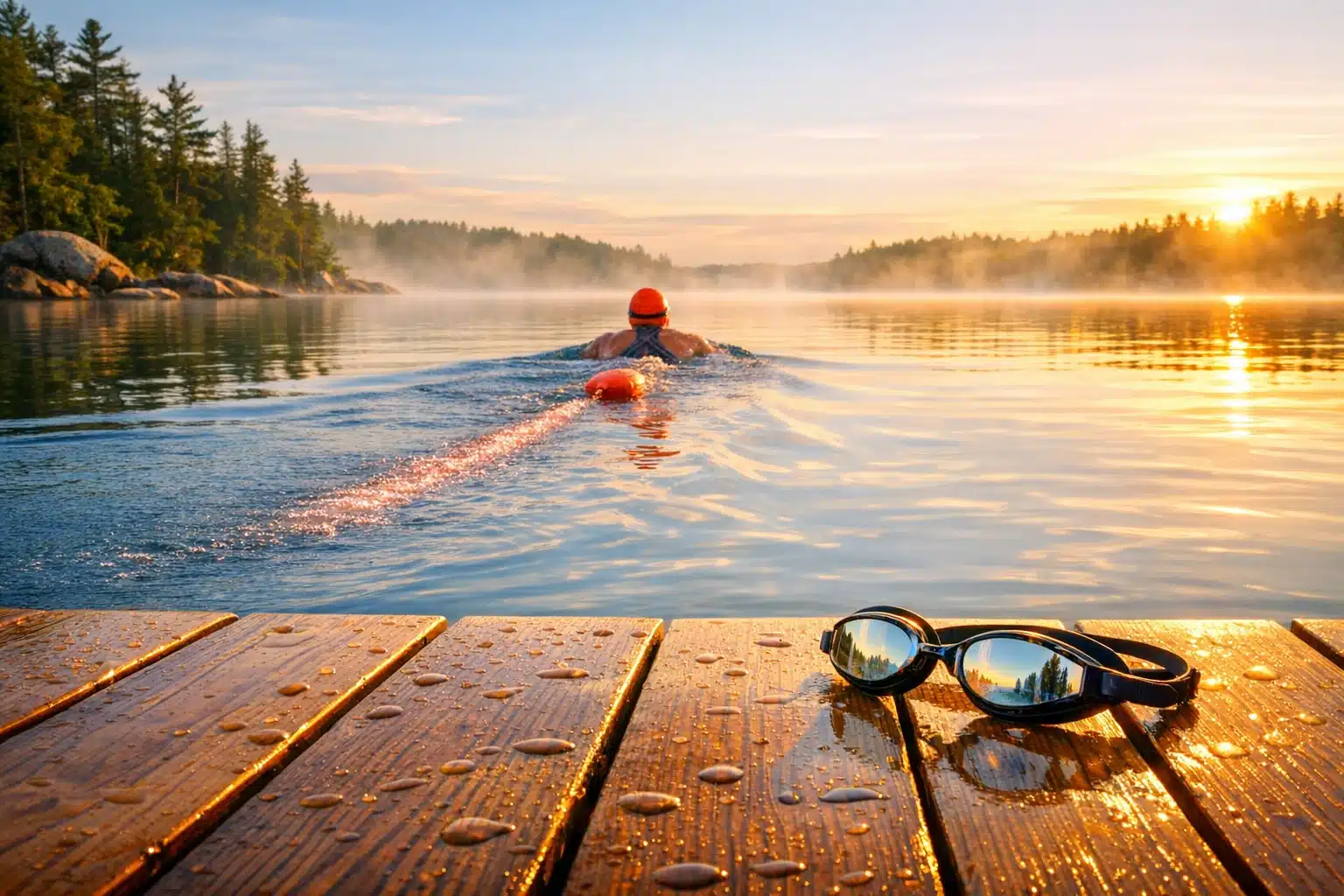
There is also a quiet emotional pull to swimming. Entering water changes sound, balance, and effort in an instant. The world becomes muted, movement slows at first, and then rhythm takes over. Whether in a bright indoor pool or a lake at sunrise, swimming invites concentration. That mixture of function and feeling is a large part of why the sport remains relevant across cultures and generations.
2. Health, Fitness, and Mental Benefits of Swimming
One reason swimming continues to attract such a broad audience is that its benefits are both immediate and long-term. Even a short session can leave the body pleasantly tired and the mind clearer, while regular practice can support cardiovascular health, muscular endurance, flexibility, and general fitness. Public health guidance often recommends at least 150 minutes of moderate aerobic activity per week for adults, and swimming fits that target well. A person who swims several times each week can build stamina without the repeated pounding associated with high-impact activities such as running on hard pavement.
The science behind this is not hard to understand. Water is much denser than air, which means every arm pull, kick, and body rotation meets resistance. At the same time, buoyancy reduces how much body weight presses through the joints. That combination is unusually useful. On land, low-impact movement can sometimes feel too gentle for serious conditioning, while intense training can be hard on knees, hips, or ankles. In water, a swimmer can work hard while often feeling less mechanical stress. This is one reason swimming is common in rehabilitation settings and is often recommended, when appropriate, for people who need an exercise option that is kinder to the joints.
Swimming also trains the heart and lungs in a distinctive way because breathing must be coordinated with movement. In freestyle, for example, the swimmer cannot breathe whenever convenient; air has to be taken at a specific moment in a repeating cycle. That rhythmic pattern improves breath control and encourages efficiency. Over time, many swimmers notice that daily activities such as climbing stairs or walking uphill feel easier because their aerobic capacity has improved.
Calories burned vary by stroke, body size, and intensity, but moderate to vigorous swimming can use substantial energy. A relaxed breaststroke session will not feel the same as a fast butterfly set, and that is exactly the point: swimming scales well. It can be easy, moderate, or brutally demanding depending on how it is performed. Compared with cycling, swimming often involves more total-body engagement. Compared with running, it generally offers less impact. Compared with gym machines, it adds balance, coordination, and timing.
The mental side deserves equal attention:
• Water can create a calming sensory environment.
• Repetitive laps often help reduce stress and mental clutter.
• Skill improvement provides measurable progress, which can be motivating.
• Group sessions can support social connection and routine.
There is no need to romanticize it into a miracle cure. Swimming does not solve every health problem, and it is not ideal for every person in every condition. Still, for many people it delivers a rare combination of intensity, accessibility, and relief. It can be demanding without being punishing, structured without being boring, and restorative without feeling passive. That balance is a big part of its staying power.
3. Understanding the Main Strokes and the Technique Behind Them
To watch experienced swimmers move through water is to realize that swimming is not just about effort; it is about efficiency. Technique matters enormously because water punishes wasted motion. A runner can survive with imperfect form for a while, but a swimmer with poor alignment often feels immediate resistance, like trying to move through a crowded room while wearing a winter coat. That is why understanding the main strokes is so important. Each has its own rhythm, strengths, and common mistakes.
Freestyle, often used to mean front crawl, is usually the fastest and most widely practiced stroke. The body stays long and horizontal, the arms alternate, and the flutter kick provides steady support. Good freestyle depends on a streamlined position, body rotation through the hips and shoulders, and relaxed breathing to one or both sides. Beginners often fight the water by lifting the head too high, which causes the hips and legs to sink. When the head stays lower and the body rotates naturally, the stroke becomes smoother and less exhausting.
Backstroke is sometimes described as freestyle turned upside down, but that comparison only goes so far. Because the face remains above water, breathing is easier to organize, which can make the stroke appealing for learners. Yet backstroke demands strong body awareness because the swimmer cannot see where they are going without using ceiling lines, flags, or lane markers. It encourages a long spine, steady kick, and balanced rotation. For some people, it feels wonderfully open; for others, it is slightly disorienting at first.
Breaststroke moves to a different beat entirely. It is slower than freestyle for most swimmers, but it offers a distinctive glide and often feels more intuitive to recreational participants. The arms sweep outward and inward, the legs perform a frog kick, and timing is everything. If the pull, breath, kick, and glide happen in the wrong order, the stroke can feel awkward and inefficient. When timed well, though, breaststroke has a calm, almost conversational quality.
Butterfly is the most dramatic of the four competitive strokes. It uses simultaneous arm recovery and a dolphin kick driven from the core and hips. Butterfly is powerful, technical, and physically demanding. It is often the stroke that exposes flaws in timing, flexibility, and rhythm. Yet it is not just brute force; skilled butterfly swimmers rely on wave-like body movement and precise coordination rather than sheer strength alone.
Common technical ideas connect all strokes:
• Streamline reduces drag.
• A stable body line saves energy.
• Breathing should support rhythm rather than interrupt it.
• Kicking helps balance as much as propulsion.
• Relaxation in the right moments improves speed.
Turns, starts, and finishes add another layer. Competitive swimmers train them carefully because seconds, and sometimes hundredths of a second, matter. Even recreational swimmers benefit from learning a tidy push-off and a controlled turn at the wall because these details improve flow and confidence. In the end, technique is what transforms swimming from struggle into travel. Once movement begins to feel efficient, the water stops feeling like an obstacle and starts acting more like a partner.
4. Learning to Swim, Building Training Habits, and Choosing Equipment
Starting swimming can feel intimidating, especially for adults who believe everyone else learned in childhood. In reality, pools are full of learners at different stages, and progress comes from patience more than bravado. The first objective is not speed. It is comfort: becoming used to submerging the face, exhaling into the water, floating on the front and back, and moving calmly from wall to wall. Those basics create trust. Once trust is present, technique becomes much easier to absorb.
Formal instruction is often the fastest route to improvement because a qualified coach or teacher can spot errors that swimmers cannot feel on their own. A beginner may think the problem is weak legs when the real issue is breath timing or body position. Lessons also break the process into manageable steps. Instead of hearing “just swim,” the learner gets a sequence: kick with support, practice bubbles, rotate to breathe, add one arm, then build the full pattern. That structure reduces frustration and makes success repeatable.
Equipment matters, but less than marketing sometimes suggests. A comfortable swimsuit and a pair of well-fitting goggles are enough to begin. A swim cap may improve comfort, especially in chlorinated pools or for people with long hair. Beyond that, tools are useful when they support a clear purpose:
• Kickboard for isolating the legs and practicing body position.
• Pull buoy for emphasizing upper-body work.
• Fins for helping learners feel propulsion and ankle motion.
• Pace clock or watch for tracking intervals and rest.
• Hand paddles for advanced strength and catch awareness, used carefully.
Training itself usually becomes more effective when it is organized. Random laps can still provide exercise, but planned sessions produce steadier improvement. Many swimmers build workouts around a simple structure: warm-up, drills, main set, and easy recovery. A beginner might alternate 25-meter efforts with rest, while an experienced swimmer could complete interval sets that target endurance, sprint speed, or race pace. This structure is one reason swimming compares favorably with other fitness options: it offers clear, measurable progress without requiring complicated equipment or huge amounts of space.
A practical weekly approach could look like this:
• Session 1: easy endurance and breathing practice.
• Session 2: technique drills and short repeats.
• Session 3: mixed effort with slightly faster intervals.
• Optional extra session: relaxed recovery swim or water walking.
Consistency beats heroics. Swimming once for ninety exhausting minutes is often less useful than swimming three times for thirty focused minutes. Improvement tends to arrive quietly. One day the lane no longer feels endless. Breathing stops feeling rushed. The wall comes sooner. A stroke that once seemed chaotic begins to click. That is the charm of swim training: progress is often subtle until, suddenly, it is obvious.
5. Safety, Access, and Why Swimming Can Last a Lifetime
No article about swimming is complete without addressing safety. Water can be joyful, but it also demands respect. Strong swimmers still need situational awareness, especially outside the controlled setting of a pool. Open water introduces currents, temperature changes, waves, poor visibility, and distance judgment that can surprise even fit athletes. Pool environments are more predictable, yet risks still exist through slips on wet surfaces, overexertion, unsupervised children, or simple inattention. Good swimming culture balances confidence with caution.
Basic safety habits are straightforward and worth repeating because they work:
• Learn in a supervised setting whenever possible.
• Never overestimate ability in deep or open water.
• Pay attention to lifeguard instructions, flags, and posted rules.
• Use suitable flotation for boating or uncertain environments.
• Swim with a partner in open water rather than alone.
• Respect weather, especially cold water, lightning, and changing currents.
Access is another major issue. Not everyone grows up near a safe pool, affordable lessons, or clean recreational water. That gap affects who learns to swim, who feels welcome in aquatic spaces, and who later sees swimming as “for people like me.” Communities that invest in public pools, school programs, adaptive instruction, and inclusive scheduling often create benefits that extend beyond sport. They support health, reduce risk, and widen participation. Adaptive aquatics for people with disabilities, women-only sessions in some cultural contexts, and low-cost municipal lessons are examples of how swimming can become more equitable.
One of the strongest arguments for swimming is that it ages well. A teenager may love racing starts and fast sets, while a middle-aged adult may value lap swimming before work, and an older participant may prefer gentle aerobic sessions or aqua fitness. The purpose can change without the activity losing relevance. Many sports narrow with age because impact, recovery demands, or injury history make them harder to maintain. Swimming often moves in the opposite direction. It can remain challenging for those who want competition, yet forgiving enough for people seeking sustainable movement.
There is also a social dimension that keeps swimmers coming back. Masters clubs, triathlon groups, community sessions, and family swim times create routine and belonging. In some places, the pool is almost a second town square: people arrive for exercise and leave with news, friendships, and shared rituals. That matters more than it may seem. Healthy habits are easier to maintain when they are tied to identity and community rather than sheer willpower.
In the end, swimming lasts because it offers more than one reward. It can sharpen performance, lower stress, teach safety, support recovery, and bring pleasure in the same week. That is not a small achievement. It is the reason so many people leave the water tired, lighter in mood, and already thinking about the next swim.
Conclusion for New and Returning Swimmers
If you are curious about swimming, the smartest approach is to treat it as both a skill and an experience. Start with comfort, learn proper basics, and build consistency before chasing speed or distance. If you already swim, refining technique and training with purpose can make each session more efficient and more enjoyable. Whether your goal is fitness, confidence, recovery, or recreation, swimming offers a rare path that can grow with you for years rather than just for a season.