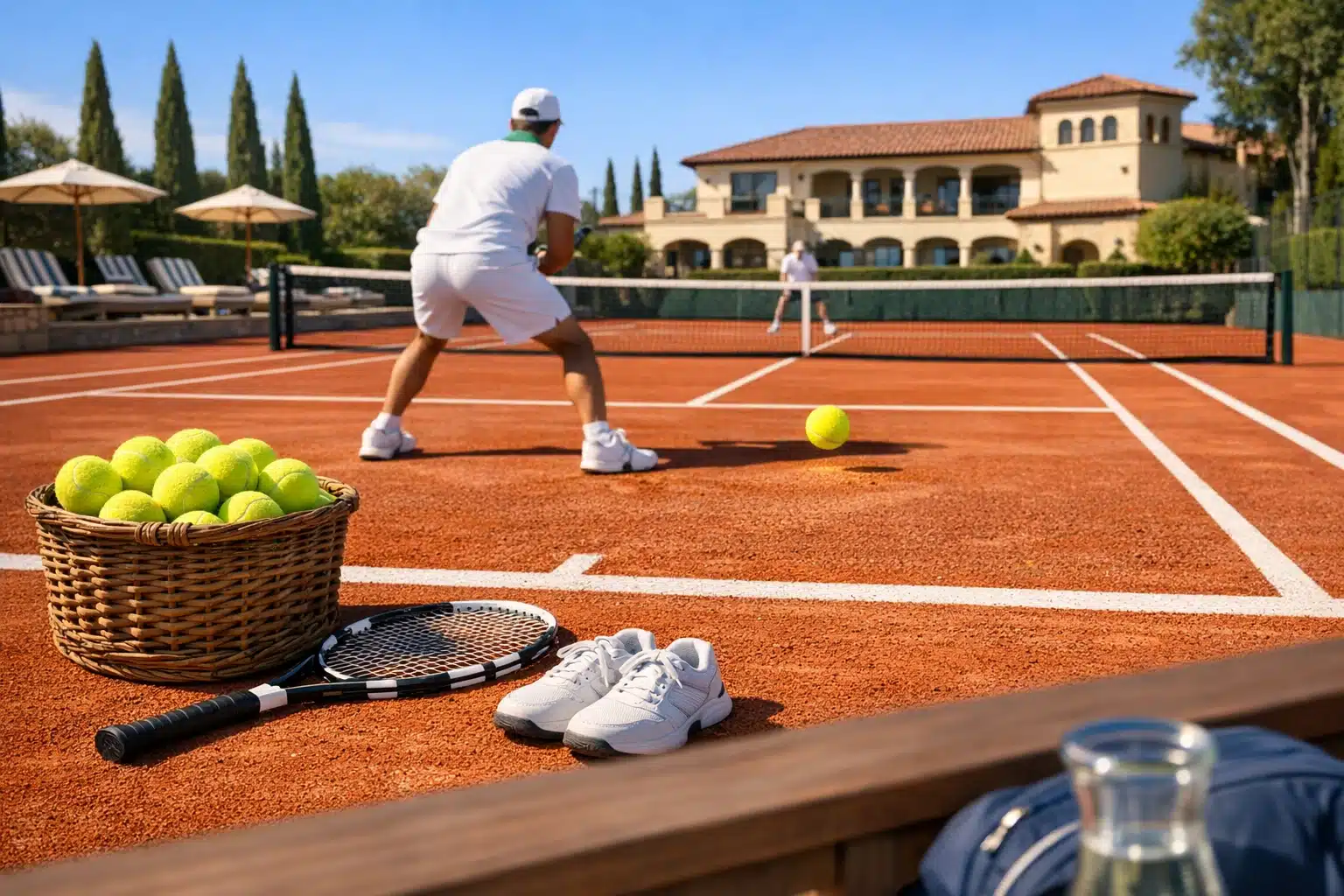
Explore the world of tennis
Tennis is one of those sports that seems straightforward until a match reveals how many layers sit beneath every rally. It combines explosive movement, quiet calculation, and emotional control, making it compelling for both weekend players and devoted spectators. From neighborhood courts to the biggest arenas in Melbourne, Paris, London, and New York, the game carries cultural weight as well as athletic drama. This article charts that landscape clearly, beginning with a practical outline and moving through rules, strategy, tournaments, training, and the reasons tennis keeps renewing itself.
Outline
- The foundations of tennis: court, rules, scoring, and match structure
- Technique and tactics: how players build points and adapt to surfaces
- The competitive calendar: Grand Slams, rankings, tours, and famous rivalries
- Training and equipment: fitness, recovery, rackets, strings, and shoes
- Tennis today: technology, accessibility, global growth, and why the sport endures
The Foundations of Tennis: Court, Rules, and the Logic Behind the Score
Tennis is played in a rectangle, but the game never feels flat. A standard court is 78 feet long. For singles, it is 27 feet wide, and for doubles, 36 feet wide. A net divides the court in half, standing 3 feet high at the center. Those measurements matter because tennis is built on geometry. A player is not only hitting a ball over the net; they are constantly choosing angles, depth, height, and spin while trying to take time away from an opponent. Even before tactics enter the picture, the court itself creates a puzzle.
The objective is simple: win enough points to take games, enough games to take sets, and enough sets to win the match. Yet tennis is famous for a scoring system that sounds almost like a code. Points move from 15 to 30 to 40, then game. At 40-40, the score becomes deuce, and a player must win two straight points to close the game. Most matches on the professional tours are best of three sets, while men’s singles at Grand Slam tournaments are still played as best of five. Tie-breaks are used in most sets when the score reaches 6-6, and today all four Grand Slams use a final-set tie-break format, though the exact rules evolved over time.
For newcomers, the serve is often the biggest point of confusion. Each point begins with a serve struck diagonally into the correct service box. Players get two chances. Missing both is a double fault, and the point is lost. After the serve, the ball can land anywhere inside the court boundaries that apply to the match format. Lines count as in, which is why a shot that clips the paint can feel like an act of theft to the player on the other side.
A few basic ideas help make the game readable:
- Singles emphasizes movement, endurance, and precision under pressure.
- Doubles places greater value on reflexes, teamwork, and net play.
- Holding serve is usually easier at advanced levels, which is why breaks of serve are so important.
- Unforced errors often decide amateur matches more than spectacular winners do.
Modern lawn tennis took shape in the late 19th century, especially in Britain, and it spread quickly because it could be played socially and competitively. That dual identity still defines the sport. Tennis can be a family activity, a school sport, a lifelong fitness habit, or a ruthless professional career measured point by point. Once the rules click, a viewer starts to notice something deeper: every match is a negotiation between risk and control. That is the real logic behind tennis, more than the oddity of 15, 30, and 40.
Technique and Tactics: How Tennis Players Build, Defend, and Finish Points
If scoring is the grammar of tennis, technique is its voice. Players speak through the forehand, backhand, serve, return, volley, lob, slice, and overhead. Each stroke has a technical purpose, but none exists in isolation. A heavy topspin forehand can push an opponent far behind the baseline, opening space for the next shot. A sliced backhand can stay low and awkward, changing the pace of a rally. A sharp first serve can produce a short return, which invites an attacking second ball. Good tennis is rarely about one magnificent shot. More often, it is about linking two or three sensible decisions before the point opens.
The serve is the only shot a player controls completely at the start, so it carries outsized importance. At the elite level, first serves can exceed 140 miles per hour on the men’s tour and 120 miles per hour on the women’s tour, though placement and spin are often more valuable than pure speed. A wide serve drags the receiver off court. A body serve jams the swing path. A kick serve jumps high, especially useful on slower surfaces or against one-handed backhands. Meanwhile, the return of serve has become one of the most decisive skills in modern tennis. Players who neutralize strong servers gain control over matches that once would have slipped away in tie-breaks.
Surface changes the language of the sport. Hard courts offer a fairly balanced bounce and reward all-around players. Clay courts are slower, produce higher bounces, and favor patience, sliding movement, and topspin. Grass courts are faster and lower-bouncing, often rewarding first-strike tennis and sharp reactions. Watching the same player across these surfaces is like hearing a musician perform in three different halls. The notes are familiar, but the acoustics transform the whole experience.
Common tactical patterns include:
- Serve plus one: using the first groundstroke aggressively after a strong serve.
- Crosscourt pressure: rallying safely crosscourt until a shorter ball appears.
- Change of direction: moving the opponent wide, then redirecting down the line.
- Net transition: approaching behind a deep shot to shorten the opponent’s options.
Footwork is the hidden engine of all this. Television can make strokes look effortless, but balance, split steps, recovery steps, and body positioning decide whether a player strikes from control or from compromise. At club level, many points are lost not because the wrong shot was chosen, but because the player arrived a fraction late or stopped moving after the serve. Mental tactics matter too. Some competitors rush, some grind, some bait errors, and some attack second serves without mercy. A player’s style is part technique, part temperament. That blend is why tennis can feel so personal: every match becomes a small argument about how the game should be played.
The Competitive Stage: Grand Slams, Rankings, Tours, and the Stories That Shape the Sport
Professional tennis has a clear hierarchy, and understanding it makes the season far easier to follow. The four Grand Slam tournaments sit at the top of the sport: the Australian Open, the French Open, Wimbledon, and the US Open. They are the most prestigious events, carry the most ranking points, and usually draw the widest global audience. Each major has a distinct atmosphere. Melbourne often feels bright and modern, Roland-Garros is steeped in clay-court endurance, Wimbledon is tied to tradition and grass-court precision, and New York arrives with noise, lights, and a city-sized pulse. Together they form the spine of the tennis year.
Beneath the Slams, the ATP and WTA Tours organize most of the professional calendar. Players earn ranking points over a rolling 52-week system, meaning rankings reflect sustained performance rather than reputation. Winning a Grand Slam singles title brings 2000 ranking points, while big tour events below that level still matter greatly for qualification, seeding, and confidence. Rankings influence everything from entry into tournaments to who avoids top seeds early in a draw. For fans, they also offer a useful way to compare consistency. A brilliant week can win a title; a high ranking requires months of quality.
The main pillars of the top calendar include:
- Grand Slams: the sport’s most valuable titles in prestige and points.
- ATP Masters 1000 and WTA 1000 events: elite tournaments just below the majors.
- Tour finals: year-end events featuring the best performers of the season.
- Davis Cup, Billie Jean King Cup, and the Olympics: team and national competitions that change the emotional texture of the sport.
Tennis history is rich with rivalries because the sport is direct and intimate. There are no teammates to hide behind, no clock to drain, and nowhere to disappear when momentum turns. The Federer-Nadal-Djokovic era gave men’s tennis one of its greatest stretches, blending contrasting styles with extraordinary longevity. On the women’s side, Serena Williams set a standard for power, resilience, and big-match presence that influenced an entire generation. Yet tennis is never only about legends. It also thrives on emerging players, breakthrough runs, and the shock of an unseeded contender who suddenly starts hitting as if the lines have widened.
The sport’s global footprint is another reason its calendar matters. Major champions and top-ranked players have come from Europe, North America, South America, Asia, Africa, and Oceania. That breadth gives tennis unusual reach. A junior player in a small club can watch the same four tournaments every year and feel connected to the highest level of the game. The structure may be complex at first, but once understood, it adds drama rather than confusion. Every week feeds the larger story, and every tournament asks the same question in a new accent: who can solve the court this time?
Training, Fitness, and Equipment: What It Takes to Play Well and Keep Improving
Tennis looks elegant when played well, but the body knows the truth. It is a physically demanding sport that combines sprinting, stopping, turning, loading, reaching, and repeated striking under fatigue. A match may last under an hour or stretch beyond four, and the player has to be ready for both possibilities. That is why effective training is not only about hitting balls. It includes movement efficiency, strength, mobility, aerobic capacity, recovery habits, and mental steadiness. A player who can produce one dazzling set is interesting. A player who can keep making good decisions in the third set is dangerous.
Conditioning for tennis usually blends several elements. Lower-body strength helps with acceleration and braking. Core stability supports balance and rotational power. Shoulder health is crucial because serving and repeated overhead movements place significant stress on the joint. Endurance matters, but tennis endurance is not the same as steady long-distance running. It is intermittent, built on repeated bursts followed by brief pauses. That rhythm is why interval work, agility drills, and point-based practice sessions often translate better than generic fitness plans.
For players of any level, a sensible training week often includes:
- On-court sessions focused on consistency, directional control, and serve repetition.
- Strength work emphasizing legs, core, and injury-resistant shoulders.
- Mobility and warm-up routines for hips, ankles, thoracic spine, and wrists.
- Recovery habits such as sleep, hydration, light movement, and rest days.
Equipment shapes feel more than many beginners expect. Modern rackets are lighter and more powerful than wooden frames of the past, but they still vary widely in head size, balance, stiffness, and string pattern. A larger head can be more forgiving. A heavier frame can offer more stability. Polyester strings often provide control and spin for advanced players, while multifilament or softer setups may feel more comfortable for recreational use. Shoes matter just as much as rackets. Tennis involves lateral movement, so running shoes are not ideal substitutes. Hard-court shoes need durability, clay-court shoes benefit from traction suited to sliding, and grass requires still different demands at elite events.
Injury prevention should never be treated as a footnote. Common issues include tennis elbow, shoulder irritation, ankle sprains, knee pain, and lower-back stiffness. Many come not from one dramatic incident but from poor load management, rushed technique, or playing too much without recovery. Coaching helps because sound mechanics reduce strain as well as improve results. There is also a psychological side to training. Rehearsing routines between points, managing frustration after errors, and staying present under scoreboard pressure are trainable skills. In tennis, progress is rarely linear. Some weeks the ball leaves the strings like a promise; other weeks it feels like the racket has its own opinions. Consistent practice, not mood, is what closes that gap.
Tennis Today: Technology, Access, Inclusion, and the Reasons the Sport Keeps Its Hold
Tennis has changed noticeably in the last two decades, but it has not lost its core identity. Technology has made officiating more accurate, coaching more data-driven, and broadcasts more informative. Electronic line calling has reduced disputes that once shaped famous matches. Video analysis allows players and coaches to study serve placement, return patterns, rally tolerance, and court positioning in exacting detail. Even casual players now use apps and wearable tools to track sessions, though improvement still depends more on habits than gadgets. Technology sharpens the picture; it does not hit the backhand for you.
At the same time, the sport continues to wrestle with access. Tennis can be wonderfully democratic when public courts, school programs, and community coaching are available. It can also become expensive when court fees, private lessons, travel, and equipment pile up. That tension matters because the health of tennis depends not only on stars at the top but on beginners feeling welcome at the bottom. Many clubs and federations have responded with shorter formats, low-compression balls for children, starter rackets, and entry-level social leagues. These changes help newcomers enjoy rallies earlier, which is crucial because early frustration drives people away faster than any official rule.
The modern game is also broader than many casual observers realize:
- Wheelchair tennis is one of the sport’s most impressive and skillful disciplines.
- Junior pathways give young players structured routes into competition.
- Recreational leagues keep adults involved long after school and college years.
- Mixed doubles and team formats bring a more social dimension to the sport.
Part of tennis’ lasting appeal is that it scales with the player. A child can learn hand-eye coordination through mini tennis. A working adult can use weekly matches for fitness and stress relief. Older players can adapt style, pace, and schedule while staying competitive. Few sports offer that kind of lifetime range. Tennis also creates a rare blend of solitude and connection. You stand alone on your side of the net, yet the whole experience depends on cooperation with an opponent who is trying to beat you. Without their challenge, there is no match worth remembering.
For readers thinking about starting, the barrier is lower than it seems. You do not need tournament ambitions to enjoy the sport. A comfortable beginner racket, a pair of proper court shoes, and access to a coach, class, or patient hitting partner can be enough to begin meaningfully. The first milestone is not winning beautifully; it is learning to rally, recover, and read the ball with less panic. After that, tennis becomes addictive in the healthiest way. Each session offers a measurable puzzle, and each small improvement feels earned. That is a large part of why the sport survives changing trends: it gives back exactly what the player is willing to put into it, no more and no less.
Conclusion for Players, Fans, and Curious Beginners
Tennis matters because it brings together athletic skill, strategic depth, and a form of personal accountability that few sports demand so clearly. For fans, understanding the rules, surfaces, and tournament structure makes every match richer. For players, especially beginners, progress becomes easier once the game is seen as a mix of movement, repetition, and smart decision-making rather than pure talent. Whether you watch the Grand Slams, play social doubles, or are considering your first lesson, tennis offers a rare combination of challenge, variety, and long-term reward. That is why the world of tennis remains worth exploring: it always has another layer waiting just beyond the baseline.