Explore the world of swimming
Swimming sits at a rare crossroads: it is a sport, a survival skill, a form of therapy, and, for many people, a quiet break from crowded schedules. In one lane, a child learns to float without fear; in another, an athlete trims milliseconds from a race. That wide reach makes swimming especially relevant today, because it offers demanding exercise with low impact and can stay useful from early lessons to older age.
Outline:
- The broader importance of swimming as recreation, exercise, and life skill
- A comparison of the four main strokes and what each one teaches
- The physical and mental benefits that make swimming stand out
- How to begin, train well, and stay safe in pools and open water
- A practical conclusion for beginners, families, and fitness-focused readers
Why Swimming Matters Beyond the Pool
Swimming often appears simple from the deck. A swimmer enters the water, finds a rhythm, and moves forward. Yet underneath that smooth picture lies a rare combination of technique, confidence, breath control, strength, and timing. That is one reason swimming has held its place across centuries and cultures. Long before indoor pools, people entered water out of necessity: to travel, to fish, to work, or to survive. Modern life has changed the setting, but not the importance. Today, swimming is at once a recreational activity, a school sport, a rehabilitation tool, and a competitive discipline watched around the world.
Compared with many land-based activities, swimming offers a different relationship with the body. Water supports movement while also resisting it. In practical terms, that means a swimmer can challenge the heart, lungs, and muscles without the repeated impact that comes from pounding pavement. A runner may feel every step through the ankles and knees, while a swimmer experiences resistance from all directions with far less jarring force. This makes swimming appealing to a broad audience, including children, older adults, and people who want exercise that feels demanding but gentler on the joints. It also adapts well to different goals. One person may swim to improve race times, another to recover general fitness, and another simply to feel calmer after a long day.
Its value also reaches beyond exercise. Water safety remains a serious public health issue, and organizations such as the World Health Organization have repeatedly noted that drowning causes hundreds of thousands of deaths globally over time. Learning to swim does not eliminate all risk, but it can dramatically improve water awareness and survival skills. Floating, treading water, turning onto the back, and knowing how to exit safely are not small achievements; they are practical protections. For families, that makes swimming lessons more than an extracurricular activity. For adults who never learned, starting later in life is not embarrassing; it is sensible.
There is also a social and emotional side to swimming that statistics cannot fully capture. Pools bring together beginners, serious athletes, rehabilitation patients, school teams, and older swimmers who have been showing up at dawn for decades. In open water, lakes and oceans add a different mood altogether, one that feels less like a workout and more like a conversation with the landscape. The sound changes, the pace shifts, and even a short swim can feel cinematic. Few activities move so easily between competition, health, safety, and simple enjoyment. That flexibility is exactly what makes swimming matter.
Understanding the Main Strokes and How They Compare
If swimming were only about moving from one end of the pool to the other, stroke choice would hardly matter. In reality, each stroke teaches the body a different lesson. The four competitive strokes, freestyle, backstroke, breaststroke, and butterfly, are not just separate techniques; they shape breathing patterns, body position, coordination, and energy use in distinct ways. Learning their differences helps beginners choose where to start and helps experienced swimmers understand why one stroke feels natural while another seems to demand negotiations with gravity and rhythm at the same time.
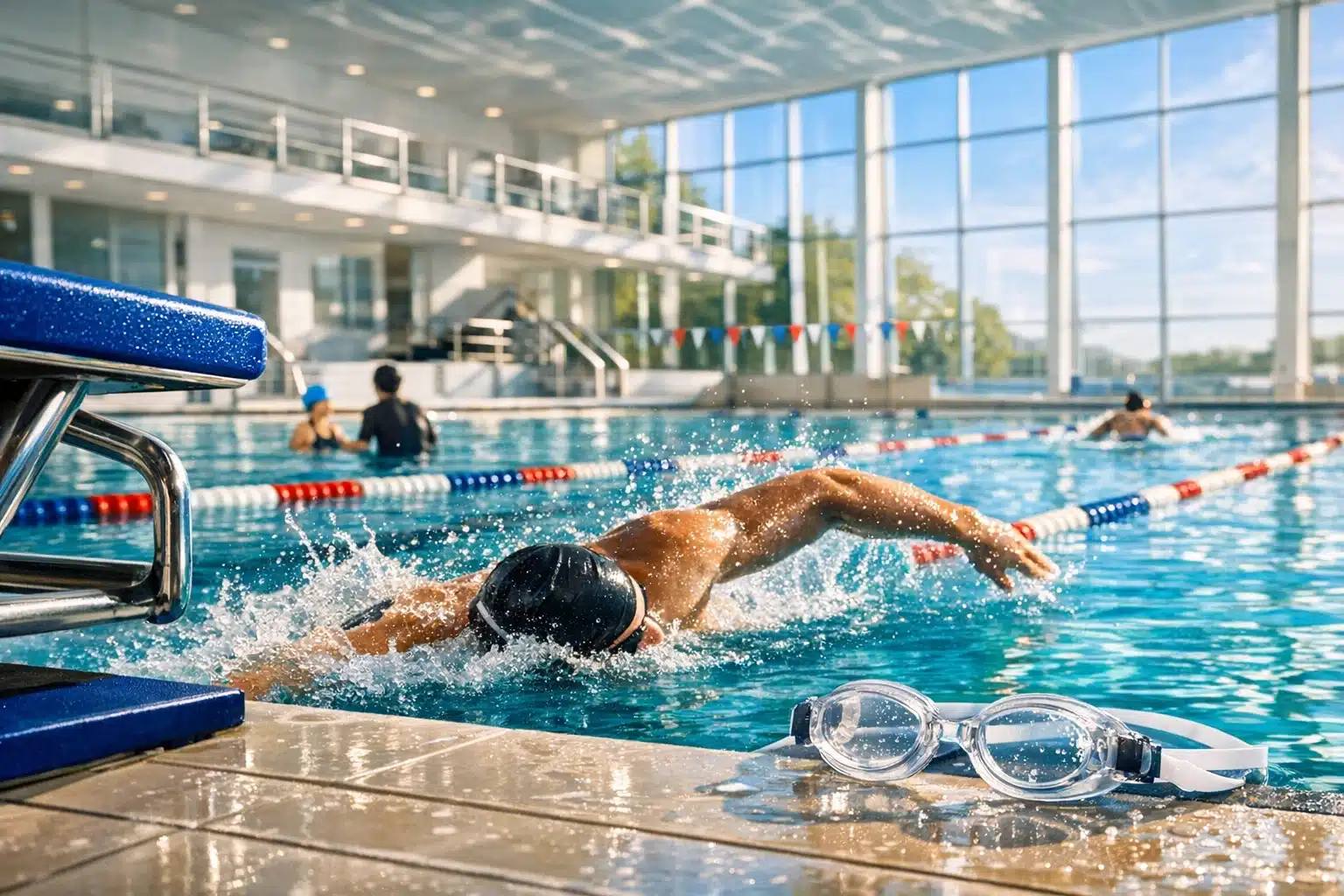
- Freestyle is usually the first stroke taught for speed and efficiency. It relies on a streamlined body position, alternating arm recovery, and steady flutter kicks. Because the face is in the water much of the time, breathing technique becomes central. Freestyle is generally the fastest stroke and the most common choice for fitness lap swimming.
- Backstroke flips the experience. The swimmer remains face up, which removes the stress of front-facing breathing but introduces new challenges with balance and direction. It can feel freeing for some beginners, though maintaining a straight line without visual reference takes practice.
- Breaststroke is often seen as approachable because the head can rise more frequently and the pace may feel calmer. However, its timing is technical. The pull, breath, kick, and glide must connect smoothly, and inefficient timing can waste a lot of energy.
- Butterfly is the most physically demanding of the four for many swimmers. It uses a wave-like body motion, simultaneous arm recovery, and a dolphin kick that depends on rhythm more than brute force. When done well, it looks powerful and graceful; when done poorly, it feels like wrestling the water.
Freestyle is usually the most practical stroke for endurance and conditioning, while backstroke offers a valuable counterbalance because it opens the chest and changes shoulder mechanics. Breaststroke is slower but highly useful for teaching timing and control, and it remains popular in recreational swimming because many people find the breathing pattern less intimidating. Butterfly, though often reserved for advanced swimmers, improves body awareness and develops explosive coordination in a way few other movements can match.
Technique matters more than many beginners expect. A stronger swimmer does not always move faster because of bigger muscles; often, the difference comes from better alignment, cleaner entry, smarter rotation, and less drag. In water, wasted movement is expensive. That is why coaches spend so much time on drills that may look repetitive from the outside. A fingertip change in hand entry or a calmer kick can transform a swimmer’s efficiency. Choosing a stroke, then, is not only about preference. It is about understanding what the water rewards: balance, timing, and respect for mechanics.
Physical and Mental Benefits of Swimming
Swimming earns its reputation as a full-body workout for good reason. Few activities recruit so many major muscle groups at once while also demanding sustained cardiovascular effort. The shoulders guide the pull, the back stabilizes and powers rotation, the core keeps the body aligned, the hips drive momentum, and the legs add propulsion through kicking. Even when the motion appears smooth and almost effortless, the body is constantly making adjustments against resistance. Unlike lifting a weight through one plane of motion, swimming asks the body to control itself in a moving environment, which adds a layer of coordination that many dry-land exercises do not require.
From a fitness perspective, swimming can serve several goals at once. Steady laps build aerobic endurance, interval sets improve speed and recovery, and technique work sharpens efficiency. Public health guidance commonly recommends at least 150 minutes of moderate physical activity per week for adults, and swimming can contribute meaningfully to that target. A swimmer who completes several moderate sessions a week is not just burning energy in the moment; they are also supporting heart health, lung function, and overall stamina. Because water reduces impact, many people find they can stay consistent with swimming even when running or court sports feel too harsh on the body. Consistency, more than intensity alone, is usually what changes fitness over time.
The benefits are not purely physical. Swimming has a mental quality that is hard to copy elsewhere. The repeated strokes, measured breathing, and muffled sound of the water can create a rhythm that feels almost meditative. For some people, the pool becomes one of the few places where attention narrows in a healthy way. You count laps, notice your exhale, correct your line, and for half an hour the noise of work, messages, and deadlines loses volume. That does not mean swimming is a cure for stress or emotional difficulty, but it can be a reliable support habit that improves mood, focus, and sleep.
There is also a confidence factor that grows quietly. Progress in swimming is often subtle at first: fewer stops at the wall, smoother breathing, a more relaxed float, a longer distance without panic. These are meaningful wins, especially for adults who enter the pool with hesitation. Unlike some forms of exercise that reward aggression or spectacle, swimming rewards patience. It teaches the body to work with the environment instead of fighting it. That lesson carries beyond the water. A person who learns to stay calm, breathe steadily, and keep moving when the first few minutes feel difficult is practicing more than fitness; they are practicing composure.
How to Start Swimming, Train Effectively, and Stay Safe
Beginning swimming can feel intimidating, especially for adults who believe everyone else learned years ago. In reality, pools are full of people at very different stages. Some are training for triathlons, some are recovering fitness after a break, and some are simply learning not to tense up in chest-deep water. The smartest way to begin is not by chasing distance immediately, but by building comfort. That means getting used to submerging the face, exhaling underwater, floating on the front and back, and moving a short distance with control. Confidence is the foundation on which technique sits. Without it, even strong bodies struggle.
A few basics make the early experience easier:
- A comfortable swimsuit that allows free shoulder movement
- Goggles that fit well without leaking
- A swim cap if needed for hair control or pool rules
- A kickboard or pull buoy for selected drills, ideally under instruction
- Access to a beginner-friendly pool or a qualified instructor
Once a swimmer is comfortable in the water, structure becomes more useful than random laps. A simple session might include a warm-up, a short drill set, a main set, and an easy cooldown. For example, a beginner could swim short lengths with rest breaks, focusing on smooth exhalation rather than speed. An intermediate swimmer might alternate easy and moderate efforts to improve endurance. More advanced athletes often use interval training, pace work, and stroke-specific sets. The principle is the same at every level: quality matters. Ten lengths with good body position and controlled breathing will usually do more than twenty rushed lengths with collapsing technique.
Safety deserves equal attention. In pools, that means knowing the lane rules, entering the water carefully, respecting lifeguards, and avoiding overconfidence. In open water, the stakes rise. Currents, temperature, visibility, boats, and sudden fatigue can turn an enjoyable swim into a dangerous one. Open-water swimmers should avoid swimming alone, use visible gear when appropriate, and understand local conditions before getting in. Even strong pool swimmers can be surprised by waves or cold water, because the environment changes everything.
There is also a training mindset worth keeping. Improvement in swimming is rarely linear. Some days the water feels friendly; on others it seems to resist every stroke. That is normal. Progress often comes from patient repetition: one better breath, one cleaner turn, one calmer length. A swimmer who learns to respect technique, train gradually, and prioritize safety builds a habit that can last for years rather than weeks. In swimming, the smartest path is usually not dramatic. It is steady, observant, and quietly effective.
A Practical Conclusion for Beginners, Families, and Fitness Seekers
For readers wondering whether swimming is worth their time, the clearest answer is that it offers unusual value across different stages of life. If you are a beginner, it gives you a practical skill that can improve safety and confidence. If you are a parent, it offers your child not only exercise and coordination, but also familiarity with an environment that demands respect. If you are returning to fitness, it provides a way to work hard without the impact that often discourages consistency. And if you already enjoy sport, swimming can sharpen endurance, technique, and body awareness in ways that carry into other activities.
What makes swimming especially appealing is that there is no single correct reason to do it. Some people arrive at the pool with competitive ambition; others come because they need movement that feels sustainable. Some want the solitude of early morning laps, while others enjoy lessons, clubs, or group sessions. The water makes room for all of them. That flexibility matters in real life, where goals change. A teenager chasing medals may one day swim for stress relief during university, then later return to the pool for general health. Few activities adapt so well to changing bodies, schedules, and motivations.
If you want a practical way to begin, keep it simple:
- Book one lesson or one supervised session instead of making a huge long-term promise
- Focus first on breathing, floating, and comfort rather than speed
- Swim short distances with rest instead of forcing long, exhausting efforts
- Track small improvements such as smoother strokes or fewer pauses
- Choose consistency over perfection, because regular practice builds trust in the water
The most important idea for the target audience, especially newcomers and health-focused readers, is this: swimming does not demand that you become an expert before it becomes useful. It starts paying off early. A little more confidence, a little better stamina, and a little less fear already matter. Over time, those small gains begin to connect. The pool no longer feels unfamiliar. Breathing settles. Movement becomes cleaner. What first seemed technical starts to feel natural. In that moment, swimming stops being just another exercise option and becomes something richer: a skill you carry, a routine you can return to, and a quiet source of strength that keeps meeting you where you are.