Exploring Economy: Global economic trends and forecasts.
Global economics can feel like weather on a planetary scale: a storm in shipping, a heatwave in energy markets, or a policy change in Washington or Beijing can alter conditions almost everywhere. For households, it shapes prices, wages, savings, and borrowing costs. For businesses, it influences demand, investment, hiring, and risk. Understanding the big trends makes the headlines less noisy and the future a little easier to read.
Outline:
• The uneven rhythm of global growth
• Inflation, interest rates, and the new cost of money
• Trade routes, energy markets, and supply-chain rewiring
• Technology, labor, and the productivity question
• Forecasts and what the next cycle may mean for readers, firms, and investors
The Uneven Rhythm of Global Growth
Global growth has returned after the sharp disruptions of the early 2020s, but the recovery has not moved in a straight line, and it has certainly not moved at the same speed everywhere. Major international institutions have recently placed world GDP growth around the low-3% range, which is respectable in isolation but softer than the long pre-pandemic average. That gap matters. It tells us that the global engine is running, yet not at full power. Instead of one synchronized boom, the world economy looks more like an orchestra tuning up: some sections are confident and loud, others are cautious, delayed, or playing in a different key.
The United States has remained more resilient than many analysts expected, supported at various points by consumer spending, still-solid labor markets, and fiscal programs that helped sustain demand. The euro area, by contrast, has had a more difficult path. Energy shocks, weak industrial activity, and uneven consumer confidence have weighed on growth. China has continued to expand, but at a slower pace than in the investment-heavy years that once defined its rise. Property-sector stress, local government debt, and a gradual shift away from old growth models have all changed the picture. Meanwhile, India and several Southeast Asian economies have often looked comparatively dynamic, helped by demographics, services exports, infrastructure investment, and growing digital ecosystems.
Three broad patterns stand out:
• Advanced economies are growing, but many are doing so below trend.
• Emerging markets are not moving as a single bloc; some are accelerating while others are constrained by debt, currency weakness, or commodity dependence.
• Regional shocks now travel faster because capital flows, trade links, and supply chains are deeply interconnected.
Commodity-exporting economies add another layer to the story. Countries selling oil, gas, metals, or agricultural goods can benefit sharply when prices rise, yet they can also suffer abrupt reversals when demand cools or inventories rebuild. Tourism-dependent economies have seen their own cycle, with strong rebounds where travel returned quickly, but more fragile conditions where inflation reduced discretionary spending.
The practical lesson is simple: “the global economy” is not one machine with one speed setting. It is a network of linked but distinct systems. Investors, business owners, and households should resist broad generalizations. A rate cut in one country, a manufacturing slump in another, or a stronger services sector elsewhere can produce very different effects. Reading growth today requires a regional lens, because the global average often hides the real story.
Inflation, Interest Rates, and the New Cost of Money
If growth is the speedometer of the economy, inflation is the pressure gauge everyone suddenly watches when it spikes. The inflation surge that followed the pandemic years was driven by a mix of reopening demand, supply bottlenecks, energy shocks, labor shortages in key sectors, and unusually loose financial conditions carried over from the crisis period. In many countries, consumer prices rose at rates not seen for decades. Central banks responded with aggressive tightening, pushing interest rates higher at one of the fastest paces in recent history. That shift changed the financial climate for nearly everyone, from first-time homebuyers to multinational corporations.
By 2024 and into 2025, inflation had moderated in many economies, especially in goods categories where supply chains improved and shipping costs normalized. Yet the fight was not entirely over. Services inflation often remained stickier, reflecting wage pressures, housing costs, and the slower way service industries adjust. This is why policymakers became more cautious even as headline inflation cooled. A drop from very high inflation to merely moderate inflation is progress, but it is not the same thing as victory.
Comparisons between central banks are revealing. The U.S. Federal Reserve tightened forcefully and then became more data-dependent as inflation eased and growth held up. The European Central Bank also raised rates substantially, though against the backdrop of weaker growth and a more energy-sensitive economy. Some emerging market central banks, including in parts of Latin America, moved earlier than developed peers because they are often quicker to defend currencies and contain inflation expectations. Japan remained the outlier for longer, shaped by a different inflation history and years of ultra-loose policy.
Higher rates affect the economy through several channels:
• Borrowing becomes more expensive for households and businesses.
• Asset prices, especially rate-sensitive ones, may reprice.
• Governments face larger debt-servicing costs over time.
• Savers can finally earn more on deposits and short-term instruments.
This new cost of money has created clear winners and losers. Borrowers with floating-rate debt have felt pressure quickly. Real estate sectors dependent on cheap financing have faced slower activity. Banks have generally benefited from wider interest margins, although they have also had to manage funding risks and loan quality carefully. For ordinary households, the picture is mixed: higher yields on cash are welcome, but mortgage payments, credit costs, and everyday living expenses can still strain budgets.
The deeper change is psychological as much as mathematical. For years, markets were shaped by the assumption that money would remain unusually cheap. That era appears less secure. Even if rates gradually decline, the long stretch of near-zero borrowing costs may not return soon. In that sense, inflation did more than raise prices; it reset expectations about how finance works.
Trade Routes, Energy Markets, and Supply-Chain Rewiring
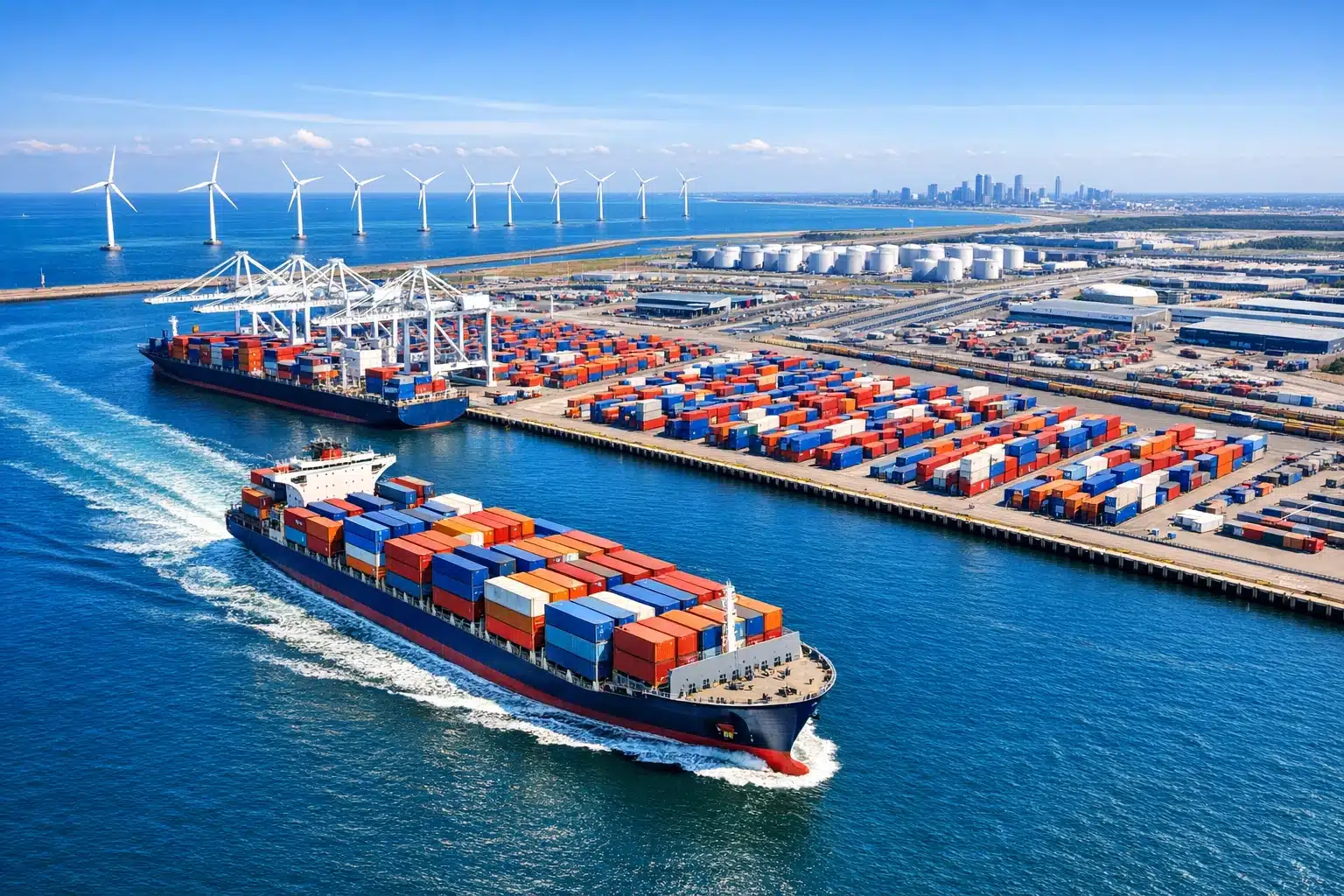
Trade used to be discussed mainly in terms of efficiency: where goods could be made fastest, cheapest, and at scale. That logic still matters, but recent years have added a new vocabulary: resilience, redundancy, strategic autonomy, and friendshoring. Companies and governments learned, sometimes painfully, that a supply chain optimized only for cost can become fragile when ports clog, wars disrupt transport routes, sanctions reshape commerce, or essential components come from too few sources. The result is not the end of globalization, but a more selective and guarded version of it.
Energy has been at the center of this shift. Oil and gas markets remain globally influential, yet they have become more politically and geographically complicated. Europe’s response to the shock in gas supply forced rapid diversification, new infrastructure investment, and a stronger push toward renewables and liquefied natural gas imports. Energy-importing countries have had to manage inflation and trade deficits when prices jumped, while exporters enjoyed revenue windfalls, at least temporarily. Electricity prices, grid constraints, and industrial energy demand now shape competitiveness almost as much as labor costs in some sectors.
Supply chains are being redesigned in visible ways. Semiconductor production has become a strategic priority in several economies. Critical minerals such as lithium, cobalt, nickel, and rare earth elements have gained attention because they are essential to batteries, electronics, and clean-energy technologies. Firms that once relied on a single production hub are increasingly spreading risk across multiple countries. In boardrooms, the old phrase “just in time” is often being balanced by a newer instinct: “just in case.”
Common corporate responses include:
• Holding larger inventories of crucial inputs.
• Diversifying suppliers across more than one country.
• Moving part of production closer to end markets.
• Investing in digital tracking tools for logistics and procurement.
These changes come with trade-offs. More resilient supply chains can be safer, but they are not always cheaper. Redundancy costs money. New factories require time, skilled workers, and stable regulation. Trade fragmentation can also reduce efficiency if political blocs become too rigid. In the short run, firms may face higher costs. In the long run, they may buy insurance against severe disruption.
For consumers, these issues may sound abstract until they become visible in empty shelves, shipping delays, or sudden price spikes in products that depend on imported parts. For investors, trade and energy shifts are increasingly central to sector analysis. Industrial policy, shipping security, and resource access are no longer side notes; they are now part of the main script. The global economy still moves goods across oceans, but it does so with a more anxious map in hand.
Technology, Labor Markets, and the Productivity Question
Technology is often presented as the grand solution to economic slowdown, but its real effect is usually slower, messier, and more uneven than the headlines suggest. Artificial intelligence, automation, cloud infrastructure, digital payments, and data tools are already reshaping how businesses operate, yet their economic value depends on adoption, training, regulation, and complementary investment. A clever tool does not raise national productivity on its own. It must be integrated into actual workflows, accepted by workers, funded by firms, and matched with the right skills. In economics, as in architecture, the blueprint matters less if the foundation is weak.
Labor markets have remained surprisingly firm in many economies even during softer growth periods. In several advanced countries, unemployment has stayed historically low or moderate because labor supply has been constrained by aging populations, early retirements, health-related exits, and sector mismatches. Employers in healthcare, logistics, engineering, hospitality, and skilled trades have often struggled to fill roles. At the same time, many workers have had to adapt to hybrid work, automation pressure, and a wider premium on digital competence. The result is a labor market that can look strong from one angle and strained from another.
Comparisons across regions are instructive. The United States has often shown a quicker ability to absorb new technologies, scale startups, and reallocate capital, which can support productivity bursts. Europe benefits from advanced industrial capacity and strong institutions, but it sometimes moves more slowly in commercialization and market integration. Emerging economies have their own advantage: in some cases, they can leapfrog older systems entirely. Mobile banking, digital identity tools, and low-cost fintech platforms have expanded financial access in parts of Asia, Africa, and Latin America more rapidly than traditional banking once did.
Several forces will shape productivity in the years ahead:
• AI may improve output in coding, design, research, customer service, and back-office operations.
• Education and retraining will determine whether workers complement technology or are displaced by it.
• Demographics will pressure countries with shrinking workforces to produce more with fewer people.
• Public infrastructure, from energy grids to broadband, will influence how widely gains are shared.
The biggest economic question is not whether technology will matter; it unquestionably will. The real question is who captures the benefits, how quickly they spread, and whether they raise living standards broadly rather than concentrating gains in a few sectors or cities. Productivity growth is the quiet hero of long-term prosperity because it allows wages and profits to rise without relying solely on more debt, more hours, or more inflation. If the next decade delivers a genuine productivity revival, it could soften many fiscal and demographic challenges. If it does not, the world may face more distributional conflict over slower-growing pie slices.
Conclusion: Forecasts and What the Next Cycle May Mean for Readers
The most likely short- to medium-term outlook is neither a dramatic boom nor an inevitable collapse. A reasonable baseline is continued global growth at a moderate pace, easing inflation compared with recent peaks, and interest rates that normalize only gradually rather than suddenly. That would mean a world economy still expanding, but with less room for policy error and less tolerance for financial excess. In practical terms, many countries may avoid severe recession while still feeling economically uncomfortable: growth positive, confidence uneven, and budgets tight.
Three broad scenarios help make sense of the road ahead:
• Baseline scenario: inflation continues to cool, central banks cut cautiously, employment softens only mildly, and growth remains modest.
• Upside scenario: productivity improves faster through technology adoption, supply chains stabilize, and investment strengthens without reigniting inflation.
• Downside scenario: energy shocks, geopolitical conflict, debt stress, or climate-related disruptions push prices higher and weaken demand at the same time.
For households, this environment rewards financial flexibility. Emergency savings, manageable debt, diversified income sources, and attention to interest-rate exposure matter more when policy is less predictable. For businesses, capital discipline becomes crucial. Companies that can balance efficiency with resilience, invest in skills, and understand shifting demand patterns should be better positioned than firms relying on cheap money and fragile logistics. For investors, broad diversification still matters, but so does a closer reading of themes such as infrastructure, energy transition, digital productivity, healthcare demand, and regional policy divergence.
Governments face a harder balancing act than the one that defined the era of low inflation and ultra-cheap financing. They must support growth, fund defense or energy security where needed, manage aging populations, and invest in climate adaptation without allowing debt burdens to spiral. That is not a simple equation. It requires prioritization, institutional credibility, and better long-range planning than many political systems naturally produce.
For readers trying to interpret the flood of economic news, the key is not to chase every headline like a leaf in the wind. Watch the underlying drivers instead: inflation trends, wage growth, business investment, trade flows, energy prices, and productivity. Those forces tell a deeper story than daily market noise. The world economy is entering a phase defined less by easy assumptions and more by careful navigation. That may sound less glamorous than the language of booms and crashes, but for anyone making real decisions with real money, it is usually the more useful truth.