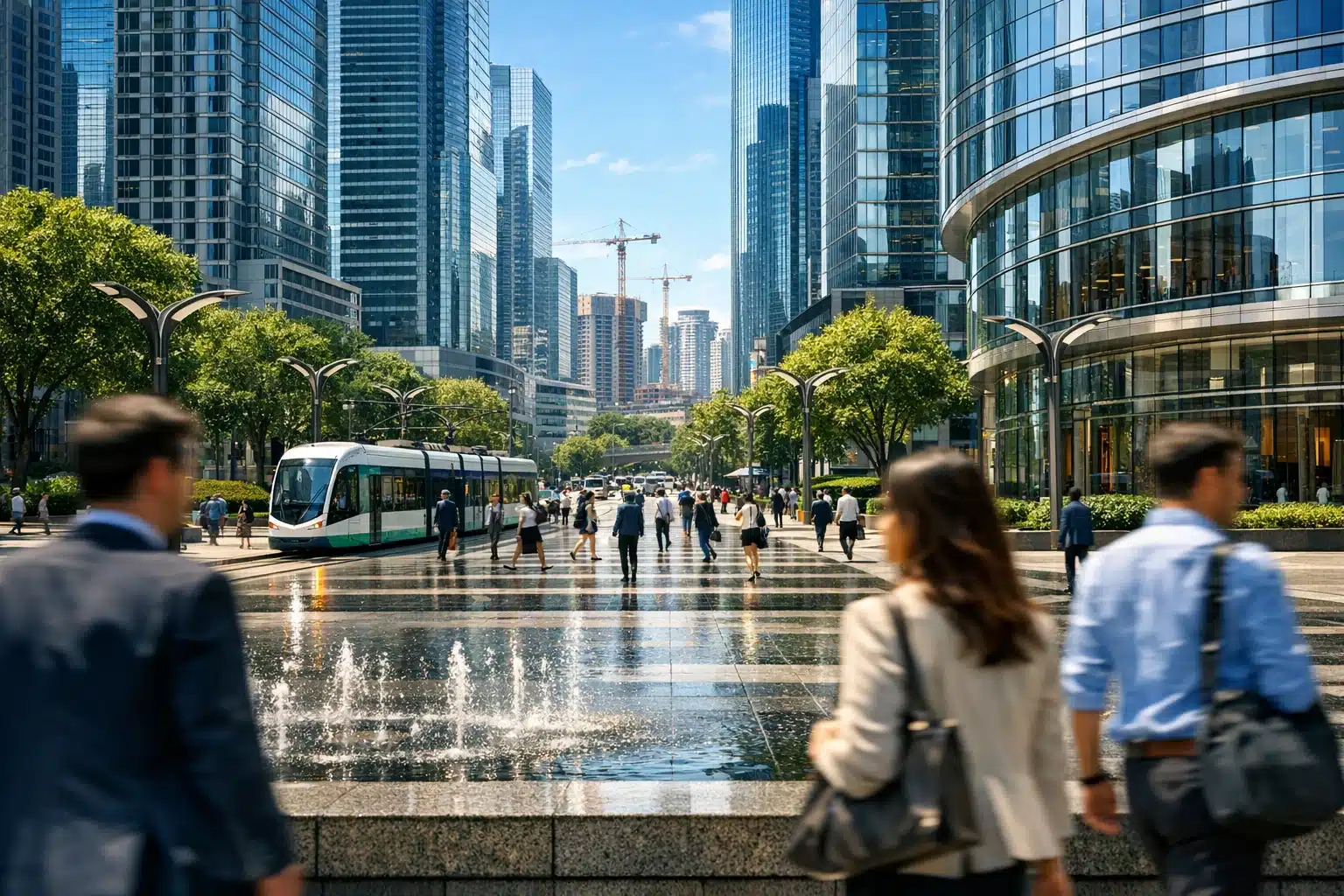
Exploring Society: Innovations and tech advancements impact on society.
Introduction
Society never changes in a straight line; it bends around inventions, habits, crises, and hopes. From smartphones and remote work platforms to artificial intelligence and digital payments, technology now shapes how people learn, earn, argue, organize, and imagine the future. That makes this topic more than a story about gadgets, because every technical leap also rearranges power, opportunity, trust, and daily routines. Understanding these shifts helps readers judge which innovations truly serve communities and which ones demand caution, regulation, or redesign.
Article Outline
This article moves from the broad social effects of innovation to the concrete choices facing citizens, workers, families, and institutions. It begins by explaining how technological change alters social structure, then looks at work and education, public debate and community life, and the influence of digital systems on identity, health, and everyday routines. It closes with a practical conclusion aimed at readers who want to think critically rather than passively about the future.
- The transformation of social structure through innovation
- Work, education, and inequality in a tech-driven age
- Media, community, and democratic life online
- Identity, wellbeing, and the culture of constant connection
- How readers can respond to change with judgment and balance
1. Innovation Changes Social Structure, Not Just Convenience
Many people first notice innovation through convenience. A phone replaces a map, a banking app replaces a queue, and a video call replaces a commute across town. Yet the deeper story is not convenience but structure. Technology changes the patterns that organize society: who has access to information, who controls communication, how communities are formed, and how institutions distribute power. In earlier centuries, the printing press widened access to ideas and weakened the monopoly of a few gatekeepers. Electricity extended the working day and reshaped industry and domestic life. Today, the internet and networked devices play a similar role, but at a far greater speed and scale.
More than 5 billion people now use the internet worldwide, which means digital systems are no longer niche tools for specialists. They are the infrastructure of modern life. A job application, a school portal, a transport ticket, a tax form, and even a neighborhood discussion may now depend on a screen and a connection. This shift has created remarkable gains. Information that once sat behind walls of geography, bureaucracy, or cost can now travel almost instantly. Small businesses can reach customers far beyond their local street. Citizens can document events in real time. Social movements can grow faster than they could in the age of leaflets and landlines.
At the same time, every infrastructure produces its own dependencies. When a society organizes daily life around platforms, algorithms, and data systems, private design decisions begin to shape public experience. A change to a recommendation system can affect what millions of people read. A software rule can influence who receives visibility, opportunity, or service. This is why innovation must be understood as social architecture. It builds invisible corridors through which attention and advantage flow.
A useful comparison is the difference between a tool and an environment:
- A tool helps with a task and can be put away.
- An environment shapes behavior even when people are not consciously thinking about it.
- Modern digital systems increasingly act like environments.
That distinction matters. Once technology becomes the setting in which education, employment, shopping, friendships, and politics occur, society is not simply using innovation. Society is being reorganized by it. The question, then, is not whether innovation is good or bad in the abstract. The better question is who benefits, who is excluded, and what kind of social world is being built beneath the glow of efficiency.
2. Work, Education, and the New Shape of Inequality
Few areas show the social impact of innovation more clearly than work and education. In offices, warehouses, hospitals, classrooms, and shops, digital systems now affect scheduling, hiring, training, performance review, and communication. Automation has reduced some repetitive tasks, while software has expanded the reach of highly skilled workers. A designer can collaborate with a team on another continent. A teacher can share lessons with thousands of students. A small firm can use cloud tools once available only to large corporations. These changes can increase productivity and flexibility, but they do not distribute rewards evenly.
One major benefit is access. Remote learning platforms, online libraries, and low-cost digital courses have opened doors for many people who were previously blocked by distance or expense. During the pandemic years, technology helped schools and businesses continue operating under difficult conditions. Hybrid work also gave some employees more autonomy over time and travel. For parents, caregivers, and people with disabilities, this flexibility has sometimes meant stronger participation in economic life.
Still, access is not the same as equality. International estimates suggest that billions of people either remain offline or lack reliable, affordable, high-quality connectivity. The digital divide is not only about devices; it includes bandwidth, digital literacy, language barriers, and institutional support. A student with a laptop, quiet study space, and strong broadband has a very different educational experience from a student trying to learn on a shared phone with unstable data access. The gap is visible between countries, but also within them, especially across rural and urban areas and across income levels.
The labor market shows a similar pattern. Technology tends to reward workers who can design systems, interpret data, manage complex tools, or adapt quickly to changing workflows. Meanwhile, routine tasks are more exposed to automation or closer monitoring. Platform-based work has created income opportunities for many people, yet it has also raised questions about job security, benefits, and bargaining power. A delivery app may offer flexibility, but flexibility without protection can easily become instability.
Several pressures now shape inequality in the digital age:
- Skills change faster than formal education systems often can.
- High-paying work increasingly clusters around digital competence.
- Workers may be managed by metrics they cannot see or challenge.
- Educational advantage compounds when families can invest in devices, tutoring, and connectivity.
The social lesson is clear: innovation by itself does not guarantee mobility. Without policy, training, labor protections, and public investment, technology can widen the distance between those who can navigate new systems and those who are expected to survive inside them. A society that celebrates innovation but neglects inclusion risks confusing technical progress with social progress. They are related, but they are not identical.
3. Media, Community, and Democratic Life in a Networked World
If previous generations met society through newspapers, radio, schools, churches, trade unions, and town squares, many people now encounter it through feeds, notifications, video clips, and group chats. This change has transformed public life. Digital platforms allow people to gather around causes, identities, hobbies, and local concerns with remarkable speed. A neighborhood can coordinate flood relief through messaging apps. Volunteers can raise funds across borders in a day. Social movements can amplify voices that traditional institutions once ignored. In this sense, technology has democratized participation by lowering barriers to publishing, organizing, and responding.
Yet public life online is not simply more open; it is also more volatile. The same systems that spread useful information can also spread rumors, outrage, manipulation, and staged conflict. Attention has become a competitive economy, and emotional intensity often performs better than patience or nuance. This matters because democratic society depends on a shared factual baseline, even when citizens disagree strongly on values or policy. When platforms reward speed, certainty, and conflict, public debate can become thinner and harsher.
Consider how information once moved through slower channels. Editors, broadcasters, and institutions acted as filters, sometimes imperfectly and sometimes with their own biases. Today, those filters have weakened. That brings freedom, but it also shifts responsibility onto users who may not have the time, training, or incentives to verify claims before sharing them. A manipulated image, misleading headline, or selective video clip can shape opinion before corrections ever arrive. The result is a social environment in which visibility is often mistaken for truth.
There is also the question of community quality. Online connection can be meaningful, especially for people separated by geography, disability, caregiving duties, or minority experiences. For many, digital communities offer real belonging. But connection is not always solidarity. A large audience is not the same thing as mutual responsibility, and a stream of reactions is not the same as dialogue. Communities are strongest when they can sustain trust, disagreement, memory, and care over time.
Healthy digital public life often depends on a few practical habits:
- Checking the source before sharing a claim
- Distinguishing evidence from performance
- Following credible institutions as well as individual voices
- Making room for slower conversation instead of instant outrage
The networked world has not destroyed democracy or community, but it has changed the conditions under which they operate. The social challenge is to preserve openness without surrendering judgment, and to use connected tools in ways that deepen citizenship rather than flatten it into noise.
4. Identity, Wellbeing, and Everyday Life Under Constant Connection
Technology shapes society not only through institutions but through the quiet choreography of ordinary life. Think of a typical morning. Before feet touch the floor, a person may check messages, headlines, calendar alerts, weather apps, and health data. The day begins with a glowing dashboard of priorities, expectations, and comparisons. This is where innovation becomes intimate. It influences attention, self-image, emotional rhythm, and the sense of what counts as a normal life.
Social media offers one clear example. It gives people tools for expression, creativity, networking, and community discovery. Artists can build audiences without old gatekeepers. Young people can find language for experiences that once felt isolating. Families separated by borders can remain part of one another’s daily routines. None of these benefits should be dismissed. They are real and often deeply human. But the same platforms can also encourage relentless comparison, fragmented attention, and pressure to perform a polished version of the self. Research on digital media and mental health is complex, but many studies suggest links between heavy or poorly managed use and problems such as anxiety, sleep disruption, and lower wellbeing, especially when engagement becomes passive or compulsive.
Another important shift involves data and personalization. Recommendation systems suggest what to watch, read, buy, and even how to exercise or date. Sometimes this feels helpful, almost like a well-read assistant who knows your habits. Sometimes it feels uncanny, as if your preferences have been mapped before you finished forming them. Personalization can save time and improve relevance, yet it can also narrow exposure. If people mostly see what aligns with previous behavior, they may encounter fewer surprises, fewer opposing views, and fewer opportunities for broad cultural exchange.
The effects are especially significant for young people, whose identities are still developing. Earlier generations also faced social pressure, of course, but the pressure was often local and temporary. Today it can be searchable, shareable, and persistent. A mistake, rumor, or moment of embarrassment can travel far beyond the original setting. This changes how risk, reputation, and belonging are experienced.
Several questions help make sense of technology’s influence on daily wellbeing:
- Does a tool help people act intentionally, or does it encourage reflexive behavior?
- Does it strengthen relationships, or mainly generate visibility?
- Does it support rest, focus, and privacy, or constantly interrupt them?
- Does it widen curiosity, or trap users in repetition?
A healthy society does not reject innovation, but it does ask whether convenience is coming at the cost of concentration, dignity, and inner balance. The most advanced society is not the one with the most notifications. It is the one where technology serves human flourishing rather than quietly colonizing every spare moment.
5. Conclusion for Readers: Building a Society That Uses Innovation Wisely
The impact of innovation on society is not a distant academic topic. It is already present in the classroom login, the hiring algorithm, the family group chat, the delivery app, the news feed, and the smart device on the kitchen counter. That is why readers, whether they are students, workers, parents, business owners, or community members, should think about technology as a civic issue as much as a personal one. The central lesson of this article is simple: innovation brings real gains, but those gains do not automatically produce fairness, trust, or wellbeing.
For ordinary readers, this means replacing passive admiration with active evaluation. A useful innovation should be judged not only by speed and novelty, but by broader social outcomes. Does it widen access? Does it protect dignity? Does it make important decisions understandable? Does it strengthen community life or merely monetize attention? These are not abstract questions for policymakers alone. They are practical questions that shape how families choose devices, how schools adopt platforms, how employers manage workers, and how citizens respond to digital information.
A balanced response to technological change often includes a few grounded habits:
- Learn how the systems you use collect data and shape choices.
- Support education that builds digital literacy, not just device familiarity.
- Value convenience, but not at the expense of privacy or fairness.
- Expect accountability from institutions that deploy powerful technologies.
- Protect spaces for offline thought, face-to-face trust, and slow conversation.
The future of society will not be determined by inventions alone. It will be determined by the rules, values, and public choices wrapped around those inventions. A society can be highly connected and still deeply unequal. It can be efficient and still exhausting. It can be innovative and still unwise. For readers trying to make sense of rapid change, the most important skill may be discernment: the ability to welcome useful tools, question harmful systems, and insist that progress remains accountable to human needs. Innovation matters, but society decides what innovation is ultimately for.