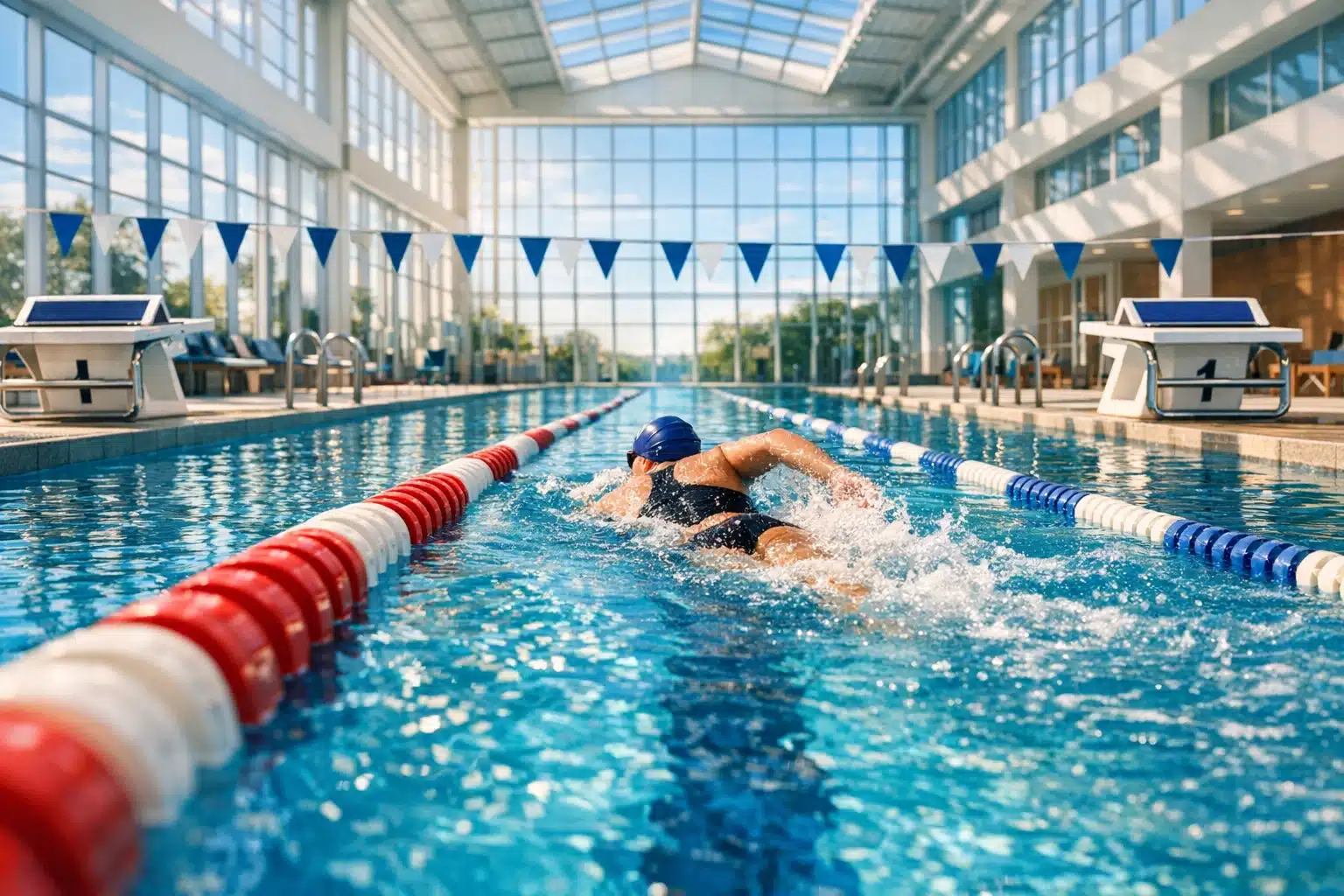
Explore the world of swimming
Swimming is one of the rare activities that feels playful, practical, and demanding at the same time. It can be a life skill, a competitive sport, a gentle form of exercise, and a reliable way to reset the mind after a long day. From neighborhood pools to open-water courses, it links fitness with safety more directly than most other activities. Understanding how swimming works makes every session in the water more confident and more rewarding.
Outline:
• Swimming as a skill, sport, and cultural practice
• The four main strokes and how they compare
• Physical and mental benefits of time in the water
• Learning, training, equipment, and safety habits
• Swimming across different ages, communities, and everyday goals
Swimming as a Skill, Sport, and Cultural Practice
Swimming has been part of human life for thousands of years, long before it became an organized sport with stopwatches, lane ropes, and record books. Ancient wall art from Egypt shows people moving through water, and written references appear in Greek and Roman sources as well. That long history matters because swimming was never only about recreation. It was a tool for travel, military preparation, fishing, survival, and later public health. In modern life, that practical foundation still gives swimming a special status. A person may learn it for fitness, but the skill also carries obvious safety value, especially in communities near rivers, lakes, or coastlines.
As a sport, swimming has grown into a global discipline with multiple branches. Pool racing has been part of the modern Olympic Games since 1896 for men and since 1912 for women. Open-water swimming joined the Olympic program in 2008 with the 10-kilometer event, showing how the sport stretches beyond tiled walls and backstroke flags. Competitive swimming today includes sprint races, distance events, relays, artistic swimming, diving, and water polo through related aquatic organizations, yet lap swimming remains the version most people encounter first. Standard competition pools are usually 25 meters or 50 meters long, and that simple layout has shaped generations of training methods and records.
Compared with land-based activities such as running or cycling, swimming changes the rules of movement because water supports the body while also resisting it. Buoyancy lowers impact on joints, but drag makes progress hard-earned. In air, a small technical mistake may barely matter. In water, poor alignment can feel like trying to move through syrup while wearing a winter coat. That contrast explains why swimming rewards patience and precision as much as effort.
Swimming also lives at the intersection of sport and public life. It appears in schools, community centers, summer camps, rehabilitation clinics, and elite training programs. Its presence is broad because the activity serves many purposes at once:
• exercise for cardiovascular health
• a safer option for people with joint pain
• a social hobby built around clubs or masters groups
• a survival skill that can reduce drowning risk
• a competitive outlet for children and adults
That range is what keeps swimming relevant. It welcomes the person chasing medals, the parent signing up for lessons, and the office worker who simply wants one quiet hour before breakfast. Few activities can honestly say the same.
Understanding the Four Main Strokes and Their Differences
The four main competitive strokes are freestyle, backstroke, breaststroke, and butterfly, and each one feels like a different conversation with the water. Freestyle, usually swum as the front crawl, is the fastest and most efficient for most athletes. The body stays long, the kick remains steady, and the alternating arm action keeps momentum flowing forward. Because the swimmer turns the head to breathe rather than lifting it high, freestyle rewards streamlined positioning. It is the stroke most beginners want to learn for fitness, and for good reason: once technique improves, it becomes the easiest way to cover distance at a steady pace.
Backstroke is often described as freestyle on the back, but the experience is distinct. Breathing is simpler because the face stays out of the water, which makes the stroke less intimidating for some learners. At the same time, body awareness becomes critical because the swimmer cannot see where they are going. Backstroke teaches balance, shoulder rhythm, and trust in line and timing. In training, it can also provide relief after long freestyle sets because it changes posture and muscular emphasis.
Breaststroke is slower than freestyle and backstroke, yet it remains extremely popular. Many casual swimmers choose it because the motion feels controlled and allows regular, forward-facing breathing. The stroke uses a simultaneous arm pull and a whip-like leg kick, with a short glide after each cycle. That glide gives breaststroke its recognizable rhythm, almost like punctuation marks in water. Done well, it looks calm. Done poorly, it can waste energy quickly. It also places different stresses on the hips, knees, and ankles, which is one reason careful instruction matters.
Butterfly is the most dramatic of the four. Two arms recover together over the water, the body undulates, and the dolphin kick drives the stroke from the core. It is powerful, fast over short distances, and physically demanding. Many swimmers describe butterfly as a stroke that exposes every shortcut. When timing slips, fatigue arrives fast. When timing clicks, it feels almost airborne, a brief argument against gravity.
A useful way to compare the strokes is to think about their priorities:
• Freestyle: speed, efficiency, endurance
• Backstroke: balance, shoulder rhythm, easier breathing
• Breaststroke: control, timing, visibility, lower pace
• Butterfly: power, coordination, high energy cost
Across all four, technique matters because water is roughly 800 times denser than air. Small changes in hand angle, head position, or kick timing can reshape the whole stroke. That is why skilled swimmers do not simply move harder. They move smarter.
Why Swimming Is So Effective for Health and Fitness
Swimming stands out as a form of exercise because it trains multiple systems at once. A solid session can raise heart rate, challenge breathing, develop muscular endurance, and improve coordination without the repetitive pounding associated with many land workouts. For people who want aerobic conditioning, that combination is a major advantage. Health organizations such as the World Health Organization recommend that adults get at least 150 minutes of moderate-intensity aerobic activity each week, and swimming can contribute meaningfully to that target. Easy continuous laps, interval sets, or even structured water walking in the shallow end can all support overall activity goals, depending on a person’s age and condition.
One reason swimming feels different from other exercise is buoyancy. When the body is submerged, water supports a significant portion of body weight, which can reduce stress on knees, hips, and the lower back. That makes swimming attractive for people recovering from injury, living with arthritis, or returning to movement after a long break. It is not effortless, though. Water pushes back on every stroke, every kick, and every shift in body position. That resistance can help develop the shoulders, back, chest, core, and legs in a single session. A relaxed swimmer may leave the pool feeling refreshed. A trained swimmer finishing a hard set may feel like every muscle has been politely but firmly reminded of its job.
The cardiovascular benefits are equally important. Repeated swimming can improve aerobic capacity, circulation, and exercise tolerance. Because breathing is timed rather than continuous, swimmers also develop greater awareness of rhythm and respiratory control. In practical terms, this means the sport teaches efficiency under mild physical stress. It is one thing to breathe normally while jogging at an easy pace. It is another to stay calm while inhaling between strokes, flipping at the wall, and keeping technique intact.
There are mental benefits as well. Many swimmers describe the pool as one of the few places where phones, meetings, and noise lose their grip. The soundscape changes, vision narrows, and the mind follows the body into a more deliberate pace. Research on physical activity consistently links exercise with improved mood and reduced stress, and swimming often adds a meditative quality to that effect.
Practical advantages include:
• low-impact conditioning for a wide range of ages
• full-body muscular engagement
• flexible intensity, from gentle movement to elite training
• improved stamina and coordination
• a setting that can support rehabilitation and stress relief
Calorie use varies with body size, stroke choice, and pace, but vigorous lap swimming commonly falls in a broad range of roughly 400 to 700 calories per hour for many adults. The exact number matters less than consistency. In the long run, swimming works because it is adaptable enough to stay in a person’s life.
Learning to Swim, Building Training Habits, and Staying Safe
Learning to swim often begins with something much simpler than perfect strokes: comfort in the water. For beginners, early lessons usually focus on floating, submerging the face, exhaling underwater, and moving to the wall. That foundation may sound basic, but it is essential. People who skip it often carry tension into every later skill. A stiff neck, clenched hands, or rushed breathing pattern can turn a manageable session into a frustrating one. Good instruction builds confidence first, then layers technique on top. That process is especially important for children, but adults benefit just as much. Many adults arrive at the pool with enthusiasm mixed with embarrassment, only to discover that patient coaching solves problems faster than willpower alone.
Once a swimmer can move safely, training becomes a matter of structure. Purposeful sessions usually combine warm-up, drills, main work, and recovery. Drills are valuable because they isolate one skill at a time. A kick set may improve body line. A pull set may sharpen the catch. A breathing drill may reduce panic and improve timing. Over weeks, those details add up. Unlike casual splashing, training in swimming is built on repeatable patterns and measured progress.
A simple progression for newer swimmers might look like this:
• 5 to 10 minutes of easy movement and breathing practice
• short repeats such as 4 x 25 meters with rest between lengths
• one technical focus, like exhaling steadily underwater
• gradual increases in distance rather than immediate speed
• a relaxed finish to reinforce control, not exhaustion
Equipment can help, although no gadget replaces practice. Common items include goggles, a well-fitted suit, a cap for comfort or hair management, a kickboard, a pull buoy, paddles for advanced work, and fins for specific drills. Each tool has a purpose. Goggles improve visibility and reduce hesitation. Fins can help swimmers feel a stronger body position. Paddles add resistance, but they also demand care because poor mechanics under added load can stress the shoulders.
Safety must remain central. The United States Centers for Disease Control and Prevention has reported that drowning is a leading cause of death for children ages 1 to 4, which is why lessons, supervision, and barriers around water are so important. Strong swimming ability lowers risk, but it does not eliminate it. Pools require attention to depth, lane etiquette, and fatigue. Open water adds current, cold, waves, reduced visibility, and navigation challenges. A lake that looks peaceful from shore can feel completely different once a swimmer is fifty meters out.
Useful safety habits include:
• swim where lifeguards are present when possible
• never overestimate endurance
• use a buddy system in open water
• learn local conditions, weather, and entry points
• stop immediately if cramps, dizziness, or chest pain appear
In swimming, progress is rewarding precisely because the environment demands respect. Confidence is good. Calm preparation is better.
Swimming for Every Age: Community, Access, and a Practical Conclusion
One of swimming’s strongest qualities is that it can remain relevant across an entire lifetime. For children, it can begin as water familiarization and basic safety, then grow into lessons that build coordination, confidence, and healthy habits. For teenagers, it may become a school sport, a club commitment, or a summer routine that keeps them active without monotony. Adults often rediscover swimming later, especially when running starts to feel harsh on the joints or when crowded schedules make efficient exercise more valuable. Older adults may turn to the pool because it supports mobility, circulation, and regular movement in a setting that feels manageable rather than punishing.
That broad usefulness does not mean access is equal everywhere. Swimming is shaped by local resources, public investment, culture, and cost. A well-maintained community pool can become a social center, a training venue, and a safety resource all at once. Without facilities, qualified instructors, or affordable programs, many families never get a proper start. This is one reason public swimming initiatives matter. Teaching a child to swim is not only about sport; it can be a meaningful prevention measure. Teaching an adult to swim can change travel choices, confidence levels, and long-term health behavior. Water opens doors when people know how to meet it.
Swimming can also be adapted. Athletes with disabilities compete at elite levels, and recreational programs continue to improve in accessibility through ramp entries, warmer therapy pools, specialized coaching, and modified instruction. In that sense, swimming is not a narrow activity reserved for one body type or age bracket. It is a flexible practice shaped around the swimmer.
For readers deciding whether to begin, return, or improve, the practical message is simple. Start from your actual level, not from an imagined one. If you are new, learn comfort and safety before chasing speed. If you already swim, refine technique because efficiency saves energy better than brute force. If fitness is your goal, consistency will matter more than heroic single sessions.
A realistic path forward might be:
• one or two lessons to correct obvious technical issues
• two or three short swims each week
• a focus on breathing, body position, and relaxed repetition
• gradual increases in distance or pace
• clear safety habits in every environment
Swimming asks for humility, but it gives back range. It can make a person fitter, safer, calmer, and more capable in a setting that many people first meet with uncertainty. For the casual reader, the beginner, the returning athlete, or the parent considering lessons, that is the real conclusion: swimming is worth learning well because its value extends far beyond the pool deck.