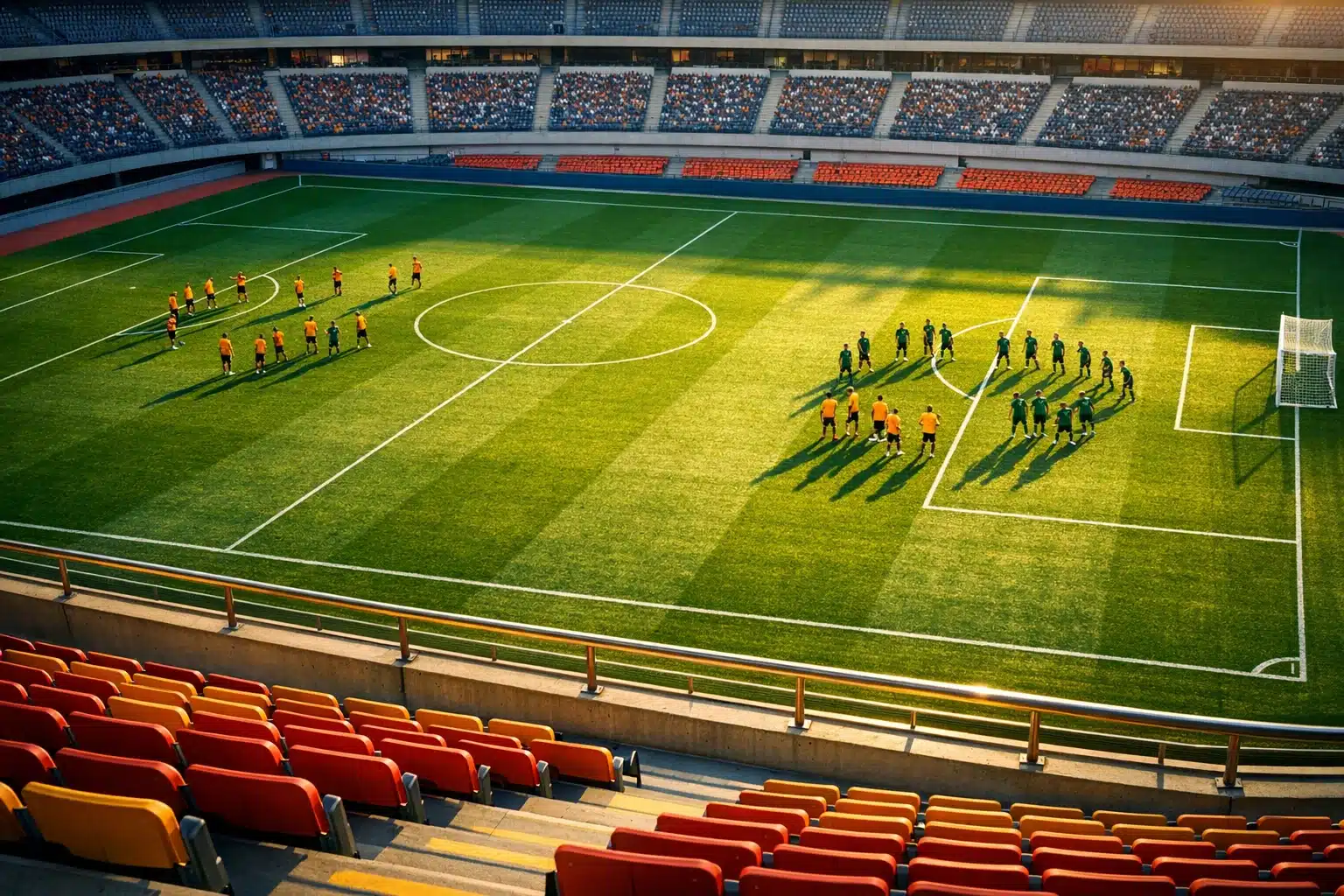
Football: Rules, Positions, and Key Strategies
Football has a rare ability to feel simple at first glance and endlessly layered once you look closer. Two teams, one ball, ninety minutes, and yet every movement carries purpose, risk, and possibility. The sport matters because it connects communities, builds discipline, and creates a shared language understood in stadiums, schools, and streets around the world. To follow it well, it helps to know not just what happens, but why it happens.
Article Outline
- The global appeal and core structure of football
- The rules that shape fair play, flow, and decision-making
- Player positions and how responsibilities differ across the pitch
- Key strategies, formations, and tactical approaches used by teams
- Modern trends, data, coaching ideas, and what today’s audience can learn from the game
1. Football’s Global Appeal and Core Structure
Football is often called the world’s game, and that description is not an empty slogan. It is played professionally in giant stadiums, competitively on school grounds, and casually on dusty streets, beaches, and parks. Few sports ask for so little equipment while offering so much drama. A ball, a marked space, and a group of willing players are enough to begin. That simplicity helps explain why football has become the most widely followed sport on the planet, with billions of supporters tuning in for major tournaments such as the FIFA World Cup, continental championships, and domestic leagues.
At its core, football places two teams of eleven players against each other, with the main objective of scoring more goals than the opponent within the allotted time. A standard match lasts 90 minutes, usually split into two halves of 45 minutes, with stoppage time added by the referee to compensate for delays. In knockout competitions, extra time and penalty shootouts may be used if the score remains level. While this structure sounds straightforward, its beauty lies in the balance between freedom and order. Players improvise constantly, yet every action unfolds within an organized framework.
The field itself shapes the sport. A full-size pitch is rectangular, with goals at each end, a halfway line, penalty areas, and a center circle that controls restarts. These markings are not decorative; they define how teams build attacks, defend dangerous spaces, and restart play after stoppages. Even the dimensions of the pitch can affect style. A wider field may favor possession and wing play, while a tighter one can increase pressure and physical duels.
Football also thrives because it produces layered experiences for different audiences:
- For players, it is a test of stamina, technique, and decision-making.
- For coaches, it is a puzzle of structure, timing, and adaptation.
- For supporters, it is emotional theater where hope can swing in seconds.
- For young learners, it teaches teamwork, patience, and accountability.
Another reason for football’s relevance is its social reach. Clubs can represent neighborhoods, cities, and entire nations. Historic rivalries carry memories across generations, while underdog stories remind audiences that reputation alone does not win matches. A compact team with discipline can frustrate a glamorous opponent filled with star talent. That possibility keeps football honest. The game does not always reward the loudest narrative; often, it rewards concentration, spacing, and effort.
From a developmental perspective, football is also valuable because it encourages several forms of growth at once. Players must read space, communicate quickly, remain physically active, and manage pressure. Young athletes learn when to be bold and when to be patient. In that sense, football resembles a moving conversation. The ball travels, players adjust, defenders respond, and the entire field shifts like a living map. One pass can open a path, one mistake can change momentum, and one smart decision can transform a match.
To understand football deeply, a viewer must first appreciate this foundation: the sport looks fluid, but it rests on strong structure. Once that structure becomes clear, every phase of the game becomes more interesting, from patient buildup to frantic stoppage-time defending.
2. The Rules That Shape the Game
Rules are the invisible architecture of football. Without them, matches would collapse into chaos, and the tension that makes the sport compelling would disappear. The Laws of the Game, maintained internationally by the International Football Association Board, create a common language for teams, referees, coaches, and fans. These rules do more than punish fouls. They protect fairness, define boundaries, regulate restarts, and preserve the rhythm that makes football both strategic and emotionally gripping.
The basic scoring rule is simple: a goal is awarded when the whole ball crosses the whole goal line between the posts and under the crossbar, provided no offense has been committed by the attacking team. Yet the path to that moment is shaped by many layers of regulation. Throw-ins restart play when the ball crosses the touchline. Goal kicks and corner kicks come into effect when the ball crosses the goal line last touched by the defending or attacking side. Free kicks, direct or indirect, respond to various infringements. The penalty kick, perhaps the most dramatic restart in the sport, is awarded when a direct free-kick offense occurs inside the defending team’s penalty area.
One of football’s most discussed and misunderstood rules is offside. A player is in an offside position if any part of the head, body, or feet is nearer to the opponents’ goal line than both the ball and the second-last defender at the moment the ball is played to them, excluding the hands and arms. But being in that position alone is not an offense. The offense occurs only when the player becomes actively involved in play. This rule prevents attackers from simply waiting near goal and forces teams to coordinate movement with precision. A perfectly timed run can split a defense; one step too early can end a promising attack.
Refereeing decisions also shape the emotional pulse of the sport. Yellow cards warn players for unsporting behavior, repeated fouls, dissent, delaying restarts, and other misconduct. A second yellow card or a straight red card sends a player off, leaving their team with fewer players for the remainder of the match. This numerical imbalance can dramatically alter strategy. A team reduced to ten players may defend deeper, counterattack less often, and conserve energy more carefully.
Modern football also includes Video Assistant Referee technology in many major competitions. VAR reviews specific situations such as goals, penalties, direct red cards, and mistaken identity. While it has improved accuracy in some cases, it has also sparked debate about delays, subjectivity, and the emotional interruption of spontaneous celebrations. Still, its presence reflects a broader trend in sport: the attempt to balance human judgment with technological assistance.
Key rules every fan should understand include:
- Matches are normally played in two 45-minute halves.
- Teams usually field 11 players, including one goalkeeper.
- Substitutions are limited by competition rules, though modern tournaments often allow more than older formats did.
- Handball decisions depend on context, body position, and whether the contact is judged illegal under current guidance.
- Serious foul play and violent conduct can result in immediate dismissal.
Rules may appear restrictive, but in football they create creativity. Because players cannot use their hands in open play, they must develop close control, timing, body shape, and spatial awareness. Because offside exists, attacks require choreography. Because fouls carry consequences, physical duels must be measured rather than reckless. The result is a sport in which discipline and imagination constantly meet. Knowing the rules does not reduce the magic; it sharpens it.
3. Positions on the Pitch and Their Responsibilities
If football is a conversation, positions are the voices that give it shape. Every player influences the match, but not in the same way. Roles differ by area of the field, team philosophy, and formation, yet the broad positional map remains essential for understanding how the sport works. The traditional structure divides players into goalkeepers, defenders, midfielders, and forwards. Within these categories are more specialized roles, each carrying technical and tactical demands.
The goalkeeper is the most distinct position. Unlike outfield players, the goalkeeper may use their hands within the penalty area, making them the final barrier against shots. However, modern goalkeeping extends far beyond shot-stopping. Elite goalkeepers are expected to organize the defense, judge crosses, distribute the ball accurately, and sometimes act almost like an extra defender during buildup. The rise of the “sweeper-keeper” reflects how football has evolved: goalkeepers now help control space behind a high defensive line and initiate attacks with quick passing.
Defenders protect the goal, but their responsibilities vary. Center-backs usually mark central attackers, challenge aerial balls, block shots, and maintain the defensive line. Full-backs operate on the left and right sides, balancing defensive duties with support in attack. In older systems, full-backs often stayed deeper, but many modern teams ask them to overlap, deliver crosses, or even move into midfield zones during possession. Some coaches also use wing-backs, who are typically more adventurous and common in formations with three central defenders.
Midfielders are often the strategic heart of a team. They connect defense and attack, control tempo, and respond to shifting phases of play. A defensive midfielder screens the back line, breaks up attacks, and recycles possession. A central midfielder may cover large distances, linking phases through passing and pressing. An attacking midfielder works closer to the forwards, looking for through balls, shots, and pockets of space between opposition lines. In many matches, the midfield battle decides everything. A team can have fast forwards and tough defenders, but if it loses control in midfield, the game can slip away like sand through open fingers.
Forwards carry the clearest objective: create and finish chances. The center-forward or striker usually leads the attacking line, occupies defenders, contests crosses, and aims to score. Wide forwards or wingers stretch the field, beat defenders one-on-one, cut inside to shoot, or supply crosses into the box. Some forwards thrive with explosive pace, others with positioning and timing. A striker may touch the ball only a few times and still decide the match, which makes the role both glamorous and unforgiving.
Common positional roles include:
- Goalkeeper: saves, distribution, command of the penalty area
- Center-back: marking, interceptions, aerial duels, buildup passing
- Full-back or wing-back: defending wide spaces, supporting attacks
- Defensive midfielder: screening, tackling, circulation of possession
- Central midfielder: linking play, pressing, rhythm control
- Attacking midfielder: chance creation, final-third passing, late runs
- Winger: width, dribbling, crossing, inside runs
- Striker: finishing, movement, hold-up play, pressing from the front
Importantly, positions are not cages. The modern game rewards versatility. A midfielder may drop between center-backs during buildup. A full-back may invert into central areas. A winger may become a second striker. What matters is not only where a player starts, but what the team asks them to do in each phase. Once fans begin to see these shifting responsibilities, football becomes richer. The pitch stops looking crowded and starts looking organized, like a chessboard in motion.
4. Key Strategies, Formations, and Tactical Thinking
Football strategy begins with a simple question: how does a team create advantages in space, time, and numbers? Everything else grows from that. Tactics are the methods teams use to attack, defend, press, and transition between phases. Formations such as 4-3-3, 4-2-3-1, 3-5-2, or 4-4-2 are useful starting points, but they are not the whole story. A formation is like the opening shape of a play; once the whistle blows, movement, pressing triggers, and positional rotations tell the real tactical story.
Take the 4-3-3, one of the most commonly used systems in modern football. It often provides width through wingers, numerical support in midfield, and a front line capable of pressing defenders. Teams using this shape may dominate possession by circulating the ball through a holding midfielder and encouraging full-backs to advance. By contrast, a 4-4-2 can offer compactness, defensive balance, and two strikers who work together to press center-backs or attack crosses. A 3-5-2 may help teams control central spaces while using wing-backs to provide width. Each structure carries trade-offs, and strong coaching lies in choosing a system that suits the players available.
Possession-based football aims to control the game through passing, positioning, and patience. The idea is not merely to keep the ball for appearance’s sake, but to move opponents, open gaps, and create higher-quality chances. Quick one-touch combinations, overloads on one side, and switches of play to the opposite flank are common features. This approach can reduce defensive exposure by limiting the opponent’s time on the ball, but it also requires technical quality and concentration. One loose pass in buildup can invite immediate danger.
Counterattacking football follows a different logic. Instead of dominating possession, a team may defend in an organized shape and attack rapidly once the ball is recovered. This strategy is especially effective against opponents who commit many players forward. Fast forwards, direct passes, and well-timed runs are crucial. Some of the most memorable football moments arrive in these sudden bursts: a tackle near midfield, one piercing pass, a sprint into open grass, and the stadium rising before the shot is even taken.
Pressing is another major tactical element. High pressing attempts to win the ball near the opponent’s goal by closing down defenders quickly and cutting off passing lanes. Mid-block defending sits deeper, preserving shape in central areas before applying pressure. Low-block defending protects the penalty area and dares opponents to break through compact lines. No approach is automatically superior. The right choice depends on player fitness, technical skill, match context, and the quality of the opposition.
Important strategic ideas include:
- Width: stretching the defense across the field
- Depth: threatening space behind the back line
- Compactness: keeping players close enough to defend collectively
- Overloads: creating numerical superiority in a zone
- Transitions: reacting quickly after winning or losing possession
- Set pieces: using corners and free kicks as planned attacking opportunities
Set pieces deserve special attention because they can decide tight games. Corners, indirect free kicks, and wide deliveries are rehearsed in training with the precision of stage choreography. Near-post runs, blockers, delayed movement, and second-ball positioning all matter. In elite competitions, a significant share of goals comes from such situations, proving that football is not only spontaneous but also carefully designed.
Ultimately, tactics give the sport its hidden depth. What looks like a simple pass backward may actually be bait for a pressing trap. A winger staying wide may be creating room for an underlapping full-back. A striker dropping deep may pull a defender out of line. Once viewers notice these patterns, football stops being only a contest of effort and becomes a contest of ideas.
5. The Modern Game: Data, Coaching, and What Fans Can Learn
Football today is shaped not only by tradition, talent, and passion, but also by analysis. The modern game has entered an era where coaching staffs examine matches through video, performance metrics, tracking data, and specialized role profiles. This does not mean numbers have replaced intuition. Rather, data has become another lens through which teams understand performance. A coach may still trust experience and observation, but now those instincts are often supported by measurable patterns.
Common statistics such as possession percentage, shots, passes completed, and tackles won remain useful, but more advanced metrics have changed how matches are discussed. Expected goals, often written as xG, estimates the quality of a chance based on factors such as shot location, angle, and type of assist. It does not predict the future or guarantee outcomes, but it helps explain whether a scoreline reflected the overall quality of chances created. A team may win 1-0 despite creating little, or draw after producing several high-quality opportunities. Numbers like this add context to what the eye sees.
Sports science has also transformed training and recovery. Clubs monitor workload, sprint distance, acceleration, and fatigue indicators to reduce injury risk and keep players performing at a high level. Nutrition, sleep, recovery protocols, and individualized training plans are now part of routine professional preparation. The image of football as pure natural flair remains attractive, but behind every elegant first touch is often a huge amount of structured work.
Coaching has grown more specialized as well. Analysts break down opponents into patterns: how they build from the back, where they press, how they defend corners, and which players receive the ball between lines. Youth development systems increasingly train decision-making instead of only repetitive technique. Players are taught to scan before receiving, adjust body orientation, and recognize pressing cues. In modern football, speed of thought can be as valuable as speed of movement.
For fans, all of this adds richness rather than complication. You do not need a coaching license to appreciate the game more deeply. Watching for a few specific details can change the experience:
- Notice how teams shape up when they lose the ball.
- Watch the midfield spacing, not just the ball carrier.
- Observe full-backs and whether they overlap, invert, or stay deep.
- Pay attention to set pieces and the runs made without the ball.
- Compare the scoreline with the quality of chances created.
Football also teaches lessons beyond the pitch. It shows that preparation matters, that systems can amplify talent, and that collective discipline often outperforms individual brilliance when pressure rises. A squad with perfect chemistry can trouble a more famous side. A well-drilled defense can silence a celebrated attack. And a young player given trust at the right moment can change the story of an entire season.
For the target audience, whether new fans, amateur players, students of sport, or casual viewers trying to understand what commentators mean, the modern game offers a rewarding challenge. The more you learn, the more details emerge. A match is never just ninety minutes of running after a ball. It is planning, reaction, courage, structure, and imagination unfolding in real time. Football keeps inviting people back because every game offers a familiar frame with a different answer inside it.
Conclusion: Why Understanding Football Makes the Game More Enjoyable
Football becomes far more rewarding when its rules, positions, and strategies are understood together rather than in isolation. The rules explain why the game flows the way it does, positions reveal how teams divide responsibility, and tactics show how coaches try to turn ideas into results. For readers who want to follow matches with more confidence, this knowledge makes every movement on the pitch easier to interpret and far more interesting to watch.
If you are new to football, start by identifying the shape of each team, the role of the midfield, and the moments when play changes direction quickly. If you already enjoy the sport, paying attention to pressing, spacing, and set pieces can deepen that enjoyment even further. Football remains popular because it welcomes every level of understanding: you can love the roar after a goal, and you can also love the quiet intelligence that made the goal possible. That combination of emotion and structure is what gives the sport its lasting power.