Football Basics: Rules, Positions, and Key Strategies
Football has a rare gift: it feels simple enough for a child in a park and layered enough to keep coaches debating for hours. A match lasts ninety minutes, yet inside that span live rules, movement, timing, bravery, and problem-solving. Once you understand those pieces, the sport becomes richer whether you play, follow a club, or tune in for major tournaments. This guide begins with a roadmap and then moves through the laws, positions, and strategies that shape the game.
Why Football Matters and Article Outline
Football, meaning association football and called soccer in some countries, is the most widely followed team sport in the world for a reason. It is accessible, dramatic, and deeply social. A game can begin with little more than a ball, a patch of ground, and two markers for goals, yet the same sport also fills giant stadiums and powers global events that capture enormous audiences. That range gives football unusual reach. It belongs to neighborhoods, schools, amateur clubs, professional leagues, and international tournaments all at once.
Part of football’s appeal is the balance between structure and freedom. The rules are straightforward enough for beginners to grasp quickly, but the game never stays mechanical. A defender must judge distance and timing in a split second. A midfielder must choose between a safe pass and a daring one. A striker may touch the ball only a few times and still define the match. Those moments create a sport that is easy to start watching and rewarding to keep studying.
This article is designed for readers who want more than surface-level familiarity. Instead of treating football as a blur of running and noise, it explains the logic behind what happens on the pitch. The aim is not to turn every reader into a coach overnight. It is to make the game readable. Once you can identify a team’s shape, notice how space opens, and understand why certain fouls matter, even a quiet match starts telling a clearer story.
The roadmap for the article is simple and practical:
- First, we look at the core rules, the match structure, and the decisions that officials make.
- Next, we examine the main positions and how different roles connect during attack and defense.
- Then, we move to key strategies such as pressing, counterattacking, possession play, and set pieces.
- Finally, we wrap up with a conclusion aimed at new fans, players, and curious readers who want to keep learning.
Think of this opening section as the tunnel before kickoff. The noise is rising, the floodlights are on, and the game is waiting. Now it is time to step onto the field and understand how football actually works.
Rules, Match Structure, and the Logic of the Game
At its core, football is a contest between two teams of eleven players each trying to score by sending the ball into the opponent’s goal. Most standard matches are played in two halves of forty-five minutes, with a halftime interval in between. Added time is placed at the end of each half to account for delays such as substitutions, injuries, or time-wasting. If a knockout match requires a winner, extra time and then a penalty shootout may be used, depending on the competition rules.
The simplicity of the scoring system is one reason football feels tense. A match can swing on a single finish, a deflection, or a moment of poor concentration. Unlike sports where teams score constantly, football often makes every chance feel precious. That scarcity changes behavior. Teams protect space carefully, take calculated risks, and value control even when the scoreboard remains unchanged.
Several rules shape how that tension unfolds:
- The ball is usually played with the feet, chest, or head, while deliberate handling by outfield players is a foul.
- The offside law prevents attackers from simply waiting near the goal and requires better timing and movement.
- Fouls can lead to free kicks, penalties, yellow cards, or red cards depending on severity and location.
- The goalkeeper has special handling rights inside the penalty area but must still follow restrictions on possession and conduct.
Offside is often the rule that confuses beginners, but its purpose is elegant. An attacker cannot gain an unfair advantage by standing beyond the second-last defender at the moment a teammate plays the ball, if the attacker is actively involved in the move. In practice, this creates a constant cat-and-mouse game. Defenders step forward to compress space, while attackers curve their runs to stay legal and dangerous at once.
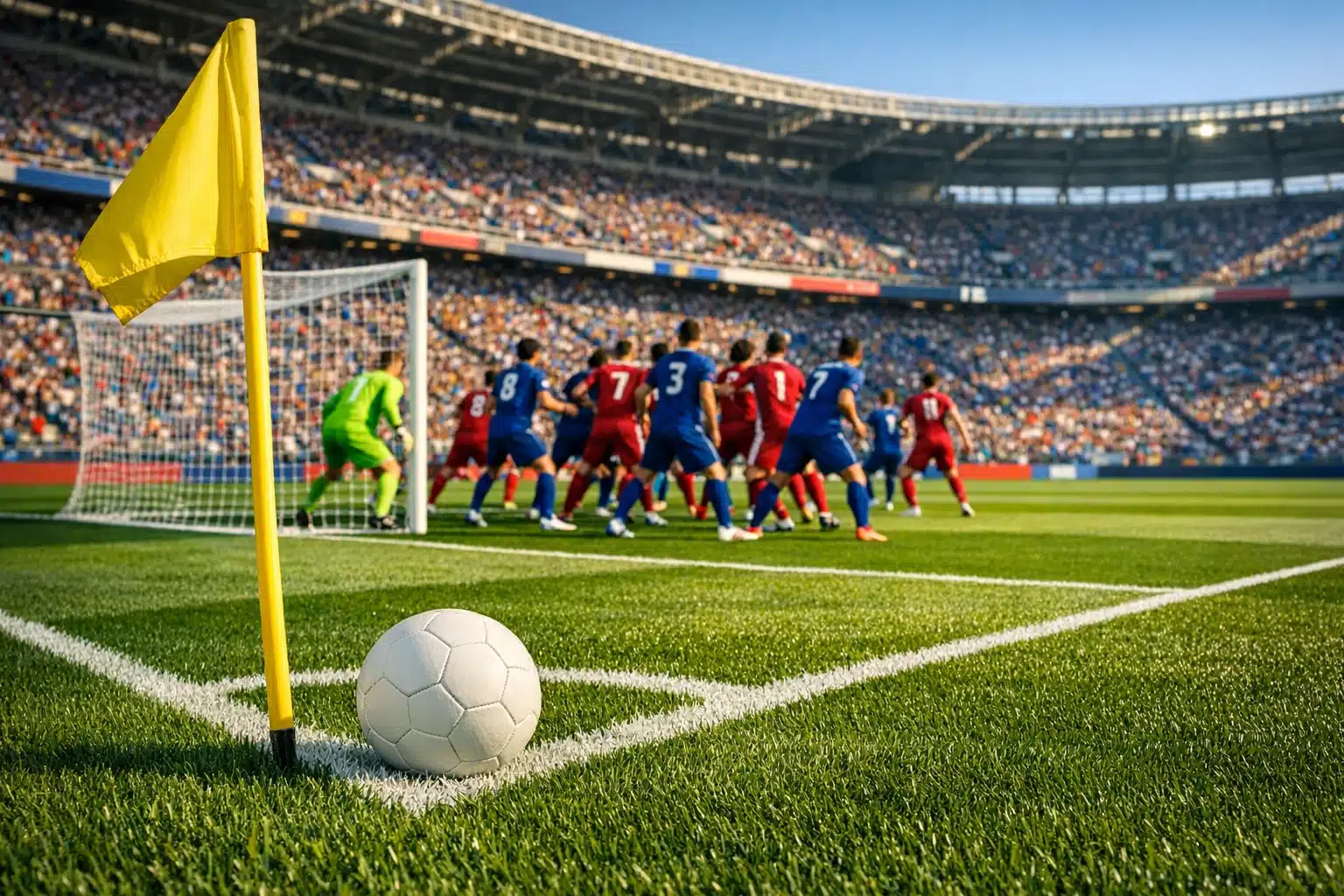
Set pieces also matter enormously. Corners, free kicks, throw-ins, and penalties interrupt open play but create valuable scoring opportunities. A well-delivered corner can be as carefully designed as a rehearsed stage scene, with blockers, decoy runs, and late movement toward the far post. At the highest level, teams devote major training time to these moments because tight matches are often settled there.
Modern football has also changed in how substitutes are used. Many competitions now allow up to five substitutions, though exact rules can vary. This gives coaches more tactical flexibility and helps manage player fatigue in demanding schedules. A fresh winger can stretch a tired defense, while an extra defender can help protect a narrow lead.
When you understand the rules as more than technicalities, the game opens up. Fouls are no longer random whistles, and stoppages stop feeling like interruptions. Instead, they become part of the chessboard on which football is played.
Positions, Formations, and What Each Player Actually Does
A football team may field eleven players, but those eleven do not perform the same job. Positions exist because space on the pitch must be managed intelligently, and each role comes with different responsibilities in attack, defense, and transition. The basic categories are goalkeeper, defenders, midfielders, and forwards, yet those broad labels only tell part of the story.
The goalkeeper is the only player allowed to handle the ball inside the penalty area, and that alone makes the role unique. However, modern goalkeeping goes far beyond shot-stopping. Top goalkeepers organize the defensive line, claim crosses, begin attacks with passing, and sometimes act as sweepers by moving off their line to clear danger. In possession-focused teams, a calm goalkeeper can function almost like an extra outfield player during buildup.
Defenders are usually split into center-backs and wide defenders such as full-backs or wing-backs. Center-backs deal with aerial balls, mark strikers, block shots, and help circulate possession from the back. Full-backs traditionally defended wide areas, but the modern version often overlaps into attack, supports wingers, and delivers crosses. Wing-backs push even higher, especially in systems with three central defenders behind them. This means the same role can be conservative in one team and adventurous in another.
Midfield is where football often becomes most interesting because it links all phases of the game. A defensive midfielder shields the back line, breaks up play, and offers passing stability. A central midfielder may carry the ball forward, switch play, or control tempo. An attacking midfielder operates closer to goal, looking for through balls, combinations, and shooting chances. The best midfields feel like engines with different gears, not just a collection of runners.
Forwards are responsible for finishing moves, stretching defenses, and unsettling opponents through movement. A central striker may play on the shoulder of the last defender, hold the ball up with back to goal, or drop deeper to combine. Wingers attack from the flanks, often cutting inside or driving to the byline. Some teams use a front two, while others rely on a lone striker supported by wide players and attacking midfielders.
Formations help organize these roles. Common examples include:
- 4-3-3, which offers width and strong pressing options
- 4-2-3-1, which balances defensive cover and attacking support
- 4-4-2, a classic shape that can remain very effective with disciplined movement
- 3-5-2, which can crowd midfield and use wing-backs aggressively
Still, a formation on paper is only a starting map. In motion, players rotate, drop, press, and exchange zones. A full-back may move into midfield. A winger may become a second striker. A striker may drift wide to create room for a teammate’s run. That fluidity is why football rewards observation. If you only watch the ball, you miss the real architecture of the game. If you watch the shapes around it, the match begins to make sense.
Key Strategies: Possession, Pressing, Transitions, and Set-Piece Thinking
Strategy is where football shifts from a list of positions to a living system of decisions. Teams do not simply send players onto the field and hope talent solves everything. They choose how high to defend, how quickly to attack, where to build play, and which spaces to deny. Even two teams using the same formation can look completely different because their strategic priorities are not the same.
One major contrast is possession play versus direct play. A possession-oriented team tries to control the ball, move the opponent from side to side, and create openings through patience. This style values passing angles, support distances, and calm buildup from the back. By comparison, a direct team may attack earlier, send longer passes into advanced areas, and seek second balls around the striker. Neither approach is automatically superior. The better choice depends on the squad, the opponent, and the match context.
Pressing is another crucial idea. A high press attempts to win the ball near the opponent’s goal, turning defensive effort into immediate attacking chances. It can be thrilling and disruptive, but it demands coordination. If one player presses late or carelessly, the opponent may escape and attack into open space. A low block, on the other hand, keeps defenders deeper and more compact. This strategy often frustrates opponents, limits central openings, and invites counterattacks once possession is regained. Watching the distance between team lines can tell you a great deal about which plan is in use.
Transitions are often the most decisive phase of all. A transition happens when possession changes hands. In those moments, shape is unstable, players are still moving, and choices must be immediate. Teams that counterattack well can punish opponents before they reorganize. Fast runners, vertical passing, and intelligent support are especially valuable here. Equally important is defensive transition, sometimes called the reaction after losing the ball. Strong teams either press instantly to recover it or retreat quickly into a protective structure.
Set pieces deserve special mention because they can tilt close games. Corners and free kicks are not random restarts at elite level. Coaches script runs, assign markers, and study opponent habits. A near-post flick, a crowd around the goalkeeper, or a late arriving header at the far side can all be rehearsed patterns. In tournaments where knockout margins are thin, set-piece efficiency often becomes a major difference maker.
Some useful strategic lenses for readers are:
- Where does a team try to win the ball back?
- How many players join the attack, and how many stay for protection?
- Does the team prefer central combinations or wide deliveries?
- What happens immediately after losing possession?
Once you begin asking those questions, football stops being a blur of motion and becomes a conversation between ideas. Every match turns into a puzzle of risk, control, and adaptation, and that is where much of the sport’s enduring fascination lives.
Conclusion for New Fans, Players, and Curious Readers
If you are new to football, the most encouraging truth is that you do not need to know everything to enjoy it deeply. Understanding grows in layers. First you notice the score and the star names. Then you start recognizing positions, patterns of passing, and the reason one team feels comfortable while the other looks rushed. Eventually, a match becomes less about isolated highlights and more about rhythm, territory, timing, and choices.
For players, these basics are especially useful because they connect individual skill to team purpose. A clean first touch matters more when you know what pressure is coming next. A run off the ball becomes smarter when you understand how it opens space for someone else. Even defending feels more rewarding once you see it as collective organization rather than simple chasing. Football is one of the clearest examples of a sport in which good decisions can elevate physical ability.
For fans, learning the game adds a second layer of enjoyment. You still get the thrill of a late winner or a spectacular save, but you also start appreciating the quieter moments that shape those dramatic endings. A holding midfielder screening passes, a full-back choosing the right overlap, or a center-back stepping out at the perfect instant may not dominate highlight reels, yet these details often decide whether a team controls the evening or spends it surviving.
If you want to keep building your understanding, a few habits help:
- Watch one player for several minutes instead of following only the ball.
- Notice team shapes when the ball is lost and when it is recovered.
- Compare different formations and ask how they change space on the field.
- Pay attention to substitutions and how they alter energy or structure.
Football rewards patience because the game reveals itself gradually. What first appears chaotic begins to show order. What seems accidental often turns out to be trained behavior. That shift is part of the pleasure. The more carefully you watch, the more the sport gives back.
So whether you are standing on a sideline, playing in a local match, or settling onto a couch before kickoff, you now have a stronger framework for understanding what unfolds. The rules provide the boundaries, positions give players their starting tasks, and strategy turns all of it into a contest of ideas. That combination is why football remains endlessly watchable: it is simple enough to begin anywhere, and rich enough that there is always another layer waiting just ahead.