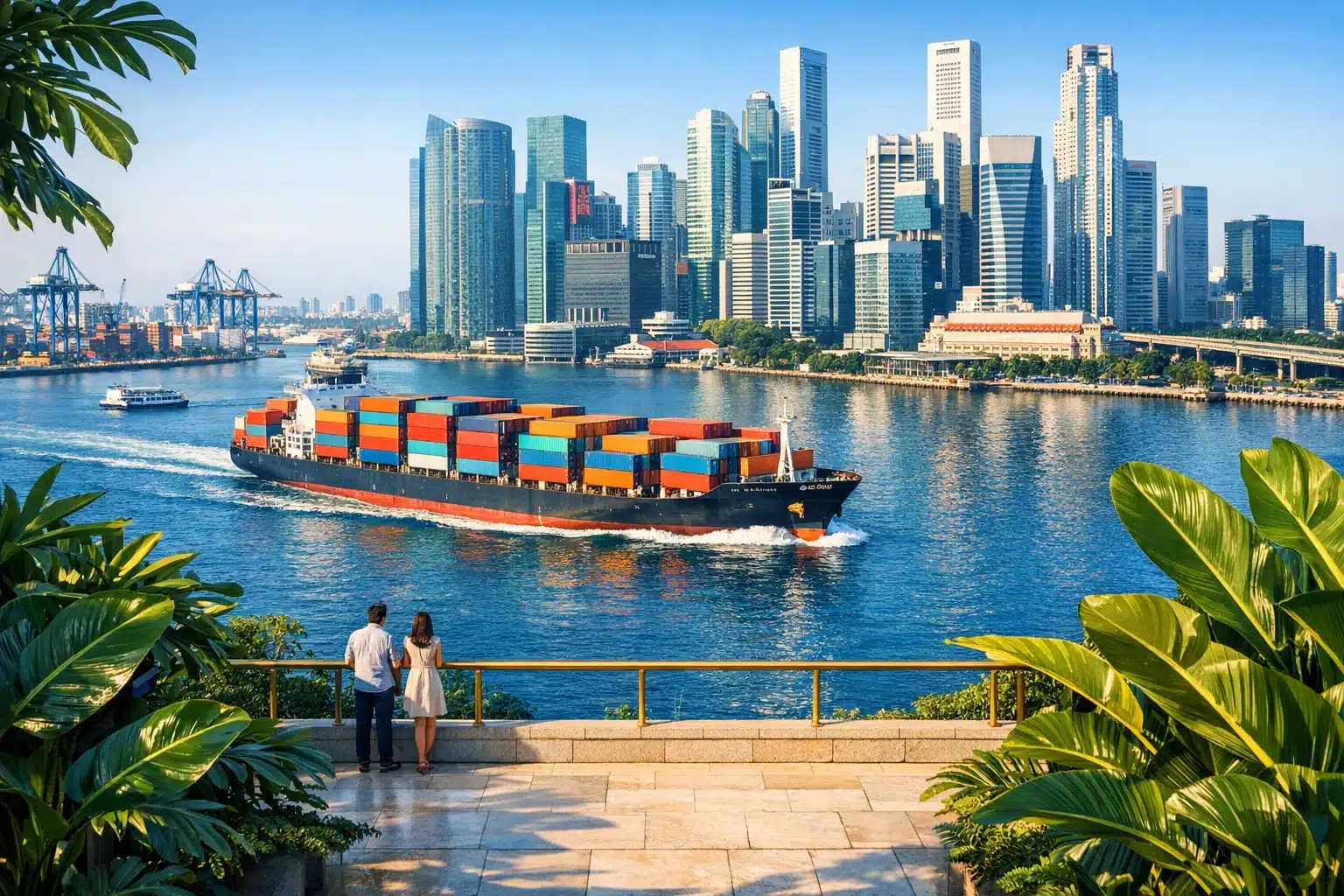
Exploring Economy: Global economic trends and forecasts.
The economy is more than charts on a financial terminal; it shapes wages, grocery bills, business plans, and government choices in quiet but constant ways. In a tightly connected world, a rate change in one major market can ripple through trade routes, energy prices, and hiring decisions elsewhere. That is why global economic trends matter to investors, managers, students, and households alike. Reading those signals carefully helps people make steadier decisions in uncertain times.
Article Outline
- The current state of the global economy
- The structural forces reshaping growth
- Regional comparisons and uneven momentum
- Forecasts, risks, and likely scenarios
- What the outlook means for households, workers, and businesses
1. The Current Global Economic Landscape
The world economy in the mid-2020s can be described as resilient, but not relaxed. Growth has continued in many regions, yet it has done so under pressure from high borrowing costs, uneven trade flows, geopolitical strain, and lingering inflation concerns. Recent forecasts from major institutions such as the IMF and OECD have generally placed global growth in the low-3% range, which is not a collapse, but it is slower than the long-run pace many countries became used to before multiple shocks hit in quick succession. In simple terms, the global engine is running, though it is no longer moving with easy speed.
One of the defining features of the current landscape is the cooling of inflation after the sharp price surges seen earlier in the decade. Energy spikes, supply chain blockages, labor shortages, and strong post-crisis demand pushed consumer prices up in many economies. Since then, headline inflation has eased in numerous advanced countries, largely because fuel prices stabilized, shipping conditions improved, and tighter monetary policy reduced demand. However, “eased” does not mean “solved.” Core inflation, especially in services, has often stayed firmer than central banks would prefer. Housing, healthcare, insurance, and labor-intensive services have kept price pressure alive even as goods inflation faded.
Interest rates have therefore remained a central theme. Central banks raised rates aggressively to control inflation, and those decisions changed the behavior of businesses, households, and governments. Mortgage payments rose, corporate borrowing became more expensive, and public debt servicing costs increased. A useful way to picture this is to imagine the global economy walking uphill with a heavier backpack. The path remains open, but each step demands more effort.
Labor markets have added another layer of complexity. In some advanced economies, unemployment remained low by historical standards, even while growth slowed. That helped consumer spending hold up better than many analysts expected. Yet the picture is not equally bright everywhere. Youth unemployment, informality, and wage stagnation remain major concerns in several emerging markets. Meanwhile, productivity growth has not consistently matched labor market resilience, which limits how fast incomes can rise without feeding more inflation.
- Growth has continued, but at a modest pace.
- Inflation has cooled, though services prices remain sticky.
- Higher interest rates have restrained borrowing and investment.
- Labor markets have stayed stronger than expected in some regions.
Trade also deserves attention. Global goods trade has been more uneven than global services activity, partly because companies have adjusted inventories, diversified suppliers, and reacted to political risk. Tourism and digital services have recovered in many places, but manufacturing has not always moved in sync. The result is a world economy that looks steady from a distance, yet highly uneven up close. That combination matters, because unevenness often shapes the next phase of economic policy and the next wave of market expectations.
2. The Structural Forces Reshaping Growth
Short-term forecasts often attract the headlines, but structural forces usually write the longer story. If daily market moves are the weather, structural economics is the climate. Several deep changes are now reshaping how countries grow, compete, invest, and manage risk. These forces do not operate in isolation; they overlap, reinforce one another, and sometimes pull in opposite directions.
The first major force is technology. Digital infrastructure, automation, cloud systems, and artificial intelligence are changing productivity patterns across industries. In theory, productivity gains allow economies to produce more with the same labor and capital. In practice, those gains arrive unevenly. Large firms often adopt advanced tools faster than smaller ones, and countries with strong education systems, energy reliability, and digital infrastructure tend to benefit first. This means technological change can boost output while also widening gaps between firms, workers, and regions. A factory that automates efficiently may become more competitive, but a workforce without access to retraining can struggle to keep pace.
The second force is demographics. Aging populations in Europe, Japan, China, and parts of North America are placing pressure on healthcare systems, pensions, and labor supply. At the same time, younger populations in India, much of Africa, and parts of Southeast Asia offer long-term growth potential if jobs, infrastructure, and education expand quickly enough. Demographics are not destiny, but they are powerful background conditions. A country with a shrinking workforce must rely more heavily on productivity, immigration, or later retirement to sustain growth.
A third force is the energy transition. Governments and companies are investing heavily in renewable power, battery systems, grid modernization, electric transport, and industrial decarbonization. This transition brings opportunity, especially in manufacturing, minerals processing, and clean infrastructure. It also brings friction. Fossil fuel exporters face adjustment risks, while energy-importing countries may see strategic advantages if they build new supply chains effectively. Investment needs are vast, and financing conditions matter enormously. Higher interest rates can slow green investment, even when policy goals are clear.
Supply chains form the fourth major force. Companies that once optimized mainly for cost are now balancing cost with resilience. The pandemic years exposed the risks of overconcentration, and geopolitical tensions reinforced the lesson. Terms such as “friend-shoring,” “nearshoring,” and “China plus one” reflect a broader shift toward diversification. This does not mean globalization is ending; it means globalization is being redesigned. Efficiency still matters, but so do redundancy, security, and political compatibility.
- Technology can raise productivity, but access to it is uneven.
- Demographic change influences labor supply, consumption, and public spending.
- The energy transition creates both investment opportunities and adjustment costs.
- Supply chains are being restructured to improve resilience, not just reduce cost.
Finally, fiscal pressure sits in the background like a persistent drumbeat. Many governments carry high debt burdens after years of crisis response, infrastructure plans, and social spending commitments. That limits flexibility when the next slowdown arrives. Structural growth, then, will depend not on one silver bullet, but on how well countries combine innovation, labor policy, energy planning, and public finance discipline. The economies that do this well are likely to be more adaptable, not merely larger.
3. Regional Comparisons: Why the World Economy Rarely Moves in One Direction
Looking at “the global economy” as a single object can be misleading. It is closer to a busy intersection than a straight road: some regions accelerate, others pause, and a few turn sharply when the signals change. Comparing major economies reveals why forecasts must always be read with context.
The United States has remained one of the most closely watched engines of global demand. Its economy has often surprised forecasters with stronger-than-expected consumer spending, resilient employment, and business investment in areas such as technology and energy. A deep capital market and flexible labor system have helped. Even so, higher rates have weighed on housing, credit-sensitive sectors, and smaller firms. Fiscal deficits and long-term debt dynamics remain points of debate, especially because strong near-term growth does not erase structural budget concerns. The US story, in short, has been one of durability mixed with unanswered long-run questions.
The euro area has faced a different mix of pressures. Energy costs, manufacturing softness, and weaker external demand have weighed more heavily on parts of Europe, particularly export-oriented economies. Monetary policy has had to balance inflation control with fragile growth conditions. Demographics also loom large, as aging populations and slower productivity gains limit the speed of expansion. Still, Europe retains major strengths: advanced industrial capacity, robust institutions, and a growing push toward green investment. Its challenge is less about potential and more about unlocking it consistently.
China remains central to any global forecast, yet its growth model is evolving. For decades, investment, exports, and property were major pillars. More recently, the property sector’s weakness, local government financing strains, and the need to rebalance toward consumption have made the outlook more complex. China continues to play an outsized role in manufacturing, supply chains, and commodity demand, but the pace and composition of its growth matter as much as the headline number. A slower but more balanced Chinese economy would affect the world differently than a faster, debt-led one.
India has increasingly stood out as a major growth story, supported by domestic demand, infrastructure spending, digital public platforms, and a large working-age population. Recent growth rates have often exceeded those of many large economies, though challenges remain in job creation, rural incomes, logistics, and human capital development. Southeast Asia has also benefited from supply chain diversification and investment flows, particularly in electronics, industrial production, and services.
Emerging markets beyond Asia present a mixed but important picture. Latin American economies are strongly influenced by commodity cycles, fiscal credibility, and currency stability. African economies offer enormous demographic potential, but financing costs, infrastructure gaps, and climate vulnerability can constrain growth. The Middle East reflects another contrast, where diversification efforts are advancing in some countries even as oil prices still shape revenues.
- The US has shown resilience, but long-term fiscal issues remain.
- Europe has strong industrial foundations, yet growth has been softer.
- China’s transition is critical for trade, commodities, and investment flows.
- India and parts of Southeast Asia are gaining attention as growth centers.
These regional differences explain why broad forecasts can feel both correct and incomplete. The world economy does not march in perfect formation. It moves more like a fleet at sea, with each vessel facing the same ocean but not the same winds.
4. Global Economic Forecasts: Likely Paths, Major Risks, and What Could Change the Story
Forecasting the economy is less like setting a train schedule and more like reading a map during changing weather. Analysts can identify direction, terrain, and likely obstacles, but certainty remains limited. Even so, a useful forecast is possible when it is built around scenarios rather than rigid predictions.
The baseline outlook for the next few years is often described as moderate global growth with gradually improving inflation trends. Many forecasters expect world output to continue expanding at a pace near the low-3% range, assuming no major external shock disrupts trade, finance, or energy markets. Inflation is widely expected to keep cooling overall, but progress may be uneven. Goods prices have already lost much of their earlier momentum in many markets, while services inflation may take longer to settle because wages, rents, and domestic demand adjust more slowly.
Interest rates are another major part of the forecast. While policy rates may ease from their peak levels as inflation comes down, many economists no longer assume a return to the ultra-cheap money era that defined much of the 2010s. Several reasons explain this: structurally higher fiscal borrowing needs, large investment demands tied to defense and energy transition, tighter labor markets in some economies, and a more fragmented global trading system. That does not mean rates must stay extremely high, but it does suggest that the future “normal” may differ from the past one.
Three broad scenarios are especially useful:
-
Baseline scenario: inflation continues to ease, central banks gradually loosen policy, and growth stays positive but unspectacular.
-
Downside scenario: geopolitical conflict, an energy shock, renewed supply disruption, or financial stress pushes growth lower and revives inflation pressure.
-
Upside scenario: productivity improvements from technology arrive faster than expected, real incomes recover, and investment strengthens without reigniting price instability.
Key risks deserve close attention. Geopolitical tension can raise shipping costs, reduce investor confidence, and interfere with critical inputs such as semiconductors, food, or energy. Climate-related events can damage crops, infrastructure, and insurance markets. Debt stress in vulnerable countries can lead to financial instability, especially where foreign borrowing is high and local currencies weaken. Political uncertainty can also alter fiscal plans, tax rules, and regulatory confidence.
Yet forecasts are not only about risk; they are also about adaptation. Businesses have become more deliberate about inventory planning and capital spending. Central banks communicate more carefully than they once did. Households in many places have adjusted budgets after a period of higher prices. These small decisions, multiplied across millions of actors, influence whether the global economy experiences a soft landing, a prolonged slowdown, or a fresh investment cycle.
The most realistic reading is this: the next phase is likely to be steadier than the last period of extreme shocks, but probably less effortless than the pre-crisis years. Growth may continue, though it will reward flexibility more than optimism alone.
5. Practical Takeaways for Readers: A Conclusion for Households, Workers, and Businesses
For everyday readers, the value of following global economic trends lies in translation. Big themes such as inflation, interest rates, demographics, and trade policy can sound distant, yet they eventually appear in ordinary choices: whether to fix a mortgage, when to expand a business, how much cash to keep available, which skills to learn, or where to seek new markets. The economy may speak in percentages, but people hear it in monthly payments and job prospects.
Households should pay particular attention to the relationship between wages, inflation, and borrowing costs. If prices rise faster than income, purchasing power weakens even when employment remains steady. If rates remain higher than in the past, debt decisions require more caution. This does not mean fear is the correct response; it means planning matters more. Emergency savings, sensible budgeting, and awareness of variable-rate debt become more valuable in a slower, costlier money environment.
Workers and students can draw a different lesson. Economic change increasingly rewards adaptability. Sectors linked to digital systems, energy transition, advanced manufacturing, logistics, healthcare, and data use are likely to remain important. At the same time, no labor market is permanently safe from restructuring. Skills that combine technical literacy with communication, analysis, and problem-solving tend to travel better across industries than narrow expertise alone. In a world of shifting supply chains and faster automation, learning is less a phase of life than a recurring habit.
Businesses, especially small and medium-sized firms, may need to think in layers rather than simple plans. Demand conditions, financing costs, supplier reliability, currency risk, and regulation can all change at once. That argues for resilience: stronger cash management, diversified sourcing, realistic pricing, and careful scenario planning. A firm does not need perfect foresight to make better choices; it needs a structure that can absorb surprises without losing direction.
- Households benefit from budgeting discipline and attention to debt costs.
- Workers gain from flexible skills and ongoing training.
- Businesses improve resilience through planning, diversification, and liquidity.
- Readers in all groups benefit from understanding the link between policy and daily life.
The broad conclusion is both simple and important. The global economy is unlikely to move in a perfectly smooth line, and forecasts will keep changing as new data arrives. Still, understanding the major forces at work gives readers an advantage: it turns uncertainty from a fog into a landscape. For households, workers, and decision-makers alike, the goal is not to predict every turn. It is to become better prepared for the road ahead.