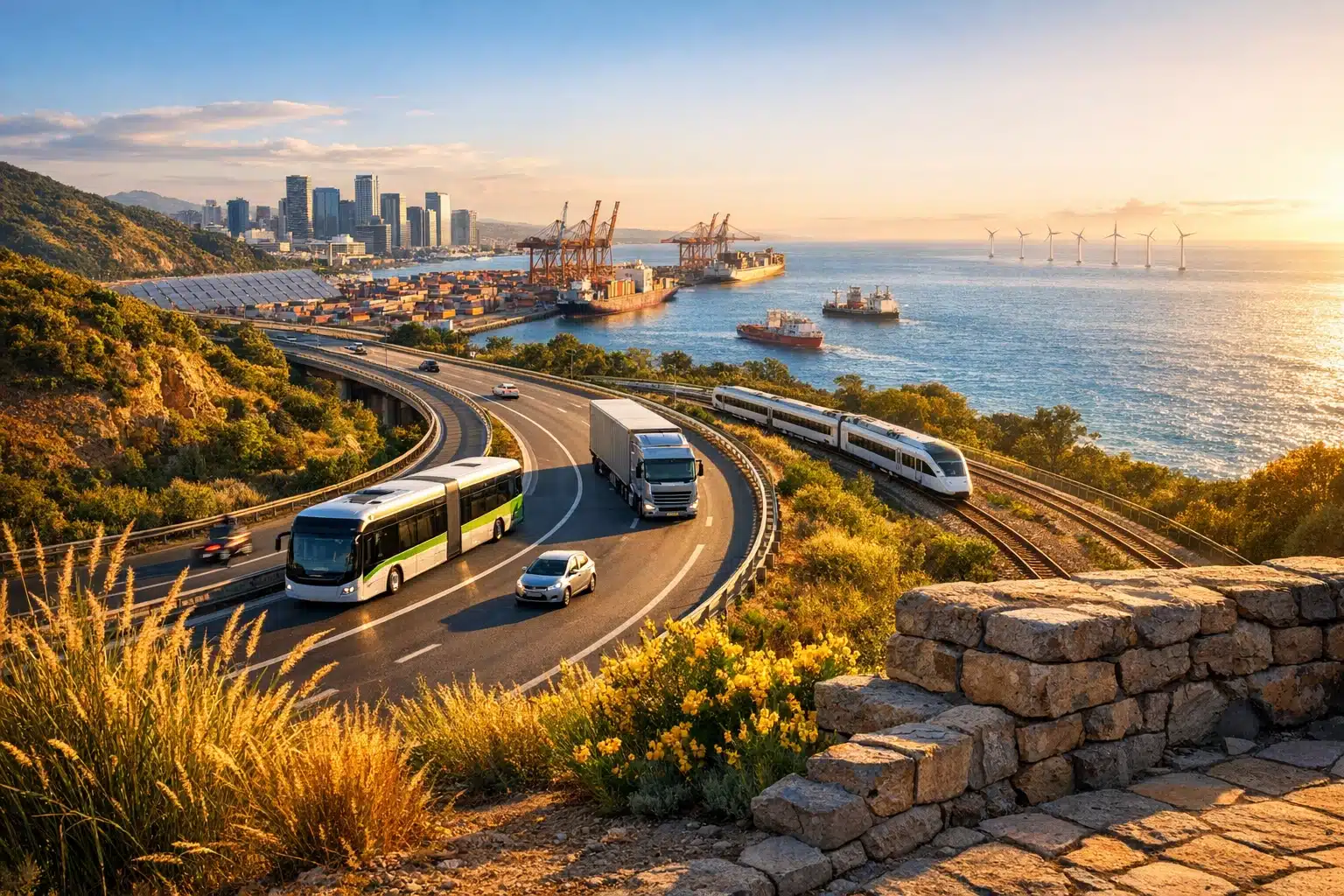
Exploring Economy: Global economic trends and forecasts.
The global economy rarely moves in a straight line; it surges, stalls, adapts, and then surprises the people trying hardest to predict it. Inflation has cooled in many places, but high interest rates, fragile supply chains, tight labor markets, and political shocks still shape daily life. That makes economic literacy more than a specialist skill: it affects wages, mortgages, business plans, public budgets, and investment choices. This article explores the major trends behind today’s forecasts and explains why the bigger picture matters.
Outline
- How global growth is evolving across major regions
- Why inflation and interest rates still dominate forecasts
- How trade, supply chains, and geopolitics are rewriting business strategy
- Why technology and the energy transition may define the next productivity cycle
- What these forecasts mean for households, workers, savers, and business leaders
1. Global Growth Is Returning, but at an Uneven and More Fragile Pace
Global growth has not collapsed, yet it has also not regained the easy momentum many policymakers hoped for after the pandemic rebound. Recent forecasts from institutions such as the IMF and World Bank have generally placed world output growth in the low-3% range, a figure that sounds respectable until it is compared with stronger eras of globalization, when 4% or more was more common. In other words, the world economy is still moving forward, but with a limp rather than a sprint.
The unevenness matters more than the headline number. The United States has remained more resilient than many analysts expected, supported by household spending, a relatively strong labor market, and government investment tied to infrastructure and industrial policy. By contrast, parts of Europe have grown more slowly, facing the aftereffects of the energy shock, weaker manufacturing demand, and tighter credit conditions. China, once the engine that pulled global commodity demand and trade volumes higher, is now managing a difficult transition away from property-led expansion toward a model built more on consumption, advanced manufacturing, and strategic technology. That adjustment is significant because China’s earlier growth model shaped everything from iron ore prices to German exports.
Emerging economies tell a more varied story. India has stood out with comparatively strong growth, helped by demographics, digital payment infrastructure, and public investment. Several Southeast Asian economies have gained from supply-chain diversification as firms look beyond a single manufacturing base. Meanwhile, a number of low-income countries continue to face a harder reality: high debt servicing costs, tighter access to capital, and climate-related disruptions that can wipe out years of progress in a single season.
- Advanced economies are generally seeing slower, steadier growth.
- Large emerging markets are growing faster, but with sharper policy trade-offs.
- Low-income countries often face the greatest vulnerability to debt and climate shocks.
The key point is that averages hide stress lines. A global forecast may suggest moderation, but behind it sit very different stories about productivity, population trends, public debt, and political room to maneuver. For businesses, that means one regional strategy is no longer enough. For investors, it means broad labels such as “developed” and “emerging” explain less than they once did. And for households, it means the economic news can feel oddly contradictory: strong jobs data in one country, factory weakness in another, and consumer caution almost everywhere. The modern world economy is not a single machine humming at one speed. It is a convoy of vehicles traveling on the same road, but with different engines, different fuel, and very different maps.
2. Inflation Has Eased, Yet Interest Rates Still Cast a Long Shadow
If global growth is the road, inflation is the weather, and for the last few years it has been stormy enough to change every traveler’s plans. In many countries, headline inflation has fallen meaningfully from the peaks reached during the post-pandemic surge. Energy prices stabilized compared with the sharp shocks triggered by supply disruptions and war, goods inflation cooled as shipping bottlenecks loosened, and some of the earlier panic around scarcity faded. Yet the broader fight is not fully over, because core inflation, especially in services, has often remained stickier than central banks would like.
That distinction matters. Headline inflation can drop when fuel or food prices cool, but core inflation reflects deeper pressures tied to wages, rent, services, and business pricing behavior. Central banks such as the U.S. Federal Reserve, the European Central Bank, and the Bank of England responded to the inflation surge with the fastest rate increases in decades. Their goal was simple in theory and painful in practice: make borrowing more expensive, slow demand, and bring price growth back under control. The challenge is that monetary policy works with a lag. Rate hikes do not hit every household and company at once; they ripple through mortgages, business loans, commercial real estate, credit card balances, and government financing costs over time.
That delayed effect is why forecasts remain cautious even where inflation has improved. A country can appear sturdy on the surface while older rate decisions are still moving through the system like a slow underground current. Economists often frame the outlook in three broad possibilities:
- Soft landing: inflation falls without a deep recession.
- Hard landing: policy tightening causes a sharper contraction in output and jobs.
- No landing: growth stays firm, but inflation remains too hot for comfort.
For households, high rates affect more than central-bank headlines. They shape mortgage affordability, car financing, business expansion, and even government budgets, because states must refinance debt at higher costs. For companies, the era of cheap money is no longer something to assume. Firms with strong cash flow can still invest, but weaker borrowers face less forgiving lenders and more selective capital markets.
The comparison across regions is revealing. Some emerging markets raised rates earlier than advanced economies and were able to stabilize inflation sooner. Others still struggle with currency weakness that imports higher prices. In advanced economies, wage growth has supported consumers, yet it has also complicated the final stretch of disinflation. The result is a strange economic mood: the fire is lower, but the room still feels hot. That is why interest-rate policy remains central to every major forecast. Inflation may no longer dominate every headline, but it continues to shape the script.
3. Trade, Supply Chains, and Geopolitics Are Rewiring the Economic Map
For decades, global trade was often treated like an invisible convenience. Goods appeared on shelves, components arrived at factories, and shipping routes seemed as permanent as the horizon. Then came the pandemic, war in Europe, semiconductor shortages, shipping delays, and renewed strategic rivalry between major powers. Suddenly, supply chains were no longer a background detail; they became a boardroom obsession and a household concern. The lesson was blunt: efficiency without resilience can be dangerously expensive.
Businesses and governments are now reconsidering how goods move across borders. This does not necessarily mean the end of globalization, but it does suggest a different version of it. Instead of maximizing cost alone, firms increasingly balance cost against reliability, political stability, transport security, and regulatory risk. Terms such as “nearshoring,” “friend-shoring,” and “China plus one” have moved from analyst jargon into mainstream business planning. Mexico, Vietnam, India, and parts of Eastern Europe have attracted greater attention as companies seek additional manufacturing bases or regional hubs.
The old model and the new model can be compared in simple terms:
- Old model: lowest-cost production, lean inventory, long global routes.
- New model: diversified suppliers, larger safety buffers, strategic regionalization.
This shift is especially visible in sectors tied to national security and industrial strategy. Semiconductors are the clearest example. Governments in the United States, Europe, Japan, South Korea, and elsewhere have devoted substantial resources to boosting domestic or allied production capacity, because chips sit at the center of everything from cars to defense systems. Critical minerals offer another case. The energy transition depends on lithium, cobalt, nickel, copper, and rare earths, which means resource security is becoming an economic issue as much as an environmental one.
Still, resilience has a price tag. Redundant suppliers, larger inventories, and shorter routes can reduce vulnerability, but they may also raise production costs. That can feed into consumer prices, especially in industries where margins are already tight. Smaller countries that depend heavily on open trade may face pressure if the world fragments into competing blocs. And when geopolitics disrupts key routes, as seen with shipping disturbances in strategic waterways, even efficient firms can find their schedules and costs thrown off overnight.
The most realistic forecast is not full deglobalization, but selective rewiring. Trade will continue, investment will continue, and multinational production will continue, yet the logic behind them is changing. Where companies once asked, “Where is it cheapest?” they increasingly ask, “Where is it durable?” That is a profound shift. It means the map of global commerce is being redrawn not with a single line, but with a hundred cautious pencil marks.
4. Technology and the Energy Transition Could Become the Next Big Growth Engines
Every era of economic uncertainty eventually asks the same question: where will the next burst of productivity come from? At the moment, two forces dominate that conversation. The first is technological change, especially artificial intelligence, automation, cloud systems, and data-driven operations. The second is the energy transition, including investment in renewables, batteries, electric transport, power grids, and efficiency upgrades. Together, they offer a rare combination of immediate business relevance and long-term structural impact.
Technology excites economists because productivity growth is the quiet hero of rising living standards. A country can borrow for a while, stimulate for a while, or consume for a while, but durable prosperity usually depends on producing more value per worker and per hour. AI has intensified debate because it appears capable of improving not only factory processes but also white-collar tasks such as coding, research, design, and customer support. That potential is real, yet it should be approached with balance. Transformative tools do not lift output automatically. They require new workflows, worker training, reliable data, cybersecurity, legal clarity, and managerial competence. A brilliant system dropped into a confused organization often becomes an expensive ornament.
The energy transition presents a similarly mixed picture. On one hand, investment in clean energy has risen rapidly in recent years, and international energy agencies have noted that spending on clean technologies now exceeds spending on some fossil-fuel categories by a meaningful margin. On the other hand, building a lower-carbon economy is not frictionless. It demands huge capital outlays, mineral supplies, updated transmission networks, land use decisions, and years of permitting. Higher interest rates can also slow projects that depend on large upfront financing.
- Technology can raise efficiency, but only when businesses adapt their processes.
- Clean energy can lower long-run vulnerability to fuel shocks, but the transition phase is capital intensive.
- Both trends create winners and losers across sectors, regions, and skill levels.
There is also an important comparison between short-term cost and long-term gain. Digital transformation may require expensive software, retraining, and restructuring before productivity improves. Green infrastructure may raise public and private spending before lower operating costs and cleaner energy systems appear. That time gap matters for forecasts, because markets often demand quick results while structural change rewards patience.
Even so, these twin forces may define the next decade more than any single quarterly GDP release. They are reshaping industrial policy, labor demand, commodity markets, and investment priorities. If trade tells us how the world is connected, technology and energy tell us how it may be rebuilt. In that sense, the future may not arrive with a dramatic bang. It may arrive as a sequence of upgrades: one smarter factory, one cleaner grid, one faster network, one retrained worker at a time.
Conclusion: What Global Economic Forecasts Mean for Readers in the Real World
For most readers, the value of an economic forecast is not in predicting the exact decimal point of GDP growth. It is in helping make better decisions under uncertainty. Whether you are a salaried worker, a student, a saver, a small-business owner, or a manager planning next year’s budget, the same broad lesson applies: the world economy is becoming less predictable, more regional, and more shaped by structural transitions than by one-off headlines alone.
The major themes of the current outlook connect clearly. Growth continues, but its distribution is uneven. Inflation has cooled, but interest rates still affect credit, housing, and public finances. Trade remains vital, yet businesses now put resilience beside efficiency. Technology and the energy transition offer real opportunities, though neither provides instant results. That combination creates an economic environment that rewards flexibility, informed planning, and a willingness to look past dramatic short-term noise.
For a practical reader, several habits matter more than trying to outguess every market move:
- Follow inflation and central-bank signals, because they influence borrowing costs and consumer confidence.
- Pay attention to regional differences, since the U.S., Europe, China, India, and commodity exporters are not moving in lockstep.
- Watch productivity trends, not just headline growth, because long-term prosperity depends on efficiency gains.
- Expect supply chains and geopolitics to remain part of economic analysis rather than temporary side stories.
- Treat forecasts as scenarios, not promises, because economic models are guides, not crystal balls.
That final point deserves emphasis. Forecasts are useful, but they are not prophecies carved into stone. They are working estimates built from available data, institutional judgment, and assumptions that can change quickly when politics, weather, technology, or financial conditions shift. A wise reader uses them the way a skilled sailor uses charts: to understand likely conditions, not to command the sea.
So what should the target audience take away from all this? Stay curious, stay skeptical, and stay grounded in the links between macroeconomics and daily life. Economic trends are not distant abstractions for central bankers and analysts alone. They show up in grocery bills, hiring plans, rent negotiations, business investment, pension performance, and public services. The better you understand the forces behind the headlines, the less confusing the economic landscape becomes. And in a world that rarely moves in a straight line, that kind of clarity is not just helpful; it is a genuine advantage.