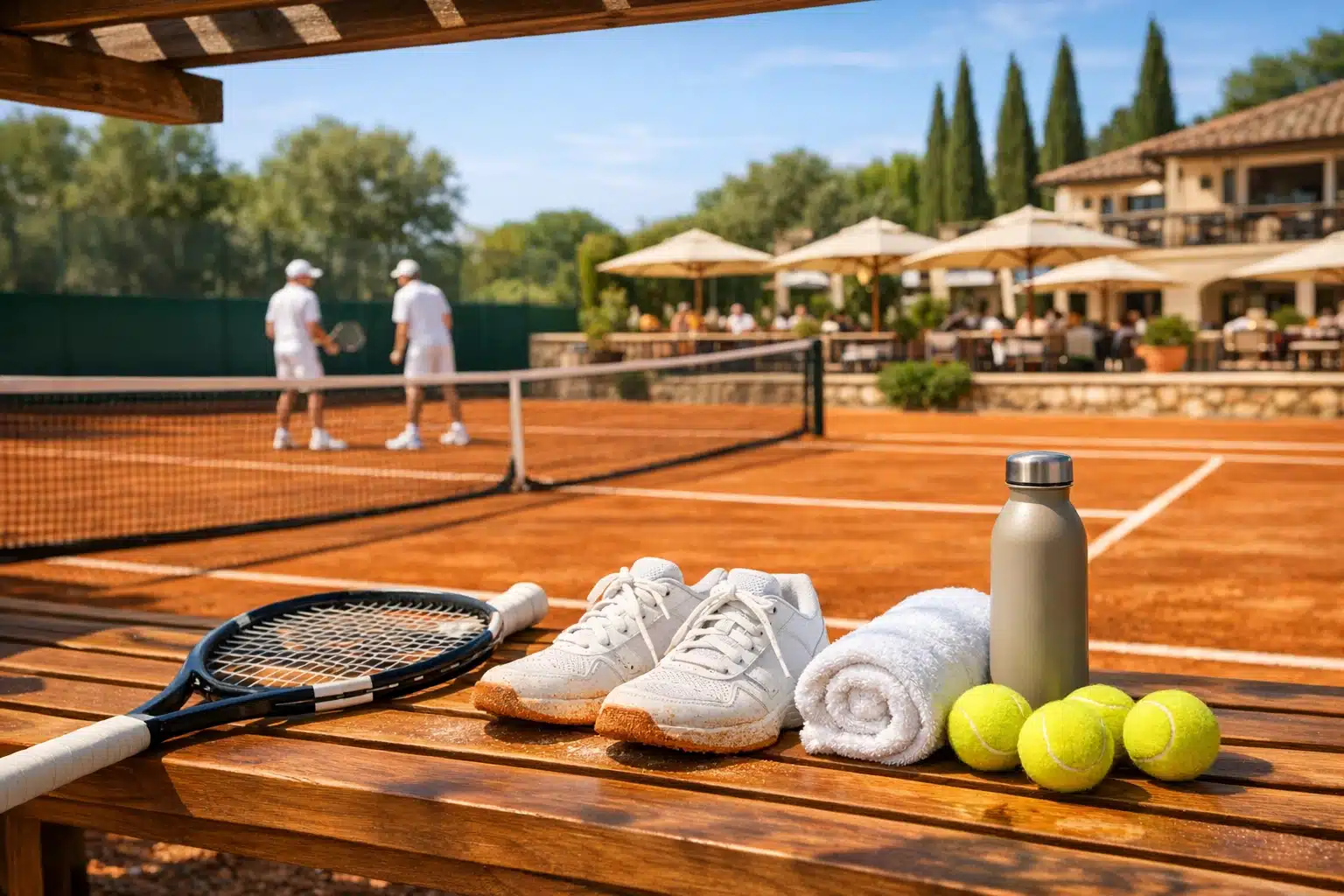
Explore the world of tennis
Tennis is one of those rare sports that feels elegant and unforgiving at the same time: a game of geometry, timing, nerve, and endurance played on a rectangle no bigger than a small room. Its reach is global, stretching from public parks and school programs to the four Grand Slam stages watched by millions. Understanding tennis matters because it rewards patience, sharp thinking, and lifelong fitness. This guide maps the sport from its basic structure to its evolving future.
Outline: this article begins with the roots, rules, and court design of tennis, then moves into technique and tactical styles. It next looks at training, recovery, and the mental side of competition before explaining how equipment, surfaces, and technology shape performance. The final section turns to tournaments, participation, and what the modern game means for readers who want to watch, play, or improve.
1. How Tennis Works: History, Court Design, and the Logic of Scoring
Tennis has deep historical roots, but the modern form most people recognize grew from lawn tennis in nineteenth-century Britain. Over time, it evolved from a pastime associated with clubs and estates into one of the most widely played individual sports in the world. The International Tennis Federation has reported that more than 100 million people play tennis globally, which helps explain why the sport appears everywhere from elite stadiums to neighborhood courts marked by fading paint and good intentions. Its appeal comes from a simple idea: send the ball over the net, keep it inside the lines, and force your opponent to miss before you do. Yet beneath that simplicity sits a richly layered structure.
A standard tennis court is 78 feet long. For singles, it is 27 feet wide; for doubles, 36 feet wide. The net stands 3 feet high at the center, slightly higher at the posts. Those measurements matter because tennis is, at heart, a game of space management. Players are not merely hitting the ball hard. They are shaping angles, depth, height, and spin while defending territory that can suddenly feel much larger than it looked before the point began. The court teaches a brutal lesson quickly: one lazy step often turns into one unreachable ball.
The scoring system is famously unusual. Points move from 15 to 30 to 40, then game. At 40-40, players reach deuce, where one must win two consecutive points to take the game. Sets are usually won by reaching six games with at least a two-game lead, though tie-break rules often apply at 6-6. Matches vary by level and event, but singles contests in major professional tournaments can range from quick two-set wins to marathon battles lasting several hours.
To understand the game, it helps to remember a few core formats:
• Singles emphasizes court coverage, stamina, and shot tolerance.
• Doubles rewards reflexes, positioning, communication, and net play.
• Recreational formats may use shorter sets, match tie-breaks, or no-ad scoring for speed.
Once a player understands the lines, the service boxes, and the rhythm of points, tennis begins to feel less mysterious and more beautiful. What first seems like an eccentric scorekeeping system becomes part of the drama. Momentum shifts faster because every point has texture. At 30-0, a player feels comfortable. At deuce, the air tightens. At break point, the court seems to shrink. Tennis turns arithmetic into tension, and that is one reason it remains so compelling.
2. Technique and Tactics: The Craft Behind Every Rally
If rules are the skeleton of tennis, technique is the muscle and movement that bring the sport to life. A complete player learns four main groundstrokes and transitions between them: the serve, forehand, backhand, and return, along with volleys and overheads at the net. Beginners often imagine that success comes from hitting harder, but experienced coaches know that consistency, footwork, and contact quality matter more. A cleanly struck medium-paced ball placed deep into the court often does more damage than a rushed power shot that lands short or flies long.
The serve is the only shot fully under a player’s control at the start of a point, which is why it carries so much tactical value. On the professional tour, elite serves can exceed 140 miles per hour, and a few recorded serves have passed 150. But speed alone is not the whole story. Placement, spin, disguise, and variation are equally important. A wide serve can drag an opponent off the court; a body serve can jam their swing; a kick serve can leap high and force a weak reply. The best servers do not simply begin points. They script them.
Groundstroke technique also reflects style. Some players are aggressive baseliners who take the ball early and attack with pace. Others are counterpunchers who absorb pressure, redirect speed, and wait for the right ball. Some prefer all-court tennis, mixing deep rally balls with slices, drop shots, and forward movement. On faster surfaces, attacking tennis may feel natural. On clay, patience usually becomes more valuable, because the surface slows the ball and rewards heavy topspin.
Key technical foundations include:
• Footwork that creates balance before contact.
• Early preparation so the racquet arrives on time.
• A stable contact point rather than a desperate swipe.
• Recovery steps after each shot to regain court position.
Tactics are where technique becomes intelligence. A smart player notices patterns: an opponent’s weaker backhand, a tendency to stand far behind the baseline, or discomfort when rushed forward. Tennis strategy often sounds simple on paper: hit deep, change direction carefully, attack short balls, defend with height, and protect the middle when under pressure. Yet during live play, the mind must make these decisions in seconds. That is why tennis has been compared to chess played at sprinting speed. Every rally is a small argument about control, and the player who reads the point more clearly often wins even without the bigger shot.
3. Training, Fitness, and the Mental Battle No Scoreboard Can Show
Tennis is demanding because it blends repeated acceleration, controlled deceleration, rotational power, and sustained concentration. A match can include short explosive bursts followed by brief recovery periods, which means players need both anaerobic sharpness and aerobic support. In plain terms, they must be able to chase, stop, hit, recover, and then do it again without their legs or judgment falling apart. This is why tennis training goes far beyond rallying for an hour. Players develop movement patterns, strength, mobility, endurance, and resilience together.
At the physical level, tennis places stress on the shoulders, elbows, wrists, hips, knees, and ankles. Repeated serving can irritate the shoulder if mechanics are poor or volume is too high. Hard-court movement can be tough on the joints because the surface returns more force through the body. Training therefore includes prevention as much as performance. Many coaches emphasize warm-ups, mobility drills, glute and core strength, and careful workload management. A player who ignores recovery often discovers that soreness turns into inconsistency, and inconsistency eventually becomes injury.
A balanced practice week may include:
• On-court drilling for patterns, serves, and point construction.
• Strength work for the legs, core, and upper body.
• Sprint and agility sessions for first-step quickness.
• Mobility and recovery work such as stretching, sleep, and hydration.
• Match play to test decisions under pressure.
The mental side is just as important. Tennis offers no clock to hide behind and no teammates to take the next possession. Between points, a player has to solve problems alone. One missed forehand can lead to a second. A double fault can invite doubt. A lost set can either unravel the match or sharpen attention. Emotional control matters because performance in tennis is fragile; tension can tighten the arm, shorten the swing, and distort decision-making in a matter of minutes.
That is why routines are so useful. Players often rely on the same sequence before serving or returning: a breath, a visual target, a bounce pattern, a reset phrase. These habits are not superstition when used well. They are tools for regulating focus. At recreational level, the same principle applies. The player who stays calm, accepts mistakes, and competes for the next ball usually outperforms the player with prettier strokes but poorer composure. In tennis, the mind is not riding along in the passenger seat. It is holding the map.
4. Equipment, Court Surfaces, and the Technology Changing the Game
Tennis equipment can look straightforward from a distance, but each piece affects how the game feels and unfolds. The racquet is the most obvious example. Modern racquets are typically made from graphite-based composites, which allow a useful blend of strength, stiffness, and manageable weight. Head size, balance, string pattern, and frame stiffness all influence power, spin, and control. A larger head size can be more forgiving for newer players, while a more control-oriented frame may suit advanced players who generate their own pace. Strings matter just as much. Polyester strings often help players produce spin and durability, while multifilament strings may offer more comfort. Tension changes the response too: lower tension can add power and comfort, while higher tension generally offers a firmer, more controlled feel.
Footwear is another major factor, especially because tennis involves sharp lateral movement, split steps, and abrupt stops. Running shoes are not designed for the same patterns. Proper tennis shoes provide side-to-side stability and outsole designs matched to different courts. That matters because surface type changes both movement and tactics. Hard courts usually produce a consistent, medium-to-fast bounce and are common at public facilities. Clay slows the ball, increases bounce height, and encourages longer rallies, sliding, and patient construction. Grass stays lower and faster, rewarding quick reactions and efficient footwork. In practical terms, a topspin-heavy baseliner may feel at home on clay, while an attacking player may enjoy a faster hard court or grass.
Surface differences shape matches in clear ways:
• Clay often favors endurance, spin, and defensive skill.
• Grass rewards low-ball handling, quick hands, and first-strike tennis.
• Hard courts sit somewhere in the middle and test all-around adaptability.
Technology has also transformed tennis. Electronic line-calling systems now assist or replace human line judges at many major events. Match analytics track serve direction, rally length, shot speed, contact location, and court positioning. Broadcasters use these data to explain patterns, and coaches use them to refine training. Even recreational players benefit from sensors, video review, and smartphone apps that make feedback more accessible than it once was.
Still, technology has not removed the human element. It has simply made the picture clearer. The sound of clean contact, the skid of a sliced backhand, the red dust on socks after a clay match, the nervous bounce before a second serve, those details remain stubbornly physical and wonderfully real. Tennis may be increasingly measured, but it is still deeply felt.
5. The Global Tennis Scene and a Practical Conclusion for Players and Fans
Tennis occupies a distinctive place in world sport because it is both intensely local and unmistakably global. A child can first meet the game on a school court with borrowed balls, then grow up watching the Australian Open in January, Roland-Garros in late spring, Wimbledon in early summer, and the US Open at the close of the northern-hemisphere season. Those four Grand Slam tournaments give the sport a familiar annual rhythm, while hundreds of other professional events fill the calendar across continents. The men’s and women’s tours, junior competition, wheelchair tennis, college tennis, and community leagues all contribute to a broad ecosystem that keeps the sport alive beyond the television spotlight.
One reason tennis continues to matter is its flexibility across life stages. It can be played competitively or socially, in singles or doubles, in formal leagues or casual weekend sessions. It develops physical literacy in children, strategic patience in teenagers, and sustainable exercise habits in adults. For older players, doubles offers a version of the game that preserves movement and competitive enjoyment without demanding the same court coverage as singles. In that sense, tennis is less a single experience than a family of experiences connected by the same net and lines.
The sport is also changing. Governing bodies and clubs are working to improve access, especially through beginner programs, shorter formats, and community outreach. There is greater attention to inclusion, adaptive tennis, and pathways that reduce the cost barrier created by coaching, court time, and equipment. Sustainability is becoming a larger conversation too, from tournament operations to ball use and facility maintenance. The future of tennis will likely depend not only on star players, but also on whether local systems make participation easier and more affordable.
For readers interested in tennis, the most practical conclusion is simple:
• If you are new, learn scoring, rally with control, and focus on footwork before power.
• If you already play, choose equipment that suits your level rather than chasing trends.
• If you mainly watch, pay attention to patterns, not just highlights; the strategy is where much of the sport lives.
• If you are a parent or returning adult player, prioritize enjoyment and consistency over quick results.
Tennis keeps calling people back because it offers a rare blend of challenge and renewal. Every match starts with a clean score. Every rally asks a new question. And whether you play for fitness, friendship, or fierce competition, the game always leaves room for one more adjustment, one more lesson, and one more beautifully struck ball.