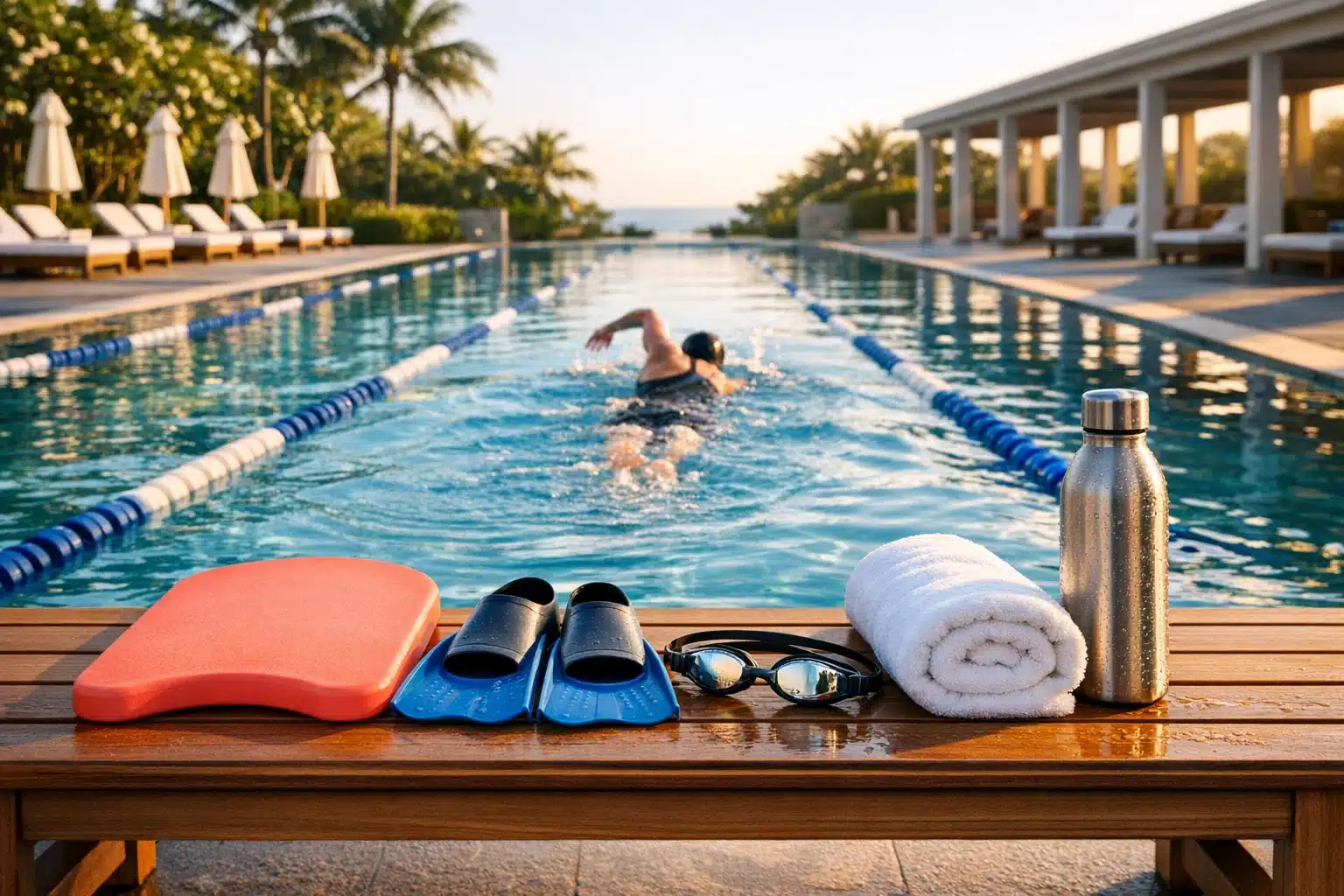
Explore the world of swimming
Step into a pool and the noise of daily life softens to splashes, breathing, and the quiet drag of water. Swimming matters because it teaches survival, builds endurance without pounding the joints, and stays accessible across many ages and fitness levels. It can be playful at a beach, disciplined in a training lane, or restorative during rehabilitation. The sections below map the subject from core strokes to safety habits, helping readers understand why this timeless activity remains so widely valued.
Outline of the article:
- The fundamentals of movement in water, including body position, breathing, and the main strokes.
- The physical and mental advantages of swimming, with useful comparisons to land-based exercise.
- Safety principles for pools, beaches, lakes, and open-water settings.
- Training methods, gear choices, and practical routines for beginners and improving swimmers.
- A concluding guide for readers who want to start, return to the pool, or deepen their enjoyment of swimming.
1. Understanding the Basics: Buoyancy, Breathing, and the Main Strokes
Swimming looks graceful when done well, yet that grace is built from a few simple principles repeated with patience. The first is body position. Water rewards length and alignment: when the head stays neutral and the hips remain close to the surface, the body slips forward with less resistance. Beginners often discover that swimming is not only about strength. It is about reducing drag, timing movements, and learning to trust the support that water provides. That trust can feel unfamiliar at first, almost like learning a new language with the whole body.
Breathing is usually the next big challenge. On land, breathing happens without thought, but in the pool it becomes part of technique. Swimmers must exhale steadily in the water and inhale quickly when the mouth clears the surface. When this rhythm breaks down, strokes become rushed and energy disappears fast. That is why early instruction often focuses on floating, gliding, and controlled breathing before speed is even discussed. A calm swimmer is often a more efficient swimmer.
The four competitive strokes each teach something different:
- Freestyle, often called front crawl, is typically the fastest and most efficient for long distances.
- Breaststroke is slower but easier for many learners to understand because the head can rise more naturally.
- Backstroke helps develop balance and rotation while allowing continuous breathing.
- Butterfly is the most demanding, requiring strong timing, coordination, and upper-body power.
Comparing these strokes reveals how varied swimming can be. Freestyle suits fitness sessions and endurance work. Breaststroke often feels approachable for recreational swimmers, though its timing can be tricky to refine. Backstroke offers a useful break from face-down swimming, yet it demands spatial awareness because the swimmer cannot see straight ahead. Butterfly, dramatic and powerful, often looks like a wave learning to become muscle.
Technique matters more than many people expect. A well-timed kick does not simply make splash; it supports balance and rhythm. Arm pulls should press water backward rather than downward. Rotation through the torso, especially in freestyle and backstroke, improves reach and reduces strain on the shoulders. These details explain why a smaller, technically skilled swimmer can sometimes move faster than a stronger but less efficient one. In swimming, refinement is a force multiplier. The water notices every shortcut, but it also rewards every improvement.
2. Why Swimming Stands Out: Fitness, Health, and Mental Benefits
Swimming earns its reputation as a complete exercise because it asks many systems of the body to work together at once. The heart and lungs support continuous movement, the muscles generate propulsion, and the nervous system coordinates breathing with rhythm and balance. Public health guidance commonly recommends at least 150 minutes of moderate aerobic activity per week for adults, and swimming can contribute meaningfully to that target. Depending on pace, stroke, and body size, an hour of swimming may use several hundred calories, often roughly in the 400 to 700 range. The exact number varies, but the broader point is clear: water can turn effort into a demanding workout without the pounding associated with many land sports.
One reason swimming feels distinct is the environment itself. Water is far denser than air, which means every stroke meets resistance. That resistance strengthens muscles in the shoulders, back, core, hips, and legs while the water’s buoyancy reduces stress on joints. For people with arthritis, old injuries, or a need for low-impact exercise, this can make swimming more practical than running. A runner may finish a session with sore knees, while a swimmer often leaves tired in a different way: worked, stretched, and pleasantly heavy-limbed.
Its benefits extend beyond conditioning:
- It can improve cardiovascular endurance through sustained, rhythmic effort.
- It develops mobility and coordination, especially when different strokes are practiced.
- It supports weight management when paired with appropriate nutrition.
- It offers a lower-impact option for recovery days and active rehabilitation.
- It can reduce stress through repetitive motion, controlled breathing, and sensory focus.
Compared with cycling, swimming uses the upper body more evenly. Compared with gym-based cardio machines, it often feels less monotonous because pace, stroke, and drill choices create variety. Compared with walking, it usually demands more whole-body coordination. None of these comparisons make swimming superior for every person; they show why it appeals to such a broad audience. Some people want performance. Others want joint-friendly movement. Many simply want an exercise that does not feel trapped indoors, even when it literally happens inside a pool.
Mental health deserves attention too. The repetitive sound of splashing, the requirement to regulate breathing, and the short-term focus on each length can create an almost meditative state. For some swimmers, the lane becomes a place where worries shrink to the size of the next turn. That experience is not a cure-all, nor should it replace professional support when needed, but it helps explain why many people return to the water for reasons that go beyond fitness metrics. Swimming can train the body while giving the mind a cleaner, quieter place to stand.
3. Safety First: Learning to Swim, Preventing Risk, and Respecting Open Water
Swimming is enjoyable precisely because water invites freedom, but that freedom must be matched with caution. Learning to swim is not only about sport; it is also about safety and self-reliance. Around the world, drowning remains a serious public health issue, and organizations such as the World Health Organization have reported that hundreds of thousands of people die from drowning each year. That fact gives swimming lessons a value that goes far beyond recreation. A child who learns how to float, tread water, and move to the wall gains more than a hobby. An adult who develops these same skills later in life gains confidence that can protect them in real situations.
Pool safety begins with habits that seem ordinary but save trouble. New swimmers should practice in supervised environments whenever possible, ideally with qualified instruction. Lifeguards are an important layer of protection, though they are not a substitute for attentive parents or personal judgment. Even confident swimmers can overestimate their ability, especially when tired. Fatigue changes technique, and poor technique can quickly turn into panic.
Essential pool and beach safety includes:
- Never swimming alone, particularly if ability is limited or conditions are unfamiliar.
- Checking depth before entering the water and avoiding reckless dives.
- Understanding lane etiquette, posted rules, and emergency procedures.
- Using flotation aids appropriately for learners, while recognizing that toys are not lifesaving devices.
- Watching weather, currents, and temperature before entering open water.
Open water deserves special respect because it removes the predictability of the pool. There are no lane ropes, black lines, or guaranteed walls close by. Lakes may hide sudden drops in temperature. Rivers can move faster than they appear from shore. The sea adds tides, waves, currents, and reduced visibility. A strong pool swimmer may feel surprisingly unsettled outside the pool because navigation, sighting, and surface conditions create new demands. This is why experienced open-water swimmers often use bright caps, tow floats, designated swim zones, and trained partners or support crews.
Safety also includes knowing when not to continue. Cramping, dizziness, sharp pain, breathlessness beyond normal exertion, or changing weather are warnings, not challenges to overcome for pride. Good judgment is one of the most underrated athletic skills. The smartest swimmers are rarely the ones trying to prove they fear nothing. They are the ones who read conditions, prepare properly, and leave enough margin for error. Water is generous when approached wisely, but it has no obligation to forgive carelessness. That is the central lesson beneath every enjoyable swim.
4. Training Smarter: Equipment, Technique Drills, and Building a Practical Routine
Once the basics are in place, improvement in swimming comes from consistency and intelligent structure rather than heroic one-day efforts. Many beginners make the same mistake: they try to swim hard for as long as possible, become exhausted, and assume they are not suited to the sport. A more effective approach breaks practice into manageable pieces. Warm up, focus on one technical skill, complete a main set that matches current fitness, and finish with a short cool-down. This structure turns random effort into measurable progress.
Useful equipment can support that process when chosen for the right reasons. Goggles improve comfort and visibility, which helps concentration. A well-fitted swimsuit reduces drag and distraction. Swim caps keep hair contained and may improve streamlining slightly. Beyond that, training tools should be used with purpose:
- Kickboards isolate leg work and help swimmers feel body position.
- Pull buoys reduce kicking so the arms and torso can be emphasized.
- Fins can improve ankle flexibility and help learners experience better speed and balance.
- Hand paddles increase resistance and should be introduced carefully to avoid shoulder strain.
- A pace clock or waterproof watch helps swimmers track rest and consistency.
Technique drills are especially valuable because they slow the movement down enough for the body to learn something new. Freestyle drills might focus on fingertip drag, catch-up timing, or side kicking to improve rotation and breathing. Breaststroke drills often target glide and timing. Backstroke drills can help with shoulder alignment and hip rotation. Drills are not glamorous, but they are often where awkward effort turns into smoother performance.
A simple weekly plan shows how accessible training can be. A beginner might swim two or three times per week, covering short repeats such as 8 x 25 meters with rest between lengths, then gradually building to 50s and 100s. An intermediate swimmer might include one endurance day, one technique-focused session, and one faster workout with intervals. Competitive swimmers, by contrast, may train multiple days per week and combine pool work with dryland strength training. These comparisons matter because they show that swimming is scalable. It can fit the person rather than forcing the person to fit a single model.
Recovery should not be neglected. Shoulders do a great deal of work in the water, so mobility, posture, and balanced strength are important on land. Hydration also matters, even though swimmers may not notice sweat as clearly as runners do. Progress tends to come quietly in this sport. One week the breathing feels less frantic. Another week the turns become cleaner. Then, almost without announcement, the water starts feeling less like resistance and more like partnership. That moment keeps many swimmers coming back.
5. Conclusion for Readers: Finding Your Own Way into the Water
Swimming does not ask every reader to become a racer, a triathlete, or an open-water adventurer. What it offers is broader and, in many ways, more useful. It offers a practical skill, a form of exercise that can last across decades, and a setting where progress is easy to feel even when it is hard to describe. For parents, it can be a safety priority and a healthy outlet for children. For office workers, it can be a joint-friendly break from long hours of sitting. For older adults, it can be a way to stay active with less impact. For athletes from other sports, it can serve as cross-training that challenges the lungs and preserves variety.
If you are new to swimming, the best starting point is modest and clear: learn comfort before speed. Take lessons if possible. Practice floating, exhaling underwater, and moving calmly from one side of the pool to the other. If you used to swim and want to return, give yourself time. Fitness in the water can fade, but technique often comes back faster than expected. If you already swim regularly, consider adding structure to keep the experience fresh, whether that means drills, interval training, or occasional open-water sessions with proper safety support.
A useful way to think about the sport is through three simple goals:
- Build confidence so the water feels familiar rather than intimidating.
- Develop skill so each stroke becomes more efficient and less tiring.
- Create consistency so swimming becomes part of life rather than an occasional burst of motivation.
There is also room for enjoyment, which should not be underestimated. Not every swim needs a stopwatch. Some of the most memorable sessions are unremarkable on paper: a quiet morning pool, sunlight shifting across the bottom, a child learning to float for the first time, or the calm satisfaction that follows twenty steady minutes of movement. Those moments explain why swimming keeps its hold on people long after novelty fades.
For readers deciding whether the sport is worth their time, the answer is often yes, not because it promises miracles, but because it meets real needs with unusual versatility. It teaches caution and confidence at once. It can challenge the fittest athlete or welcome the hesitant beginner. Most importantly, it gives people a way to move with purpose in an environment that changes how effort feels. That is the quiet magic of swimming: the water resists you, supports you, and teaches you in the same breath.