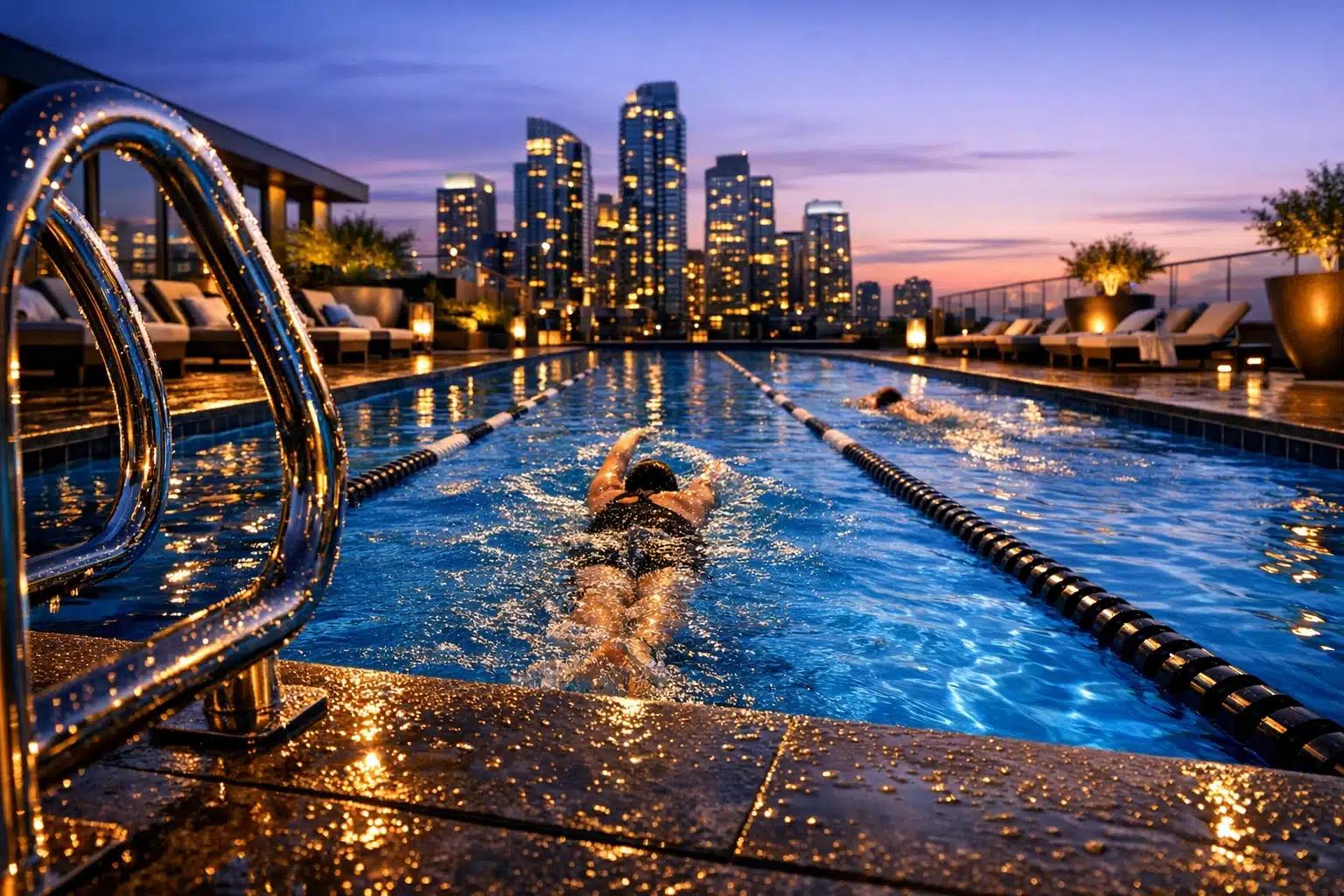
Explore the world of swimming
Swimming is one of the rare activities that can be a lifesaving skill, a demanding sport, and a calming escape all at once. From children learning to float to older adults seeking gentle exercise, it connects safety, fitness, and recreation in a remarkably practical way. Its low-impact nature opens the door to many body types and age groups, while its technical depth keeps improvement interesting for years. This article explores how swimming works, why it matters, and how to enjoy it with more confidence.
Outline
- The wider importance of swimming as a life skill, exercise, and cultural activity
- How the body responds to water, including physical and mental benefits
- The main swimming strokes and the techniques that shape efficiency
- Training methods, essential equipment, and practical safety habits
- How swimming fits into recreation, competition, and lifelong well-being
Why Swimming Matters Beyond the Pool
Swimming often enters people’s lives in one of three ways: as a childhood lesson, a holiday activity, or a formal sport. Yet its value stretches much further. At its most basic level, swimming is a safety skill. Being comfortable in water, understanding buoyancy, and knowing how to float or move toward support can make a real difference during accidents near pools, lakes, rivers, or the sea. That alone gives swimming a relevance that many other sports do not share. You can stop playing tennis for a decade and lose little beyond touch and timing, but losing confidence in water can carry much higher consequences.
It is also one of the most adaptable forms of movement available. A person may swim for relaxation, rehabilitation, play, social connection, endurance, or competition. Unlike highly specialized activities that demand a certain terrain, season, or body profile, swimming appears in many forms across the world. People train in public pools, school facilities, hotel pools, open-water lakes, rivers, and coastal areas. Some enjoy structured lane sessions; others prefer a gentle breaststroke at their own pace, gliding through the water as if the day has suddenly decided to slow down.
Swimming also has a deep cultural and historical place. Civilizations have long relied on water for transport, trade, fishing, military movement, and ceremony. In modern life, that legacy has shifted into public recreation, organized education, and elite sport. Swimming is part of school systems, military training, lifesaving programs, and international competition. The Olympic Games, for example, include pool swimming, marathon swimming, artistic swimming, and diving, showing how broad the aquatic world really is.
Its practical significance becomes clearer when compared with land-based exercise. Walking is easy to begin, cycling is efficient for transport, and running builds strong cardiovascular endurance, but swimming combines movement with water competence. That mixture is unusual. It teaches people not only how to exercise, but how to function in an environment that follows different rules.
- Water supports the body differently than land does.
- Breathing must be timed rather than left automatic.
- Balance depends on body position, not simply foot placement.
- Progress comes from technique as much as effort.
In that sense, swimming is both simple and layered. Almost anyone can enjoy the feeling of being in water, but mastering movement through it can take years. That balance is part of its appeal. A beginner can have a meaningful first lesson, while an experienced swimmer can still spend months refining one turn, one catch, or one breath. Few activities meet people at so many levels without losing their core purpose.
How Water Changes the Body and Mind
Water transforms exercise in ways that are immediately noticeable and quietly profound. The first change is physical support. Because of buoyancy, the body feels lighter in water than on land, which reduces the impact placed on joints during movement. That is one reason swimming is often recommended for people who want a challenging workout without the repeated pounding associated with activities such as running. Knees, hips, and ankles usually experience less stress, while the muscles still have to work steadily to produce forward motion.
The second change is resistance. Water is far denser than air, so every stroke becomes a negotiation with pressure. Move your hand slightly better, and the water rewards you with smoother travel. Move badly, and it feels as though the pool is politely pushing you backward. This constant resistance is why swimming can be such an effective full-body activity. The shoulders, back, core, hips, and legs all contribute, though the exact balance depends on the stroke. Freestyle and backstroke emphasize rotation and continuous rhythm, breaststroke relies more on timing and whip-like coordination, and butterfly demands powerful undulation and upper-body control.
From a fitness perspective, regular swimming can support cardiovascular health and muscular endurance. Health authorities such as the World Health Organization advise adults to accumulate at least 150 to 300 minutes of moderate-intensity aerobic activity per week, and swimming can contribute meaningfully to that target. A steady 30-minute swim session can raise heart rate, train breathing efficiency, and improve stamina. Competitive training adds further layers through interval work, speed sets, and technique drills.
The mental effect deserves equal attention. Many swimmers describe the water as mentally settling. There is a repetitive rhythm to laps: push off, streamline, pull, kick, breathe, turn, repeat. In a busy day filled with notifications and noise, a pool can feel surprisingly focused. Even when the lane is crowded, the act of counting strokes or watching the line on the pool floor creates a narrow channel of attention. It is not silence exactly, but it is a different texture of sound and thought.
- Swimming can feel restorative because the water muffles external distraction.
- Structured sets create a clear sense of progress.
- Technique practice rewards patience rather than brute force.
- Cool water can help some people feel refreshed after training.
Compared with gym workouts, swimming often appears gentler from the outside, yet it can be deeply demanding. A strong session leaves the lungs awake, the shoulders pleasantly tired, and the mind cleaner than before. That blend of effort and relief explains why so many people return to the pool for years, even when they are not chasing medals or personal records.
The Four Main Strokes and the Craft of Efficient Movement
To understand swimming well, it helps to look at the four competitive strokes not as isolated techniques, but as different answers to the same question: how can a human body move through water efficiently? Each stroke solves that problem in its own way, and each teaches something useful even to recreational swimmers.
Freestyle, usually swum as front crawl, is the fastest and most commonly practiced stroke. Its speed comes from continuous propulsion, a streamlined body position, and alternating arm recovery over the water. Good freestyle is not just about moving the arms quickly. It relies on balance, rotation, a stable head position, and an effective catch, meaning the hand and forearm hold the water rather than slipping through it. Breathing adds another layer. Lift the head too much and the hips sink; delay the breath too long and rhythm breaks down. When freestyle clicks, it feels less like fighting the pool and more like slicing a zipper through fabric.
Backstroke mirrors some freestyle mechanics but changes orientation completely. Because the swimmer lies on the back, breathing is unrestricted, which can make the stroke feel more relaxed. At the same time, that position removes visual cues. There is no black line directly beneath the face to anchor the body, so alignment becomes a subtle skill. Backstroke rewards body roll, relaxed shoulders, and a flutter kick that keeps the hips near the surface.
Breaststroke is slower than freestyle in racing terms, but technically it is often the trickiest for beginners to coordinate. The pull, breath, kick, and glide must occur in the right order. If the kick fires too early or the glide is skipped, the swimmer loses momentum. Breaststroke is distinctive because it includes a pause, a moment of shape and stillness that contrasts with the continuous churn of front crawl. Many casual swimmers enjoy it because the head can rise forward regularly, making orientation easier.
Butterfly is the most dramatic stroke to watch and, for many, the most difficult to sustain. Both arms recover together, the body moves in a wave-like pattern, and the kick comes from a dolphin motion driven by the core and hips. It is powerful, technical, and unforgiving when timing slips. Yet even practicing small pieces of butterfly can improve body awareness and rhythm.
- Freestyle is typically the fastest and most economical over distance.
- Backstroke supports open breathing but demands strong alignment.
- Breaststroke emphasizes timing and a distinct glide phase.
- Butterfly requires coordinated power and efficient body undulation.
Beyond the strokes themselves, efficiency depends on fundamentals that apply everywhere:
- Streamlining after each push-off reduces drag.
- A horizontal body line helps keep resistance low.
- Controlled exhalation in the water makes breathing smoother.
- Well-timed turns save energy and preserve momentum.
Technique matters because water punishes waste. On land, awkward movement can still carry you forward reasonably well. In a pool, small flaws multiply. Dropped elbows, stiff ankles, rushed breaths, and sinking hips all cost energy. That is why experienced swimmers often look calm rather than frantic. Their speed comes not from chaos, but from order. The water rewards precision, and over time that lesson becomes strangely addictive.
Training, Equipment, and Safety for Beginners and Improvers
Swimming may look simple from the deck, but effective progress usually comes from a thoughtful combination of routine, tools, and caution. A beginner does not need expensive gear or a heroic training plan. In fact, too much too soon often leads to frustration. What matters most is consistency and a willingness to build skill before chasing distance or speed.
A basic kit is refreshingly modest. Most swimmers start with a swimsuit, goggles, and a towel. From there, a few optional items can support development:
- A swim cap can reduce drag slightly and keep hair more contained.
- A kickboard isolates leg work and helps with balance drills.
- A pull buoy supports the legs so the arms can be trained more directly.
- Fins can improve body position and let swimmers feel speed more easily.
- A pace clock or waterproof watch helps structure intervals.
The key is to treat equipment as support, not magic. Fins do not fix poor breathing, and a pull buoy does not teach proper body rotation on its own. Useful tools amplify good practice; they do not replace it.
Training structure also matters. Many new swimmers make the same mistake: they attempt to swim continuously until exhaustion and assume that struggle equals progress. A better method is interval-based practice with clear goals. For example, a session might include a warm-up, a short drill set, several repeats at manageable effort, and a calm cooldown. This creates learning opportunities while keeping fatigue under control.
A simple development-focused session could include:
- 200 meters easy choice stroke
- 4 x 50 meters drill work with rest between repeats
- 6 x 50 meters freestyle at moderate pace
- 4 x 25 meters focusing on strong push-offs
- 100 meters easy recovery swimming
Safety deserves just as much attention as technique. In pools, that includes obeying lane direction, checking before pushing off, and respecting differences in speed. A fast lane can feel like traffic at rush hour, and good etiquette keeps everyone moving safely. In open water, the stakes rise. Visibility changes, currents shift, temperatures vary, and distance can be deceptive. Someone comfortable in a heated pool may find a lake unexpectedly disorienting.
Practical safety habits include:
- Never overestimating your endurance in unfamiliar water
- Using bright caps or tow floats in open water where appropriate
- Swimming with a partner or supervised group when possible
- Learning entry and exit points before beginning a route
- Respecting weather, waves, and local guidance
Another overlooked factor is recovery. Shoulders, neck, and calves can become tight if volume climbs too quickly. Mobility work, rest days, and attention to stroke mechanics help reduce unnecessary strain. The smartest swimmers are not the ones who always do more; they are the ones who do the right amount well enough to return tomorrow.
That may be the most useful training principle of all. Swimming rewards patience. Progress tends to arrive quietly, through easier breathing, cleaner turns, and the sudden realization that a distance which once seemed long now feels entirely manageable.
From Recreation to Competition and Lifelong Enjoyment
One of swimming’s greatest strengths is that it can remain meaningful across an entire lifetime. A child may begin with blowing bubbles and kicking while holding the pool wall. A teenager may join a school team and discover the thrill of relay racing. An adult may return to the water after years away, drawn by fitness goals or the simple wish to move without joint discomfort. Later still, swimming may become a steady ritual, less about performance and more about energy, routine, and pleasure. Few activities travel so well through different ages and stages of life.
Recreational swimming alone offers enormous variety. Some people prefer unstructured sessions, drifting between easy laps and relaxed floating. Others enjoy lane swimming because it offers measurable progress. Even small milestones matter: swimming 200 meters without stopping, mastering bilateral breathing, or learning a tumble turn can make the pool feel newly open. These achievements are modest on paper and surprisingly satisfying in practice.
For those who enjoy competition, swimming provides multiple pathways. Pool racing ranges from explosive 50-meter sprints to longer distance events such as the 1500 meters. Competitive pools are standardized for fairness, with long-course pools measuring 50 meters and short-course pools commonly measuring 25 meters or 25 yards, depending on the setting. Open-water events add navigation, currents, and temperature management, changing the sport from a technical race into something closer to strategy mixed with resilience. There are also Masters programs for adults, triathlon communities, and para swimming formats that widen access and opportunity.
The social side should not be underestimated either. Although swimming can look solitary, it often builds quiet communities. Regulars recognize one another at early-morning sessions. Coaches notice improvements that swimmers themselves miss. Parents gather at lesson time. Teammates learn the peculiar humor of wet hair, fogged goggles, and sets that looked easy on the whiteboard until the first repeat began.
- Swimming can be social without requiring constant conversation.
- It offers personal goals for people who dislike traditional team sports.
- It scales well from gentle exercise to elite competition.
- It can remain enjoyable even when performance is not the main aim.
Staying engaged over the long term usually depends on variety and realistic goals. Many swimmers benefit from changing stroke focus, mixing easy and hard days, or alternating pool work with occasional open-water sessions where safe. Others stay motivated by signing up for a local event, joining a class, or tracking consistency rather than speed.
In the end, swimming is not only about how fast a person moves from one wall to the other. It is about learning to inhabit water with skill and ease. That can mean racing, recovering, exploring, or simply carving out forty calm minutes in a noisy week. The pool asks for effort, but it often gives back more than expected.
Final Thoughts for New and Returning Swimmers
If you are curious about swimming, the best starting point is not perfection but familiarity. Learn the basics, build confidence gradually, and allow technique to develop over time instead of demanding instant fluency. The water can feel awkward at first, yet that unfamiliarity is exactly what makes progress so rewarding.
For beginners, casual swimmers, parents, and adults returning after a long break, swimming offers something rare: usefulness, challenge, and enjoyment in the same place. Whether your goal is fitness, stress relief, safety, or sport, the path forward is steady rather than mysterious. Show up, stay patient, and let the water teach you what it can.