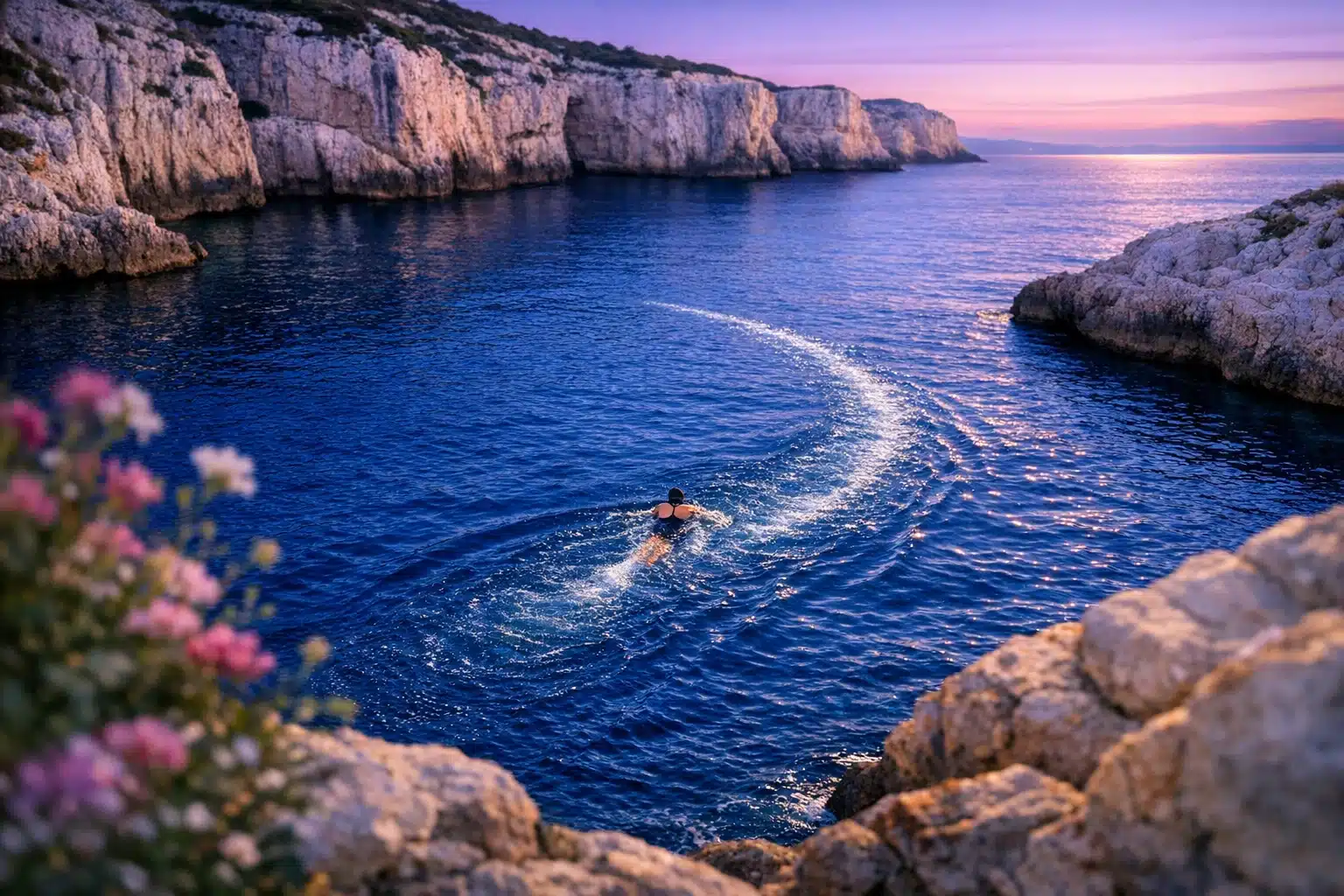
Explore the world of swimming
Swimming sits at a rare intersection of survival skill, lifelong recreation, and serious athletic discipline. A quiet lane at dawn can feel almost meditative, while a windy shoreline reminds us that water also demands judgment, respect, and preparation. Because it builds fitness without the heavy impact common in many land-based activities, swimming appeals to children, older adults, people recovering from injury, and ambitious competitors. Learning how the sport works, why it matters, and how to approach it safely makes every session more useful and far more enjoyable.
Outline
- The cultural, practical, and athletic importance of swimming
- The physical and mental health benefits that make it widely accessible
- A comparison of the main strokes and the technique behind efficient movement
- Safety principles, learning pathways, and the differences between pools and open water
- Training methods, goal setting, and a conclusion for new and returning swimmers
Swimming as a Life Skill, Leisure Activity, and Global Sport
Swimming matters for more reasons than many people realize. At the most practical level, it is a safety skill. Knowing how to float, tread water, and move to safety can reduce risk around pools, lakes, and coastlines. Public health organizations continue to treat drowning as a serious concern worldwide, which is why swim instruction is often promoted not simply as recreation, but as prevention. In that sense, swimming begins long before lap counters, stopwatches, and medals enter the picture. It starts with confidence, awareness, and the ability to stay calm in an environment that behaves by very different rules than solid ground.
Beyond safety, swimming has a remarkable social range. For one person, it is a child’s first lesson in body control and trust. For another, it becomes a family weekend routine, a rehabilitation tool after injury, or a demanding competitive pursuit built around hundredths of a second. Few activities travel so easily between these worlds. A community pool can host toddlers splashing under supervision in one lane, a senior water exercise class in another, and a dedicated club squad training for a meet at the far end. The same element, water, welcomes very different goals.
Historically, swimming has deep roots. Humans have swum for transport, fishing, military preparation, and survival for centuries. In modern sport, swimming became part of the Olympic program for men in 1896, while women’s Olympic swimming events were added in 1912. Since then, the sport has expanded into sprint races, distance events, relays, open-water competition, artistic swimming, and triathlon. That broad development reflects a simple truth: swimming is both ancient and adaptable.
Compared with sports that require large teams, expensive equipment, or specific weather conditions, swimming can be more accessible where facilities exist. Of course, access is not equal everywhere, and that remains a real barrier. Pools cost money to build and maintain, lessons can be expensive, and open water is not always safe or available. Still, in many communities, swimming remains one of the few activities where a person can pursue health, enjoyment, and structured athletic progress in the same place.
- As a safety skill, swimming supports water awareness and self-rescue ability.
- As recreation, it offers play, relaxation, and family participation.
- As a sport, it combines technique, endurance, timing, and discipline.
This layered importance explains why swimming holds its place across generations. It is not only about going faster from one wall to the next. It is about learning how to work with water instead of fighting it, and that lesson tends to stay with people for life.
Why Swimming Is Good for the Body and Mind
Swimming is often praised as “full-body exercise,” and that description is broadly accurate. Propelling yourself through water requires coordinated effort from the shoulders, back, chest, core, hips, and legs, while breathing rhythmically under physical demand challenges the cardiovascular system. Unlike many land-based workouts, however, swimming does not involve repeated impact against hard surfaces. That difference is one reason it is commonly recommended for people who want aerobic exercise with less stress on joints. While no activity is right for everyone, swimming is frequently welcomed by people who find running uncomfortable or who need a lower-impact option.
From a fitness perspective, swimming can be adjusted to match very different ability levels. A beginner may start with short lengths and plenty of rest, focusing mainly on comfort in the water. An intermediate swimmer might use intervals to improve endurance, such as repeated 50-meter or 100-meter efforts with controlled recovery. Advanced athletes can build highly structured sets that target speed, aerobic capacity, pacing, and stroke mechanics. This scalability is one of swimming’s biggest strengths. The water does not ask whether you are a first-timer or a racer; it simply responds to what you do.
There is also a useful balance between resistance and rhythm. Water is denser than air, so every movement meets consistent resistance. That makes technique especially important, but it also means the workout can feel smooth rather than jarring. Many swimmers describe a session as physically demanding yet mentally settling. The repeated pattern of kick, pull, breathe, and glide can create a focused state that leaves little room for daily distractions. That is not magic, and it does not replace professional mental health care, but regular physical activity, including swimming, is often associated with reduced stress and improved mood.
Health guidelines from major authorities such as the Centers for Disease Control and Prevention encourage adults to accumulate regular moderate or vigorous physical activity each week, and swimming can contribute meaningfully to those targets. Depending on pace and intensity, it can support heart health, muscular endurance, and calorie expenditure. It may also improve posture and body awareness because efficient swimming rewards alignment rather than brute force.
- Cardiovascular benefit comes from sustained rhythmic effort.
- Muscular engagement is broad, especially through the back, shoulders, core, and legs.
- Joint comfort is often better than in high-impact activities.
- Mental refreshment can come from the repetitive, immersive nature of the sport.
Compared with gym machines, swimming feels more dynamic and less fixed. Compared with running, it often feels gentler on the body. Compared with casual walking, it demands more technical learning. That combination makes it distinct: accessible enough for general fitness, yet deep enough to reward years of practice.
Understanding the Main Strokes and the Technique Behind Them
One reason swimming remains endlessly interesting is that it is not a single motion but a family of movement patterns, each with its own logic. The four competitive strokes are freestyle, backstroke, breaststroke, and butterfly. All four cover the same objective, moving efficiently through water, yet they do so with very different rhythms and technical priorities. A newcomer often assumes speed comes mainly from strength, but experienced swimmers know that small changes in body position or timing can make a striking difference. In swimming, wasted motion is expensive.
Freestyle, usually swum as front crawl, is generally the fastest and most efficient stroke for most people. It relies on a long body line, steady flutter kick, alternating arm recovery, and well-timed side breathing. When freestyle works well, it looks almost effortless, like a zipper gliding shut. When it breaks down, the signs appear quickly: dropped hips, rushed breathing, a crossing hand entry, or a frantic kick that burns energy without adding much speed. Because of its efficiency, freestyle is the stroke most often used in fitness lap swimming, triathlon, and distance training.
Backstroke shares some structural similarities with freestyle but changes the orientation completely. Swimmers stay on their back, which allows easy breathing but introduces challenges in alignment and navigation. Good backstroke depends on hip rotation, a stable head position, and a controlled flutter kick. Many beginners enjoy the openness of the breathing pattern, though some struggle with balance at first.
Breaststroke is slower than freestyle for most swimmers, but it is highly technical and deeply popular. Its pull, breath, kick, and glide sequence must be coordinated carefully. A powerful breaststroke kick can feel satisfying, but poor timing creates drag almost instantly. Because the stroke allows the head to rise forward more naturally, some learners find it approachable, though it can place specific demands on hips and knees.
Butterfly is often treated as the dramatic cousin of the group. It is physically demanding, but it is also elegant when done well. The stroke uses simultaneous arm action, a dolphin kick, and wave-like body timing. New swimmers sometimes fear butterfly because it appears punishing, yet broken-down drills can make it far more learnable than its reputation suggests.
- Freestyle: usually fastest, efficient, widely used for training and racing
- Backstroke: easier breathing, challenging balance, strong rotation emphasis
- Breaststroke: technical timing, distinctive kick, more glide-based rhythm
- Butterfly: demanding, powerful, timing-sensitive, visually striking
Technique improves through repetition with feedback. Useful focal points include body alignment, head position, controlled breathing, catch mechanics, and kick timing. Many swimmers benefit from drills such as single-arm freestyle, kick sets with a board, sculling, or side balance work. Improvement rarely arrives as one grand breakthrough. More often, it comes quietly, one cleaner stroke at a time.
Learning to Swim Safely: Pools, Open Water, and Essential Habits
If technique tells you how to move in water, safety tells you when and where that movement is sensible. This is not the glamorous side of swimming, but it may be the most important. Strong swimmers can still make poor decisions, and weak swimmers can improve dramatically when they learn in the right environment. Good habits begin with honest self-assessment. Can you float comfortably? Can you tread water without panic? Do you know how to rest, signal for help, or recognize fatigue before it becomes dangerous? These questions are more valuable than bravado.
For beginners, supervised lessons remain one of the best entry points. A qualified instructor can teach breathing, buoyancy, body position, and water confidence in a progression that reduces fear and builds control. Children especially benefit from structured, age-appropriate instruction paired with close adult supervision. It is worth stressing that lessons do not replace supervision. A child who has taken classes is not “waterproof.” Around water, attention is part of safety equipment.
Pools and open water also demand different mindsets. Pools are controlled environments: lane lines, visible bottoms, set lengths, and often lifeguards. They make it easier to practice technique and measure progress. Open water, by contrast, adds variables such as current, waves, temperature, visibility, and navigation. A lake can look calm from shore while hiding cold water or sudden depth changes. The sea can feel inviting one minute and stubborn the next. Open-water swimming can be beautiful and rewarding, but it requires extra preparation.
- In pools, learn lane etiquette, wall awareness, and basic emergency procedures.
- In lakes or the ocean, check conditions, swim with others, and use visible safety gear when appropriate.
- Never overestimate warmth, energy, or distance judgment in unfamiliar water.
Equipment matters too, though not in an overly complicated way. A well-fitting swimsuit, goggles, and a cap are enough for many pool sessions. Kickboards, pull buoys, fins, paddles, and snorkels can help training, but they are tools, not shortcuts. For open water, extra considerations may include a tow float, bright cap, wetsuit where suitable, and knowledge of local rules.
There is also a behavioral side to swimming safety. Do not ignore pain, dizziness, or cramping. Do not dive into unknown depth. Do not treat fatigue as a character test. Sensible swimmers respect conditions and adjust. In a sport shaped by water, humility is not weakness; it is part of competence.
Training, Goal Setting, and a Conclusion for New and Returning Swimmers
Once a swimmer has basic confidence and sound habits, training becomes the bridge between casual participation and meaningful progress. That progress does not need to be competitive. For some people, success means swimming continuously for twenty minutes without stopping. For others, it means improving a 100-meter time, preparing for a triathlon, or becoming comfortable in open water before a summer holiday. The beauty of swimming is that goals can be modest, ambitious, or purely personal, and the water remains equally honest with all of them.
Effective swim training usually combines three elements: consistency, technique, and manageable progression. Consistency matters because feel for the water fades when sessions are too far apart. Technique matters because poor mechanics can lock a swimmer into inefficient habits. Progression matters because doing too much too soon often leads to frustration rather than improvement. A practical weekly plan for a recreational swimmer might include two or three sessions, each with a simple structure: warm-up, skill work, a main set, and an easy cool-down. Even forty-five minutes can be productive when organized well.
- Warm-up: easy swimming and gentle drills to establish rhythm
- Skill work: one technical focus such as breathing, balance, or catch position
- Main set: repeated distances based on current ability and fitness goals
- Cool-down: relaxed swimming to lower effort and reinforce smooth movement
Tracking can help, but it does not need to become obsessive. Useful markers include distance completed, perceived effort, stroke count per length, rest intervals, and how controlled your breathing feels. Competitive swimmers may add split times, turn quality, and race-specific sets. Recreational swimmers may simply note how many lengths felt comfortable compared with last month. Both approaches are valid if they support motivation rather than draining it.
It is also worth remembering that swimming progress is rarely linear. Some days the water feels friendly, almost cooperative. On other days it seems to resist everything. That fluctuation is normal. Fatigue, stress, technique drift, and even pool temperature can influence performance. The key is to treat setbacks as information, not failure.
For readers who are curious but hesitant, the best starting point is not perfection. It is one sensible first step: a lesson, a local pool visit, a beginner session, or a plan to rebuild fitness gradually. For returning swimmers, patience often pays faster than ego. Skills come back, but they return best when given structure and time. In the end, swimming offers something unusually durable: a way to stay active, sharpen discipline, and find enjoyment in movement that feels both ancient and fresh. Whether you want health, confidence, or challenge, the water has room for you, provided you meet it with respect and intention.