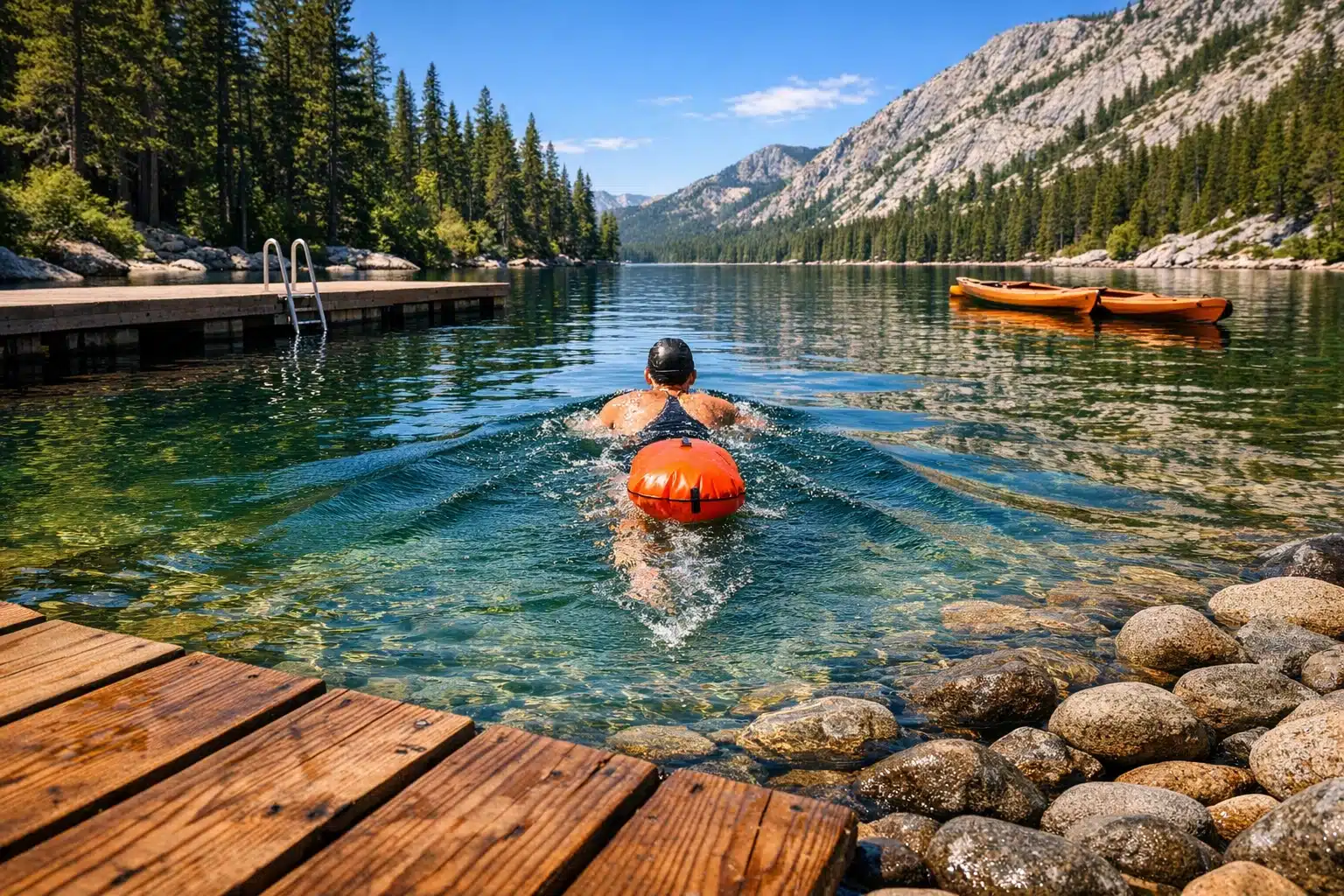
Explore the world of swimming
Swimming is one of the rare activities that feels playful on the surface while demanding serious coordination underneath. In one lane, a child learns to float; in the next, an athlete trims fractions of a second from a race, showing how broad the sport truly is. Its relevance reaches beyond recreation because it builds fitness, supports recovery, and teaches a life-saving skill. That mix of freedom, discipline, and usefulness makes swimming worth understanding in depth.
Outline: This article first explains why swimming matters in daily life and public health. It then explores the four main strokes and the technique principles that shape efficient movement. After that, it examines health and fitness benefits, followed by a practical look at safety, gear, and learning methods. The final section offers a conclusion focused on readers who want to make swimming a lasting part of their routine.
Why Swimming Matters Beyond the Pool
Swimming is often introduced as a sport, but that description is too narrow to capture its full value. It is also a survival skill, a form of therapy, a social activity, and for many people, a reliable path back into exercise after injury or long periods of inactivity. Unlike sports that demand expensive equipment, large teams, or ideal weather, swimming can be practiced in community pools, school facilities, lakes, and coastal areas, although natural water requires greater caution. That flexibility helps explain why swimming remains relevant across age groups and fitness levels.
One of the strongest arguments for learning to swim is safety. Water is beautiful, calming, and deceptively powerful. Public health organizations have long treated water competency as a serious matter because drowning remains a major global risk, especially for children and people with limited access to lessons. Knowing how to float, tread water, regulate breathing, and move calmly toward safety can make an enormous difference in emergencies. In that sense, swimming is not merely recreational; it is practical knowledge with real-world consequences.
Swimming also stands out because it lowers the barrier for people who find high-impact exercise uncomfortable. Running can stress joints, especially for beginners, older adults, or those returning after injury. In water, buoyancy supports body weight, reducing impact while still allowing the heart and lungs to work hard. The resistance of water adds another advantage: even gentle movement can become productive exercise because every stroke pushes against a dense medium. Water is far more resistant than air, so the body must coordinate effort constantly.
Its importance can be understood through several roles it plays at once:
- It improves confidence in and around water.
- It offers low-impact conditioning for varied populations.
- It teaches discipline, rhythm, and body awareness.
- It can be enjoyed alone, with family, or in organized sport.
There is also a quieter reason swimming matters. Many people experience the pool as a place where noise softens and attention sharpens. The repetitive sound of breathing, the line at the bottom of the lane, and the feeling of gliding forward create a form of moving focus that few land-based activities replicate. That combination of utility and pleasure is what gives swimming lasting appeal. It asks for respect, rewards patience, and meets people where they are, whether they want exercise, recovery, confidence, or simple relief from a crowded schedule.
Understanding the Main Strokes and the Logic of Technique
To an observer, swimming may look like a straightforward matter of moving arms and kicking legs, but efficient swimming depends on technique far more than raw effort. In fact, beginners often discover that trying harder without understanding body position only makes them tired faster. Water punishes wasted motion. The swimmer who stays long, balanced, and relaxed frequently moves better than the swimmer who thrashes with determination. That is why learning the main strokes is as much about understanding principles as memorizing patterns.
Freestyle, also called front crawl, is the fastest and most commonly practiced stroke. It relies on a streamlined body, alternating arm recovery, and rhythmic side breathing. Good freestyle feels less like climbing through water and more like sliding over it. The head stays relatively still, the hips remain near the surface, and the kick supports balance rather than doing all the work. Beginners often lift the head too high to breathe, which causes the legs to sink and creates drag. Small technical adjustments can change the entire experience.
Backstroke is sometimes easier for nervous swimmers because the face stays above water, yet it comes with its own challenges. Orientation matters; without lane flags or a sense of direction, a swimmer may drift. Backstroke rewards a long body line, steady flutter kick, and controlled shoulder rotation. It is a useful stroke for balance and confidence because it teaches openness through the chest and a more even relationship with breathing.
Breaststroke is slower but highly popular, especially among recreational swimmers. It uses a simultaneous arm pull and a whip-like kick, with a glide phase that makes timing essential. When performed well, breaststroke is smooth and economical. When performed poorly, it becomes tiring and inefficient. Butterfly, by contrast, is the most demanding of the four competitive strokes. Its symmetrical arm recovery and dolphin kick require power, timing, and mobility. It is often admired from the deck because in the water it quickly reveals every technical weakness.
A simple comparison helps:
- Freestyle: fastest, efficient for fitness and racing.
- Backstroke: useful for breathing comfort and posture awareness.
- Breaststroke: approachable for many recreational swimmers, but timing is critical.
- Butterfly: powerful and technical, best learned progressively.
Across all strokes, the same rules return again and again: reduce drag, maintain alignment, coordinate breathing, and use effort wisely. Coaches often focus first on floating, kicking, streamlining, and exhaling into the water before chasing speed. That sequence makes sense. A swimmer with solid fundamentals can improve every stroke; a swimmer without them works much harder for smaller results. Technique is the hidden architecture of swimming, and once it begins to click, the water starts feeling less like resistance and more like a medium for control.
Health, Fitness, and Mental Benefits of Regular Swimming
Swimming has earned a strong reputation in health and fitness for good reason. It trains the cardiovascular system, engages large muscle groups, and does so with far less impact than many land-based workouts. During a well-paced swim, the heart works steadily, the lungs adapt to controlled breathing, and muscles across the shoulders, back, core, hips, and legs contribute to movement. Few forms of exercise ask so much from the whole body while feeling so fluid at the same time.
From a conditioning perspective, swimming can support both moderate exercise and high-intensity training. A relaxed continuous swim helps build endurance, while interval sets can raise intensity and improve speed, power, and aerobic capacity. Calorie expenditure varies by stroke, pace, and body size, but swimming often burns several hundred calories per hour, especially when technique is efficient enough to sustain effort. That makes it useful for people managing body composition, though its value should not be reduced to calorie math alone. The more important point is that swimming can become a sustainable habit, and sustainable habits usually outperform short bursts of motivation.
Compared with running, swimming places less repeated stress on knees, ankles, and hips. That difference matters for older adults, people carrying extra body weight, and those returning from injury. It also matters for athletes who need active recovery. A runner, cyclist, or field sport player may use the pool to maintain fitness on days when pounding the ground would be unhelpful. Rehabilitation programs often include water-based exercise for similar reasons: buoyancy assists movement, while water resistance still challenges the body.
Its benefits extend beyond physical training. Many swimmers describe an improvement in mood, concentration, and stress regulation after time in the water. The pattern is easy to understand. Swimming blends rhythmic breathing, repetitive motion, and sensory immersion, all of which can have a calming effect. While it is not a replacement for medical or mental health treatment, it can be a valuable part of a healthy routine.
Regular swimming can help support:
- Cardiovascular endurance and circulation
- Muscular endurance across the entire body
- Joint-friendly exercise for recovery and longevity
- Breath control and body awareness
- Stress relief and mental reset
For general health, many adults aim to meet weekly physical activity guidelines through a mix of moderate and vigorous exercise, and swimming fits comfortably within that framework. It can be playful for children, purposeful for athletes, and restorative for older adults. That range is rare. Some activities are effective but punishing, while others are accessible but limited. Swimming manages to be both demanding and adaptable, which is why so many people return to it across different seasons of life.
Safety, Essential Gear, and the Best Way to Learn
Swimming becomes far more enjoyable when safety is treated as a foundation rather than an afterthought. Confidence in water should never be confused with carelessness. Even strong swimmers can get into difficulty through fatigue, cold water, poor visibility, cramping, currents, or simple overestimation of ability. Pools may feel controlled, yet they still require awareness of depth, lane etiquette, and surrounding swimmers. Open water adds another layer entirely, including waves, currents, sudden temperature changes, and the absence of walls to rest on. The smartest swimmers are usually the least casual about these details.
For beginners, the safest learning path is structured and gradual. Lessons with a qualified instructor can shorten the learning curve dramatically because they address fear, breathing, floating, and movement in the right order. Many adults delay lessons out of embarrassment, but adult beginners are common, and good teaching environments are designed for them. In fact, adults often progress well because they can understand technical feedback clearly once anxiety is reduced.
Basic gear does not need to be complicated. A comfortable swimsuit and well-fitting goggles are the two most useful starting points. Swim caps can improve comfort, especially for people with long hair, while a kickboard or pull buoy can help isolate parts of technique during drills. Fins may assist body position and ankle flexibility, but they are optional rather than essential.
A practical beginner kit usually includes:
- A secure swimsuit made for movement rather than casual lounging
- Goggles that seal well without causing pressure headaches
- A swim cap if desired for comfort or facility rules
- A towel, water bottle, and simple bag for organization
- Optional training aids such as a kickboard or pull buoy
Learning efficiently means respecting progression. First come water comfort and breath control. Next come floating, gliding, and kicking. Then arm actions, timing, and breathing patterns begin to connect. Many learners want to skip ahead to full laps, but that often builds strain instead of skill. Short drills, frequent rests, and patient repetition produce better long-term results than frantic practice. One excellent benchmark is this: if you finish a short set and feel more coordinated rather than more chaotic, training is moving in the right direction.
Safety habits should remain constant at every level. Swim where supervision is available when possible, tell someone if you are entering open water, respect warning flags and weather, and avoid pushing through panic. The water rewards calm decision-making. Skill matters, but judgment matters just as much. A person who swims modestly with strong awareness is often safer than a fitter swimmer who treats the environment too casually.
Conclusion: Making Swimming Part of Your Life
If you are curious about swimming, returning after years away, or trying to build a healthier routine without punishing your joints, this is a good sport to take seriously. It meets beginners with simple goals such as floating, breathing, and finishing a comfortable length, yet it also offers endless room to improve. That range is part of its charm. You do not need to become a racer to benefit from the water, and you do not need perfect technique to begin. You simply need a safe setting, a willingness to learn, and enough patience to let skill grow one session at a time.
Swimming can fit different lives in different ways. A parent may see it first as a safety skill for a child. A busy professional may value it as a quiet hour away from screens and constant noise. An older adult may appreciate the freedom of movement that water restores. A competitive athlete may chase pace times, stroke efficiency, and race strategy. None of these approaches cancels the others. Swimming is unusually generous in that sense; it allows each person to meet the same water with a different purpose.
For readers ready to start, the best plan is often the simplest one. Choose a realistic schedule, even if it is only one or two sessions a week. Focus on consistency before intensity. Track small milestones, such as better breathing, smoother kicks, or longer relaxed swims. Consider lessons if technique feels confusing, because a few corrections can save months of frustration. And if motivation fades, remember that progress in swimming is not always loud. Sometimes it arrives quietly, in the moment when the water suddenly feels less like something to fight and more like something to work with.
A sustainable approach might look like this:
- Start with short sessions and leave the pool wanting a little more.
- Prioritize technique before speed.
- Use variety by mixing strokes, drills, and easy laps.
- Respect recovery and avoid comparing your pace to others.
- Let enjoyment be part of the goal, not an afterthought.
In the end, swimming offers more than exercise. It teaches control without rigidity, effort without impact, and confidence without noise. For the reader standing at the edge, wondering whether it is worth stepping in, the answer is practical and simple: yes, if you want a skill that can improve health, deepen resilience, and stay useful for years. The water does not ask for perfection. It asks for attention, practice, and trust, and those are qualities that tend to reward people far beyond the pool.