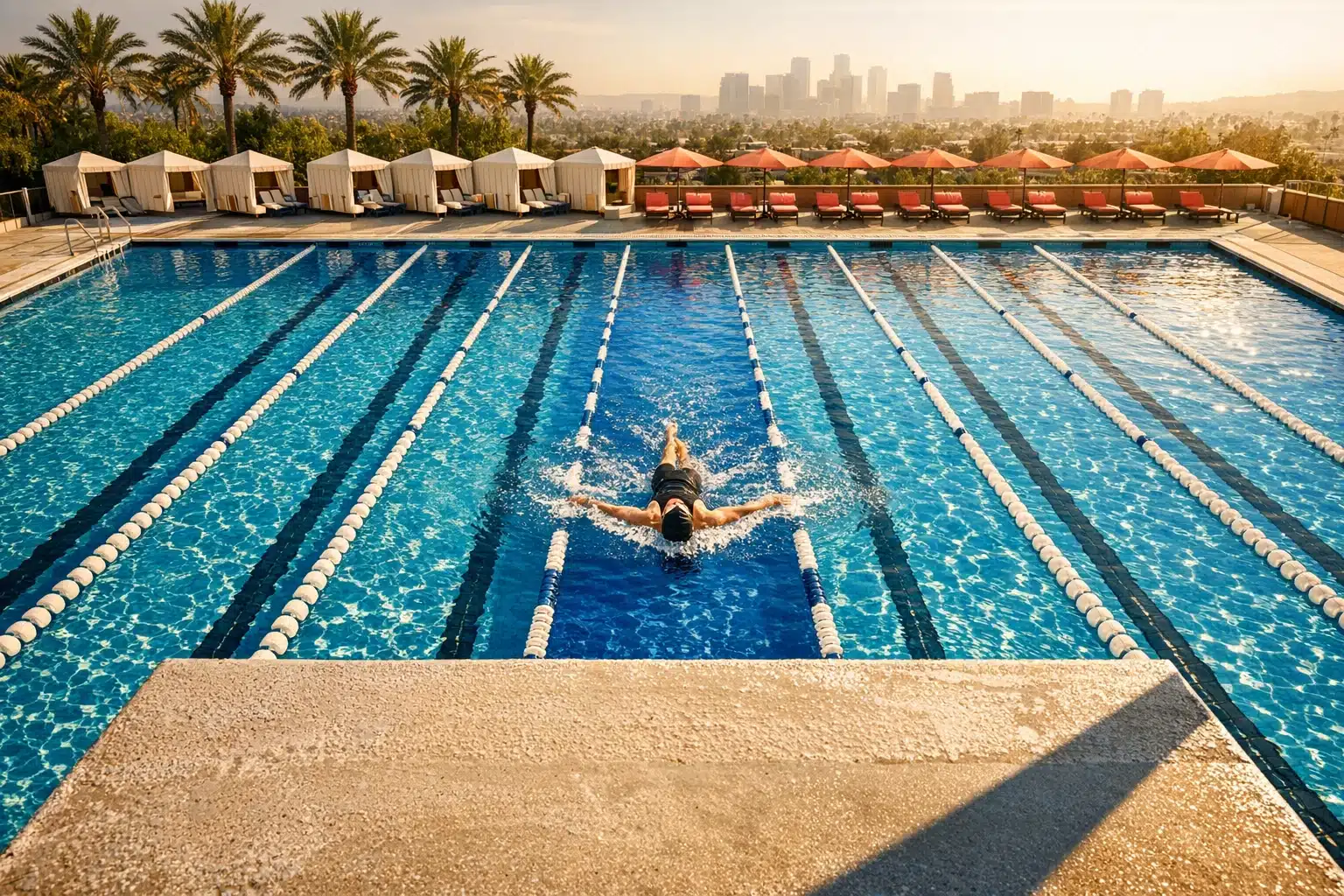
Explore the world of swimming
Swimming is one of the rare activities that works as exercise, sport, life skill, and recreation at the same time, which helps explain its lasting appeal. Whether practiced in a pool, lake, or sea, it improves coordination, challenges the heart and lungs, and teaches respect for an environment that does not forgive carelessness. This article looks at why swimming matters, how it benefits the body and mind, and what practical lessons can help both beginners and experienced swimmers make every session count.
Outline
- The nature of swimming and the qualities that make movement in water unique
- The physical and mental benefits that help explain swimming’s broad appeal
- The core skills, techniques, and training habits that support improvement
- Safety, etiquette, and the differences between pools and open water
- Practical guidance for readers who want to make swimming a lasting habit
The Nature of Swimming: Why Water Changes Everything
Swimming feels familiar because nearly everyone has seen it, yet it is unlike almost every other form of exercise. On land, movement usually means pushing against a stable surface. In water, the surface can support you, resist you, or unsettle you at the same time. That contrast is the beginning of swimming’s fascination. Water is far denser than air, so even simple motions create noticeable resistance. A slow pull with the arm can feel smooth and controlled, while a rushed stroke can feel wasteful, as if effort is slipping through the fingers. Good swimmers learn that speed is not just about force. It is about timing, position, and the ability to move with the water rather than fight it.
Buoyancy also changes the experience. Immersion reduces the load placed on joints, which is one reason swimming appeals to older adults, people returning from injury, and athletes who need conditioning without extra pounding. At the same time, reduced weight does not mean reduced challenge. The body still has to coordinate breathing, arm action, kick rhythm, and balance. When those parts work together, swimming looks almost quiet from the deck. Under the surface, however, it is a detailed full-body task that rewards patience more than brute strength.
Different strokes highlight different qualities. Competitive swimming recognizes four main strokes, each with a distinct rhythm and purpose:
- Freestyle is usually the fastest and most efficient over distance for many swimmers.
- Backstroke emphasizes body alignment and steady shoulder movement while keeping the face out of the water.
- Breaststroke uses a glide phase and is often easier for beginners to pace, though its timing can be technical.
- Butterfly is powerful and demanding, relying on strong coordination and body wave mechanics.
The setting matters too. A pool offers measured distances, lane lines, and predictable conditions, making it ideal for technique work and structured training. Lakes and oceans add currents, temperature shifts, and visibility challenges, turning swimming into a more adventurous skill. One environment is like practicing scales on a piano; the other is like performing outdoors with the wind involved. Both can be rewarding, but they ask for different forms of awareness. That mix of science, skill, and sensation is what gives swimming its special character.
Health and Fitness Benefits: More Than a Full-Body Workout
Swimming is often described as a full-body workout, and that label is fair, but it only tells part of the story. A well-designed swim session can improve cardiovascular fitness, muscular endurance, mobility, breathing control, and mental focus in one practice. Public health guidance in many countries recommends at least 150 minutes of moderate-intensity aerobic activity each week for adults, and swimming can clearly contribute to that target. Depending on pace and structure, it can be a gentle recovery activity or a demanding conditioning session. That range makes it unusually flexible for people with different goals and fitness levels.
One of swimming’s strongest advantages is its low-impact nature. Running and jumping create repeated loading through the feet, knees, hips, and lower back. For many people, those activities are useful and enjoyable, but they are not always comfortable or practical. Swimming offers a different path. Because the body is supported by water, many swimmers can train with less joint stress while still raising heart rate and working major muscle groups. Aquatic exercise is frequently included in rehabilitation settings for that reason. It can help individuals stay active when certain land-based exercises feel too harsh.
The respiratory side of swimming is also important. Because breathing has to fit the rhythm of movement, swimmers become more aware of inhaling efficiently and exhaling fully. That does not mean swimming magically transforms lung capacity for everyone, but it does train breathing discipline in a very direct way. Over time, many swimmers develop better control over effort and pacing because poor breathing patterns are quickly exposed in the water.
There is also a mental benefit that deserves attention. The repetitive sound of splashing, the line at the bottom of the pool, and the steady cycle of stroke and breath can create a focused, almost meditative state. Many people describe leaving the water calmer than when they entered it. For busy adults, that matters.
- Swimming can support endurance without high impact.
- It engages the upper body, core, and lower body in connected movement.
- It can suit competitive athletes, casual exercisers, and people rebuilding fitness.
- It often provides a sense of mental reset that is hard to replicate elsewhere.
In short, swimming is not only exercise for the body. It is also training for rhythm, attention, and consistency. That combination helps explain why some people start for fitness and keep returning for reasons that are harder to measure, but easy to feel.
Learning to Swim Well: Technique, Practice, and Efficient Progress
Many new swimmers assume progress depends mainly on fitness, yet technique usually matters more at the beginning. A strong beginner with poor body position can tire quickly, while a smaller swimmer with better alignment can travel farther with less effort. That is one of the most important lessons in swimming: efficiency often beats force. The water rewards clean movement. When the head is too high, the hips tend to sink. When the kick is frantic, it can create drag instead of forward motion. When breathing is rushed, the entire stroke starts to unravel. Improvement often begins not with doing more, but with doing less in a smarter way.
A good learning sequence builds comfort before speed. First comes water confidence: putting the face in, exhaling underwater, floating on the front and back, and standing up calmly. Next comes balance and streamlined position. After that, beginners usually work on kicking, arm actions, and simple breathing patterns. Lessons help, but self-aware practice matters just as much. In a 25-meter pool, even a few lengths done with attention can teach more than a longer session performed mindlessly.
For freestyle, several technical elements have outsized importance:
- Keep the body long and relatively horizontal to reduce drag.
- Rotate through the torso rather than reaching only with the shoulders.
- Exhale steadily in the water so the inhale can be quick and relaxed.
- Use the kick to support balance and rhythm, not only to create speed.
- Enter the hand cleanly and pull with control instead of splashing wildly.
Training tools can help when used carefully. Kickboards isolate leg work, pull buoys reduce lower-body demand so swimmers can focus on the upper body, and fins can improve body position while helping swimmers feel momentum. None of these tools replaces sound technique. They are helpful assistants, not shortcuts. A swimmer who depends on equipment without understanding movement may look better in practice than they actually are.
Structured sessions are useful for nearly everyone. Instead of endlessly swimming until tired, it helps to divide a workout into a warm-up, drills, a main set, and a short recovery period. For example, a recreational swimmer might begin with easy lengths, spend ten minutes on breathing and balance drills, swim several repeats at a controlled pace with rests in between, and finish with relaxed backstroke. That format creates purpose and makes progress easier to track. In swimming, mastery arrives lap by lap, often quietly, until one day the water that once felt difficult begins to feel like a place you understand.
Safety, Etiquette, and the Difference Between Pool and Open Water
Swimming is enjoyable partly because it offers freedom, but that freedom has to be matched with judgment. Water can be calming, playful, and beautiful; it can also become risky very quickly. Safety is not only for beginners. Experienced swimmers also make mistakes when they overestimate their ability, ignore conditions, or treat familiar environments too casually. Good habits matter whether the setting is a community pool, a hotel lane, a reservoir, or the sea.
In a pool, the dangers may seem smaller because the environment looks controlled, yet basic rules still count. Slippery decks, shallow diving areas, fatigue, and poor lane awareness all cause problems. Lane etiquette improves safety and the experience for everyone. Swimmers should choose the correct lane speed when possible, rest at the wall without blocking others, and pass only when space allows. Showering before entry, following posted rules, and respecting lifeguard instructions are practical forms of courtesy as well as hygiene.
Open water changes the equation. A lake or ocean has no lane ropes, no black line on the bottom, and often no fixed sense of pace. Conditions can shift because of wind, current, waves, boat traffic, water temperature, and visibility. Even a strong pool swimmer may feel unsettled when the bottom disappears and the water moves unpredictably. That is normal. Open-water swimming requires specific preparation rather than confidence alone.
- Never assume distance looks shorter on the water than it really is.
- Check weather, currents, and local guidance before entering.
- Use visible gear such as a bright swim cap or tow float when appropriate.
- Swim with others when possible, especially in unfamiliar locations.
- Know the signs of cold stress, fatigue, and panic, and exit early if needed.
Hydration and sun protection also matter more than some swimmers realize. A cool environment can hide sweat loss, and long outdoor sessions can result in significant sun exposure. Ear care, eye protection, and clean equipment deserve attention too. Goggles that fit well are not a luxury; they improve comfort and visibility, which supports safer movement.
The broad rule is simple: treat water with respect, not fear. Respect means preparation, observation, and honesty about your limits. Fear freezes people; respect guides them. The best swimmers are rarely the most reckless. They are often the ones who understand that a safe session is what makes the next session possible.
Final Thoughts for New and Returning Swimmers
If you are curious about swimming but unsure where to begin, the encouraging news is that this activity offers many entry points. You do not need to train like a racer to benefit from being in the water. Some people start because they want a reliable form of exercise. Others want to feel safer around pools, beaches, or family outings. Some return after years away and discover that swimming gives them a fresh relationship with movement because it feels both demanding and forgiving. Whatever the starting point, progress is usually built through consistency, not dramatic single sessions.
A practical approach works best. Set small goals that you can measure without turning every workout into a test. One person may aim to swim twice a week for a month. Another may focus on learning to exhale comfortably underwater. Someone else may want to complete 500 meters continuously with steady breathing. These targets are modest, but they build skill and confidence. Over time, modest targets stack up into real ability.
It also helps to define what success means for you. For a competitive swimmer, success may involve race times, turns, and pace control. For a parent, it may mean becoming comfortable enough in the water to enjoy time with children safely. For an older adult, it may mean preserving mobility and staying active with less joint stress. For a stressed professional, it may simply mean that forty quiet minutes in the pool creates a better day. Swimming is generous in that way: it can meet very different needs without losing its core value.
The main lessons of this article point in the same direction. Swimming is technically unique because water changes how the body moves. It is valuable because it supports fitness, coordination, and mental clarity. It becomes more enjoyable when technique improves, and it remains rewarding when safety and respect shape every session. If you are deciding whether to begin, return, or improve, think of swimming not as a test to pass, but as a skill to grow into. The water can be a teacher, a training ground, and sometimes even a reset button. Start where you are, learn deliberately, and let familiarity turn into confidence one length at a time.