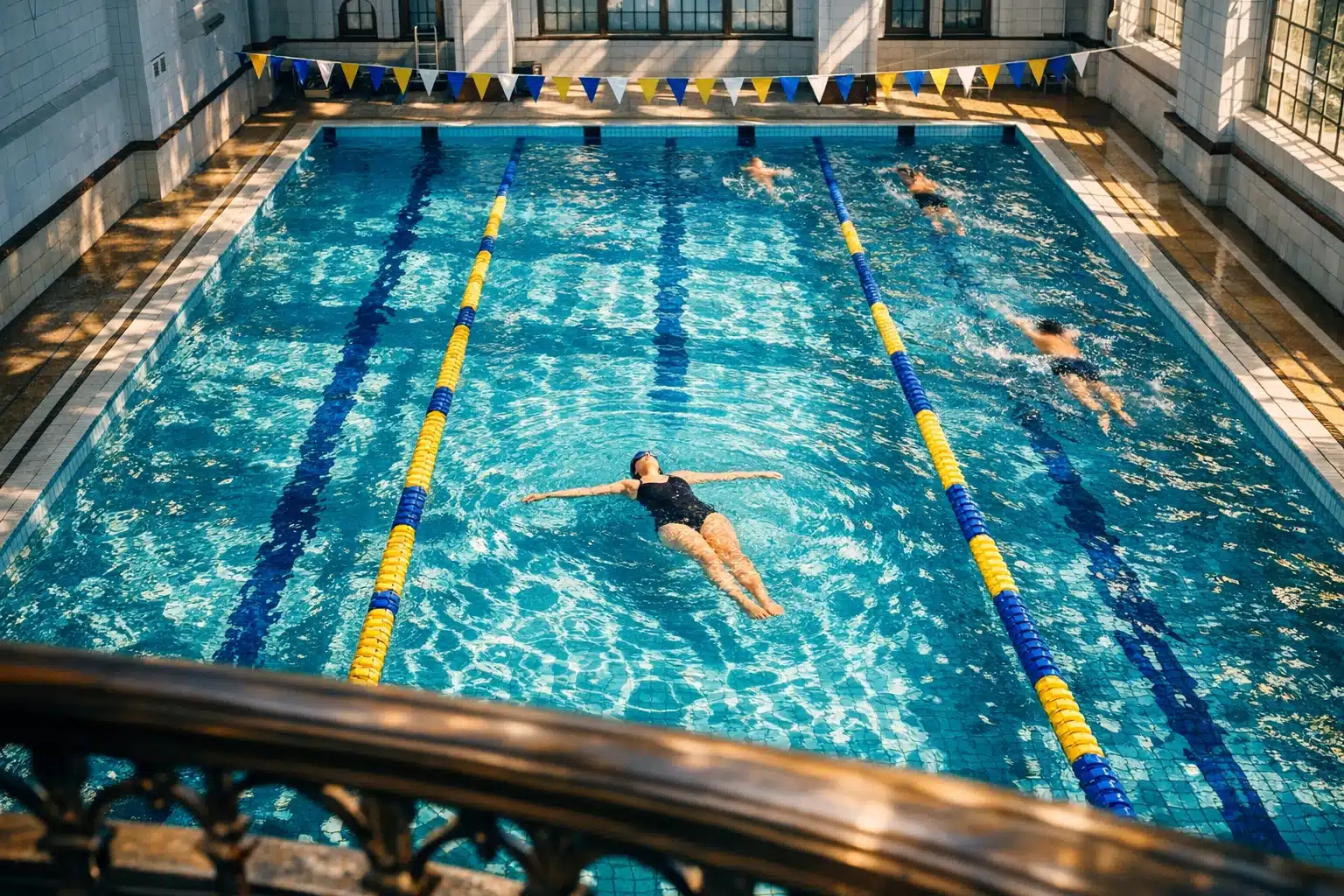
Explore the world of swimming
Swimming is one of those rare activities that feels playful and serious at the same time. It can be a lifesaving skill, a competitive sport, a low-impact workout, and a quiet reset after a noisy day. From toddlers splashing in shallow water to athletes chasing split times, it meets people where they are. That range is exactly why swimming remains relevant in schools, fitness programs, rehabilitation settings, and everyday life.
Outline: 1. Why swimming matters in daily life and sport. 2. Physical and mental benefits, with comparisons to land-based exercise. 3. The main strokes and the technique principles behind efficiency. 4. Training structure, equipment, and safety in pools and open water. 5. Practical advice for beginners and a conclusion for readers who want to make swimming part of their routine.
Why Swimming Matters: More Than a Sport
Swimming matters because it sits at the intersection of skill, health, recreation, and safety. Many sports are valuable, but few combine practical life application with year-round fitness in quite the same way. If someone learns to run, they gain endurance. If someone learns to cycle, they gain another useful form of exercise and transportation. If someone learns to swim, they gain both exercise and a basic water-survival skill that can be important in real-world situations. That alone gives swimming a special place in education and public health.
Water changes the whole experience of movement. Buoyancy supports the body, which means joints usually deal with less impact than they would during running, jumping, or many court sports. At the same time, water provides resistance in every direction. Because water is far denser than air, even a simple movement such as raising an arm or kicking from the hip asks muscles to work steadily. That combination makes swimming unusual: it can feel gentle on the body while still being physically demanding. For many people, especially older adults, people returning after injury, or those managing joint discomfort, that balance is a major advantage.
Swimming also has a broad cultural and historical footprint. Humans have been swimming for thousands of years, first out of necessity and later as sport, military training, therapy, and recreation. Today it appears everywhere: school lessons, local leisure centers, beach holidays, triathlon training plans, elite Olympic programs, and rehabilitation clinics. A child learning to float, a parent doing early-morning laps before work, and a professional athlete refining turns all belong to the same watery world, even if their goals differ.
Another reason swimming remains relevant is accessibility across life stages. It can be introduced very early in life with proper supervision, and it can continue well into older age. Not everyone will enjoy sprint intervals or butterfly sets, but many people can find a version of swimming that suits them. That might mean gentle aqua exercise, technique-focused lane swimming, social masters sessions, or open-water swims in lakes and calm sea conditions.
Its appeal is not only practical. There is something quietly dramatic about entering water and feeling your usual relationship with gravity soften. On land, movement is noisy, abrupt, and often rushed. In the pool, every action creates immediate feedback. Rush a stroke and the water fights back. Relax and align the body, and suddenly you travel farther with less effort. That lesson carries beyond sport. Swimming teaches patience, rhythm, and efficiency in a way that many people remember long after they leave the pool deck.
Health Benefits of Swimming: Fitness, Recovery, and Mental Clarity
Swimming is one of the most complete forms of exercise because it trains several systems at once. A steady session challenges the cardiovascular system, recruits major muscle groups, and improves breathing control. The heart works to circulate oxygen-rich blood, the lungs adapt to repeated breathing patterns, and the muscles of the shoulders, back, core, hips, and legs coordinate through each stroke. Unlike exercises that isolate one area at a time, swimming rewards whole-body integration.
For general health, it fits well with common fitness advice. Public health recommendations often encourage adults to get at least 150 minutes of moderate aerobic activity per week. Swimming can contribute directly to that target. A person who swims for 30 minutes, three to five times per week, may improve endurance, energy levels, and movement quality over time. Calorie burn varies by body size, stroke, and intensity, but recreational swimming can burn roughly 180 to 300 calories in 30 minutes, while vigorous lap swimming may push that number much higher. Freestyle and butterfly usually demand more energy than gentler breaststroke sessions, though technique changes the picture.
Compared with running, swimming usually places less repetitive stress on knees, ankles, and hips. Compared with cycling, it uses the upper body more actively while also demanding postural control from the trunk. Compared with gym circuits, it offers continuous resistance without weights or machines. None of this means swimming is automatically better than other activities in every case. Running may build bone-loading tolerance more directly, and strength training remains essential for muscle and joint support. Still, swimming occupies a valuable niche: it is a sustainable option for people who want aerobic fitness with less pounding.
The benefits are not only physical. Many swimmers describe a session as mentally resetting. There are practical reasons for that feeling. Repetitive movement, controlled breathing, and limited digital distraction create an almost meditative environment. Instead of switching between messages, screens, and noise, the swimmer pays attention to the next breath, the wall ahead, the position of the hips, and the sound of the water. For stressed workers, students, and parents, that narrowed focus can feel restorative.
Swimming is also widely used in rehabilitation and active recovery settings. Because buoyancy reduces load, carefully supervised water exercise can help people rebuild confidence after injury or surgery. It is not a cure-all, and it should not replace medical advice, but it often supports gradual return to movement. Common reasons people are drawn to swimming include: • lower joint impact • full-body conditioning • improved endurance • a cooling environment in warm weather • a strong mental break from daily routine. When practiced consistently and sensibly, swimming becomes more than exercise; it becomes a durable health habit that can adapt as the body changes over time.
The Core of Good Swimming: Strokes, Technique, and Efficiency
To someone watching from the stands, swimming can look simple: reach, kick, breathe, repeat. In the water, it quickly becomes clear that technique shapes everything. Small errors create drag, wasted energy, or breathlessness. Small improvements make the body feel longer, calmer, and faster. That is one reason swimming humbles beginners and fascinates experienced athletes. Progress often comes not from trying harder, but from moving smarter.
The four main competitive strokes are freestyle, backstroke, breaststroke, and butterfly. Freestyle, usually swum as front crawl, is the fastest and most common stroke for fitness swimmers. It relies on a streamlined body position, alternating arm recovery, a steady flutter kick, and timed side breathing. Backstroke uses a similar alternating rhythm but is performed face up, which changes balance and awareness. Many beginners find the breathing easier in backstroke, though swimming straight can be trickier without overhead markers. Breaststroke is often seen as more approachable because the head can come out of the water more frequently, but efficient breaststroke demands precise timing between the pull, breath, kick, and glide. Butterfly is the most powerful and technically demanding of the four, using simultaneous arm action and a wave-like dolphin kick that requires strength, coordination, and rhythm.
Across all strokes, several technique principles matter. Body position is foundational. A high-hip, aligned body creates less drag than a sagging one. Breathing should support rhythm rather than interrupt it. In freestyle, lifting the head forward usually causes the legs to drop, which increases resistance. Rotating to the side for a quick breath is more efficient. The catch phase, when the hand and forearm begin to hold the water, is another key detail. Strong swimmers do not simply slap at the surface; they anchor against the water and move the body past that anchor.
Beginners often assume kicking is the main engine, but the answer depends on the stroke and distance. In freestyle, the kick helps balance, timing, and propulsion, yet the arm stroke and body line are usually more decisive for most adult learners. In breaststroke, timing and the shape of the kick matter greatly. In butterfly, rhythm ties the whole stroke together. A useful way to think about technique is this: speed comes from reducing waste. You are not trying to overpower the pool. You are trying to stop giving energy away.
Coaches often break technique into manageable parts with drills. A swimmer may practice side kicking to improve alignment, fingertip drag to refine recovery, or single-arm work to isolate balance and pull mechanics. Useful technical checkpoints include: • head position that stays neutral • relaxed but purposeful breathing • an engaged core • consistent timing • a stroke count that does not rise wildly as fatigue appears. The water is an honest teacher. When a stroke clicks, it feels less like force and more like conversation, as though the lane finally stops resisting and starts cooperating.
Training, Equipment, and Safety: The Structure Behind Enjoyable Progress
Many people think swimming improvement depends mainly on talent, but structure matters far more for most learners. Random laps can build basic fitness, yet purposeful training usually produces better results and more satisfaction. A balanced swim session often includes four parts: warm-up, drills, main set, and cool-down. The warm-up raises body temperature and loosens movement patterns. Drills sharpen technique without the pressure of speed. The main set targets a goal such as endurance, pacing, or stroke control. The cool-down helps the body settle and gives swimmers a final chance to focus on smooth form.
A beginner session might look simple: 200 meters easy swimming, 4 short drill repeats, 6 moderate repeats with rest, then 100 easy to finish. A more advanced swimmer may use interval training with timed rests, heart-rate targets, and pace control. This is where swimming resembles running plans or cycling blocks. Progress becomes easier to see when workouts have purpose. For example, one day may emphasize aerobic endurance, another short speed efforts, and another technique quality under low fatigue.
The good news is that swimming requires relatively little equipment compared with many sports. Essential items are basic: a comfortable swimsuit, goggles that seal well, and a towel. After that, gear can be added according to goals. Common training tools include: • a swim cap for comfort and reduced drag • a kickboard for lower-body focus • a pull buoy to support leg flotation during upper-body work • fins for drill assistance and ankle mobility • a pace clock or waterproof watch for interval control. Equipment can be useful, but it should not become a crutch. A swimmer who owns every tool in the bag still needs sound technique and consistent practice.
Safety deserves equal attention, especially because confidence in water should never become carelessness. In pools, basic rules matter: know lane etiquette, avoid diving in shallow areas, follow lifeguard instructions, and be aware of others when pushing off the wall. In open water, caution increases. Conditions can change quickly due to wind, current, cold temperature, chop, or limited visibility. Open-water swimmers should ideally use a buddy system, wear visible colors, understand the route, and respect weather warnings. Cold water in particular can affect breathing and coordination faster than inexperienced swimmers expect.
Hydration and recovery also belong in the safety conversation. People often underestimate fluid loss in water because they do not feel sweat in the usual way. Shoulders can become irritated by sudden training jumps, so volume should build gradually. Good swimming is not about gritting through every session. It is about stacking safe, repeatable practices over time. The swimmers who improve most reliably are often not the ones who start hardest, but the ones who learn how to train with patience, awareness, and consistency.
Conclusion: How Beginners and Returning Swimmers Can Find Their Lane
If you are new to swimming, or returning after years away, the smartest first step is not chasing speed. It is building comfort, routine, and trust in the water. Many adults hesitate because they think everyone else in the pool already knows what they are doing. In reality, lap lanes contain all kinds of swimmers: people recovering fitness, people learning technique from scratch, people training for triathlons, and people simply trying to move after a long workday. You do not need to arrive polished. You need to arrive willing.
A practical beginner plan can be remarkably modest. Two or three sessions per week is enough to create momentum. Early goals might include exhaling underwater without tension, floating calmly on front and back, swimming short lengths with control, and resting without embarrassment. Once those basics feel steadier, you can begin linking lengths together and exploring drills. A first-month progression could look like this: • week 1 focuses on water comfort and breathing • week 2 adds short repeats and basic freestyle rhythm • week 3 introduces simple endurance sets • week 4 blends technique and consistency. That kind of progression is realistic, measurable, and far less discouraging than comparing yourself with experienced swimmers in the next lane.
It also helps to define what swimming means to you. Some readers want fitness without joint strain. Others want to become safer around water with family. Some are drawn to the quiet concentration of lap swimming, while others dream of open-water events or masters competitions. Your reason shapes your path. A parent learning to swim before a beach holiday does not need the same program as a former athlete chasing a timed 1500 meters. Both goals are valid, and both can begin with the same fundamentals: breathing, balance, coordination, and patience.
The broader lesson of swimming is simple but powerful. Progress rarely arrives as a dramatic leap. It appears as a smoother exhale, a calmer turn, a longer glide, or the moment one length becomes four. These changes seem small until you realize they have transformed both confidence and capacity. That is why swimming remains worth learning at almost any age. It offers fitness, practical skill, mental space, and a sense of possibility that deepens with practice.
For readers considering their next healthy habit, swimming is an excellent place to begin. Start where you are, learn deliberately, and let consistency do the heavy lifting. The pool does not ask for perfection. It asks for attention, respect, and a little courage. Give it those things, and it often gives back far more than exercise alone.