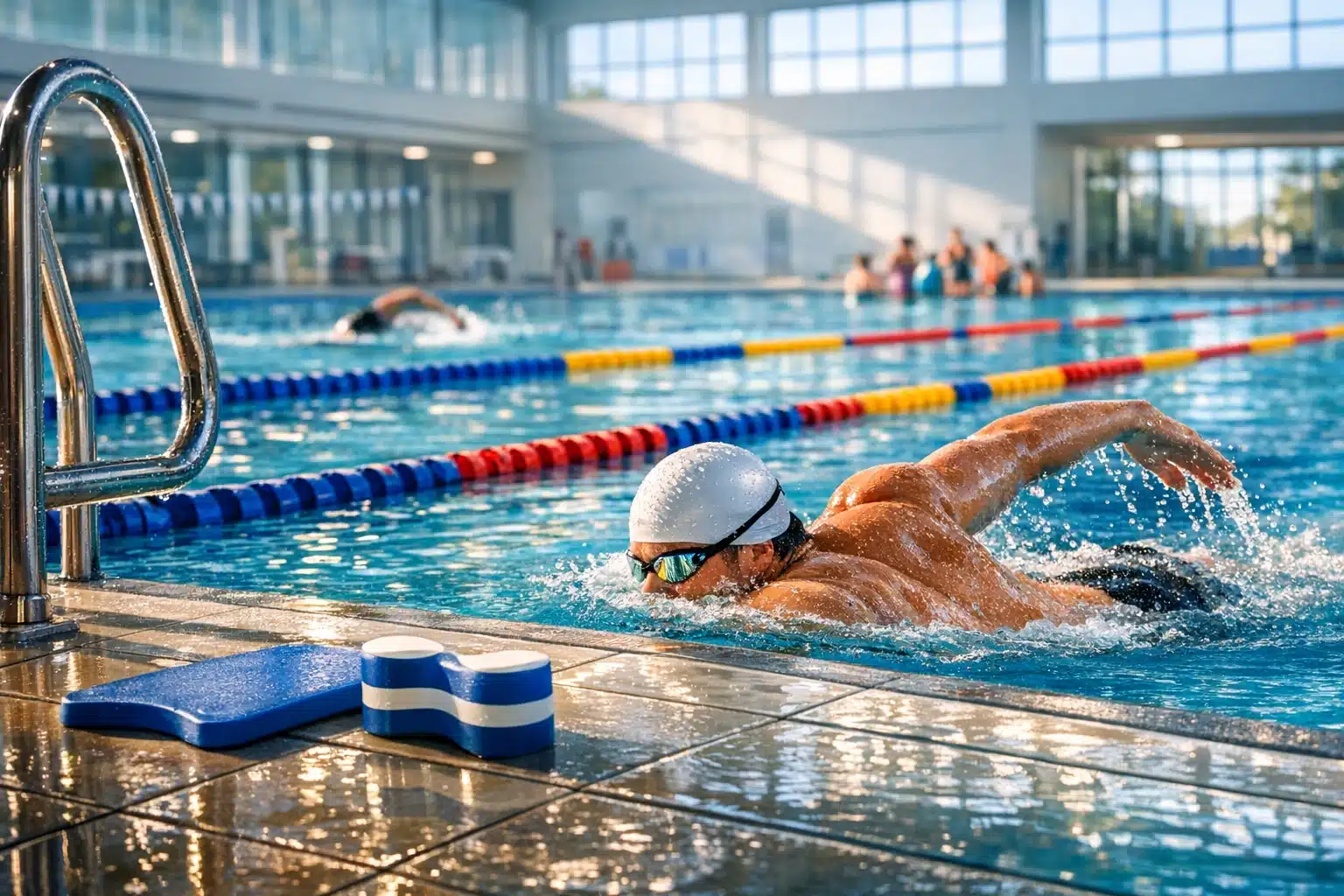
Explore the world of swimming
Swimming occupies a rare place in modern life: it is a sport, a survival skill, a source of play, and a serious form of training at the same time. In one lane, a child learns confidence; in the next, an athlete chases fractions of a second; outside, open water invites patience and respect. That range makes swimming relevant to families, fitness beginners, competitors, and older adults who want movement that challenges the heart without punishing the joints.
This article follows a clear route from overview to practice.
- The meaning and reach of swimming
- Physical and mental benefits
- Technique and the main strokes
- Safety, equipment, and swimming environments
- Practical guidance for building a lasting routine
Swimming in Context: Why This Sport Reaches So Many Lives
Swimming is one of the oldest physical skills humans have practiced. Long before it became a structured sport, it was a practical ability tied to travel, fishing, military training, and survival. Over time, it moved from necessity to recreation, then into organized competition. Today, swimming exists in several distinct forms: casual swimming for fun, lap swimming for fitness, competitive racing in pools, artistic swimming, diving, water polo, and open-water events in lakes, rivers, and seas. That wide reach helps explain why swimming matters to such a broad audience.
Modern competitive swimming has a highly organized structure. It has been part of the Olympic Games since 1896 for men, and women’s events were added in 1912. Standard competition pools are usually 25 meters or 50 meters long, and races range from short sprints to long-distance events. Yet the public image of swimming is larger than medals. For many people, the first real value of swimming is not speed but security. Learning to float, breathe calmly, and move through water can reduce fear and build independence, especially for children.
Swimming also stands apart because it bridges recreation and discipline with unusual ease. A person may begin by splashing on holiday, later join a local pool for exercise, and eventually train for a triathlon or masters competition. Few activities allow that kind of seamless progression. Water has a curious way of welcoming beginners while still humbling experts. It softens impact, but it does not hide inefficiency. If your timing is off, the water lets you know immediately.
Another reason swimming remains relevant is access across age groups. It can serve a young athlete developing endurance, an office worker seeking stress relief, or an older adult trying to stay active without heavy pounding on knees and hips. In many rehabilitation settings, water-based exercise is valued because buoyancy reduces load on the body. That does not mean swimming is effortless. It demands coordination, rhythm, and patience. Still, compared with some land sports, it offers a gentler entry point for people who need a lower-impact form of movement.
In short, swimming matters because it combines function, health, enjoyment, and challenge. It is both deeply practical and surprisingly poetic: a lesson in control, breath, and trust delivered one stroke at a time.
Health and Fitness Benefits: What Swimming Does for the Body and Mind
Swimming is often described as a full-body workout, and that label is deserved. Even an easy session asks the shoulders, back, core, hips, and legs to work together in a coordinated pattern. Unlike some forms of exercise that overload a single area, swimming distributes effort across the body while placing less direct stress on the joints. Because water supports body weight, many people who find running uncomfortable can still train effectively in a pool. That makes swimming especially appealing to beginners, older adults, and individuals returning to activity after a break.
From a cardiovascular perspective, swimming can help improve heart and lung function when practiced consistently. Public health guidance in many countries, including recommendations aligned with the CDC, suggests adults aim for at least 150 minutes of moderate aerobic activity each week. Swimming can contribute directly to that goal. Intensity varies widely, of course. A relaxed set of laps feels very different from interval training, but both can support endurance. Depending on body size, stroke choice, and effort level, adults may burn several hundred calories per hour; many estimates place moderate to vigorous swimming roughly in the 400 to 700 calorie range for an hour of continuous work.
The mental side is just as important. Many swimmers describe the pool as a place where thought becomes quieter. The repeated pull, the sound of exhalation underwater, and the lane line sliding past can create a focused rhythm that feels almost meditative. That effect is not magical, but it is real enough to matter. Exercise in general is associated with better mood and lower stress, and swimming adds a sensory environment that many people find calming.
Compared with other common activities, swimming offers a distinctive balance:
- Running often develops strong cardiovascular capacity, but it places more impact on joints.
- Cycling is excellent for endurance, yet it does not challenge the upper body to the same degree.
- Strength training builds power well, but it does not automatically improve breathing rhythm or sustained aerobic control.
- Swimming blends endurance, coordination, flexibility, and muscular engagement in one session.
That does not mean swimming is superior for every goal. If someone wants maximal bone-loading stimulus, for example, weight-bearing exercise still has unique benefits. The smarter conclusion is that swimming fills a valuable role inside a balanced lifestyle. It develops endurance without relentless pounding, encourages posture and breath control, and gives people a way to exercise even when high-impact options are not ideal. For anyone searching for a sport that can be demanding and forgiving at once, swimming makes a persuasive case.
Technique and Strokes: How Skill Changes the Experience
If fitness is the engine of swimming, technique is the steering. Two people can swim the same distance and feel completely different levels of effort depending on how efficiently they move through the water. Good technique reduces drag, improves breathing, and helps the swimmer travel farther with less wasted motion. This is why beginners often feel exhausted after only a few lengths while experienced swimmers can glide through longer sessions with steady control. The water rewards precision. It does not care how determined you are if your body position is fighting the surface.
The four main competitive strokes are freestyle, backstroke, breaststroke, and butterfly. Freestyle, usually swum with a front crawl, is generally the fastest and most common for fitness training. Backstroke allows easier breathing because the face stays above water, though body alignment still matters. Breaststroke has a distinct pull-and-kick rhythm and is often considered accessible for learners, yet efficient breaststroke is technically demanding. Butterfly is powerful, dramatic, and physically taxing, requiring timing, core strength, and confidence. Watching skilled butterfly can feel like seeing a person argue successfully with gravity.
Several technical principles matter across all strokes:
- Body position should stay long and balanced rather than stiff or sinking.
- Breathing must be timed so it supports rhythm instead of disrupting it.
- The kick should assist propulsion and balance, not become frantic background noise.
- Arm movement works best when it catches water cleanly instead of slapping at the surface.
For beginners, one of the biggest lessons is that effort alone is not enough. A swimmer who lifts the head too high often causes the hips to drop. A rushed stroke may feel strong, but it can increase drag and destroy rhythm. This is why drills are so useful. Kickboard work can isolate leg action, pull buoy sets can highlight upper-body mechanics, and simple exercises such as side kicking or catch-up drill can improve alignment and timing. Coaches frequently emphasize shorter, more focused sets over mindless volume because repetition without awareness can simply reinforce bad habits.
Technique also shapes enjoyment. When swimming becomes smoother, the sport changes from a struggle into a flow. Distance feels less intimidating. Breathing becomes calmer. Confidence grows because the swimmer is no longer merely surviving each length. That shift is central to long-term progress. People often believe that advanced swimmers are just stronger, but many are also much more economical. Skill, not just conditioning, is what turns splashing into swimming.
Safety, Equipment, and the Difference Between Pool and Open Water
Swimming is rewarding, but it is never a sport that should be approached carelessly. Water can be peaceful one moment and punishing the next, especially outside controlled environments. Safety begins with honesty about ability. Knowing how to move through water is not the same as being prepared for fatigue, cold, waves, current, or panic. Formal swim lessons, especially for children and inexperienced adults, remain one of the most practical steps a person can take. Water competency includes floating, breathing control, entering and exiting safely, and understanding what to do if something goes wrong.
Pools are the most predictable environment for learning and training. The water is measured, lanes are marked, lifeguards are often present, and external variables are limited. Even so, pool etiquette and safety matter. Slippery decks, diving in shallow areas, ignoring posted rules, or pushing beyond personal limits can create avoidable problems. Hygiene is another practical issue. Showering before entering, wearing clean gear, and respecting pool rules help maintain water quality for everyone.
Open water is a different world entirely. Lakes, rivers, and oceans introduce factors that a pool never does: visibility changes, currents shift, temperatures drop quickly, and navigation becomes part of the task. A swimmer may be fit enough for a pool workout and still be unprepared for a choppy coastline. That is why open-water swimming demands added caution.
- Never assume distance feels the same in open water as it does in a pool.
- Use a bright swim buoy or visible cap where appropriate.
- Check weather, tides, and local guidance before entering.
- Swim with others whenever possible, not alone.
- Wear a life jacket when boating or when conditions call for flotation support.
Equipment can stay simple at first. A well-fitting swimsuit and a comfortable pair of goggles are enough for many new swimmers. A cap can help with visibility, hair management, and warmth, while optional tools such as fins, paddles, kickboards, and pull buoys are best used with purpose rather than as random extras. For open water, a wetsuit may improve warmth and buoyancy in colder conditions, but it also changes body position and movement. Gear should support safe practice, not create false confidence.
The most useful mindset is respectful rather than fearful. Swimming is safest when people treat water as an environment that deserves preparation. Confidence is valuable, but informed caution is even better.
Conclusion: Finding Your Lane and Building a Habit That Lasts
For most readers, the real question is not whether swimming is impressive but whether it fits into daily life in a realistic way. The answer is often yes, provided expectations are sensible. You do not need to train like an Olympian to benefit. A modest routine can improve endurance, support health, and make you more comfortable in the water. What matters most at the beginning is consistency, not heroic distance. Twenty or thirty focused minutes done regularly will usually beat one exhausting session followed by two weeks of avoidance.
A practical starting point might look like this:
- Beginners can aim for two short sessions a week, alternating easy lengths with rest.
- Intermediate swimmers may add interval sets, such as 8 x 50 meters with controlled recovery.
- Fitness-focused adults can combine swimming with walking or strength work for a balanced week.
- Parents can treat lessons and supervised family swims as both recreation and skill building.
There is also room to personalize the experience. Some people love the structure of counting laps. Others prefer drills, aqua fitness, or open-water outings that feel more adventurous. A triathlete may use swimming to complete a multisport plan, while a desk-bound worker might value it as a reset after long hours indoors. The beauty of the sport lies partly in that flexibility. It can be social or solitary, intense or restorative, technical or playful.
Progress tends to follow a familiar pattern. At first, attention goes to breathing and basic comfort. Then efficiency begins to improve. Eventually, swimmers notice they can cover more distance with less strain and greater confidence. That is the moment many people start to enjoy the sport deeply. The pool becomes less of a test and more of a companion. Water no longer feels like an obstacle; it feels like a place where skill has quietly grown.
If you are new to swimming, start small and learn well. If you are returning after years away, let patience replace comparison. If you are already comfortable in the water, refine technique and stay mindful of safety. For all of these readers, the same truth applies: swimming rewards steady practice, attention to detail, and respect for the environment. In a noisy world, it offers something rare—a demanding activity that can also leave you clearer, calmer, and stronger when you climb out.