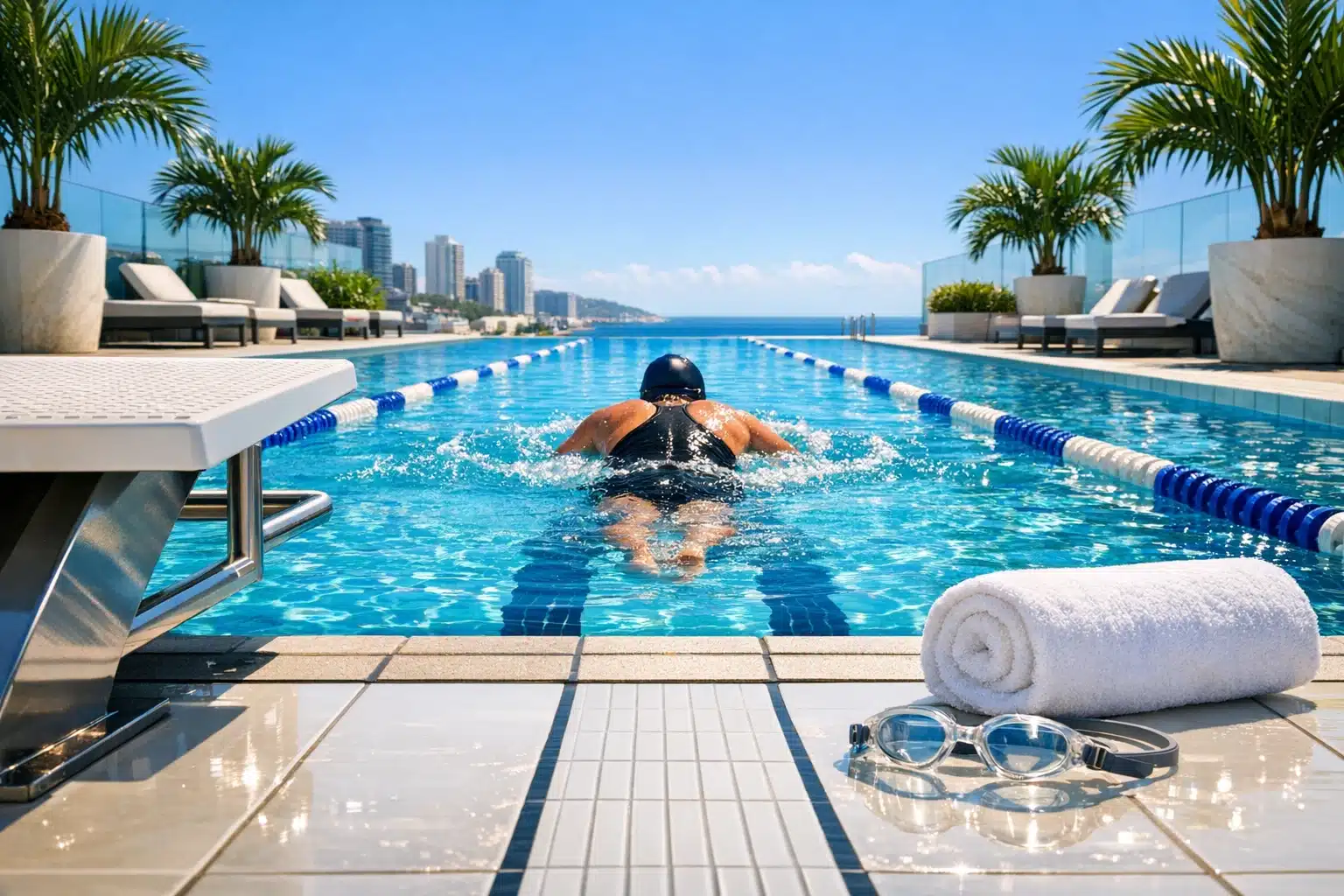
Explore the world of swimming
Swimming matters because it sits at the crossroads of health, safety, sport, and simple pleasure. A child learning to float gains more than a pastime; that lesson can build confidence and reduce danger around open water. An adult returning to the pool often finds a rare kind of exercise that challenges the heart, strengthens muscles, and eases stress without punishing the joints. In a sedentary age, swimming remains practical, inclusive, and quietly transformative.
Outline: this article first explains why swimming has lasting relevance, then examines the four main strokes and the science of moving through water, next explores physical and mental benefits, after that covers safety, learning, and training habits, and finally closes with a reader-focused conclusion on how to make swimming part of everyday life.
Why Swimming Matters Beyond the Pool
Swimming is often introduced as a sport, but that description is too narrow. It is also a life skill, a public health tool, a rehabilitation option, and for many people, a form of recreation that remains enjoyable long after other activities become harder to sustain. Few exercises can be practiced by children, elite athletes, older adults, and people recovering from injury with the same basic medium and the same essential goal: move well through water. That broad usefulness gives swimming a special place in modern life.
Its importance begins with safety. The ability to float, tread water, and move toward a safe edge can make a decisive difference in emergencies. Public health organizations regularly emphasize drowning prevention, especially for children and communities with frequent exposure to lakes, rivers, beaches, or backyard pools. Learning to swim does not remove all risk, but it creates layers of protection. A person who understands breath control, body position, and calm movement in water is usually better equipped than someone who panics at the first unexpected splash.
Swimming also fits a wide range of lifestyles. Someone training for competition may spend hours refining split times, while another person may simply swim gentle laps after work to clear the mind. That flexibility is one reason it remains popular in schools, community centers, fitness clubs, and therapy programs. Unlike some sports that demand specialized fields, teams, or expensive equipment, swimming can begin with a swimsuit, safe supervision, and access to water. The barriers are not trivial, especially where facilities are limited, but the basic activity itself is remarkably direct.
There is a cultural dimension as well. Across coastal towns, island communities, and cities built around rivers, swimming has long carried meanings that go beyond exercise. It can signal freedom, summer, discipline, or belonging. Watch a pool at dawn and you see one world; watch a public beach at sunset and you see another. In both, water becomes a stage where confidence, caution, effort, and delight meet.
Several qualities help explain swimming’s staying power:
• It teaches survival skills as well as athletic skills.
• It can be gentle on joints while still demanding real effort.
• It suits both solitary practice and team environments.
• It scales from playful movement to elite competition.
That combination is rare. Swimming is not merely about crossing a lane. It is about learning to cooperate with an element that never stops giving feedback. Water is an honest teacher: rush too hard, and it resists; find rhythm, and it carries you farther than force alone ever could.
The Four Main Strokes and the Science of Moving Through Water
To understand swimming, it helps to start with a simple fact: water is far denser than air, which means every movement meets noticeable resistance. This is why a technically efficient swimmer can outperform a stronger but less coordinated one. In the pool, power matters, yet shape, timing, and breath often matter more than beginners expect. Swimming is essentially a conversation between propulsion and drag. The body must create forward movement while reducing everything that slows it down.
The most commonly taught stroke is freestyle, usually swum with a front crawl. It is typically the fastest of the four competitive strokes because it combines a streamlined body line, alternating arm recovery, and continuous flutter kick. Efficient freestyle depends on a long reach, a stable head position, and controlled rotation through the hips and shoulders. Swimmers who lift the head too high or cross their arms over the center line often create extra drag, which wastes energy quickly.
Backstroke shares many mechanics with freestyle but flips the body face-up. Because the swimmer can breathe freely, beginners sometimes find it mentally easier. At the same time, maintaining direction without seeing forward requires body awareness and lane discipline. Breaststroke is different again. It uses a simultaneous arm pull and a whip-like kick, making timing especially important. For many casual swimmers it feels intuitive, yet when done poorly it can slow to a stop between cycles. Butterfly is the most demanding of the four, asking for coordinated arm recovery, a dolphin kick, and strong trunk control. When done well, it looks almost musical, as if the swimmer is riding a wave created by the body itself.
A useful comparison looks like this:
• Freestyle: fastest, efficient for distance, highly dependent on rhythm and rotation.
• Backstroke: good for posture awareness, continuous breathing, strong shoulder coordination.
• Breaststroke: slower but often approachable, emphasizes timing and lower-body propulsion.
• Butterfly: powerful and technical, demanding on the core, shoulders, and lungs.
Beyond the strokes, basic physics shapes every lap. Streamlining reduces drag; this is why swimmers push off the wall with arms extended and head tucked. Buoyancy helps support the body, but body position still matters because legs that sink increase resistance. Propulsion comes from the hands, forearms, feet, and the coordinated transfer of force through the torso. Breathing must fit the stroke rather than interrupt it. In practical terms, the best swimmers do not merely fight the water. They organize movement so the water has less chance to fight back.
This is one reason swimming can feel humbling at first. On land, effort alone often carries a person through. In water, effort without technique can feel like trying to run through a thick curtain. Once mechanics improve, however, the experience changes dramatically. A length that once felt chaotic becomes smooth, and the pool that seemed endless begins to shrink with each better stroke.
Physical Fitness, Recovery, and Mental Wellbeing in the Water
Swimming is one of the clearest examples of full-body exercise. It asks the heart and lungs to sustain effort, the muscles to produce controlled force, and the nervous system to coordinate repeated patterns with precision. Because water supports much of the body’s weight, swimming is often described as low impact, but that does not mean low demand. A steady set of laps can raise the heart rate, challenge breathing, and build endurance in a way that feels very different from running or cycling.
From a fitness perspective, the benefits are broad. Regular swimming can contribute to cardiovascular health by helping people accumulate moderate to vigorous physical activity, which aligns with widely accepted exercise guidelines. Depending on body size, stroke choice, and pace, roughly 30 minutes of lap swimming may burn around 200 to 350 calories or more, while harder sessions can exceed that range. It also recruits major muscle groups across the shoulders, back, chest, core, glutes, and legs. Unlike machine-based workouts that isolate one area at a time, swimming links these regions into coordinated motion.
Another advantage is versatility. An experienced swimmer can use intervals for speed, long repeats for endurance, drill work for technique, or easy recovery sessions after strength training. People managing joint discomfort often appreciate the reduced loading compared with high-impact activities. This is why pools are commonly used in rehabilitation settings, where supervised aquatic exercise may help some individuals rebuild confidence and mobility after injury or surgery. The water does not cure everything, and medical advice still matters, but it often creates a more forgiving environment for movement.
The mental side is just as significant. Repetitive lap swimming can feel meditative because breathing, stroke count, and the sound of water create a rhythm that narrows attention. Many swimmers describe a mental reset after even a short session. That effect is not magic; it likely comes from a mix of steady physical exertion, reduced digital distraction, and the calming sensory qualities of the water itself. Pools also give structure to progress. A person can measure one more lap, five seconds less per length, or a smoother turn. Small wins accumulate quietly.
Some of the most valued benefits include:
• Improved cardiovascular endurance through sustained aerobic work.
• Better muscular endurance, especially in the upper body and core.
• Lower impact on joints than many land-based exercises.
• A chance to manage stress through rhythmic, focused movement.
That said, swimming is not automatically gentle in every form. Poor technique, sudden volume increases, or excessive intensity can strain shoulders, neck, or knees. Competitive swimmers, for example, often need strength training, recovery planning, and mobility work to stay healthy. The lesson is simple: swimming is powerful because it is adaptable. It can be restorative, challenging, social, or solitary, but the benefits show up most clearly when the workload matches the swimmer’s skill, goals, and physical condition.
Learning Safely, Building Technique, and Training with Purpose
Many people want to swim more but feel uncertain about where to begin. That uncertainty is normal. Water can be inviting from the deck and intimidating once you step in, especially if previous experience was limited or unpleasant. The most effective path is usually a gradual one: learn comfort first, then control, then efficiency. Floating, exhaling into the water, pushing off the wall, and maintaining a relaxed body line may seem simple, yet these basics shape everything that comes later. Strong swimmers are rarely built on shortcuts.
Safety deserves first priority. Beginners should choose supervised environments when possible, especially pools with lifeguards or formal lessons. Open water adds variables that pools do not have, including currents, waves, cold temperatures, limited visibility, and uncertain depth. Even skilled pool swimmers can be surprised by those conditions. A bright cap, a tow float where appropriate, a swimming partner, and local knowledge all matter outdoors. Confidence is helpful; overconfidence is hazardous.
Technique development benefits from patience. One common beginner mistake is trying to swim farther before learning to breathe calmly. Another is kicking hard while the hips and legs sink, which creates fatigue without much speed. Drills can help isolate problems: side kicking improves balance, catch-up drill slows freestyle enough to teach timing, and sculling builds feel for the water. Video feedback, when available, often speeds learning because swimmers can compare what they think they are doing with what is actually happening.
A practical beginner session might include:
• 5 to 10 minutes of easy water adjustment and relaxed breathing.
• Short drill repeats focused on floating, kicking, or arm timing.
• Several manageable lap efforts with generous rest.
• A few minutes of easy backstroke or gentle movement to cool down.
Training with purpose means matching sessions to goals. If the goal is general fitness, consistency matters more than heroic single workouts. Two or three swims each week can build skill and endurance more effectively than one punishing session followed by long gaps. If the goal is speed, then interval structure, pacing, and stroke mechanics become more important. If the goal is confidence in the sea or a lake, then sighting, navigation, and comfort in changing conditions must be practiced deliberately.
Equipment can support learning, though it should not replace it. Goggles improve visibility and reduce hesitation. A kickboard can help isolate the lower body, a pull buoy can highlight body position, and fins can make drills more accessible. Used thoughtfully, these tools are useful. Used carelessly, they can hide weaknesses. The best training habit is not buying more gear; it is showing up with a clear focus and enough humility to improve one detail at a time.
Conclusion: Why Swimming Is Worth Your Time
For readers wondering whether swimming is really worth the effort, the strongest argument is its range. Very few activities teach safety, develop cardiovascular fitness, challenge coordination, support recovery, and remain enjoyable across decades of life. You do not need to become a competitive swimmer to benefit from it. You simply need a reason to start and a plan that respects your current level. That reason may be health, stress relief, family safety, sport, or the desire to feel more capable in water. All are valid.
If you are a beginner, focus on comfort and instruction before speed. If you are returning after years away, let technique and patience rebuild your stamina. If you are already active on land, use swimming as a complement rather than a direct copy of your other training. The pool rewards consistency far more than bravado. Progress often arrives quietly: a calmer exhale, an easier length, a turn that no longer feels rushed, a body that leaves the water awake rather than drained.
Swimming also offers something harder to measure. It creates a rare kind of attention. The phone stays in the locker, the lane draws a clean line from one end to the other, and the water keeps asking for presence. In a noisy schedule, that simplicity can be surprisingly valuable. One session may feel clumsy, another smooth, and a third somewhere between, but each teaches something. Water is patient with repetition. It does not care how impressive you looked yesterday; it responds to what you do well today.
If you want a practical next step, keep it modest:
• Take a beginner or refresher lesson.
• Choose one or two weekly sessions you can realistically maintain.
• Practice breathing and body position before chasing distance.
• Learn basic water safety if you plan to swim outside the pool.
For parents, swimmers returning to fitness, older adults seeking joint-friendly exercise, and curious newcomers alike, swimming offers a durable return on time invested. It can become a workout, a skill, a social habit, or a private refuge. Start small, stay attentive, and let improvement grow lap by lap. The world of swimming is wide enough for ambition, caution, discipline, and joy, which is exactly why so many people keep coming back to the water.