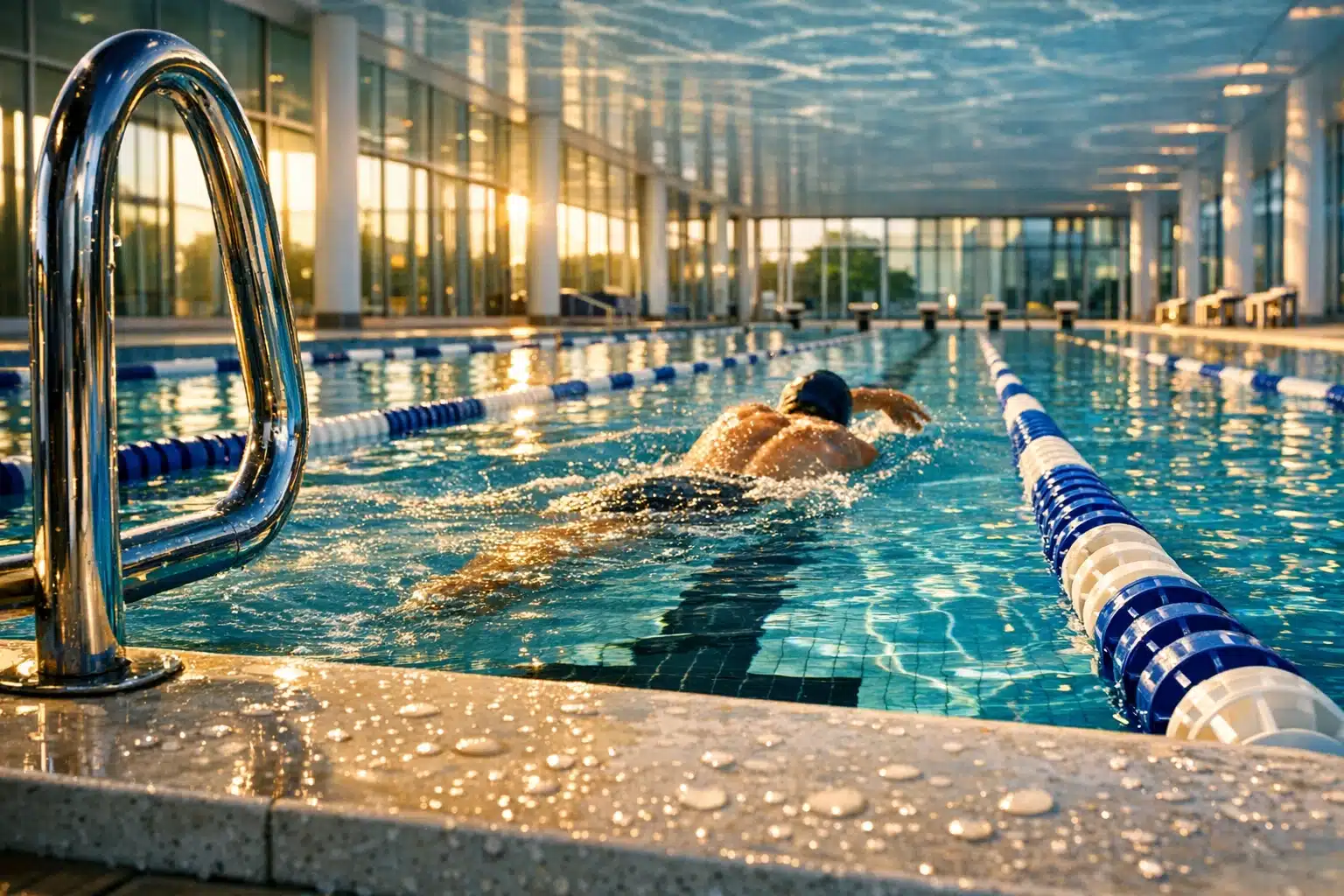
Explore the world of swimming
Swimming invites people into a setting where movement behaves differently: gravity eases its grip, breathing becomes deliberate, and every stroke leaves a brief silver trail behind. That unusual mix of challenge and relief helps explain its appeal in schools, fitness programs, rehabilitation settings, and elite sport. Whether your goal is better endurance, greater safety in the water, or a fresh way to train, learning how swimming works reveals a discipline that is practical, adaptable, and rewarding over time.
Outline: this article explores swimming as a cultural and practical skill, examines its physical and mental benefits, explains the major strokes and technical foundations, covers training and safety, and concludes with ways to build a lasting relationship with the sport.
Swimming as a Human Skill, Sport, and Cultural Practice
Swimming is far more than a competitive event measured in seconds. At its core, it is a basic movement skill that has shaped survival, travel, recreation, military training, education, and modern fitness culture. Humans have swum for thousands of years, and evidence from ancient art and written records suggests that water movement was recognized early as both useful and admirable. In the modern world, swimming appears in many forms: children learning to float, adults taking lap sessions before work, lifeguards training for rescue readiness, triathletes building endurance, and families cooling off on a summer afternoon. Few activities move so easily between necessity and enjoyment.
One reason swimming remains widely relevant is its versatility. Running largely requires land, footwear, and tolerance for repetitive impact. Cycling depends on equipment, roads, or designated routes. Swimming, by contrast, can take place in pools, lakes, rivers, or oceans, though each setting has distinct safety considerations. It can be taught as a life skill, practiced as exercise, refined as a technical sport, or enjoyed simply as leisure. That range gives swimming unusual social value. A community pool may serve school programs in the morning, therapy sessions in the afternoon, and local clubs in the evening. The same body of water supports beginners, recreational users, and serious competitors.
Swimming also carries a strong educational dimension. Learning how to breathe calmly, float efficiently, and move with control can reduce panic in the water and improve decision-making. This matters because water competence is not the same as confidence. A person may feel relaxed near water and still lack the skills to respond safely when conditions change. Good instruction usually develops several linked abilities:
• entering and exiting water safely
• floating and treading water
• turning onto the back to rest
• coordinating breathing with movement
• recognizing hazards such as currents, cold shock, or fatigue
Culturally, swimming occupies an interesting place between seriousness and freedom. It can be strict, with black lines on pool floors, interval sets, and precise stroke counts. Yet it can also feel almost poetic. In open water, the horizon replaces lane ropes, and progress is marked by rhythm rather than walls. This dual identity helps explain why swimming appeals to such a broad audience. It offers measurable performance for those who want structure, and a deep sense of release for those who simply want to move through water with purpose.
The Physical and Mental Benefits of Swimming
Swimming is often recommended because it combines aerobic training, muscular engagement, and relatively low impact in a single activity. Health organizations commonly advise adults to aim for at least 150 minutes of moderate-intensity aerobic activity per week, and swimming can contribute meaningfully toward that target. A steady swim session elevates heart rate, challenges the lungs, and recruits multiple muscle groups at once. Unlike some gym routines that isolate one area of the body, swimming asks the arms, shoulders, back, core, hips, and legs to cooperate continuously. The body does not work as separate parts in the water; it works as a system.
One major advantage is reduced joint stress compared with many land-based exercises. Because water supports the body, swimming can be a practical option for people who find running uncomfortable due to impact, excess body weight, or certain mobility limitations. That does not mean swimming is effortless. Water creates resistance in every direction, so even a smooth, easy-looking lap requires force production and precise timing. The result is a form of exercise that can be gentle on joints while still demanding from the cardiovascular system. This balance is one reason swimming appears so often in rehabilitation programs and cross-training plans.
The mental benefits are equally significant. The repetitive nature of strokes, the controlled breathing pattern, and the muted soundscape of the pool often create a calming effect. Many swimmers describe a focused state that resembles meditation, especially during longer sessions. Attention narrows to essentials: inhale, exhale, catch, pull, kick, glide. For people whose daily routines are crowded with noise and screen time, that simplicity can feel restorative. Exercise in general is associated with improved mood and reduced stress, and swimming offers those benefits in an environment that encourages concentration without constant external stimulation.
There are also practical training advantages:
• it can be adapted for beginners, older adults, and high-level athletes
• intensity is easy to vary through pace, distance, rest, and stroke choice
• it develops endurance without the pounding associated with some sports
• it complements activities such as running, rowing, and team sports
Still, the benefits depend on consistency and sound technique. A swimmer who trains once a month will not gain the same conditioning as someone who swims three times a week. Likewise, poor breathing habits or rushed stroke mechanics can limit efficiency and enjoyment. When practiced regularly and with basic technical guidance, swimming becomes one of the most complete forms of exercise available, blending health, function, and a surprising sense of quiet pleasure.
Understanding the Main Strokes and the Logic of Good Technique
To an untrained eye, swimming can seem simple: get from one end of the pool to the other. In reality, technique shapes everything. Efficient swimmers are not merely stronger; they are better at reducing drag, organizing movement, and turning effort into forward motion. Water is dense compared with air, so small technical errors create noticeable consequences. A lifted head, a dropped elbow, or a mistimed breath can act like a hidden brake. Good technique is therefore less about looking graceful for its own sake and more about conserving energy.
The four main competitive strokes are freestyle, backstroke, breaststroke, and butterfly. Freestyle, usually swum with a front crawl, is the fastest and most common for fitness training. It rewards a long body line, relaxed recovery, steady kick, and rhythmic breathing. Backstroke flips the swimmer onto the back, which changes orientation and breathing but still depends on rotation and alignment. Breaststroke is slower and more timing-sensitive, with a glide phase, symmetrical arm action, and a whip-like kick. Butterfly is the most physically demanding for many swimmers because it requires coordinated arm recovery, a strong undulating body action, and carefully timed breathing. Each stroke has its own personality. Freestyle is efficient, backstroke feels open, breaststroke is measured, and butterfly is dramatic, like trying to turn strength into rhythm before rhythm disappears.
Beginners often improve fastest by focusing on a few core principles rather than obsessing over every detail at once:
• keep the body as horizontal as possible to reduce drag
• exhale steadily in the water instead of holding the breath
• enter each stroke with control rather than rushing
• use the core to connect the upper and lower body
• think about balance and timing before raw power
Breathing deserves special attention because it affects both technique and confidence. New swimmers frequently lift the head too high to inhale, which causes the hips and legs to sink. A better approach in freestyle is to rotate with the body and take a quick, economical breath while one goggle remains near the surface. That tiny adjustment often improves alignment immediately. Kicking is another area of misunderstanding. Many people assume speed comes mostly from the legs, but in many swim situations the kick serves balance, rhythm, and body position as much as propulsion.
Turns and starts also matter, especially in pool swimming. Pushing strongly off the wall can make a noticeable difference to pace, and streamlined underwater positioning reduces resistance before the first stroke begins. In short, swimming technique is a chain of connected decisions. When one link improves, the whole movement often feels easier, smoother, and faster.
Training, Safety, and Equipment for New and Experienced Swimmers
Swimming rewards regular practice, but productive training is not just a matter of piling up laps. Good swim training balances technique work, aerobic conditioning, recovery, and safety awareness. A beginner may improve most through short sessions centered on comfort in the water, breathing patterns, and basic stroke mechanics. A more advanced swimmer might use structured interval sets, pace targets, kick drills, and stroke-specific work. In both cases, the principle is the same: train with intention. Mindless distance can build fatigue without building much skill.
A simple swim session often includes a warm-up, a main set, and an easier finish. Warm-ups matter because cold muscles and rushed breathing can make the first minutes feel harder than they need to. A typical structure might look like this:
• easy swimming to raise body temperature and settle breathing
• drills to reinforce body position or catch mechanics
• a main set based on endurance, speed, or technique
• a cool-down to bring effort back down gradually
Safety should never be treated as background information. Pools are controlled environments, but even there, fatigue, slippery surfaces, and overconfidence can create problems. Open water adds further variables such as currents, waves, visibility, water temperature, boats, and changing weather. A lake that looks calm from the shore can feel completely different once you are several hundred meters out. For that reason, open-water swimmers are usually advised to avoid swimming alone, wear visible equipment when needed, and understand local conditions before entering the water.
Equipment can help, though it should support skills rather than replace them. Goggles improve visibility and comfort. Swim caps reduce drag slightly and keep hair contained. Kickboards isolate leg work, while pull buoys emphasize upper-body positioning. Fins can help swimmers feel body line and speed, but they may also hide technical flaws if overused. Paddles increase resistance and can strengthen the catch when used carefully, yet poor use may overload the shoulders. The best equipment is the kind that serves a purpose in a thoughtful plan.
Experienced swimmers also learn to respect recovery. Because water keeps the body cool, it can mask fatigue more effectively than some land sports. That makes it easier to push too hard without noticing until technique breaks down. Smart training includes rest days, hydration, adequate fueling, and attention to shoulder health. Swimming may look smooth and quiet from the deck, but beneath the surface it is a demanding full-body practice. When training and safety are taken seriously, it becomes both more effective and more enjoyable.
A Lifelong Practice: Community, Competition, and Why Swimming Matters for You
One of swimming’s greatest strengths is that it can remain meaningful across nearly every stage of life. A child may begin with simple floating games, a teenager may join a school team, an adult may use the pool for fitness or stress relief, and an older swimmer may rely on the water for mobility-friendly exercise. The details change, but the activity remains relevant. That long lifespan sets swimming apart from trends that burn brightly and disappear once novelty fades. Water has a way of inviting people back.
For those drawn to performance, swimming offers a rich competitive world. There are local meets, national programs, masters competitions for adults, open-water events, para swimming, and triathlon. Competition can sharpen focus, create accountability, and turn training into a shared project. Yet swimming does not need a stopwatch to have value. Community is equally important. Public pools, club sessions, learn-to-swim classes, and casual lane hours create spaces where people of different backgrounds participate side by side. In a time when many forms of exercise are increasingly individualized and screen-driven, swimming still encourages a strong sense of place.
There are, of course, barriers. Pool access may be limited, lessons can be expensive in some regions, and many adults feel self-conscious about learning later in life. These are real obstacles, not minor inconveniences. But they are not reasons to dismiss the activity altogether. They are reasons to support better access, clearer instruction, and more welcoming aquatic spaces. A person does not need perfect technique or elite goals to belong in the water.
If you are considering swimming as part of your own routine, a practical approach works best:
• begin with realistic session lengths, even 20 to 30 minutes
• focus first on comfort, breathing, and consistency
• seek feedback from a qualified instructor if technique feels confusing
• alternate easy and harder days instead of forcing progress
• choose a form of swimming you actually enjoy, whether laps, lessons, or open water
For the target reader, the central message is simple. Swimming is not only a sport for specialists or a seasonal pastime reserved for holidays. It is a useful life skill, a credible fitness method, a mental reset, and for many people, a deeply enjoyable habit. If you approach it patiently, the pool can become more than a place to exercise. It can become a place where effort feels clear, progress feels tangible, and movement regains a sense of freshness that everyday routines often lose.