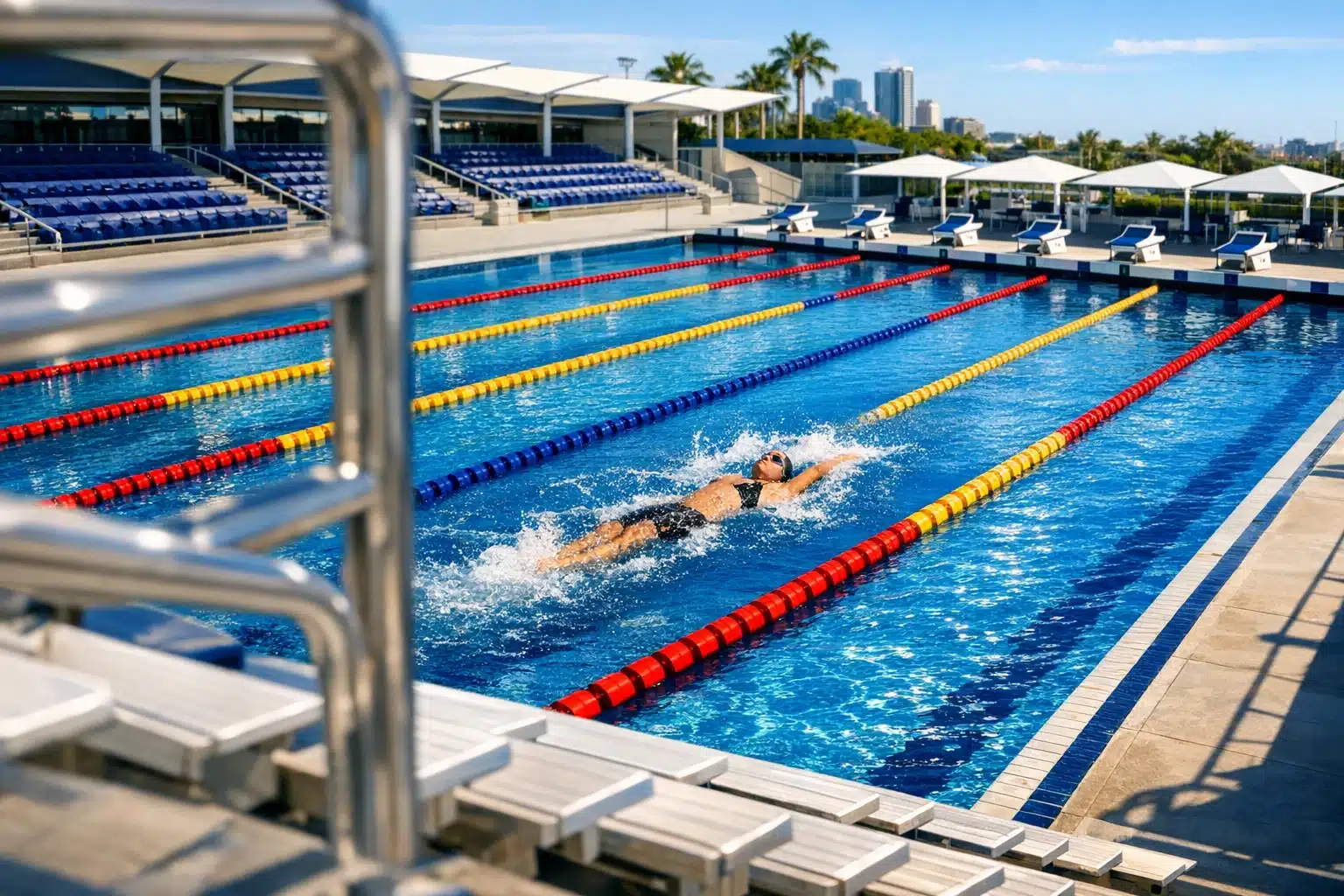
Explore the world of swimming
Swimming is one of those rare activities that feels playful, practical, and powerful at the same time. It builds fitness without pounding the joints, teaches lifesaving confidence in the water, and can be enjoyed by children, adults, and older swimmers alike. From quiet lap pools to open lakes and Olympic arenas, it connects health, skill, and adventure. This guide explores why swimming matters and how to enjoy it well.
Outline: This article begins with the broader meaning of swimming as a life skill, sport, and source of recreation. It then compares the main strokes and explains how technique shapes efficiency in the water. After that, it examines the physical and mental benefits of regular practice, followed by a practical look at safety, training habits, and equipment. The final section brings everything together with a clear conclusion for beginners, returning swimmers, and anyone curious about making swimming part of everyday life.
Swimming as a Life Skill, Sport, and Source of Freedom
Swimming has a special place among physical activities because it is more than exercise. It is a survival skill, a competitive discipline, a social pastime, and for many people, a form of quiet escape. A person who learns to move confidently in water gains access to beaches, pools, rivers, lakes, and a long list of recreational experiences that would otherwise feel intimidating. That practical value matters. According to the World Health Organization, drowning remains a major global public health issue, causing hundreds of thousands of deaths worldwide each year. That fact alone makes basic water competence deeply relevant, especially for children and communities living near open water.
As a sport, swimming is also remarkably inclusive. Elite racing may look highly technical and intense, but the basic activity scales well for very different bodies and goals. One person may swim to recover from injury, another may train for a triathlon, while someone else simply enjoys a gentle half hour in the pool after work. Compared with contact sports, swimming places minimal impact on the joints. Compared with walking or running, it challenges the body in a less familiar environment where posture, breathing, and coordination all matter at once. Water supports body weight, yet it also resists movement from every direction, so even a relaxed session can involve meaningful muscular effort.
The appeal of swimming often grows slowly. At first, the water can feel awkward, almost like learning a new language with the whole body. Then something changes. A smoother breath appears, the kick steadies, and suddenly the swimmer begins to glide instead of struggle. That moment is hard to forget. It explains why many people stay with swimming for years.
Swimming also bridges worlds that usually stay separate:
• health and leisure
• discipline and relaxation
• individual focus and team culture
• childhood learning and lifelong fitness
Very few activities can be introduced in early life, refined in adolescence, used for high performance in adulthood, and continued into older age with meaningful benefits. That long lifespan gives swimming unusual value. It is not just a seasonal hobby or a sport for specialists. It is a practical, adaptable skill that can strengthen confidence, expand independence, and create a lasting relationship with movement.
The Main Swimming Strokes and the Technique Behind Efficient Movement
To an observer standing on deck, swimming can appear simple: arms turn, legs kick, the swimmer moves forward. In reality, every stroke is a precise blend of timing, balance, breathing, and rhythm. The four competitive strokes are freestyle, backstroke, breaststroke, and butterfly. Each has its own personality, and each teaches something different about moving through water with control.
Freestyle, usually swum as the front crawl, is the fastest and most widely practiced stroke. It is commonly the first stroke taught for fitness because it is efficient over long distances once the basic pattern is learned. The body stays long and horizontal, the arms recover over the water, and the swimmer breathes to the side. Good freestyle depends less on force than many beginners assume. A streamlined position reduces drag, while a relaxed exhale underwater keeps breathing from becoming frantic. When technique improves, swimmers often discover they can go farther with less effort, which is one of the most satisfying lessons the pool can offer.
Backstroke is sometimes seen as freestyle’s mirror image, but it brings its own challenges. Because the face stays above the surface, breathing is easier, yet body alignment can be tricky without a visual reference. It is useful for building balance and shoulder coordination, and many recreational swimmers appreciate it as a change of pace during longer sessions.
Breaststroke is often considered the most approachable stroke for casual swimmers because the movement allows frequent breathing and a more measured tempo. Still, it is deceptively technical. The timing of the pull, kick, and glide needs precision, and a poorly shaped kick can waste a surprising amount of energy. Butterfly, by contrast, is the most physically demanding of the four. It requires coordinated undulation, strong timing, and excellent upper-body endurance. Even experienced swimmers respect it.
Several technique cues improve nearly every stroke:
• keep the head aligned rather than lifted high
• lengthen through the body to reduce drag
• exhale steadily in the water
• use the kick to support balance, not just speed
• aim for rhythm before raw power
A useful comparison can be made with cycling. Strong legs matter on a bike, but poor positioning wastes effort. Swimming works similarly. Fitness helps, yet technique decides how effectively that energy becomes forward motion. That is why beginners often improve quickly with a few corrections, and why advanced swimmers spend years refining details measured in fractions of a second. In water, efficiency is not a bonus. It is the difference between fighting the pool and flowing through it.
Health, Fitness, and Mental Benefits That Make Swimming Stand Out
Swimming earns its reputation as a whole-body workout because it combines aerobic conditioning, muscular engagement, mobility, and breath control in a single session. The heart and lungs work continuously, especially during steady lap swimming, while the shoulders, back, core, hips, and legs all contribute to movement. Unlike some gym routines that isolate one region at a time, swimming asks the body to coordinate across chains of muscles. That makes it efficient for general fitness and attractive to people who prefer exercise that feels integrated rather than mechanical.
One major advantage is reduced impact. Running is excellent for many people, but it can be uncomfortable for those with joint pain, higher body weight, or a history of overuse injuries. Water supports much of the body, which often makes swimming and water-based exercise more comfortable. This does not mean swimming is effortless. Resistance in water is far greater than in air, so even moderate movement can become surprisingly demanding. A short session of focused laps may leave a beginner just as winded as a brisk land workout, only without the pounding sensation in the knees or ankles.
From a public health perspective, swimming can help people meet common activity goals. Many health organizations, including the Centers for Disease Control and Prevention, recommend at least 150 minutes of moderate aerobic activity each week for adults. Swimming can contribute directly to that target. Intensity varies widely, of course. A gentle recreational swim is different from interval training, and a structured masters workout is different again. That range is part of the appeal: the same pool can serve recovery, conditioning, skill practice, or high-level athletic preparation.
The mental side deserves equal attention. Water has a way of narrowing attention to immediate, manageable tasks: the next breath, the next wall, the next length. For people whose days feel crowded with noise, that focus can be restorative. Some swimmers describe it as moving meditation. Others simply notice that they leave the pool calmer than when they arrived. There is also a strong confidence effect. Learning to swim, improving endurance, or mastering a new stroke gives visible progress that many adults find motivating.
Common benefits include:
• improved cardiovascular endurance
• better muscular stamina and posture
• increased shoulder and hip mobility when technique is sound
• lower-impact training for many bodies
• stress relief through rhythmic movement and breath control
Swimming is not a miracle cure, and it does not replace individualized medical advice. Still, as a practical habit, it offers a rare combination of accessibility, challenge, and sustainability. For many readers, that balance is exactly what makes it worth trying.
Safety, Training Habits, and Choosing the Right Place to Swim
Enjoyment in the water should always begin with safety. Confidence is valuable, but overconfidence can be dangerous. Swimming pools, lakes, rivers, and oceans each have different risks, and strong swimmers in one setting may feel surprisingly vulnerable in another. A clear pool lane with a lifeguard is not the same as cold open water with waves, current, and limited visibility. Understanding that distinction is one of the smartest habits any swimmer can build.
For beginners, formal instruction is often the fastest path to competence. Lessons do more than teach strokes. They cover floating, treading water, breathing control, safe entry and exit, and basic rescue awareness. Those skills matter because real-world water situations are not always neat or predictable. Children benefit especially from early instruction, but supervision remains essential. No lesson replaces attentive adult oversight near water.
Training habits also shape progress. Many new swimmers try to muscle through long sessions, then feel frustrated when they tire quickly. A better approach is to build skill and endurance gradually. Short repeats with rest can improve technique far more effectively than one exhausted effort. For example, a session built around several lengths of easy freestyle, kick practice, and controlled breathing drills often teaches more than continuous, sloppy swimming.
Useful safety and training reminders include:
• never swim alone in open water
• check local conditions, weather, temperature, and currents
• warm up before intense efforts
• stop if dizziness, pain, or panic appears
• use visible gear such as bright caps or tow floats when appropriate
• respect lane etiquette in shared pools
Equipment can help, but it should support learning rather than distract from it. Goggles improve visibility and comfort. A well-fitted swimsuit reduces drag and lets the body move freely. Kickboards, pull buoys, and fins can isolate parts of the stroke, though they work best when used purposefully. Advanced gadgets such as watches and stroke counters can be motivating, yet numbers alone do not create good form. A swimmer with modest gear and solid technique will usually progress faster than someone relying on accessories without understanding the fundamentals.
The setting matters too. Pools are predictable and ideal for drills, pacing, and lessons. Lakes and oceans offer beauty, variety, and challenge, but they demand stronger judgment. There is something unforgettable about the first clean dive into open water at sunrise, when the surface looks like hammered glass and every stroke feels adventurous. Even then, preparation is not optional. Smart swimmers know that freedom in the water comes from respecting it, not underestimating it.
A Practical Conclusion for New and Returning Swimmers
If you are curious about swimming, returning after a long break, or trying to find a form of exercise you can sustain, this is the most useful takeaway: start smaller than your ambition, but start deliberately. You do not need elite technique, expensive equipment, or a punishing weekly schedule to benefit from time in the water. You need a safe environment, a willingness to learn, and enough consistency to let the body adapt. Progress in swimming can feel slow in the beginning, yet it is often steady once the basics settle into place.
For beginners, one realistic goal might be two or three short sessions each week. A simple plan could include five minutes of easy water adjustment, a few lengths using a comfortable stroke, rest breaks as needed, and one skill focus such as breathing, floating, or streamlining. Returning swimmers may benefit from alternating easier recovery swims with moderate endurance work. Parents introducing children to the pool can focus on comfort and trust before formal performance. Fitness-minded readers can treat swimming as a primary workout or use it to complement cycling, strength training, or walking.
A helpful mindset is to measure improvement in multiple ways:
• feeling calmer in deeper water
• swimming farther without rushing
• learning a cleaner breathing pattern
• finishing a session with energy left
• enjoying the process enough to come back
That last point matters more than it seems. The best exercise routine is rarely the most impressive one on paper. It is the one a person will continue. Swimming has unusual staying power because it can change with life. It can be playful during childhood, competitive in youth, restorative in adulthood, and sustainable later on. Few activities offer that kind of range.
So the target audience for this article is broad for a reason: swimmers are not only racers. They are learners, leisure seekers, health-focused adults, open-water explorers, older exercisers, and people rebuilding confidence one length at a time. If you fit any of those descriptions, the water has room for you. Begin with respect, practice with patience, and let skill grow naturally. In time, swimming becomes more than a workout. It becomes a dependable way to move, think, breathe, and feel more at home in your own body.