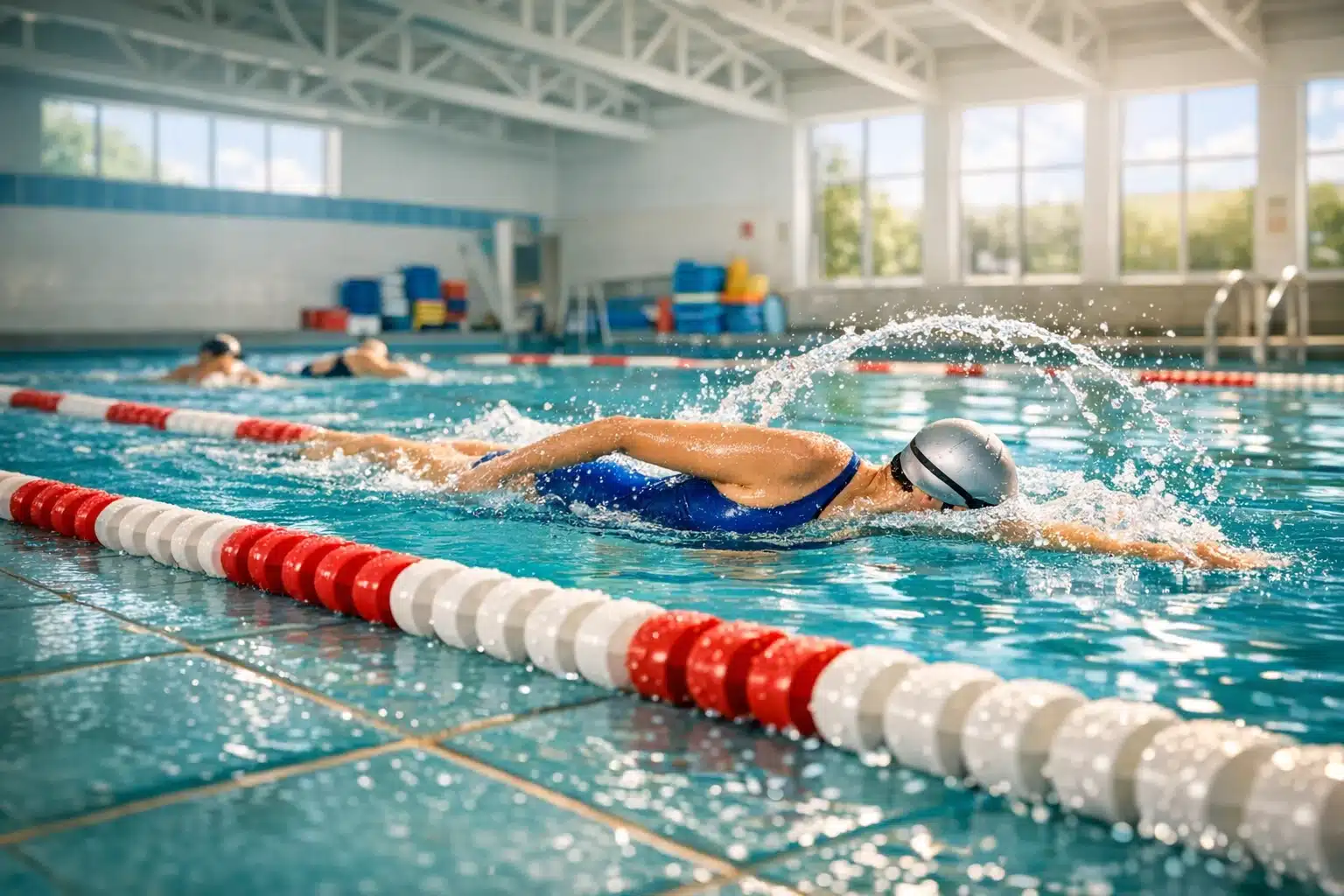
Explore the world of swimming
Swimming is more than a sport or a summer pastime; it is a life skill, a full-body workout, and for many people a rare form of exercise that feels both demanding and calming. In one lane, athletes chase fractions of a second, while in another, beginners discover the small but thrilling victory of floating with confidence. Because it improves fitness, supports joint-friendly movement, and strengthens water safety, swimming stays relevant across ages, goals, and ability levels.
Outline: 1) Why swimming matters in modern life. 2) The main strokes and the mechanics behind them. 3) Physical and mental benefits, with realistic comparisons to other exercise. 4) Safety principles, learning methods, and common errors. 5) Practical ways to start, improve, and keep swimming for years.
Why Swimming Matters: More Than Exercise in a Pool
Swimming occupies a special place among physical activities because it blends movement, survival skill, recreation, and sport. A person can swim to compete, to recover from injury, to manage stress, to cross-train for another discipline, or simply to feel more at ease around water. That broad relevance helps explain why swimming lessons are often treated as essential education rather than a niche hobby. Public health experts regularly stress water competence because drowning remains a serious global safety issue, and the World Health Organization continues to report hundreds of thousands of drowning deaths worldwide each year. In that context, swimming is not just about fitness; it is about confidence, prevention, and informed behavior in aquatic environments.
What also makes swimming distinctive is the way water changes the rules of movement. Water is far denser than air, so every stroke meets resistance from multiple directions. At the same time, buoyancy reduces the load placed on joints. That combination allows people to work hard without the same pounding often associated with activities such as running on pavement. For older adults, people with certain joint limitations, and those easing back into exercise, this can make swimming especially attractive. For healthy athletes, the resistance of water turns even simple drills into demanding work for the shoulders, back, core, hips, and legs.
Swimming is also unusually democratic. A competitive swimmer perfecting a tumble turn and a beginner learning to exhale underwater are separated by skill, not by the basic value of the activity. Both are developing coordination, timing, and awareness. In many communities, swimming pools serve as social spaces where children learn discipline, adults rebuild fitness, and families create rituals around health. Open-water settings add another dimension: lakes, rivers, and seas can make swimming feel less like a workout and more like a conversation with nature, though they also require more caution.
Several qualities explain why swimming continues to matter:
• It builds cardiovascular endurance.
• It develops whole-body coordination.
• It supports water safety and self-rescue skills.
• It can suit competitive, recreational, and therapeutic goals.
• It remains available across a wide age range.
If running feels like a drumbeat, swimming often feels like a measured current. It asks for effort, but it also teaches rhythm. That balance of challenge and calm is one reason people return to the water for years, sometimes for life.
The Main Strokes and Core Skills Every Swimmer Should Understand
To an untrained eye, swimming can seem simple: move your arms, kick your legs, and keep going. In reality, efficient swimming depends on technique more than brute force. Small changes in body position, breathing, timing, and hand placement can make the difference between gliding forward and fighting the water. This is why beginners often feel exhausted after a short distance, while trained swimmers move with apparent ease. They are not always stronger; they are usually more efficient.
The four competitive strokes are freestyle, backstroke, breaststroke, and butterfly. Freestyle, typically performed as front crawl, is usually the fastest and most efficient for covering distance. It relies on a streamlined body line, alternating arm recovery, and a steady flutter kick. Good freestyle asks swimmers to rotate through the torso rather than slap the surface with straight, tense arms. Backstroke uses a similar alternating rhythm but on the back, making breathing easier because the face stays above water. It can feel less intimidating for some learners, although maintaining direction without visual cues takes practice.
Breaststroke is often associated with recreational swimming because the stroke allows for clear moments of breathing and sighting forward. Yet technically, it is demanding. Its timing must coordinate a pull, breath, kick, and glide in a precise sequence. Butterfly is the most physically intense of the four for many swimmers, using simultaneous arm recovery and a dolphin kick driven from the core and hips. When done well, it looks almost musical; when done poorly, it quickly becomes exhausting.
Beyond the named strokes, several core skills matter just as much:
• Body position: A horizontal, balanced body reduces drag.
• Breathing: Exhaling into the water helps avoid panic and tension.
• Kicking: Effective kicks come from the hips, not frantic knee movement.
• Catch and pull: The hand should hold water, not simply splash through it.
• Timing: Smooth coordination saves energy and improves speed.
Comparisons between strokes reveal how different swimming goals shape technique. Freestyle is often best for fitness sessions and endurance work. Backstroke helps posture and shoulder awareness when performed correctly. Breaststroke can be comfortable at easy pace but places distinct stress on knees and hips if technique is poor. Butterfly develops power and timing but is rarely the first stroke adults learn for long distances.
For beginners, the smartest path is not to master every stroke at once. A better progression is to learn floating, submersion, breathing, kicking, and relaxed movement before chasing speed. Swimming rewards patience. Water quickly exposes wasted motion, but it also rewards every improvement with a feeling that is hard to forget: suddenly, the pool no longer feels like an obstacle but like a medium that finally makes sense.
Health, Fitness, and Performance Benefits of Swimming
Swimming is often praised as a full-body workout, and that description is justified. Unlike exercises that emphasize one region at a time, swimming recruits the shoulders, chest, back, core, glutes, and legs in coordinated patterns. The exact emphasis changes by stroke, but almost every lap asks the body to stabilize, propel, and breathe under controlled demand. That makes swimming both aerobic and muscular, especially when sessions combine technique drills, steady efforts, and faster intervals.
For cardiovascular health, swimming can help people meet widely recommended activity targets, including the common benchmark of at least 150 minutes of moderate-intensity aerobic movement per week for adults. A swimmer does not need race speed to benefit. Even consistent moderate laps can improve stamina, circulation, and exercise capacity over time. Because buoyancy reduces impact, many people find they can sustain longer sessions in the water than they would tolerate on land during periods of joint discomfort. That feature has made swimming and water exercise popular in rehabilitation and active aging programs.
There is also a meaningful mental dimension. Repetitive lap swimming can create a meditative rhythm: inhale, turn, exhale, pull, kick, repeat. For some, it offers the same psychological reset as a long walk; for others, it feels even more absorbing because the water mutes noise and narrows attention. Research on physical activity consistently supports links between regular exercise and better mood, stress management, and sleep quality, and swimming fits well within that broader evidence. While it is not a cure-all, it can be a powerful part of a healthy routine.
Compared with other activities, swimming has clear advantages and a few trade-offs:
• Compared with running, it usually creates less impact stress on knees and ankles.
• Compared with cycling, it uses the upper body far more.
• Compared with gym machines, it demands more coordination and breathing control.
• Compared with walking, it often requires more access, planning, and technical skill.
Calorie expenditure in swimming varies greatly by stroke, pace, body size, water temperature, and efficiency, so generic numbers should be treated cautiously. A relaxed breaststroke session and a hard butterfly interval set are not remotely the same workload. That said, swimmers can train for fat loss, endurance, speed, technique, or recovery depending on how the session is designed. The water does not hand out results automatically; the structure of practice matters.
Performance gains typically come from consistency rather than heroic efforts. Swimmers improve when they repeat sound technique, gradually increase volume or intensity, and recover properly. In other words, progress is usually less about surviving one brutal workout and more about returning to the pool often enough to let skill and fitness grow together.
Safety, Learning Progressions, and the Technique Mistakes That Slow People Down
Swimming is rewarding, but the water deserves respect. Safety is the foundation of all good swim education, whether the setting is a public pool, a quiet lake, or the open sea. Knowing a stroke is not identical to being water competent. Real competence includes entering and exiting safely, floating without panic, managing breathing, recognizing fatigue, and responding appropriately when conditions change. In supervised pools, risks are lower, yet rules still matter. In open water, where there may be currents, cold shock, poor visibility, waves, or boat traffic, judgment becomes just as important as physical ability.
Several safety principles are non-negotiable:
• Children should always have active adult supervision near water.
• New swimmers learn faster and safer with qualified instruction.
• Pool depth, lane etiquette, and posted rules should be understood before starting.
• Open-water swimmers should avoid going alone and should use visible safety gear where appropriate.
• Fatigue, weather shifts, and cold water should never be underestimated.
For beginners, the ideal learning progression is simple and logical. First comes comfort in the water: standing, submerging the face, exhaling underwater, and floating on front and back. Next comes balance and glide, because horizontal alignment reduces drag before any strong pulling begins. After that, kicks and arm patterns become easier to learn. Too many adults try to skip these basics, which is like building a roof before the walls. They may move forward somehow, but every meter feels harder than it should.
Common technique mistakes often explain frustration. Lifting the head too high causes the hips and legs to sink, increasing drag. Holding the breath raises tension and disrupts rhythm. Kicking from the knees creates splashing without efficient propulsion. Pulling water straight down rather than back wastes effort. Swimming too fast during practice can also mask flaws, because fatigue makes poor habits harder to correct. A skilled coach often spots these patterns in seconds.
Pool swimming and open-water swimming deserve a brief comparison. Pools offer controlled conditions, clear distances, lane markers, and lifeguards in many cases. They are ideal for learning, timing sets, and refining mechanics. Open water adds sighting, navigation, changing temperatures, and surface conditions. It can feel freeing, almost cinematic, but it requires stronger awareness and planning. Being fit in a pool does not automatically mean being prepared for a lake or the ocean.
The encouraging news is that most technical problems improve with focused drills. A few well-chosen exercises for breathing, rotation, and balance can change an entire stroke. Swimming may appear unforgiving, yet it is wonderfully honest: when technique improves, the water tells you immediately through smoother movement, easier breathing, and longer, calmer strokes.
Building a Lifelong Swimming Habit: Practical Ways to Start, Improve, and Stay Motivated
Many people admire swimming from a distance because it seems technical, inconvenient, or intimidating. The truth is that a sustainable swimming habit usually begins with modest expectations. You do not need to love every lap on day one, own elite gear, or understand interval training before you start. What helps most is a manageable routine, a clear reason for showing up, and a willingness to let skill develop gradually. In swimming, confidence is built meter by meter.
A beginner-friendly approach might look like this: two or three sessions per week, each with a short warm-up, a focused drill block, a main set at comfortable effort, and a cool-down. Early sessions do not need to be long. Twenty to thirty minutes of purposeful practice can be far more useful than an hour of disorganized struggle. Many swimmers progress faster when they divide training into themes. One day can emphasize breathing and balance, another endurance, and another stroke variety. This structure gives practice shape and makes improvement easier to notice.
Helpful equipment can support learning, though it should not become a crutch:
• Goggles improve comfort and visibility.
• A kickboard helps isolate kicking drills.
• A pull buoy can highlight body position and upper-body mechanics.
• Fins may improve feel for the water and reduce frustration in some drills.
• A pace clock or waterproof watch helps track consistent effort.
Motivation tends to last longer when goals are concrete. “Swim more” is vague; “swim 400 meters without stopping,” “learn bilateral breathing,” or “join a local masters session within three months” creates direction. For some, social accountability matters. Masters clubs, community lessons, triathlon groups, and lane-swimming communities can turn solitary exercise into shared progress. Others prefer the quiet ritual of early mornings, when the pool surface looks like polished glass and the first dive slices the silence in half.
Improvement also depends on respecting recovery. Shoulder soreness, overuse, and mental burnout can appear when enthusiasm outruns technique and rest. Alternating harder days with easier ones, including mobility work, and seeking feedback before pain becomes persistent are sensible long-term strategies. Swimming rewards discipline, but it punishes stubbornness.
For readers considering where to begin, the most practical next step is also the simplest: get into the water with a plan. Take a lesson if needed. Start short, stay consistent, and focus on skill before speed. If you already swim, refine one detail instead of chasing ten at once. That is the enduring beauty of this activity. Swimming can welcome the cautious beginner, challenge the serious athlete, and continue offering new layers of mastery long after the first splash. For anyone seeking a useful, engaging, and lasting form of movement, the lane is open.