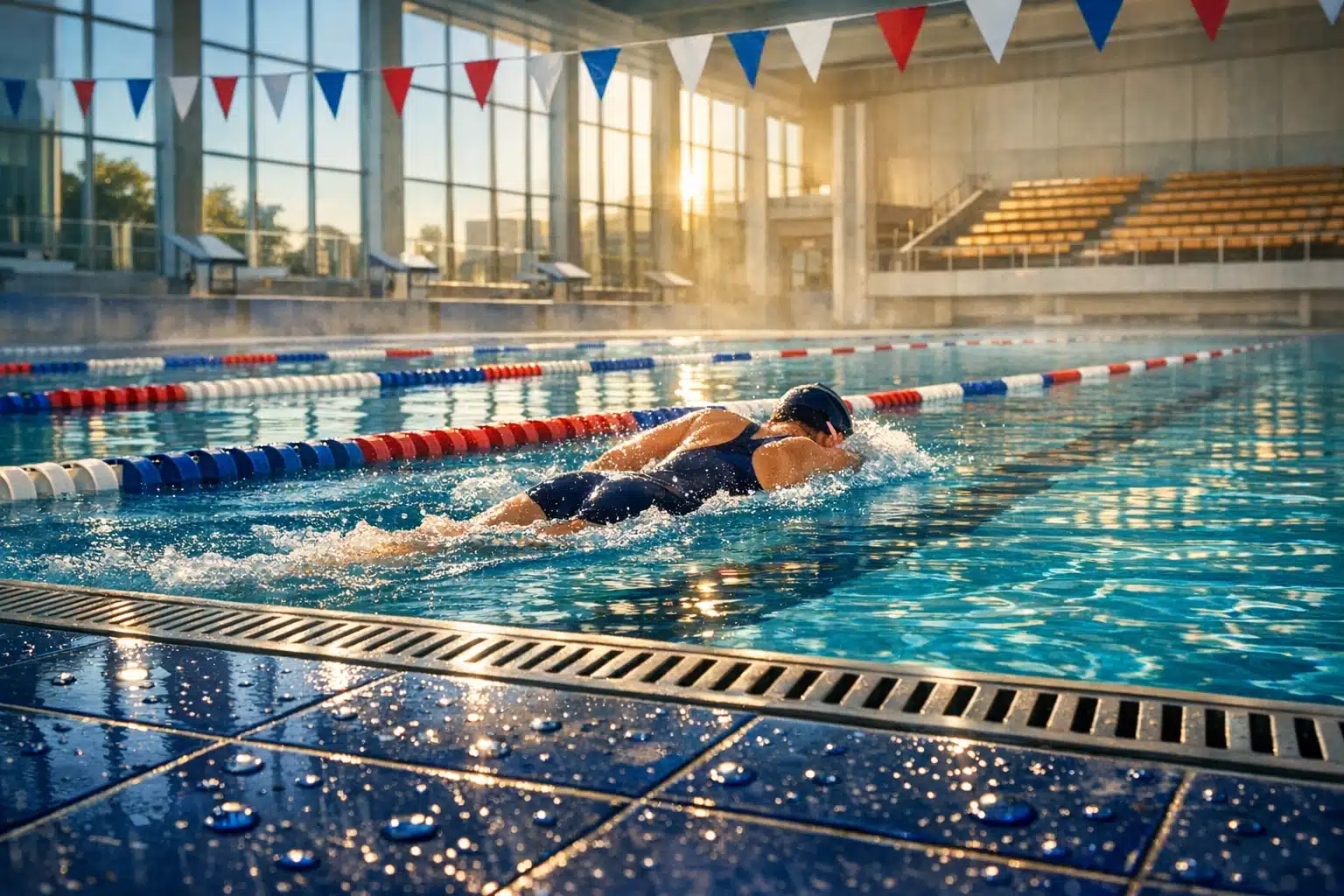
Explore the world of swimming
Swimming is one of the rare activities that feels playful on the surface while demanding serious coordination underneath. It strengthens the heart and lungs, recruits most major muscle groups, and gives many people a joint-friendly alternative to pounding pavement. From school lessons and therapy pools to masters meets and open-water races, its relevance stretches across ages, goals, and skill levels. Step into the water and you meet both a sport and a life skill.
Article Outline and Why Swimming Matters
Before diving into details, it helps to see the shape of the journey ahead. This article follows a clear path:
• why swimming remains widely relevant;
• how it benefits physical and mental health;
• what beginners should learn first;
• how major strokes and environments compare;
• how to stay safe and build a lasting routine.
Swimming matters because it sits at a rare intersection of recreation, performance, therapy, and survival. A person may first enter the water through a childhood lesson, return years later for fitness, and later rely on it again during injury recovery or low-impact training. Very few activities travel so smoothly across life stages. A teenager may chase speed off the wall, a triathlete may use it to round out endurance, and an older adult may value the freedom of moving without harsh impact on knees or hips. The same lane can host ambition, recovery, discipline, and joy.
Part of swimming’s appeal comes from the way water changes movement. On land, gravity feels blunt and obvious. In water, buoyancy softens that burden, yet resistance rises from every direction. That combination makes swimming feel almost paradoxical: it supports the body while asking the muscles to work steadily through a denser medium than air. Because of this, even simple actions such as floating, kicking, and turning the head to breathe demand timing and body awareness. What looks graceful from the deck usually hides a string of small technical decisions.
Swimming also carries cultural and practical weight. It is a core competitive sport at the Olympic Games, a common part of school programs in many places, and an important public safety skill. Knowing how to move calmly in deep water is not merely athletic knowledge; it can reduce panic and improve judgment around pools, rivers, lakes, and coastlines. In that sense, swimming deserves attention not only from sports fans, but also from parents, educators, and adults who simply want confidence near water. It teaches respect as much as performance. The lane line may seem quiet, but it is never empty of meaning.
The Physical and Mental Benefits of Swimming
Swimming is often praised as a full-body workout, and that description is justified. A typical session asks the shoulders, back, chest, core, hips, and legs to work together in repeating cycles. Unlike some exercises that heavily favor one region, swimming spreads the effort across the body. Freestyle emphasizes rotation and coordinated pulling, breaststroke leans more on timing and leg drive, and butterfly demands powerful rhythm through the whole trunk. Even easy laps can become a lesson in how the body functions as one connected system rather than a collection of separate parts.
Its cardiovascular value is another major reason for its popularity. Continuous lap swimming can raise heart rate, challenge the lungs, and improve aerobic capacity over time. Public health guidance from organizations such as the World Health Organization recommends regular moderate or vigorous activity each week, and swimming fits well within that framework. Depending on stroke choice, pace, body size, and session length, it can also be a meaningful calorie-burning activity. Many adults burn roughly a few hundred calories in a moderate half-hour swim, while harder sets can demand considerably more. The numbers vary, but the principle stays the same: the water rewards consistent effort.
One of swimming’s clearest advantages, especially when compared with running, is reduced impact. The pool does not erase all injury risk, but it often feels more forgiving for people dealing with joint sensitivity, excess body weight, or a return to exercise after time away. Water supports the body, which may make movement feel more accessible. At the same time, water resistance means the muscles still have work to do. In practical terms, swimming can sit somewhere between strength and endurance training, though it does not fully replace either.
Mental benefits deserve equal attention. The repetitive sound of breathing, the visual simplicity of lane lines, and the need to coordinate movement can create an unusually focused state. Some swimmers describe it as moving meditation; others simply notice that stress loosens by the final length. Research on exercise and mental well-being consistently links regular activity with improved mood and reduced stress, and swimming often adds a sensory calm that treadmill sessions may lack. The pool can be loud with splashes and whistles, yet once your face returns to the water, the world narrows beautifully. That hush is part of the reward.
Learning the Basics: Technique, Breathing, and Essential Equipment
For beginners, swimming can feel deceptive. It looks natural when experienced swimmers do it, but the water quickly exposes tension, rushed breathing, and poor alignment. The good news is that progress usually comes from fixing a few fundamentals rather than forcing harder effort. The first goal is not speed. It is comfort, control, and a sense that the body can stay balanced in the water without panic.
Body position comes first. New swimmers often lift the head too high, which causes the hips and legs to sink. A better approach is to keep the body long, let the water support you, and direct the gaze in a stable way based on the stroke. In freestyle, that usually means looking downward and slightly ahead rather than straight forward. The less drag you create, the less energy you waste. This is why a technically relaxed swimmer often moves more efficiently than a stronger but rigid one.
Breathing is the next major hurdle. On land, breathing is automatic and forgiving. In the pool, it becomes rhythmic and strategic. Many learners hold their breath underwater and then rush to inhale, which builds anxiety fast. Coaches commonly teach a simpler pattern: exhale gently into the water, turn or lift only as needed to inhale, then return to the line of movement. That small change can transform the experience. Once breathing settles, kicking and arm action begin to make sense instead of feeling chaotic.
Equipment should support learning, not distract from it. Useful basics include:
• a comfortable swimsuit that stays secure;
• goggles that seal well without painful pressure;
• a swim cap if needed for hair control or reduced drag;
• a kickboard for focused leg practice;
• occasionally a pull buoy for isolating the upper body during drills.
Lessons can speed up progress dramatically because technique errors are easier to fix early than later. Common beginner drills include floating on the front and back, pushing off the wall in a streamlined shape, kicking with support, and practicing side breathing one piece at a time. The smartest path is usually gradual: learn to float, glide, breathe, and relax before chasing distance. Swimming rewards patience more than force. If you try to overpower the water, it usually wins. If you learn to cooperate with it, even short swims begin to feel smooth, purposeful, and deeply satisfying.
Comparing the Main Strokes and the Worlds of Pool and Open Water
Swimming becomes more interesting when you realize it is not one movement but a family of distinct techniques. The four classic competitive strokes are freestyle, backstroke, breaststroke, and butterfly. Each asks different questions of the body, and each attracts swimmers for different reasons. Learning their differences can help a beginner choose where to start and help a recreational swimmer understand why certain sets feel easy while others seem to rearrange the lungs.
Freestyle, usually performed with the front crawl, is the fastest and most commonly taught stroke for fitness. Its alternating arm action and flutter kick allow continuous movement, and its rotating body line helps skilled swimmers travel efficiently. For many people, freestyle becomes the default training stroke because it balances speed and endurance well. Backstroke shares the alternating pattern, but the face stays out of the water, which changes breathing and orientation. Some swimmers find backstroke freeing because air is always available; others find it disorienting because they cannot see where they are going without cues from lane flags and ceiling lines.
Breaststroke is slower for most swimmers, yet it is often loved for its rhythm and visibility. The head can rise more naturally, and the glide phase gives it a very different personality from freestyle. However, the timing is technical, and the kick demands specific flexibility and coordination. Butterfly is the most dramatic stroke of the group. When done well, it looks like controlled power unfolding in waves. When done poorly, it feels exhausting almost immediately. Butterfly requires strong core engagement, precise timing, and confidence with demanding breathing patterns, which is why it is usually learned after more basic control has been developed.
A simple comparison helps:
• freestyle: efficient, versatile, and ideal for general fitness;
• backstroke: useful for posture awareness and varied muscle use;
• breaststroke: rhythmic and technical, often comfortable at easier paces;
• butterfly: powerful, demanding, and usually reserved for advanced practice.
Environment matters just as much as stroke choice. Pool swimming offers measured distances, walls for turns and rests, lane etiquette, and relatively controlled conditions. It is excellent for structured training because progress can be tracked precisely. Open water, by contrast, introduces currents, waves, changing temperatures, reduced visibility, and navigation demands. A lake or sea swim can feel expansive and adventurous, but it also requires stronger judgment. Pool swimmers count lengths; open-water swimmers often read wind, sight landmarks, and manage uncertainty. Neither setting is inherently better. The pool is like a well-marked classroom, while open water is more like a wide, handwritten map. One sharpens precision, the other broadens adaptability.
Safety, Etiquette, and Final Takeaways for Everyday Swimmers
Swimming’s beauty should never distract from the fact that water demands respect. Safety is the foundation under every good session, whether the goal is gentle exercise, race training, or a casual family outing. Strong swimmers still need judgment, and beginners need structure even more. Core habits are simple but non-negotiable: know your environment, understand your limits, and never confuse confidence with invulnerability.
In a pool, safety begins with awareness. Depth markers matter. So do posted rules about diving, lane direction, and supervision. Children should be actively watched around water even if flotation devices are present, because proximity alone is not the same as attention. Adults returning to exercise should warm up, especially if they have been inactive or have medical concerns. Fatigue can arrive quietly in the water. Cramping, dizziness, chest discomfort, or sudden breathlessness are signs to stop and seek help. The calm appearance of a pool can make people underestimate stress, but exertion is still exertion.
Open water adds another layer of caution. Conditions can change quickly due to wind, current, temperature, and visibility. A swimmer who feels relaxed near shore may feel very different a few hundred meters farther out. Safer practice usually includes swimming with a partner or group, checking local conditions beforehand, using highly visible gear, and choosing designated swimming areas when possible. Cold water deserves special respect because it can affect breathing control and muscle function. The bravest decision is sometimes turning back early.
Etiquette improves the experience for everyone. In shared lanes, circle swimming rules, passing awareness, and honest lane selection prevent frustration. If you need frequent rest, choosing an appropriate lane is courteous and smart. Rinsing before entering the pool, keeping gear organized, and leaving space at the wall are small habits that make facilities work better. Good swimmers are not only efficient movers; they are also considerate neighbors in a narrow strip of water.
For readers wondering how to make swimming stick, consistency usually beats intensity. A practical routine might involve two or three weekly sessions with varied goals:
• one easier technique day;
• one steady endurance swim;
• one shorter session with pace changes or drills.
If you are new, focus first on comfort and safety. If you are returning, rebuild gradually and let skill lead fitness. If you already love the sport, keep refining technique because small improvements in water often create outsized results. Swimming can be a workout, a refuge, a competitive outlet, or a confidence-building life skill. Its gift is flexibility. The water meets people where they are, then quietly asks them to grow.