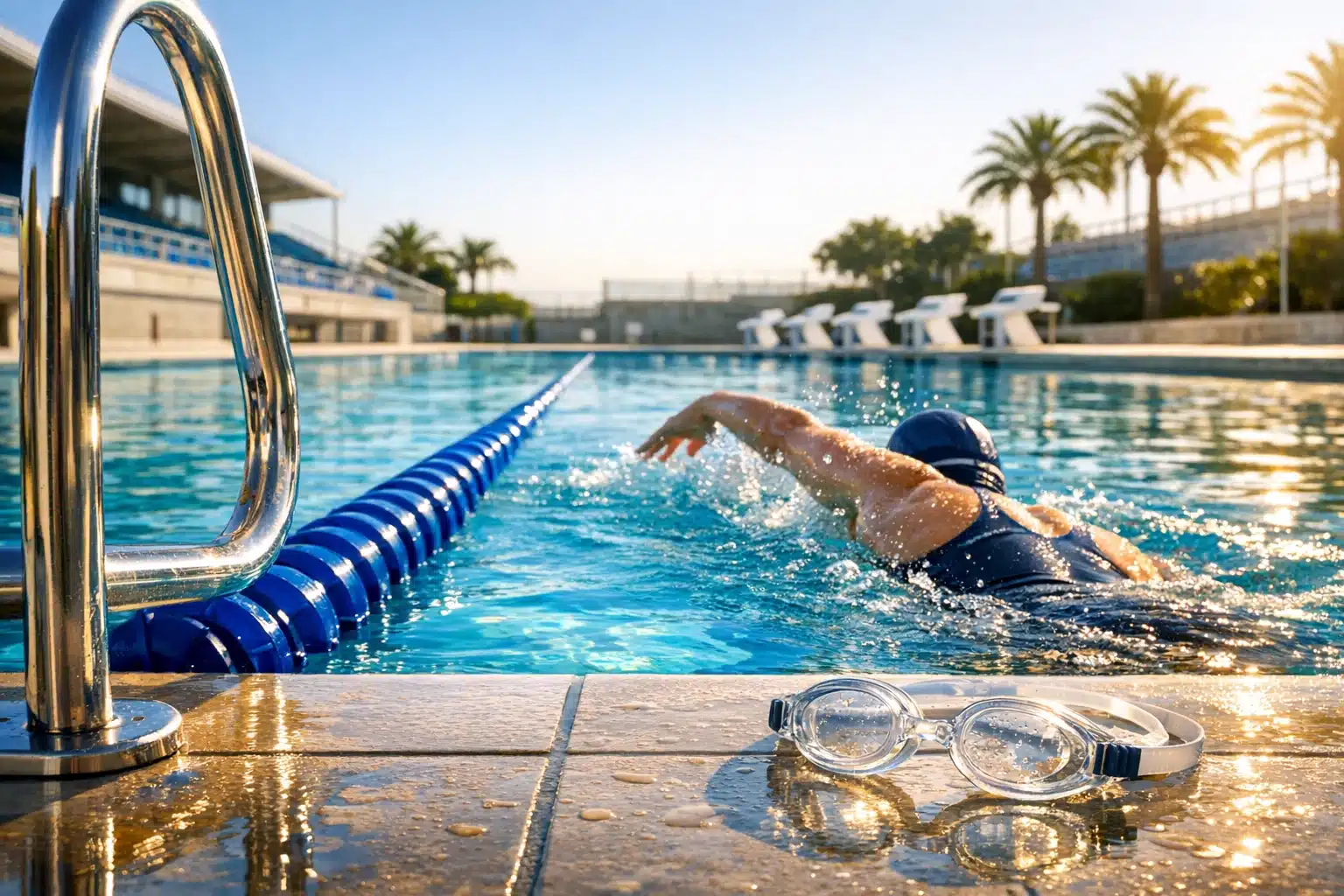
Explore the world of swimming
Swimming is one of the few activities that can feel playful, disciplined, and deeply practical at the same time. It matters because it builds fitness without punishing the joints, teaches safety around water, and offers a skill people can use from childhood to old age. Whether someone enters a pool to race, recover, relax, or simply learn, swimming opens a door to better health and greater confidence in an environment that rewards patience and rhythm.
Outline:
1. Why swimming has such broad and lasting appeal
2. The physical and mental benefits of time in the water
3. The major strokes and the technique behind efficient movement
4. Safety, training habits, and essential equipment
5. How beginners, families, fitness swimmers, and competitors can make it part of daily life
Swimming as a skill, a sport, and a lifelong companion
Swimming occupies a rare place in human life because it serves several purposes at once. It is a competitive sport with strict rules and measurable performance. It is also a practical safety skill, a therapeutic activity, and a source of simple enjoyment. Few forms of exercise can claim that range. A person might first learn to swim for safety, return to it later for fitness, and eventually stay with it because the water offers a kind of moving quiet that is hard to find elsewhere.
Historically, swimming has deep roots. People have crossed rivers, fished, traveled, and trained in water for thousands of years. Over time, what began as necessity also became recreation and organized competition. Today, swimming appears in schools, clubs, holiday resorts, rehabilitation centers, and international events such as the Olympic Games. That wide presence matters because it shows how adaptable the activity is. A teenager training for sprint freestyle and a retiree walking laps in a warm pool are doing very different things, yet both are participating in the same broad tradition.
One reason swimming remains relevant is accessibility across life stages. It can be introduced early through supervised lessons, developed through structured practice in youth, maintained for general health in adulthood, and continued later in life with modifications for comfort and mobility. Compared with impact-heavy sports, swimming places less stress on knees, hips, and the spine because water supports body weight. That support does not make the work easy; it simply changes how the body experiences effort.
Swimming also teaches useful habits beyond exercise:
• respect for environment
• attention to breathing
• body awareness
• patience with gradual progress
• calm under pressure
These lessons carry over surprisingly well into daily routines. A new swimmer learns quickly that force alone does not solve every problem. If the body is tense, the stroke becomes inefficient. If breathing is rushed, fatigue arrives early. Water gives immediate feedback, almost like a strict but fair teacher. That is part of its appeal. The pool does not flatter, yet it rewards consistency. For readers who want a sport with measurable improvement, practical value, and room for personal meaning, swimming stands out as an unusually complete pursuit.
The health and fitness benefits that make swimming stand out
Swimming is often recommended because it combines cardiovascular exercise, muscular engagement, and low-impact movement in a single session. When people swim continuously, the heart and lungs work harder to deliver oxygen, helping improve endurance over time. At the same moment, the arms pull, the legs kick, the core stabilizes, and the back coordinates posture. That full-body demand explains why even moderate sessions can feel productive. Unlike an isolated strength machine at a gym, the water asks the body to move as a connected system.
For general health, swimming fits neatly within widely accepted exercise goals. Public health guidance commonly encourages adults to accumulate around 150 minutes of moderate-intensity aerobic activity per week, and swimming can contribute directly to that target. A swimmer might divide this into several shorter sessions, such as three or four visits to the pool, making it realistic for busy schedules. Because pace can be adjusted easily, the same activity can suit beginners who need gentle movement and experienced athletes who want demanding intervals.
Its low-impact nature is one of its biggest strengths. Runners sometimes turn to the pool during recovery because water reduces the jarring forces associated with land-based movement. People with joint discomfort may also find that swimming, or even water-based exercise, allows them to stay active with less pain. This does not mean it is automatically risk-free. Poor technique, overuse of the shoulders, or pushing too hard too soon can still lead to problems. Still, compared with many sports, swimming gives the body a more forgiving setting.
The mental side deserves equal attention. Repetitive strokes, controlled breathing, and the muffled sound of water can create an almost meditative effect. Many swimmers describe a session as mentally clearing, especially after a stressful day. There is a simple reason for that: the activity demands just enough focus to interrupt rumination. You count lengths, time your breath, notice your body position, and settle into a rhythm. The mind has less room to wander into clutter.
Key benefits often include:
• improved cardiovascular endurance
• better muscular coordination
• support for weight management when paired with balanced nutrition
• reduced joint stress compared with many land sports
• stress relief and improved mood through steady, rhythmic movement
In practical terms, swimming works because it adapts to different goals. Some people want fitness without pounding pavement. Others want cross-training, rehabilitation support, or a reliable way to stay active through changing seasons. The pool can answer all of those needs. It is not magic, and it does not remove the need for consistency, but it offers a sustainable path that many people can keep for years rather than weeks.
Understanding the main strokes and the craft of efficient technique
Swimming looks smooth when done well, yet that smoothness is built from many small technical decisions. The four competitive strokes are freestyle, backstroke, breaststroke, and butterfly. Each has its own rhythm, body position, and breathing pattern, and each teaches something different about how to move through water efficiently. For beginners, freestyle is usually the first major focus because it is versatile and relatively fast. For others, breaststroke or backstroke may feel more approachable at the start because the breathing pattern seems easier to manage.
Freestyle, often called front crawl, is typically the fastest stroke used in general swimming and competition. The body stays as long and level as possible while the arms alternate and the legs perform a flutter kick. Efficient freestyle depends less on frantic speed than many new swimmers expect. The important pieces are alignment, rotation, and a relaxed but deliberate pull. If the head lifts too much, the hips tend to sink. If the stroke crosses the center line, balance and power suffer. Small errors multiply quickly in the water.
Backstroke reverses the orientation but still relies on streamlined positioning and alternating arm action. Because the face stays above the surface, some swimmers find it less stressful from a breathing perspective. The challenge is navigation and maintaining stable body position without excessive bending at the hips. Breaststroke uses a distinct pull-and-kick cycle and is often learned early because it allows clear forward breathing. However, efficient breaststroke is technical; timing matters enormously. Butterfly, with its simultaneous arm recovery and wave-like motion, is the most demanding for many swimmers and usually develops later.
Across all strokes, several technical principles remain constant:
• keep the body long in the water
• reduce unnecessary splash and tension
• breathe with timing instead of panic
• let the core support balance and rotation
• value efficiency before speed
This is where swimming becomes a craft rather than just exercise. Two swimmers can work equally hard, but the one with better technique will usually travel farther with less energy. That is why lessons, video feedback, and drills matter. A simple drill focused on kicking from the hips or entering the hand cleanly can change the entire feel of a stroke. There is something satisfying about that process. Improvement may begin with awkward lengths and missed breaths, then gradually turn into movement that feels almost musical. One lap leads to the next, and suddenly the water feels less like resistance and more like a partner.
Safety, training habits, and the equipment that actually matters
For all its benefits, swimming should always be approached with respect. Water is inviting, but it is not casual in the way a treadmill might seem casual. Safety starts before the first stroke. New swimmers should learn in supervised environments, ideally with qualified instruction and clear pool rules. Children require close, active supervision around any body of water, including shallow pools. Strong swimmers also need caution, especially in open water where currents, visibility, temperature, and distance from shore can change the situation quickly.
Basic pool safety sounds simple because it is simple, yet that is exactly why it gets overlooked. Do not swim alone when skill level is limited. Pay attention to depth markers. Avoid running on wet deck surfaces. Understand lane etiquette in shared pools. If fatigue, dizziness, or cramping appears, stop and recover rather than forcing another lap. In open water, extra steps become essential: visible swim buoys, knowledge of the area, checking weather conditions, and ideally swimming with a partner or organized group.
Good training habits matter just as much as safety rules. Many beginners make the same mistake: they try to cover too much distance too soon. Swimming is technical, so tired muscles often mean falling technique. A more effective approach is to alternate short swims with rest, drills, and gradual progression. A structured session might include a warm-up, skill work, a main set, and a cool-down. Competitive swimmers refine this format heavily, but even recreational swimmers benefit from some planning.
Useful equipment can support learning, but it should not become a crutch:
• goggles help visibility and comfort
• a well-fitted swimsuit reduces distraction
• a kickboard isolates leg work
• pull buoys can help focus on upper-body mechanics
• fins may assist body position and drill work when used thoughtfully
• a swim cap can improve comfort and streamline long hair management
Expensive gear is not the heart of progress. Technique, regular practice, and sensible recovery matter more. It also helps to recognize that pools themselves vary. Some are 25 meters or yards long, while others are 50 meters. Water temperature, crowding, and lane availability influence the feel of a workout. Adapting to those practical details is part of becoming a confident swimmer. In the end, safe and effective swimming is built on respect for the environment, honesty about current ability, and the willingness to improve step by step instead of chasing dramatic leaps.
Making swimming part of real life: guidance for beginners, families, and committed athletes
The most valuable thing about swimming may be its flexibility. It can fit into many kinds of lives without requiring a single fixed identity. You do not need to become a racer to benefit from lessons. You do not need to train daily for the water to improve your health. A family can treat swimming as a safety priority, an office worker can use it as low-impact exercise, and a serious athlete can turn it into a discipline shaped by split times, pacing charts, and technical goals. The same pool can serve all three.
For beginners, the first goal should not be speed or distance. It should be comfort, breathing control, and trust in the water. That often means starting with floating, gliding, exhaling underwater, and short repeats rather than long uninterrupted laps. Progress in swimming can feel slow at first because technique and confidence develop together. Still, the reward is meaningful. Once a person learns how to relax and move efficiently, the entire experience changes from struggle to possibility.
Families benefit from treating swimming as a life skill rather than a seasonal hobby. Formal lessons are valuable, but practice matters too. Children usually learn best when safety rules are repeated calmly and consistently. Adults who never learned to swim should not feel embarrassed about starting later. Many instructors teach adult beginners, and progress often comes faster once fear is addressed directly and methodically. Water confidence is not reserved for one age group.
For fitness-focused swimmers, consistency wins. Two or three steady sessions every week often matter more than one heroic workout followed by long gaps. Training can be shaped around goals:
• endurance through longer aerobic sets
• technique through drills and video review
• speed through short intervals with rest
• recovery through easy swims and mobility work
• variety through mixing strokes instead of repeating one pattern endlessly
Competitive athletes, meanwhile, learn that swimming rewards discipline in unusual ways. Fractions of a second matter, turns become strategic, and starts are practiced until they feel automatic. Yet even at that level, the foundations remain familiar: body position, breath control, timing, and patience.
For the reader wondering whether swimming is worth the effort, the answer is practical rather than dramatic. It offers fitness, safety, resilience, and a skill that can stay useful for life. If you are curious, begin small and begin well. Take a lesson, choose a manageable schedule, and let each session build on the last. Water rarely yields to force, but it responds beautifully to attention. That may be the clearest reason to keep going.