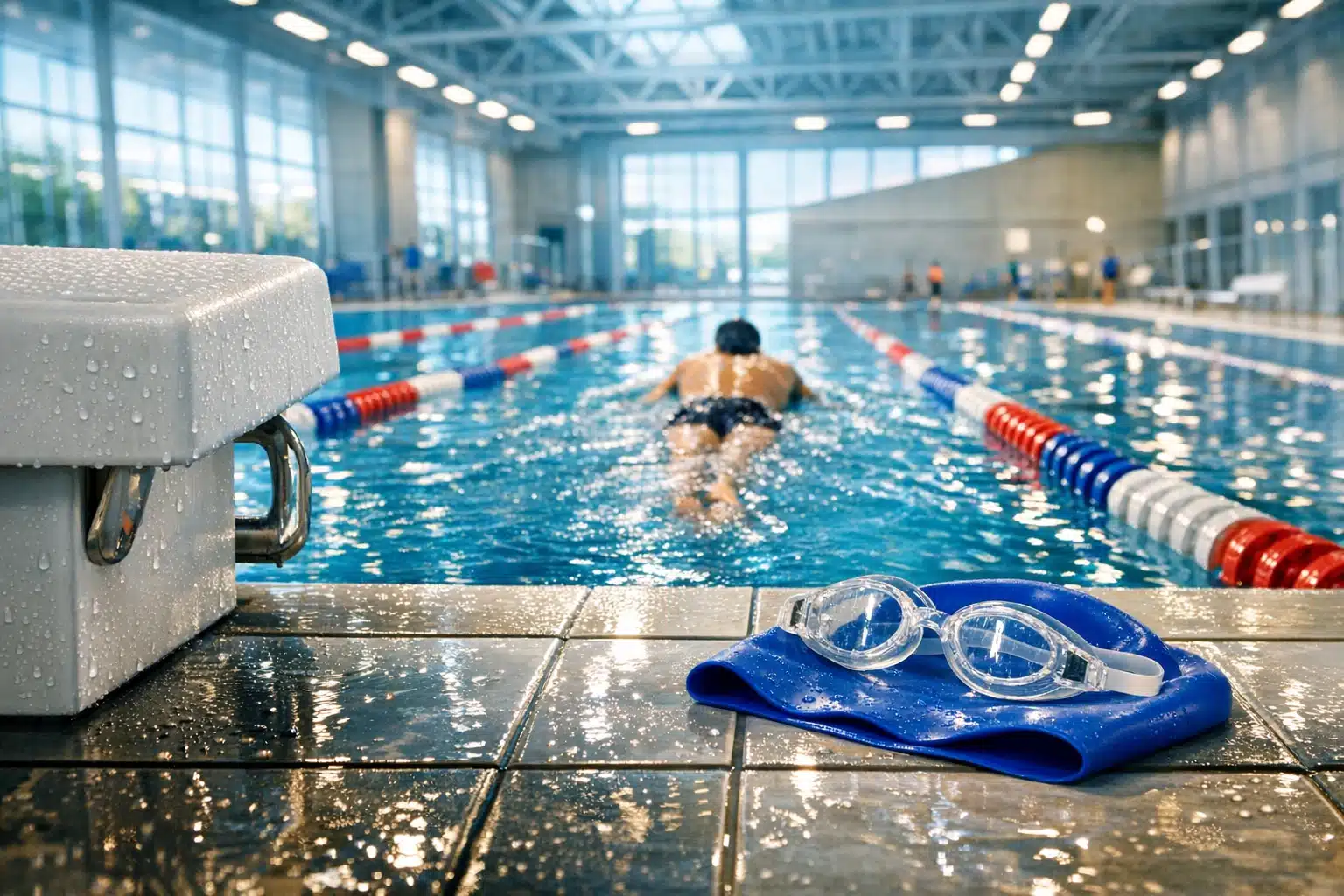
Explore the world of swimming
Swimming occupies a rare place among physical activities because it trains the body, steadies the mind, and teaches a practical life skill at the same time. In a pool, lake, or calm sea, the water turns ordinary movement into something both demanding and strangely soothing. People take it up for survival, exercise, therapy, travel, and competition, yet its appeal often begins with a simple revelation: staying afloat can feel like discovering a new kind of freedom.
Outline:
• Why swimming has remained relevant across cultures and generations
• The physical and mental benefits that make it stand out from many land-based activities
• A comparison of the main strokes and the techniques behind efficient movement
• Practical guidance on learning, training, equipment, and staying safe in the water
• A concluding look at how readers can make swimming part of everyday life
Swimming as a Life Skill, Sport, and Global Tradition
Swimming is far more than a way to cross a body of water. It is a survival skill, a recreational pastime, a competitive sport, and for many people, a form of moving meditation. Long before modern pools and lane ropes existed, humans were already swimming in rivers, lakes, and coastal waters for transport, fishing, military training, and play. Ancient artwork from several civilizations shows that swimming has been practiced for thousands of years, which makes it one of the oldest physical activities still widely enjoyed today.
Part of swimming’s enduring value comes from its versatility. A person can swim for relaxation on holiday, for rehabilitation after an injury, for structured cardiovascular exercise, or for elite competition. That range is unusual. Running, for example, is accessible and efficient for fitness, but it does not teach water competence. Team sports can build coordination and community, but they often require groups, fixed schedules, and specific facilities. Swimming can be solitary or social, casual or intense, technical or playful. It fits many lifestyles because the water itself becomes the training environment.
Modern swimming also occupies a visible place in public life. It is a core Olympic sport, an important part of military and rescue training, and a foundation for water safety education. In many countries, children are introduced to swimming lessons early because confidence in the water can reduce fear and improve safety around pools, beaches, and boats. That practical importance matters. The World Health Organization has repeatedly identified drowning as a major global public health concern, which gives swimming a value that goes well beyond recreation.
Swimming cultures vary by region. Coastal communities may grow up with open-water familiarity, while urban swimmers often learn in municipal pools. Competitive clubs emphasize split times, stroke mechanics, and race strategy. Recreational swimmers may simply value the quiet rhythm of laps after work. Yet these versions of swimming share a common thread: they teach people how to move efficiently in an environment where technique matters as much as strength.
Perhaps that is why swimming stays memorable. Water is honest. If your breathing is rushed, it tells you. If your body line is balanced, it rewards you. Few activities blend humility, skill, and satisfaction quite so naturally.
Physical and Mental Benefits of Swimming
Swimming is often recommended because it delivers a rare combination of cardiovascular challenge and reduced impact on the joints. On land, every stride in a run or jump sends force back through the body. In water, buoyancy supports much of that load, which is one reason aquatic exercise is so widely used in rehabilitation and low-impact fitness programs. For people managing joint discomfort, recovering from certain injuries, or simply looking for a break from repetitive pounding, swimming can offer a sustainable alternative.
From a fitness perspective, swimming trains several systems at once. It raises heart rate, recruits large muscle groups, and demands coordinated breathing. A steady session can improve endurance, while harder intervals build speed and power. Because water is denser than air, even simple movements meet resistance. That means swimmers are not only moving forward but also pushing against a medium that constantly asks for effort. Moderate lap swimming can burn several hundred calories per hour, though the exact number varies by body size, stroke choice, and intensity.
The benefits are not only physical. Many swimmers describe the pool as a place where thoughts settle into rhythm. Breathing patterns, repeated strokes, and the muffled sound of water can make swimming mentally restorative. Research on physical activity consistently shows that exercise can support mood, stress management, and sleep quality, and swimming often adds a sensory calm that other workouts do not provide. For some people, the lane becomes a place to think clearly. For others, it becomes a way to stop thinking for a while.
Swimming also supports healthy aging. It can help maintain mobility, muscular endurance, and cardiovascular function across a wide age range. Adults are generally advised by public health authorities to get at least 150 minutes of moderate aerobic activity each week, and swimming can contribute meaningfully to that target. Older adults may especially appreciate that training in water can feel demanding without feeling punishing.
Its advantages can be summed up clearly:
• It improves aerobic fitness and stamina.
• It strengthens the shoulders, back, core, hips, and legs.
• It offers low-impact movement for many bodies and ages.
• It can support stress relief and mental reset.
• It builds water confidence, which carries practical safety value.
Of course, benefits depend on consistency and proper technique. A few laps done with tension and poor breathing may feel frustrating. A structured plan, even a simple one, transforms swimming from random splashing into purposeful progress. Like water smoothing stone, the gains often arrive gradually, but they last.
Understanding the Main Strokes and the Craft of Efficient Technique
One of the most fascinating parts of swimming is that speed does not come from effort alone. It comes from efficiency. In the water, a strong but poorly aligned swimmer can work far harder than a relaxed swimmer with better technique and still move more slowly. That is why swimming coaches spend so much time on body position, timing, breathing, and streamlining. The main strokes all solve the same problem, moving a human body through water, but they do so in very different ways.
Freestyle, commonly used in front crawl form, is usually the fastest and most efficient stroke for distance swimming. The swimmer stays mostly face down, rotates through the torso, and uses alternating arm pulls with a flutter kick. Because one arm is almost always recovering while the other is pulling, propulsion remains relatively continuous. Freestyle rewards a long body line and controlled breathing. When beginners lift the head too high to inhale, the hips often drop, creating drag. A small technical mistake can feel like towing an invisible anchor.
Backstroke shares the alternating rhythm of freestyle but flips the body onto the back. Many beginners appreciate that the face stays above the water, yet the stroke introduces another challenge: alignment. Without a clear view of where they are going, swimmers must rely on balance, shoulder rotation, and lane awareness. Backstroke can be excellent for posture and shoulder control when taught well.
Breaststroke looks calmer than it feels. Its pull, breath, kick, and glide happen in a distinct sequence, and timing matters immensely. Unlike freestyle and backstroke, the kick provides a large share of propulsion. Many recreational swimmers enjoy breaststroke because it allows forward visibility and a gentler tempo, but competitive breaststroke is highly technical and can be surprisingly demanding. Butterfly, by contrast, is the stroke that announces itself dramatically. It uses simultaneous arm recovery and a wave-like body motion with dolphin kicks. It is powerful and elegant, but also the most exhausting for many swimmers because it demands strength, timing, and rhythm all at once.
A useful comparison looks like this:
• Freestyle: fastest for most swimmers, efficient for distance, highly dependent on breathing rhythm
• Backstroke: face stays up, strong emphasis on alignment and shoulder rotation
• Breaststroke: slower but controlled, timing-heavy, popular for recreational swimming
• Butterfly: explosive and beautiful, technically difficult, energy-intensive
No matter the stroke, several principles remain universal. A streamlined body reduces drag. Relaxed but deliberate breathing preserves rhythm. Kicks should support balance rather than become frantic splashing. Good hand entry and underwater pull matter more than theatrical effort above the surface. Even turns and push-offs influence performance, especially in pool swimming, because a strong push from the wall can be faster than surface swimming for a short distance.
This is where swimming becomes almost architectural. Each lap asks the swimmer to build a cleaner line, a steadier breath, a more economical movement pattern. The water does not care how determined you feel; it responds to what you do. That makes technique not an optional extra, but the language of the sport itself.
Learning to Swim, Training Effectively, and Staying Safe
For beginners, swimming can seem deceptively simple from the pool deck and surprisingly technical once they enter the water. The best starting point is not speed, but comfort. Learning to float, exhale into the water, kick with control, and move between positions creates the foundation for everything that follows. Formal lessons can accelerate progress because an instructor sees details that a learner often misses, such as tension in the neck, a mistimed breath, or legs sinking from a misaligned head position.
As swimmers improve, training becomes more structured. A useful session often includes a warm-up, drills, a main set, and an easy finish. Drills isolate parts of the stroke so technique improves under less pressure. A freestyle session, for example, might include kick work, single-arm practice, and short repeats focused on breathing every three strokes. More advanced swimmers may use interval training to build endurance and pace control, while competitive athletes track split times, stroke counts, and recovery periods carefully.
Equipment matters, but it does not need to be elaborate. A practical setup usually includes:
• Well-fitted goggles for clear vision and comfort
• A swimsuit designed for movement rather than casual lounging
• A swim cap if required by the pool or helpful for hair management
• A kickboard for isolating leg work
• A pull buoy for upper-body focus and body position awareness
• Fins or paddles only when used thoughtfully and with proper instruction
Safety deserves equal attention. Swimming skill lowers risk, but it does not erase it. Strong swimmers can still make poor decisions in unfamiliar water. Pools carry hazards such as slippery surfaces, exhaustion, and overestimating ability. Open water adds currents, temperature changes, waves, reduced visibility, and navigation challenges. Sensible habits are straightforward:
• Swim where lifeguards are present when possible
• Never assume calm water is harmless
• Enter unknown water carefully
• Respect weather, flags, and local warnings
• Avoid swimming alone, especially in open water
• Stop immediately if cramping, dizziness, or unusual fatigue appears
There is also a difference between pool confidence and open-water competence. In a pool, walls, lane lines, and predictable conditions help orientation. In open water, there may be no black line beneath you, only depth and distance. That shift can unsettle even experienced lap swimmers. Training for it means practicing sighting, pacing, and calm breathing under changing conditions.
Done thoughtfully, swimming becomes safer and more rewarding over time. Progress does not come from forcing harder sessions every day. It comes from steady learning, respect for the environment, and a willingness to improve one quiet lap after another.
Conclusion: Why Swimming Deserves a Place in Everyday Life
If you are reading this as a beginner, swimming may look like a skill reserved for the naturally graceful. It is not. Like cycling, cooking, or learning a language, it becomes manageable when broken into parts and practiced patiently. The first victories are often small: putting your face in the water without panic, floating longer than before, finishing a full length without stopping, or finally understanding how exhaling changes everything. Those moments matter because they turn uncertainty into ability.
If you already know how to swim but have not returned to it in years, the sport offers a practical way back into movement. It can be gentle enough for rebuilding fitness and demanding enough to remain interesting for decades. Few activities scale so well across life stages. Children can learn safety and coordination. Adults can use swimming for training or stress relief. Older swimmers often value the combination of challenge and reduced joint impact. Competitive lanes, community classes, hotel pools, beach sessions, masters clubs, and aquatic therapy programs all show how adaptable it can be.
The most important takeaway for everyday readers is simple: swimming rewards consistency more than bravado. You do not need heroic distances or expensive gear to benefit from it. A regular schedule, sound instruction, and respect for safety are far more useful than trying to power through bad habits. Start where you are. Learn the basics well. Build technique before chasing speed. Let confidence grow alongside fitness.
In the end, swimming offers more than exercise. It teaches composure in an unfamiliar environment, awareness of breath, and trust in gradual improvement. That is a rare combination. Whether your goal is health, recreation, resilience, or the satisfaction of moving smoothly through water, swimming has room for you. Step in carefully, learn with intention, and you may find that the pool is not just a place to work out, but a place to feel capable in a completely different element.