Explore the world of swimming
Swimming is one of the rare activities that feels playful while demanding discipline, making it relevant to children learning confidence, adults chasing fitness, and older people protecting mobility. It strengthens the heart, trains nearly every major muscle group, and offers a low-impact option for bodies that dislike pounding roads or crowded gyms. In a world that often keeps people seated, the water invites movement, focus, and a refreshing reset.
Outline
-
The article begins by explaining what makes swimming both a practical survival skill and a globally respected sport.
-
It then explores the physical and mental benefits that keep swimmers returning to the pool, lake, river, or sea.
-
Next comes a close look at technique, including the main strokes and the habits that improve efficiency.
-
A dedicated section covers safety, equipment, and the differences between controlled pool sessions and open-water outings.
-
The final section examines training paths, competition, and the lifelong value of staying connected to swimming.
Swimming as a Life Skill, Recreation, and Sport
Swimming occupies a special place in human life because it serves several purposes at once. It is a survival skill, a leisure activity, a rehabilitation tool, and a competitive discipline with a long international history. Many sports ask you to choose one identity: casual participant or serious athlete. Swimming is more generous. A person may learn basic floating for safety, enjoy gentle laps for relaxation, and still admire the precision of elite racers without any contradiction. The same lane can host a nervous beginner at dawn and a seasoned masters swimmer by evening.
Historically, swimming is not a modern invention dressed up in bright goggles. People have crossed rivers, coastlines, and canals for thousands of years. In the modern era, it became one of the foundational Olympic sports, appearing in the first Games of 1896 for men, while women’s Olympic swimming events were added in 1912. That long competitive tradition helped standardize strokes, race distances, timing systems, and training methods. Yet the sport has never lost its broader appeal. For many families, the first swimming lesson matters more than any medal because it builds confidence around water, which can be unpredictable and unforgiving.
Competitive swimming is usually organized around four primary strokes, each with its own rhythm and technical demand:
-
Freestyle: the fastest and most commonly practiced stroke, often associated with front crawl technique.
-
Backstroke: performed on the back, useful for posture awareness and shoulder coordination.
-
Breaststroke: slower but highly technical, relying on timing between pull, kick, and glide.
-
Butterfly: powerful and visually dramatic, requiring strength, timing, and excellent body control.
Recreational swimmers often compare swimming to walking in another element. That image works because the water changes everything. Air allows sloppy movement to go mostly unpunished; water exposes inefficiency immediately. Lift your head too high, and your hips sink. Rush your stroke, and speed disappears into splash. Relax into the correct line, though, and the body begins to slide forward with a satisfying quietness. That is part of swimming’s charm: it turns small adjustments into noticeable rewards.
Another reason swimming remains widely relevant is accessibility across life stages. Young children use it to build coordination. Teenagers may enter school teams or train for triathlon. Adults often return to the pool after years away because joints that complain during running tolerate aquatic exercise far better. Older swimmers value the combination of movement and support the water provides. In that sense, swimming is not just a sport to be watched or measured. It is a lifelong relationship with an environment that teaches respect, patience, and calm under pressure.
Health Benefits: Why Swimming Works So Well for Body and Mind
Swimming earns its reputation as a full-body workout because water resists movement from every angle. When you pull, kick, rotate, or stabilize, muscles must work without the jarring impact found in many land-based activities. That makes swimming appealing to people who want challenging exercise without repetitive pounding on knees, ankles, and hips. It also explains why a modest-looking session can leave the body pleasantly tired from shoulders to calves.
From a cardiovascular perspective, swimming can help improve heart and lung efficiency when practiced regularly. The World Health Organization recommends at least 150 minutes of moderate-intensity aerobic activity per week for most adults, and swimming can contribute meaningfully to that target. Easy laps can support general fitness, while interval sets raise intensity and push endurance. Because breathing must synchronize with movement, swimmers develop a sharper awareness of pacing than many beginners expect. A fast start in the pool is quickly corrected by reality; poor rhythm becomes obvious within a few lengths.
Calorie expenditure varies by body size, stroke, and effort level, but moderate to vigorous swimming can burn several hundred calories per hour, often in a range comparable to brisk cycling or steady jogging. The exact number is less important than consistency. Someone who enjoys the activity enough to practice it three times a week is likely to benefit more than someone forcing themselves through an exercise routine they dislike. Swimming also supports muscular endurance, particularly in the back, shoulders, core, and legs. Unlike gym machines that isolate movement patterns, the pool teaches coordination across multiple muscle groups at once.
Its low-impact nature makes swimming especially valuable for several groups:
-
People returning to exercise after inactivity
-
Older adults who want joint-friendly movement
-
Athletes seeking recovery sessions between harder workouts
-
Individuals managing certain orthopedic limitations under professional guidance
There is also a mental side that should not be overlooked. Repeated strokes, controlled breathing, and the muffled acoustics of the pool can create an almost meditative atmosphere. Many swimmers describe the first few minutes as a negotiation with distraction and the next twenty as a clearing of mental clutter. While swimming is not a cure-all and should not replace qualified care for medical or psychological conditions, regular exercise is widely associated with improved mood, lower stress, and better sleep quality. The pool often provides these benefits with an added sense of physical lightness that people find restorative.
Compared with running, swimming generally produces less impact stress. Compared with cycling, it usually recruits the upper body far more directly. Compared with walking, it demands stronger breath control and greater technical awareness. Those differences help explain why swimming feels distinct rather than merely interchangeable with other workouts. It trains fitness, but it also trains composure. The lesson is simple and memorable: progress comes not from fighting the water, but from learning how to move through it intelligently.
Technique and Stroke Mechanics: The Difference Between Effort and Efficiency
One of the most fascinating things about swimming is how quickly technique separates strain from speed. Beginners often assume strength alone will carry them forward, but the water is a ruthless editor of wasted motion. A swimmer who thrashes energetically may travel less efficiently than someone using a smoother, quieter stroke. That is why coaching cues in swimming often sound simple yet matter enormously: keep the body long, look down, exhale underwater, finish the pull, hold the line. Each adjustment reduces drag or improves propulsion.
Body position is the foundation of nearly every stroke. When the torso remains close to horizontal, the swimmer moves through the water with less resistance. Lift the head too far and the legs tend to drop, creating drag. Breathing, therefore, is not only about getting air; it is also about protecting alignment. In freestyle, many swimmers benefit from turning the head just enough to inhale while keeping one goggle in the water during the breath. In backstroke, the face stays above the surface, but timing and shoulder rotation still determine whether the stroke feels smooth or chaotic.
Each competitive stroke asks a different question of the body. Freestyle rewards rhythm, rotation, and steady propulsion. Backstroke emphasizes balance on the spine and clean arm recovery. Breaststroke is often underestimated because it appears gentle, yet it is one of the most technical strokes due to the precise sequence of pull, breath, kick, and glide. Butterfly brings together a wave-like body motion, simultaneous arm action, and dolphin kick, creating a stroke that can look almost theatrical when performed well. It is the closest thing the pool has to a drum solo.
For learners, improvement usually comes from breaking complex movement into manageable parts. Common priorities include:
-
Learning to float and relax instead of bracing against the water
-
Practicing a steady exhale underwater to avoid breath-holding panic
-
Developing a controlled kick that supports balance rather than splashing wildly
-
Using drills to isolate timing, catch position, or rotation
Freestyle comparisons reveal why technique deserves attention. A novice may cross 25 meters with high effort and stop breathless. A trained swimmer can cover several times that distance at a faster pace while appearing less rushed. The difference is not mysterious talent. It usually comes from better streamlining, a more effective catch, a calmer kick, and consistent breathing. Training tools such as kickboards, pull buoys, and fins can help, but they work best when used with a clear purpose rather than as shortcuts.
Good technique is also protective. Efficient movement may reduce unnecessary strain on shoulders and neck, especially for swimmers who train frequently. That does not mean perfection is required before enjoyment begins. On the contrary, the learning process is part of the pleasure. Every small refinement changes how the water feels. A cleaner turn, a quieter entry, or a better-timed breath can transform a frustrating session into one that feels almost elegant. In swimming, grace is not decoration. It is practical engineering expressed through the body.
Safety, Equipment, and the Difference Between Pools and Open Water
Swimming is enjoyable partly because it feels freeing, but that sense of freedom should always travel with caution. Water can support the body beautifully one moment and expose poor judgment the next. Safety is not the dull administrative part of swimming; it is what makes the experience sustainable. The World Health Organization continues to identify drowning as a major cause of unintentional injury-related death globally, which is why basic awareness matters even for confident swimmers.
Pool environments are generally controlled, yet they still require attention. Depth changes, crowded lanes, slippery decks, and overestimating personal ability can all create preventable problems. Children need active supervision rather than distant observation. Adults returning to swimming after years away may discover that former confidence does not immediately match current conditioning. Pool etiquette also improves safety for everyone. Circle swimming in the correct direction, starting with enough space, checking before pushing off, and communicating during shared sets can prevent collisions and frustration.
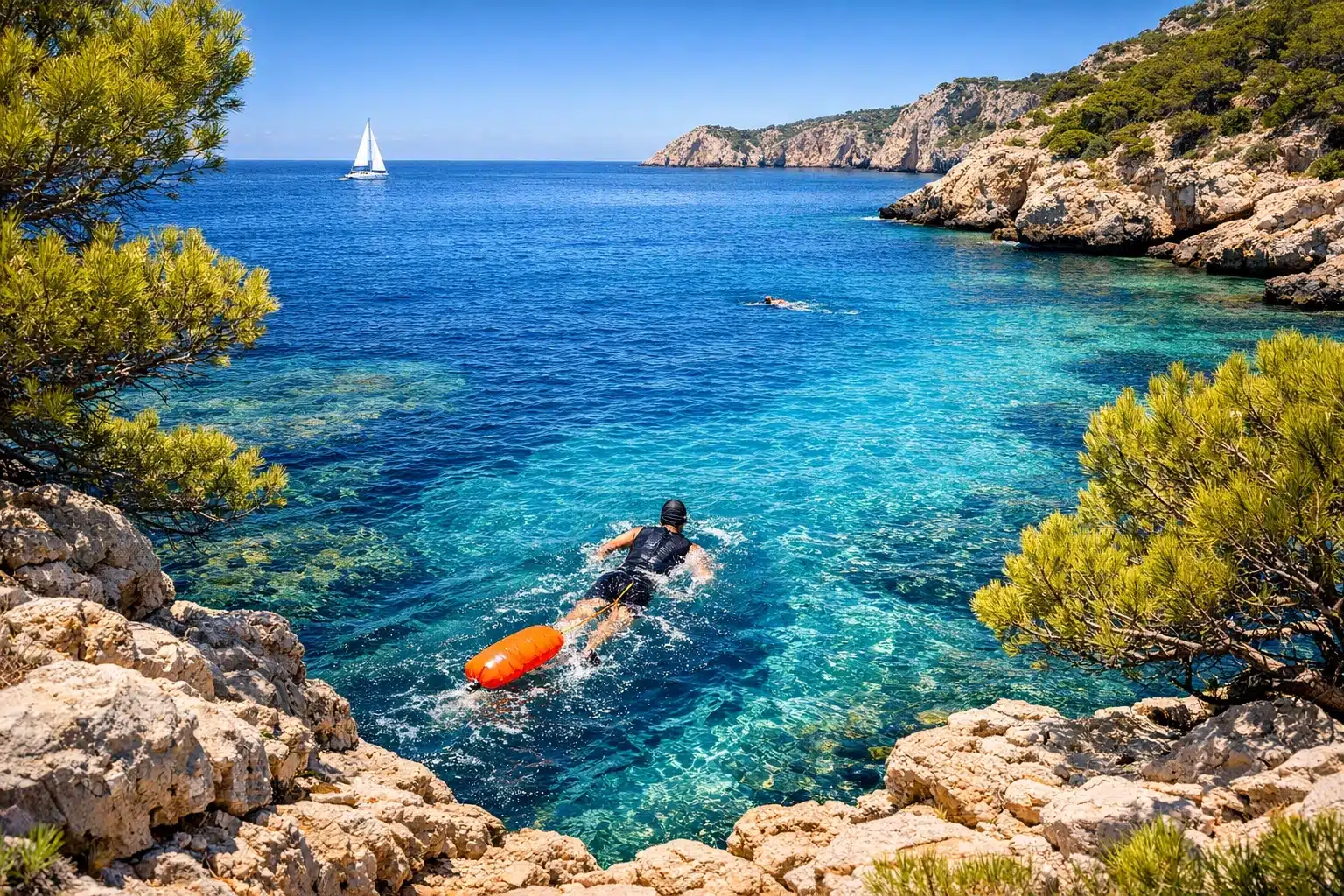
Open water introduces variables that a pool cannot imitate fully. Lakes, rivers, and seas may involve currents, waves, cold temperatures, limited visibility, and changing weather. Distances can feel different when lane lines disappear and the bottom is no longer visible. Even strong pool swimmers may find open water surprisingly demanding because navigation, sighting, and thermal stress add new challenges. A cautious approach is wise: swim with others, use a brightly colored tow float when appropriate, learn the entry and exit points, and respect local guidance about tides or water quality.
Equipment can make swimming more comfortable and more productive, though not all gear is essential from day one. A basic kit often includes:
-
A well-fitting swimsuit that allows unrestricted movement
-
Goggles suited to the lighting conditions and face shape
-
A swim cap for comfort, streamlining, or pool rules
-
A towel, water bottle, and sandals for practical poolside use
As training becomes more structured, swimmers may add tools such as kickboards, pull buoys, fins, paddles, snorkels, or pace-tracking watches. These items are useful when they solve a training problem. Fins can help body position and ankle flexibility. Pull buoys highlight upper-body mechanics. Paddles increase feel for the catch but should be used carefully to avoid excessive shoulder load. Sunscreen, thermal protection, and visibility gear become more important outdoors.
Hygiene and preparation matter too. Showering before entering a pool helps maintain water quality. Staying hydrated is easy to forget because swimmers are surrounded by water, yet workouts still produce fluid loss. Warm-up should not be skipped simply because the activity looks smooth from the outside. A few gentle lengths, mobility exercises, and gradual acceleration allow the body to settle in. In short, smart swimming is not timid swimming. It is informed swimming, the kind that lets confidence grow from sound habits rather than wishful thinking.
Training, Competition, and the Lifelong Appeal of Swimming
Swimming can be shaped to fit remarkably different goals. One person wants stress relief after work. Another aims to complete a triathlon. A teenager may train for school meets, while a retiree may value mobility and routine above race times. This flexibility is one reason the sport stays relevant across decades. Unlike trends that burn brightly and fade, swimming keeps offering new versions of itself. The challenge changes, but the medium remains compelling.
For general fitness, a simple training structure often works well. A session might begin with an easy warm-up, move into technique drills, continue with a main set built around pace or distance, and finish with a gentle cool-down. Beginners do not need heroic volume. Consistency matters more than dramatic single efforts. Two or three thoughtful sessions per week can improve endurance, efficiency, and confidence. Rest intervals are not signs of weakness; they are part of the design, allowing swimmers to maintain quality rather than collect sloppy meters.
A practical progression may look like this:
-
Week 1 to 2: short repeats with generous rest, focused on comfort and breathing
-
Week 3 to 4: slightly longer sets, adding one technical goal per session
-
Week 5 onward: structured intervals, pacing awareness, and stroke variety when appropriate
Competition introduces another layer of precision. Races are measured in hundredths of a second, and details such as starts, turns, underwater phases, and finishes can decide outcomes. Pool events range from explosive 50-meter sprints to distance races like the 1500 meters, while medley races test versatility across all four strokes. Open-water events, including the Olympic 10-kilometer race, shift the emphasis toward endurance, tactics, navigation, and physical resilience in variable conditions. Watching elite swimmers can be revealing: what appears fast is usually carefully controlled, not frantic.
Still, the value of swimming should not be judged only by podiums. Masters programs, community pools, adult lesson groups, and local clubs create social spaces where improvement coexists with encouragement. For many people, the true reward is not winning but returning. Returning after a demanding week. Returning after an injury layoff. Returning because the pool offers a familiar challenge that clears the mind and organizes the day. That kind of loyalty says something important about the sport.
Technology now supports swimmers with underwater video, smart watches, tempo trainers, and data on splits, stroke count, and rest time. These tools can sharpen feedback, but they do not replace feel. Swimming remains gloriously physical and immediate. The body learns through repetition, sensation, and timing. Over time, a swimmer starts to recognize subtle differences in pressure against the palm, rotation through the ribs, or the way a good turn carries momentum into the next length. Those insights are deeply satisfying because they are earned, not guessed.
In the end, swimming appeals for a simple reason: it keeps offering both challenge and relief. It demands respect, then pays back effort with skill, fitness, and moments of quiet concentration that are hard to find elsewhere.
Conclusion for Beginners, Fitness Swimmers, and Curious Readers
Swimming deserves attention not only because it is an established sport, but because it solves several real-life needs at once. It can improve cardiovascular fitness, build coordination, support joint-friendly exercise, and strengthen water safety awareness. For beginners, the key message is encouraging: progress does not require perfect technique on day one, only patience and steady practice. For experienced swimmers, the sport remains endlessly adjustable through pace, distance, stroke work, and competition. If you are looking for an activity that combines discipline with relief, structure with freedom, and challenge with genuine usefulness, swimming is a strong place to begin and an even better habit to keep.