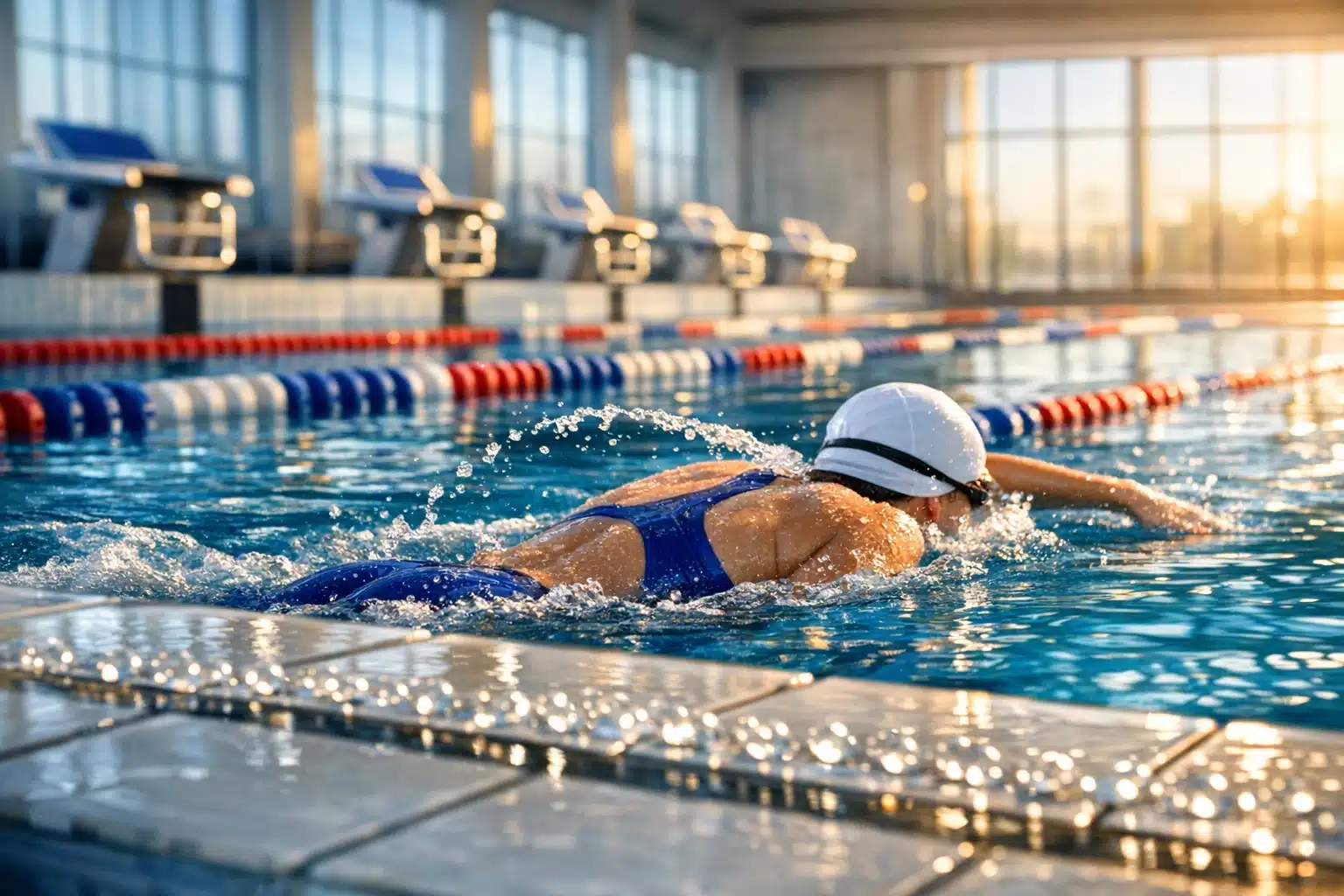
Explore the world of swimming
Swimming is one of those rare activities that feels playful on the surface yet delivers serious value underneath. It builds endurance, strengthens muscles, supports heart health, and offers a low-impact option for people who want to move without punishing their joints. From Olympic lanes to quiet lakes and neighborhood pools, it reaches beginners, athletes, children, and older adults alike. This article maps the essential ideas behind swimming and shows why the water keeps calling people back.
Outline:
• Why swimming matters as both a sport and a life skill
• The four main strokes and the foundations of efficient technique
• Training methods for fitness, endurance, and improvement
• Safety, pool etiquette, and the special demands of open water
• How swimming fits different ages, goals, and lifestyles
Why Swimming Matters: More Than Exercise in a Pool
Swimming occupies a special place in human life because it is not only a sport but also a practical survival skill, a form of recreation, and a serious training method. Long before organized competitions existed, people entered water to fish, travel, cool down, and cross rivers. Today, the setting may be more structured, with lane ropes, timers, and lesson schedules, yet the basic appeal remains strikingly simple: in water, movement feels different. Gravity loosens its grip, the body becomes lighter, and effort produces a gliding sensation that few land-based activities can imitate.
From a fitness perspective, swimming stands out because it combines aerobic work with muscular engagement. Water creates resistance in every direction, so even simple movements ask the body to coordinate the shoulders, core, back, hips, and legs. Because of that, a steady swim session can improve cardiovascular endurance while also challenging posture and body control. For many people, the low-impact nature of the activity is just as important. Running is effective, but it can be hard on knees, ankles, and hips. Swimming, by contrast, often allows people with joint sensitivity, higher body weight, or recovery needs to exercise with less pounding.
There is also a mental side to swimming that deserves attention. Repeating strokes, counting laps, and syncing breath with movement can create a rhythm that feels almost meditative. The world narrows to bubbles, turns, and the sound of water sliding past the ears. Many swimmers describe this as calming rather than monotonous. In a busy week, that matters. Exercise adherence often improves when the activity itself feels rewarding, not merely useful.
Swimming is relevant across a wide range of goals:
• general fitness and weight management
• rehabilitation and low-impact conditioning
• sport performance and competition
• stress relief and mental reset
• family recreation and water safety
It also adapts well to different environments. A person may begin with basic lessons in a local pool, progress to lap swimming for health, and later discover masters training, triathlon, or open-water events. Others may never enter a competition and still gain enormous value. That flexibility explains why swimming has such lasting appeal. It can be gentle or intense, solitary or social, technical or carefree. Few activities travel so easily between play and discipline, and that broad usefulness is a major part of its staying power.
The Main Strokes and the Craft of Efficient Technique
To an untrained eye, swimming can look like a blur of arms and splashing. In reality, good swimming is built on mechanics, timing, and restraint. The four recognized competitive strokes are freestyle, backstroke, breaststroke, and butterfly, and each asks the body to solve the same challenge in a different way: how to move forward efficiently through a dense, resisting medium. Water is far denser than air, so small technical errors can cost a surprising amount of energy. That is why beginners often feel exhausted after a short distance while experienced swimmers appear to slide forward with controlled ease.
Freestyle, usually performed as front crawl, is the fastest and most commonly practiced stroke. Its basic pattern includes alternating arm recovery, a flutter kick, and side breathing. The key idea is not raw force but alignment. A swimmer who keeps the head neutral, rotates the body from the hips and shoulders, and enters the hand cleanly into the water usually wastes less energy. Common mistakes include lifting the head too high to breathe, crossing the hands over the centerline, and kicking wildly instead of steadily.
Backstroke uses a similar alternating rhythm but places the swimmer face-up. Many people find breathing easier here because the mouth stays clear of the water more often. The challenge is navigation and body position. Hips that sink create drag, and arms that enter too close to the head can disturb balance. Backstroke often teaches awareness because the swimmer cannot rely on looking forward.
Breaststroke is slower for many swimmers but highly technical. It uses a simultaneous arm pull, a whip-like kick, and a glide phase. Timing matters enormously. If the arms pull too wide or the kick opens too early, momentum breaks apart. Butterfly, often seen as the most demanding stroke, combines a dolphin kick with simultaneous arm recovery. When performed well, it looks powerful and fluid, almost like the swimmer is surfing a wave created by the body itself. When performed poorly, it feels brutally inefficient.
Across all strokes, several fundamentals repeat:
• horizontal body position reduces drag
• controlled breathing supports rhythm and relaxation
• a stable core helps transfer force
• efficient kicks support balance as much as propulsion
• consistent timing matters more than frantic effort
Technique is where swimming becomes artful. Two swimmers may be equally fit, yet the one with cleaner movement will usually travel farther on less effort. That is why drills remain central to improvement. Catch-up freestyle, fingertip drag, single-arm backstroke, kickboard work, and sculling drills all teach pieces of the larger puzzle. Progress can feel slow at first, but once the body starts understanding the water, swimming changes. Instead of fighting the pool, the swimmer begins negotiating with it, and that is when the sport becomes genuinely satisfying.
Training for Fitness, Endurance, and Speed
Swimming training can be shaped around very different goals, and that is one reason the sport stays relevant for so many people. A beginner may simply want to complete several lengths without stopping. A recreational swimmer might use the pool for general health and stress management. A competitive athlete, meanwhile, will care about stroke count, pace times, turns, and race strategy. The structure changes, but the principle is consistent: improvement comes from balancing technique, conditioning, recovery, and regular exposure to the water.
For general fitness, swimming is often effective because intensity is easy to scale. One person may do relaxed lengths with long rests, while another performs interval sets that drive the heart rate high. A moderate 30-minute swim can burn a meaningful number of calories, often roughly in the 200 to 350 range depending on size, speed, and stroke choice, but focusing only on calorie estimates misses the bigger picture. Swimming can improve aerobic capacity, muscular endurance, and movement quality at the same time. It also helps many people stick with exercise because the environment feels less repetitive than a treadmill or static bike.
A sensible workout usually includes three parts. First comes a warm-up, where easy laps and simple drills prepare breathing and joint motion. Then comes the main set, which targets endurance, speed, or technique under fatigue. Finally, a cool-down helps the swimmer return to a calmer effort level. Even short sessions benefit from this structure. Order matters in the water because rushed, cold starts often produce sloppy movement.
Here is what progression often looks like in practice:
• beginners build comfort, breath control, and basic distance
• intermediate swimmers add intervals, drills, and pacing awareness
• advanced swimmers monitor splits, turns, and training zones
A beginner session might include 4 easy lengths, 4 drill lengths, and several short repeats with rest after each one. An intermediate workout could use a set such as 8 x 50 meters at a steady pace with 20 seconds of rest, followed by kick work and easier recovery swimming. More experienced swimmers often organize training around race demands. Sprinters may work at high intensity with longer rest, while distance swimmers spend more time at sustainable aerobic paces.
Consistency matters more than heroic single sessions. Two or three swims each week usually produce better results than one exhausting workout followed by long gaps. Cross-training can help as well. Shoulder stability work, mobility training, and core strength support better mechanics in the pool. Recovery is part of training, not the opposite of it. Swimmers who ignore sleep, hydration, and technique breakdown often stall.
The most encouraging truth is that progress in swimming is visible in many forms. Faster times are one measure, but so are smoother breathing, fewer strokes per length, better confidence in deep water, and the ability to finish a session feeling worked rather than defeated. In swimming, improvement is not only about moving faster. It is also about making hard things look and feel more controlled.
Safety, Pool Etiquette, and the Distinct Challenge of Open Water
Swimming offers freedom, but water demands respect. Safety is not an optional side note to the sport; it is part of the foundation. Even skilled swimmers can make poor decisions when fatigue, cold, weather, or overconfidence enter the picture. In a supervised pool, risks are more controlled, yet they do not disappear. Slippery decks, breath-holding contests, dehydration, and lane collisions are all avoidable problems that still happen regularly. The best swimmers are not only fit or fast. They are attentive.
In pools, etiquette improves both safety and enjoyment. If lanes are marked by speed, choosing the appropriate one prevents frustration for everyone. Circle swimming, where swimmers keep to one side of the lane, helps traffic flow during busy sessions. Passing should be done carefully, ideally at the wall or with clear awareness of space. Resting at the wall is normal, but blocking the middle of the turn area is inconsiderate and sometimes dangerous. A shared pool works best when swimmers treat it like a cooperative environment rather than private territory.
Some basic pool habits are worth repeating:
• shower before entering when required
• avoid diving in shallow water
• do not swim alone if you are inexperienced
• stop immediately if sharp pain, dizziness, or cramping occurs
• respect lifeguard instructions without argument
Open-water swimming changes the equation dramatically. A lake or ocean may look inviting, but it removes many of the cues and protections swimmers rely on in a pool. There are no lane lines, visibility may be poor, water temperature can drop unexpectedly, and waves or currents can disrupt rhythm. Breathing to one side may suddenly expose the face to chop. Navigation becomes part of the effort, which is why open-water swimmers practice “sighting,” briefly lifting the eyes forward to stay on course without ruining body position.
Cold water deserves special caution. It can tighten breathing, reduce dexterity, and drain energy faster than many newcomers expect. Bright swim buoys, colored caps, and swimming with a partner or organized group improve visibility and safety. In the ocean, tides and rip currents require local knowledge. In lakes, depth changes and plant growth can unsettle anxious swimmers even when conditions are otherwise calm.
Yet for many people, open water is where swimming becomes unforgettable. Without black lines on the pool floor, the experience feels less measured and more expansive. The water may be dark, green, silver, or almost glassy at dawn. That beauty is part of the attraction, but it should never distract from preparation. Safe swimming is not fearful swimming. It is informed swimming. When people learn the rules of the environment, confidence grows for the right reasons, and the water becomes a place of challenge rather than unnecessary risk.
Swimming Across Life Stages: Skill, Confidence, Community, and Long-Term Value
One of swimming’s greatest strengths is that it remains useful and meaningful across the lifespan. For children, it begins as safety and familiarity. Learning how to float, kick, breathe, and reach a pool edge can build confidence that extends beyond the water. Lessons also teach listening, patience, and body awareness. Some children quickly fall in love with the sensation of movement in water, while others need time to trust it. Both responses are normal. Progress in early swimming is often uneven, with sudden leaps after periods that seem quiet from the outside.
For teenagers and young adults, swimming can become a competitive outlet or a stabilizing routine alongside school, work, and changing schedules. Team swimming builds discipline because improvement comes from repeated practice rather than lucky moments. Times drop by fractions, starts sharpen, turns become cleaner, and athletes learn that detail matters. At the same time, recreational swimming provides a different kind of value for people who want exercise without the culture of constant impact found in some other sports.
Adults frequently return to swimming after long gaps. Some were strong swimmers as children and rediscover the sport later. Others start from scratch, often carrying understandable anxiety about deep water, breathing, or being slower than everyone else in the lane. Adult learning can feel humbling, but it can also be deeply rewarding. Unlike some sports that are heavily tied to youth performance, swimming offers clear progress markers at almost any age. Better breathing, calmer stroke rhythm, and increased comfort in water are meaningful gains, whether or not a race is involved.
Swimming can be especially valuable for older adults and people managing physical limitations. Because water supports body weight, movement may feel more accessible than on land. Programs such as gentle lap sessions, water walking, and coached technique classes can help people stay active. Adaptive swimming further expands access by modifying instruction, equipment, or expectations to meet different physical, sensory, or neurological needs.
The social side should not be underestimated:
• local pools often create reliable community routines
• masters groups welcome adults with varied goals
• family swim sessions connect generations
• open-water clubs combine adventure with accountability
There is also a cultural dimension. In many places, access to safe swim instruction is unequal, and that shapes lifelong confidence around water. Supporting public pools, affordable lessons, and inclusive programming is not just about sports participation. It is about health, safety, and community belonging. Swimming may begin as an individual act, one body moving through one lane, but its broader value is collective. A community that teaches people to swim is also teaching resilience, confidence, and practical freedom.
Final Thoughts for New and Returning Swimmers
If you are curious about swimming, the most useful next step is usually the simplest one: start where your current comfort level honestly sits. That may mean formal lessons, a few relaxed lengths at a local pool, or a structured session with clear rest intervals. You do not need to chase perfect technique on day one, and you do not need to compare your pace with seasoned swimmers who have years in the water behind them. What matters first is confidence, consistency, and safe practice.
Swimming rewards patience more than bravado. The early sessions may feel awkward, breathless, or unexpectedly technical, but that is part of the learning curve, not a sign that the sport is closed to you. With time, the water becomes less like resistance and more like conversation. Strokes smooth out, breathing settles, and each lap begins to feel intentional. For readers who want a sport that can challenge the body, steady the mind, and stay relevant through different seasons of life, swimming is a remarkably durable choice.