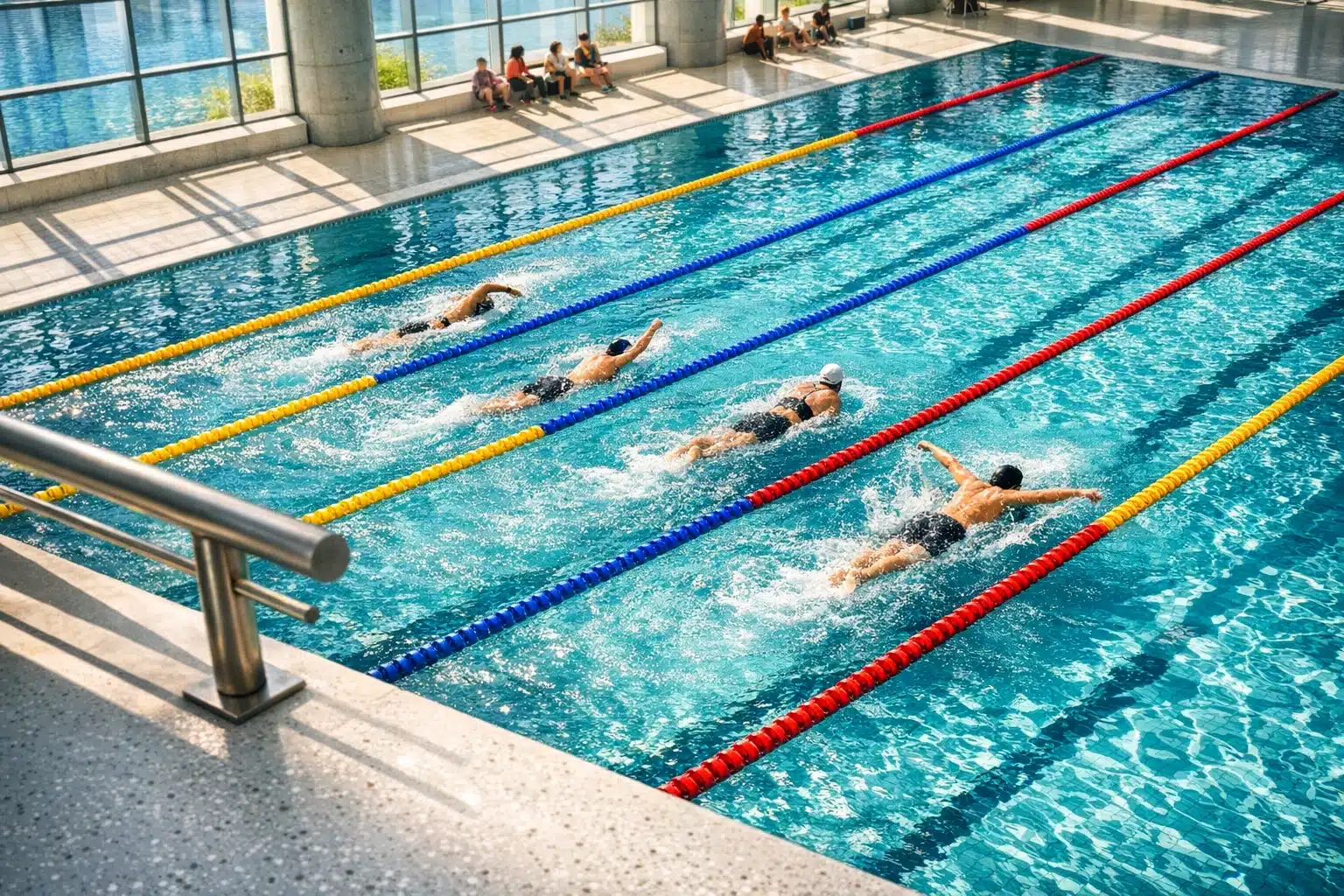
Explore the world of swimming
Swimming is one of the few activities that can feel playful, disciplined, restorative, and quietly demanding at the same time. From early lessons to lap training, it teaches body control, water safety, and persistence in an environment that challenges muscles and lungs without pounding the joints. Its value keeps rising as more people search for exercise they can sustain across decades rather than weeks. This article maps the essentials of swimming, from technique and training to culture, health, and everyday enjoyment.
Outline: this article begins with what makes swimming unique, moves through physical and mental benefits, compares the main strokes, explains training and safety basics, and ends with a practical conclusion for readers who want to make the water part of their routine.
Why Swimming Holds a Unique Place in Sport and Daily Life
Swimming occupies an unusual and important space between sport, survival skill, recreation, and lifelong exercise. Many activities ask the body to move on land in ways that feel familiar from childhood onward. Swimming asks something different. It places the body in a medium that supports weight while resisting every motion, which means even simple movement becomes a lesson in balance, rhythm, and breath. A person does not merely travel through water; they negotiate with it. That negotiation is part of swimming’s appeal. The water gives support, yet it never gives a free ride.
Its relevance stretches far beyond fitness. Learning to swim can increase confidence around pools, lakes, rivers, and coasts, making it a valuable life skill as well as a form of exercise. For children, that often means safety and coordination. For adults, it can mean returning to movement after injury, building endurance without constant impact, or finding a space where exercise feels less mechanical than a treadmill and less punishing than pavement. For older adults, it can be a practical way to stay active when joints no longer appreciate hard landings.
Swimming also carries deep historical roots. Human beings have swum for transport, work, military training, rescue, ritual, and pleasure. In modern sport, swimming became part of the first modern Olympic Games in 1896, and it has since grown into one of the most watched international events. Competitive pools themselves are carefully standardized, with short-course pools measuring 25 meters and long-course pools measuring 50 meters. Those clean lines and measured distances support precise timing, yet the activity is not limited to formal competition. It exists just as naturally in a quiet municipal pool, a hotel lane at dawn, a lake on a warm afternoon, or a rolling patch of sea where the horizon seems to breathe.
Part of swimming’s broad appeal lies in its flexibility. It can be:
- a technical sport focused on efficiency and speed
- a calming routine built around steady laps
- a social activity shared with friends or family
- a rehabilitation tool used under professional guidance
- a gateway to water polo, triathlon, surfing, rowing support, or lifesaving skills
Few activities move this easily between seriousness and joy. One swimmer may chase split times with relentless discipline, while another drifts into the pool to loosen a stiff back after work. Both are participating in the same ancient conversation between body and water. That range is what makes swimming so enduring: it meets people where they are, then quietly asks them to discover what more they can do.
The Physical and Mental Benefits of Swimming
Swimming is often praised as a full-body workout, and that description is accurate, but it is also incomplete. What makes swimming especially valuable is not only that it uses many muscle groups, but that it blends muscular effort, breathing control, coordination, and endurance in one continuous task. The arms pull, the legs drive, the core stabilizes, and the lungs work in a deliberate rhythm. That combination can improve cardiovascular fitness while building functional strength and body awareness.
Public health guidance frequently recommends that adults aim for at least 150 minutes of moderate-intensity aerobic activity each week. Lap swimming can contribute meaningfully to that target. Depending on pace and stroke choice, it can be moderate or vigorous exercise. Freestyle intervals, for example, may elevate heart rate steadily over a session, while an easier breaststroke swim can provide a gentler aerobic effort. Because the body is buoyant in water, many people find the experience more forgiving on hips, knees, and ankles than running or court sports. That does not mean it is effortless. It means the challenge arrives through resistance and control rather than repeated impact.
The physical benefits commonly associated with regular swimming include:
- improved cardiovascular endurance
- better shoulder, back, and core engagement
- increased mobility through repeated, controlled range of motion
- exercise options for people who need lower-impact training
- support for cross-training in sports such as triathlon, rowing, and team games
The mental side matters just as much. Swimming often creates a rare kind of concentration. Breathing has to be timed. Stroke rhythm has to be maintained. The outside world becomes muffled by water, bubbles, and lane noise. For many people, that sensory shift turns a workout into something close to moving meditation. Research on exercise in general consistently links physical activity with improved mood, lower stress, and better overall well-being, and many swimmers describe those benefits in practical, everyday terms: clearer thinking after a session, a calmer evening, or the simple satisfaction of leaving the pool with tired muscles and a quieter mind.
Still, swimming is not magic, and realistic expectations matter. It requires access to safe water, time to learn technique, and patience during the early stages when breathing can feel awkward. Chlorinated pools may irritate some skin or eyes, and beginners sometimes mistake poor form for poor fitness. Yet those limitations do not diminish its value. They simply remind us that swimming rewards consistency and instruction. Once the basics settle in, even a modest routine of two or three swims a week can become a sustainable, balanced habit that serves both body and mind.
Understanding the Main Strokes and How They Compare
Every stroke in swimming has its own logic, rhythm, and personality. To an untrained eye, they may seem like variations on the same idea: move arms, kick legs, go forward. In practice, each stroke places different demands on the body and teaches different lessons about timing, propulsion, and breathing. Knowing how they compare helps swimmers choose the right stroke for their goals, whether those goals involve fitness, technique, comfort, or speed.
Freestyle, usually swum with the front crawl, is the fastest and most efficient stroke for most people over distance. The body stays horizontal and streamlined, the kick remains relatively compact, and breathing usually happens to the side every two, three, or more strokes. Because it rewards smooth rotation and continuous movement, freestyle is the standard choice for fitness laps, triathlons, and many competitive races. It can feel wonderfully fluid once learned well, but beginners often struggle with breathing timing and body position at first.
Backstroke turns the swimmer face-up, which changes both comfort and challenge. Many people appreciate the freedom to breathe continuously without planning a side turn. It can encourage strong posture, shoulder rhythm, and a stable flutter kick. On the other hand, swimming on the back makes navigation harder outside a pool, and beginners sometimes discover that floating calmly on the back does not automatically translate to moving efficiently. In training, backstroke can be a useful contrast to freestyle because it works the body differently while remaining rhythmic and relatively sustainable.
Breaststroke is often seen as approachable because the head can rise regularly and the pace can be more deliberate. Its pull and kick work together in a distinct pattern, and its glide phase gives swimmers a moment of pause that other strokes do not. It is also the slowest of the four competitive strokes for most swimmers, largely because its recovery happens in the water rather than through the air. Good breaststroke demands timing, flexibility, and a technically sound kick. When done well, it feels measured and controlled rather than rushed.
Butterfly is the most dramatic and, for many, the most demanding. Both arms recover together, the body undulates, and the dolphin kick drives momentum. Butterfly punishes poor timing quickly, which is why it often looks either graceful or exhausting, with very little middle ground. It builds power and rhythm, but it is usually not the first stroke people choose for long, easy sessions.
A simple comparison helps clarify their differences:
-
Freestyle: best for efficiency, continuous lap swimming, and speed over most distances.
-
Backstroke: useful for posture, breathing comfort, and variation in training.
-
Breaststroke: helpful for controlled pacing and accessible breathing, though technically specific.
-
Butterfly: ideal for advanced coordination, strength, and explosive effort.
A balanced swimmer does not need to master every stroke at once. Still, learning even basic versions of all four builds versatility. Each stroke highlights a different truth about movement in water, and together they form a richer understanding of what swimming can be.
Learning to Swim Well: Training Habits, Gear, and Safety Basics
Getting better at swimming is rarely about brute effort alone. Beginners often assume the answer is simply to swim more laps, but progress usually comes from a combination of skill work, sensible structure, and respect for safety. Water is an honest teacher. If a swimmer rushes, holds tension, or ignores breathing mechanics, the pool reveals the problem immediately. The good news is that steady improvement is very realistic when training is broken into manageable pieces.
For true beginners, the early sequence matters more than speed. Comfort in the water comes first. That includes floating, exhaling into the water, gliding, and learning how the body aligns when relaxed. Only then do kicking, pulling, and coordinated breathing start to feel less like separate puzzles and more like parts of one motion. Lessons with a qualified instructor can shorten this learning curve considerably, especially for adults who feel self-conscious or for children who need structured confidence-building. Even strong athletes from other sports often benefit from coaching because swimming technique is highly specific.
Basic gear is simple, which is one reason swimming remains accessible compared with many sports. A functional setup usually includes:
- a comfortable swimsuit designed for movement
- well-fitting goggles that do not leak constantly
- a swim cap if required or preferred
- a towel, water bottle, and sandals for poolside use
- optional training aids such as a kickboard, pull buoy, fins, or paddles for more advanced practice
Training sessions are most productive when they have a purpose. A thoughtful swim may include a warm-up, a short drill block, a main set, and an easy finish. For example, a developing swimmer might warm up with easy freestyle and backstroke, practice breathing drills, complete several moderate repeats with rest, and cool down with relaxed laps. That structure builds skill and endurance at the same time. Randomly charging through lengths until fatigue takes over can feel productive, but it often reinforces poor form.
Safety deserves equal attention. Pool swimming and open-water swimming are not the same experience. Pools offer lane lines, visible walls, predictable depth markers, and often lifeguards. Lakes, rivers, and oceans introduce current, temperature shifts, changing visibility, waves, and navigation challenges. Anyone entering open water should use conservative judgment: swim with others, choose supervised or familiar areas, wear visible gear when appropriate, and respect weather and local conditions. Even strong pool swimmers can feel surprised by chop, cold water, or distance without walls for reference.
Good habits also include courtesy. Share lanes thoughtfully, understand basic pool etiquette, and leave space at turns. In swimming, progress is built not only by stronger strokes but by calmer decisions. The swimmer who learns to combine patience, practice, and caution usually advances further than the one who treats every session like a race.
Conclusion: How Different Readers Can Make Swimming Part of Life
Swimming does not belong to a single type of person. That may be the most useful conclusion for anyone considering it seriously. It is not reserved for elite competitors, former club swimmers, or people who already look confident in a lane. It can serve beginners who are still learning to float, adults searching for sustainable exercise, parents choosing life skills for their children, older readers wanting movement with less impact, and athletes who need cross-training that develops endurance without constant pounding on the body.
If you are a beginner, the priority is not speed. It is comfort, breathing, and basic technique. A few lessons can save months of frustration and make the water feel less intimidating. If you are returning after years away, forget the version of yourself from school or a past competition. Start with shorter sessions, rebuild feel for the water, and let consistency do the work. If your goal is fitness, swimming can become a dependable part of a weekly routine, especially when combined with walking, strength training, or mobility work. If you are a parent, swimming offers something rare: a recreational activity that also carries clear safety value.
A practical path forward might look like this:
- choose one realistic goal, such as two swims per week or one lesson series
- focus on technique before chasing distance
- alternate strokes or drill sets to avoid monotony
- track simple progress markers like comfort, lap count, or breathing ease
- treat rest and recovery as part of improvement, not as failure
There is also room for joy here, and that matters. Not every session must be optimized. Some days, the point is training. On others, the point is to slip into the water and leave feeling better than when you arrived. Swimming can be disciplined without becoming joyless, and relaxing without becoming aimless. That balance is part of its staying power.
For the target audience of curious newcomers, busy adults, health-minded readers, and recreational athletes, the message is straightforward: swimming is worth exploring because it offers more than one benefit and more than one entry point. You can approach it as exercise, as skill, as therapy, as recreation, or as a long-term habit that supports an active life. The lane does not ask for perfection. It asks for attention, patience, and the willingness to begin.