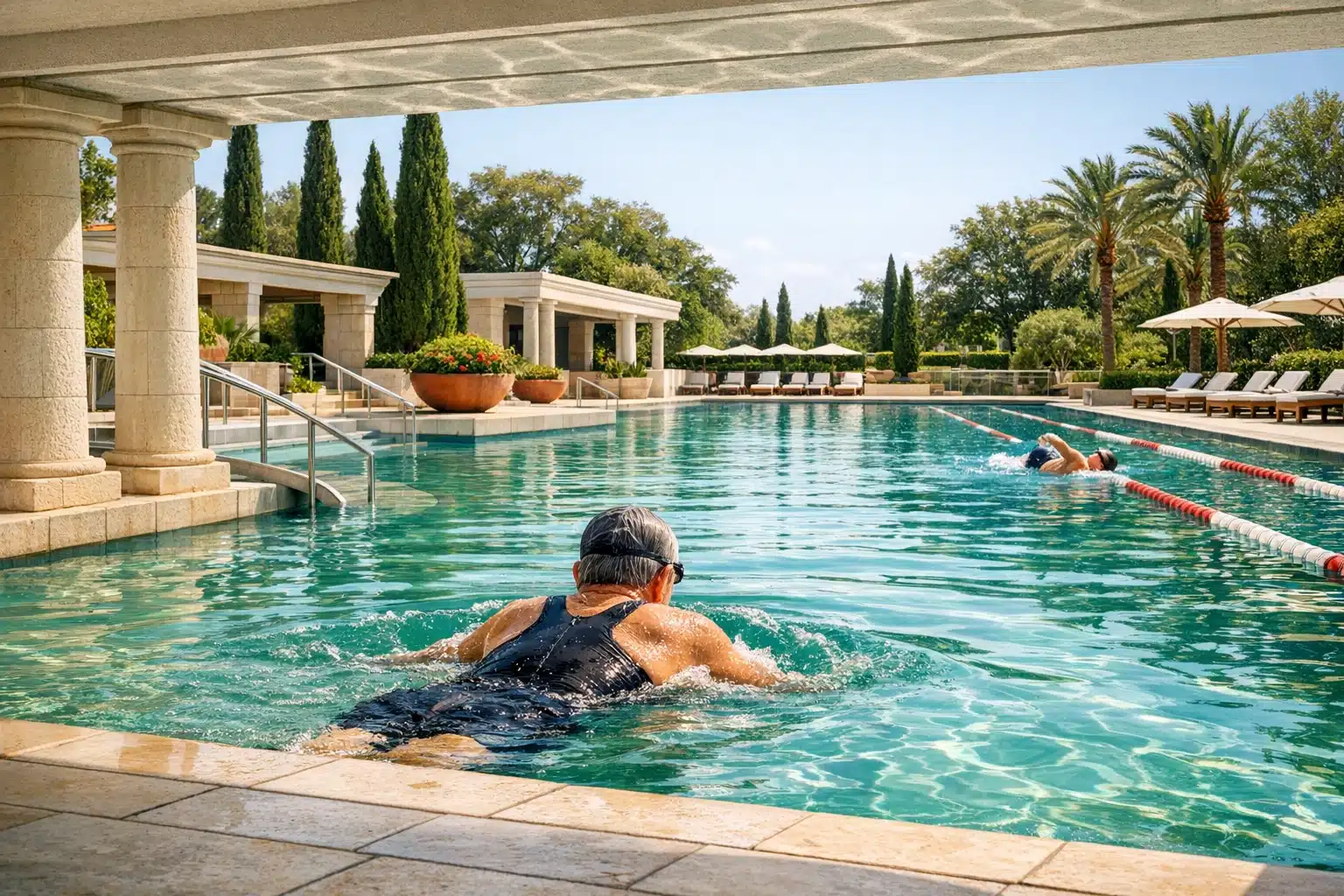
Explore the world of swimming
Water changes the rules of movement. The moment a body slips beneath the surface, gravity eases its grip, breathing demands attention, and even simple motion becomes a conversation between balance, rhythm, and resistance. That is why swimming matters far beyond medals or summer fun: it builds fitness, sharpens coordination, and teaches confidence in an environment that rewards patience. Few activities combine skill, safety knowledge, and long-term versatility so elegantly.
Outline:
- Why swimming remains relevant for health, mobility, and everyday fitness.
- How the major strokes differ in technique, efficiency, and physical demand.
- What beginners and regular swimmers should know about training structure, drills, and equipment.
- Which safety habits matter in pools and open water, and how access can be widened for more people.
- How different readers, from parents to adult beginners to performance-minded athletes, can turn this knowledge into practical action.
Why Swimming Matters: Health, Movement, and the Appeal of Water
Few sports ask the whole body to cooperate as completely as swimming. Arms pull, legs stabilize or drive, the core keeps the torso aligned, and breathing has to sync with movement rather than happen automatically. That coordinated demand is one reason the activity feels so distinctive. Another is the water itself. On land, impact travels through joints with every stride or jump. In a pool, buoyancy supports body weight, often making exercise more comfortable for older adults, people returning from injury, and anyone who wants training without constant pounding on knees or hips.
Water also resists motion from every direction. Unlike lifting a weight only during a single phase of an exercise, swimming creates continuous drag that the body must overcome stroke after stroke. That does not mean it is automatically easy or automatically hard; instead, intensity scales with pace, technique, and duration. A relaxed breaststroke can feel meditative, while a fast set of front crawl intervals can leave even a fit athlete breathless. This adaptability makes the sport unusually flexible across age groups and fitness levels.
From a health perspective, regular swimming can contribute to cardiovascular conditioning, muscular endurance, and mobility. Public health guidance from major organizations such as the World Health Organization often recommends adults aim for at least 150 minutes of moderate aerobic activity per week. Time in the pool can count toward that goal when the effort is sustained. Many coaches also value swimming because it improves body awareness. A swimmer quickly learns whether the head is too high, the kick too wide, or the timing too rushed; the water gives honest feedback, even if it does so silently.
The mental dimension matters too. Repetitive laps can create a rhythm that feels somewhere between training and reset. The black line at the bottom of the lane becomes a metronome, and each turn offers a small, measurable checkpoint. For people with crowded schedules, that clarity can be part of the attraction.
- Low-impact movement often suits sensitive joints.
- Continuous resistance challenges multiple muscle groups at once.
- Effort can be adjusted for beginners, fitness seekers, or competitors.
- Skill development keeps the experience engaging over time.
In short, swimming stays relevant because it is not only exercise. It is also a life skill, a confidence builder, and for many people, a form of active calm that is hard to replicate elsewhere.
Understanding the Strokes: Technique, Efficiency, and What Each One Teaches
When people say they “go swimming,” they may mean many different things. Some drift through easy laps with a relaxed breaststroke. Others train with structured sets using front crawl, backstroke, butterfly, and kick drills. Each stroke has its own mechanics, strengths, and learning curve, and understanding those differences makes the sport far more interesting.
Front crawl, often called freestyle in casual conversation, is generally the fastest and most efficient stroke for covering distance. The body stays long and horizontal, the legs provide a steady flutter kick, and the arms recover over the water before catching and pulling beneath the surface. Breathing is timed to the body’s rotation rather than forced straight forward. Good front crawl is less about slapping the water and more about reducing wasted motion. A streamlined head position and a clean hand entry can save energy over every length.
Backstroke shares some of that rotational logic, but the face stays above the surface and the swimmer moves on the back. Many beginners enjoy the easier breathing pattern, though staying straight without seeing forward takes practice. Because the hips must remain high, backstroke quickly reveals weaknesses in body position. It also offers a useful contrast to front crawl by opening the chest and changing the shoulder rhythm.
Breaststroke is often the most familiar recreational option, yet efficient breaststroke is highly technical. The timing of the arm pull, breath, kick, and glide has to be precise. A wide or rushed kick can create drag that feels like swimming into a curtain. Done well, breaststroke is economical and controlled; done poorly, it becomes tiring surprisingly fast.
Butterfly is the most visually dramatic stroke and usually the most demanding for novices. It relies on simultaneous arm recovery, a dolphin kick driven from the torso, and wave-like timing through the body. Spectators often think it is mainly about strength, but experienced coaches know rhythm is just as important. Without timing, power dissolves into splash.
- Front crawl usually offers the best balance of speed and endurance.
- Backstroke helps with posture, alignment, and relaxed breathing.
- Breaststroke rewards patience and exact sequencing.
- Butterfly develops coordination, timing, and full-body force production.
Learning these styles is valuable even for casual swimmers. Each one teaches a different lesson about balance, propulsion, and breath control, and together they turn swimming from simple movement into a technical craft.
Learning to Swim and Building a Training Routine That Actually Works
Many people assume progress in the pool comes mainly from swimming more lengths. Volume does matter, but improvement usually comes faster when practice has structure. A beginner who spends thirty minutes repeating the same rushed lap often gains less than someone who alternates short swims with drills focused on breathing, floating, and body alignment. Swimming rewards precision. A small technical fix can make an enormous difference because inefficiency multiplies across every stroke.
For true beginners, the first goals should be comfort and control rather than speed. Floating on the front and back, exhaling into the water, kicking with a long body line, and learning how to stand or roll to breathe are fundamental. Formal lessons can shorten the learning curve dramatically because a coach sees details that a swimmer may miss. Adults sometimes hesitate to take lessons, but that hesitation is rarely useful. Water does not care about age, only about mechanics.
Once basic confidence is in place, training can become more deliberate. Most effective sessions include a warm-up, skill work, a main set, and an easy finish. Pool length matters here: many community pools are 25 meters or 25 yards, while Olympic-standard long-course pools measure 50 meters. Distances therefore feel different depending on venue, and comparing times across formats should be done carefully.
A simple weekly routine might include the following elements:
- One technique-focused session with drills such as catch-up, fingertip drag, or kickboard work.
- One aerobic session built around steady repeats, for example 8 x 50 meters with controlled rest.
- One mixed session combining speed, kicking, and recovery swimming.
Equipment can help, but it should support sound practice rather than replace it. Goggles improve visibility and reduce irritation. A well-fitted cap can keep hair manageable and reduce drag slightly. Kickboards isolate leg work, while pull buoys shift emphasis toward the upper body and alignment. Fins may help beginners feel body position and ankle movement, though overreliance can hide weak kicking mechanics. More advanced swimmers sometimes use paddles, tempo trainers, or snorkels, but these tools are most helpful when their purpose is clear.
Perhaps the most underrated training principle is consistency. Two or three sensible sessions per week often produce better progress than one punishing workout followed by long gaps. In the pool, patience compounds. The swimmer who keeps showing up usually becomes smoother, calmer, and faster almost before noticing it.
Safety, Open Water Awareness, and Making Swimming More Accessible
Because swimming is enjoyable, people sometimes forget that water deserves respect. Safety is not a side note; it is part of the sport itself. Strong technique reduces fatigue, smart supervision prevents tragedies, and good judgment matters even more outside the calm geometry of a pool. A swimmer may feel confident after many indoor sessions, yet open water introduces variables that lanes and lifeguard chairs cannot erase.
In pools, the basics are straightforward but essential. Children should never be left unattended near water, not even for a moment that seems harmless. Adults also benefit from caution, especially when fatigue, illness, or overconfidence enter the picture. Knowing lane etiquette helps prevent collisions: stay to the correct side, leave sensible spacing, and pass only when it is safe. Hygiene counts too. Showering before entering the pool, wearing appropriate footwear in changing areas, and staying home when unwell all contribute to a better environment for everyone.
Open water adds a wider set of demands. Lakes, rivers, and seas can be beautiful, but they are less predictable than tiled pools. Temperature may be lower than expected, visibility can drop quickly, and currents can shift effort from manageable to dangerous. Coastal swimmers should learn about tides, rip currents, and local warning systems. A bright tow float or cap improves visibility, and swimming with a partner or organized group is far wiser than venturing out alone.
- Check weather, water conditions, and entry or exit points before starting.
- Use clearly visible gear when swimming in natural settings.
- Respect cold water, which can impair breathing and coordination quickly.
- Know when to stop; pride is not flotation.
Accessibility is another important part of the conversation. Not everyone reaches the pool with the same comfort level, financial flexibility, or physical ability. Inclusive programs, adaptive instruction, and welcoming facilities can change that. For people with disabilities, swimming may offer freedom of movement that land exercise does not. For communities with limited access, school programs and affordable public pools can turn a luxury into a basic opportunity.
A truly healthy swimming culture is not built only on fast times. It is built on confidence, supervision, education, and broad access. The quiet surface of the water can look simple, but the smartest swimmers know it is never casual in the careless sense of the word.
Conclusion: How Different Readers Can Turn Swimming into a Lifelong Advantage
If you are a beginner, the most useful lesson is that swimming does not require instant elegance. Early progress often looks modest: a steadier exhale, a calmer kick, a lap completed without panic. Those small wins matter because they create the foundation for everything else. Starting with lessons, short sessions, and realistic expectations usually beats trying to copy advanced workouts from the first week.
If you are a parent, the sport offers something especially valuable: enjoyment linked to safety. Learning strokes is helpful, but learning water confidence, supervision habits, and respect for depth and conditions may be even more important. A child who becomes comfortable in the water gains both a recreational skill and a layer of practical protection that can last for years.
If you are returning to exercise as an adult, the pool can be an unusually forgiving place to rebuild fitness. The low-impact nature of the environment may feel kinder than running or court sports, while the technical side keeps the brain engaged. Progress does not have to be dramatic to be meaningful. Improved endurance, better breathing control, and a stronger sense of balance are worthwhile outcomes in their own right.
If performance motivates you, swimming offers endless room for refinement. Stroke count, turns, pacing, kick timing, and aerobic capacity can all be measured and improved. A lane line may look ordinary, yet for an ambitious athlete it becomes a laboratory where tiny changes produce visible results.
The broad appeal of swimming lies in this flexibility. It can be a survival skill, a rehabilitation tool, a competitive pursuit, or a quiet ritual before work. It can challenge a teenager chasing race times and also welcome a retiree seeking mobility and routine. That range is rare.
So the best takeaway for the reader is simple: meet the water at your current level, not at someone else’s. Learn the basics well, build habits patiently, and treat safety as part of mastery rather than a separate concern. Do that, and swimming becomes more than an activity you try once in a while. It becomes a durable skill, a reliable form of exercise, and for many people, one of the most rewarding ways to move through the world.