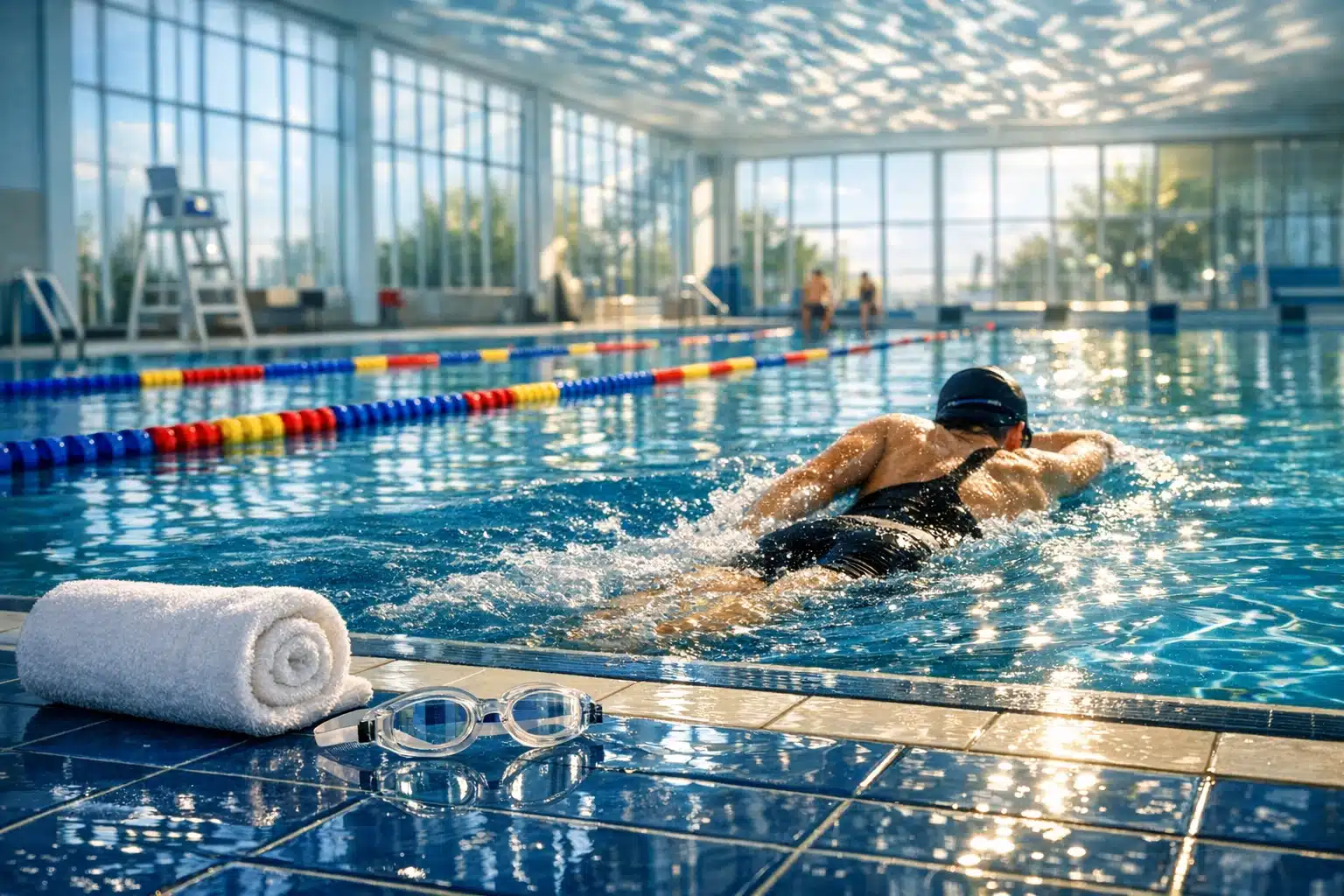
Explore the world of swimming
Swimming is one of those rare activities that feels playful and serious at the same time. It can teach a child confidence, give an athlete a demanding workout, and offer older adults a joint-friendly way to stay active. From neighborhood pools to open-water routes, it brings safety, fitness, and skill into a single practice. That broad reach is exactly why swimming deserves a closer look.
Outline: 1. The foundations of swimming and how water changes movement. 2. The major strokes and the technical details that shape efficiency. 3. The physical and mental benefits of regular swimming. 4. Training, safety, and equipment for both pools and open water. 5. A practical conclusion on building a swimming habit that lasts.
The Foundations of Swimming: Water, Movement, and Confidence
Before a swimmer learns speed, endurance, or race strategy, there is a quieter lesson to understand: water behaves differently from land, and the body must negotiate with it rather than overpower it. Water is roughly 800 times denser than air, which means every movement creates resistance. That resistance is what makes swimming such an effective workout, but it is also why technique matters so much more than brute effort. A beginner who thrashes often works harder than an experienced swimmer who glides. In the pool, progress starts when the swimmer stops fighting the water and starts organizing movement through balance, breath, and rhythm.
Buoyancy is the first major concept. Human bodies float because water pushes upward, yet not everyone floats in the same way. Lung capacity, body composition, and posture all influence how high someone rides in the water. A common beginner problem is lifting the head too much, which causes the hips and legs to sink. Once that happens, the body becomes a dragging anchor rather than a streamlined vessel. Instructors often correct this by teaching a neutral head position, a long spine, and relaxed kicking. These simple changes can make swimming feel less like a struggle and more like a conversation between body and current.
Breathing is the second pillar. On land, breathing is automatic and unremarkable. In water, it becomes a skill. Swimmers need to exhale into the water and inhale quickly when the mouth clears the surface. That timing can feel awkward at first, especially for nervous learners, but it is central to efficiency and calm. Many adult beginners are surprised to discover that their greatest obstacle is not strength but tension. Tight shoulders, hurried breaths, and fear of submersion all waste energy. Patient drills, such as bubble blowing, floating, and gliding, help build trust in the water.
Swimming environments also shape learning. A calm pool with lane lines, visible depth markers, and lifeguards offers predictability. Open water, by contrast, can include waves, temperature changes, murky visibility, and navigation challenges. Both settings are valuable, but they demand different levels of awareness. For most people, the smartest path begins in a controlled pool setting and gradually expands outward.
- Core beginner priorities include breath control, body position, and basic propulsion.
- Confidence grows faster when lessons are consistent rather than intense and infrequent.
- Good technique usually reduces fatigue more effectively than simply trying harder.
At its heart, swimming begins with comfort in the water. Once that comfort is in place, nearly every other skill becomes easier to build.
Understanding the Main Strokes: Technique, Efficiency, and Comparison
If swimming were a language, the strokes would be its dialects: each clear in purpose, each shaped by different rhythms, and each rewarding careful practice. The four competitive strokes are freestyle, backstroke, breaststroke, and butterfly. Freestyle, usually swum as front crawl, is generally the fastest and most efficient for most swimmers over long distances. Its alternating arm action and flutter kick allow continuous propulsion, and its side breathing pattern can be adapted for sprinting, distance work, or open-water conditions. This is why freestyle dominates fitness laps, triathlon training, and distance racing.
Backstroke flips the swimmer onto the back and changes the entire visual experience. Because the face remains above water, breathing is less restrictive than in freestyle. However, body alignment becomes more difficult, and swimmers must rely on feel and lane markers rather than direct forward sight. Backstroke is often recommended for variety and shoulder balance, though poor technique can lead to zigzagging across the lane. It is also useful for people who feel uneasy exhaling underwater for long stretches.
Breaststroke is slower than freestyle for most swimmers, but it is often one of the first formal strokes that beginners recognize. Its pull, breath, kick, and glide pattern is more cyclical and visibly structured. The challenge lies in timing. A strong pull without an efficient frog kick wastes energy, while a powerful kick without a streamlined glide interrupts momentum. Breaststroke can be comfortable at easy speeds, yet at competitive intensity it is highly technical and demanding. It also places unique stresses on the knees and hips, so careful form matters.
Butterfly is the stormiest stroke of the four. Spectacular when done well, it requires coordinated arm recovery, a dolphin kick, and strong core control. To the untrained eye, butterfly looks like raw power, but elite swimmers know it is also about rhythm and wave-like timing. A swimmer who muscles through butterfly usually fades quickly. One who understands body undulation moves with a kind of deliberate drama, as if riding a pulse through the water rather than hammering at it.
Comparing strokes helps swimmers choose the right tool for the goal:
- Freestyle: best for efficiency, endurance, and general fitness.
- Backstroke: useful for breathing ease, posture variety, and balanced training.
- Breaststroke: accessible at gentle paces, technical at higher intensity.
- Butterfly: excellent for power and coordination, but demanding and less sustainable for most recreational swimmers.
Across all strokes, the same principle returns: streamline first, force second. A cleaner line through the water often produces more speed than a harder pull. That is one of swimming’s great lessons. Precision is not decoration; it is performance.
The Health Benefits of Swimming: Fitness, Recovery, and Mental Wellbeing
Swimming earns its reputation as a full-body activity because it asks many systems to cooperate at once. The heart works to deliver oxygen, the lungs adapt to rhythmic breathing, and large muscle groups in the shoulders, back, core, hips, and legs all contribute to movement. For adults trying to meet public health guidelines, swimming can help support the widely cited recommendation of at least 150 minutes of moderate-intensity aerobic activity per week. Whether that time is spent in steady lap swimming, water aerobics, or interval sets, the cardiovascular benefit can be meaningful when the effort is regular.
One of swimming’s most practical advantages is its low-impact nature. Because the water supports body weight, many people find it easier on the joints than running or court sports. That makes swimming popular among older adults, people returning from injury, and those managing conditions that make high-impact exercise uncomfortable. Of course, low impact does not mean no challenge. Water resistance works in every direction, so even controlled movement can create substantial muscular demand. An easy recovery swim feels gentle; a hard set can leave the arms and lungs fully taxed. That range is part of the sport’s appeal.
Calorie expenditure varies widely by size, stroke, and intensity, but swimming can be a significant energy user. Vigorous laps often burn several hundred calories per hour, and faster or more technical strokes can raise that number. Still, the value of swimming should not be reduced to calorie math. Fitness gains also include improved endurance, better coordination, stronger posture, and enhanced breath control. Unlike some gym routines that isolate a single muscle group, swimming tends to train the body as an integrated system.
Mental wellbeing matters here too. Repetitive laps can create a meditative effect, with each turn offering a small reset. For some people, the pool is one of the few places where a phone cannot interrupt them. The sensory experience changes everything: muffled sound, cool pressure on the skin, and a narrow focus on stroke count or breathing pattern. Studies on exercise and mood consistently show benefits from regular physical activity, and swimming often adds an extra layer of calm because of its rhythm and environment.
- For children, swimming can build confidence, coordination, and water safety.
- For working adults, it offers efficient exercise with less joint pounding.
- For older swimmers, it can support mobility and routine without demanding impact.
In short, swimming is both a workout and a refuge. It can push hard, soothe deeply, and remain adaptable across many stages of life.
Training, Safety, and Equipment: How to Swim Smarter
Good swimming is not built on random laps alone. Like any skill-based sport, it improves faster when practice has structure. A balanced session often includes a warm-up, drills, a main set, and a cooldown. The warm-up raises body temperature and helps the shoulders, hips, and ankles loosen into range. Drills refine specific skills such as catch position, kick timing, or bilateral breathing. The main set then applies those skills under fatigue, which is where real adaptation happens. Even recreational swimmers benefit from this format because it turns exercise into deliberate practice rather than repetitive survival.
Beginners should resist the temptation to measure progress only by distance. Swimming 1,000 meters with poor technique can simply rehearse inefficiency. Shorter repeats with rest, feedback, and focus points are usually more useful. For example, eight sets of 50 meters with attention to exhaling underwater may teach more than one long, breathless struggle. More experienced swimmers often use interval training, pace work, and stroke variation to build speed and endurance. Devices such as pace clocks, waterproof watches, and heart rate tools can help, but they work best when paired with sound fundamentals.
Safety deserves equal attention. According to public health agencies such as the CDC, drowning remains a serious risk, especially for young children. That means swimming is not only a fitness topic; it is also a life skill topic. Children should have active supervision around water, not passive observation from a distance. New swimmers benefit from formal lessons, and even confident swimmers should understand local rules, depth changes, and emergency procedures. Open water adds additional hazards such as cold shock, currents, boat traffic, and sudden fatigue far from shore.
- Choose supervised locations whenever possible.
- Use bright caps and visible tow floats in open water.
- Never overestimate endurance in cold or unfamiliar conditions.
- Learn how to float, tread water, and signal for help.
Equipment can support training, though it should not replace technique. Goggles protect the eyes and improve visibility. Swim caps reduce drag and help keep hair out of the face. Kickboards isolate leg work, pull buoys emphasize upper-body positioning, and fins can assist body alignment or speed development when used carefully. A well-fitted swimsuit matters more than fashion in regular training because comfort affects consistency. The smartest swimmer is not the one carrying the most gear; it is the one who knows why each piece is being used.
When training and safety work together, swimming becomes more enjoyable and more sustainable. The pool then feels less like a place to endure laps and more like a workshop where skill, fitness, and judgement are built side by side.
A Practical Conclusion for New and Returning Swimmers
For anyone standing at the edge of the pool wondering where to begin, the encouraging truth is that swimming does not demand a single identity. You do not need to become a racer, a triathlete, or a dawn-patrol lap enthusiast to benefit from it. Swimming can be a survival skill, a family activity, a rehabilitation tool, a competitive sport, or a reliable form of weekly exercise. That flexibility is part of its strength. A teenager learning flip turns, a parent signing up for lessons, and a retiree easing stiff joints in a quiet lane are all participating in the same broad tradition, even if their goals look very different.
The best starting point is usually modest and specific. Rather than aiming vaguely to “get better,” choose a target that can be practiced: learn to exhale comfortably underwater, complete four lengths without stopping, improve body position, or attend one lesson per week for a month. Small gains matter in swimming because the sport magnifies details. A calmer breath, a softer kick, or a slightly longer glide can change how the whole session feels. Improvement often arrives less like a dramatic breakthrough and more like a light turning on in a room that had seemed confusing a day earlier.
It also helps to match the approach to the person. Children need safety, play, and trust. Adults returning after years away often need patience more than intensity. Fitness-focused swimmers may enjoy structured sets and measurable progress. Older adults may value comfort, mobility, and routine. People with disabilities may find swimming especially welcoming when facilities and instruction are inclusive, because water can reduce loading and open movement possibilities that land sometimes limits. A good program recognizes those differences instead of forcing everyone into the same lane, literally or figuratively.
If there is one lasting lesson from swimming, it may be this: efficiency, awareness, and consistency matter more than drama. The water rewards steadiness. It notices panic, but it also responds beautifully to calm technique and repeated practice. So if you are curious, start simply. Take a lesson, visit a supervised pool, commit to regular sessions, and let familiarity replace hesitation. Over time, swimming can become more than exercise. It can become confidence in deep water, a break from noise, and a skill that serves you for years.