Explore the world of swimming
Swimming has a curious power: it can quiet the mind while asking the whole body to cooperate. In one lane, a beginner practices breathing without fear; in the next, a trained athlete refines a turn measured in fractions of a second. That wide reach is exactly why swimming still matters, as both a life skill and a practical form of exercise. Whether the goal is health, confidence, recovery, or competition, understanding the water changes the experience.
Outline
This article explores swimming from five connected angles so readers can move from broad understanding to practical action.
- The history, appeal, and major branches of swimming
- The mechanics of the main strokes and efficient breathing
- The physical and mental benefits of regular swimming practice
- Essential equipment, safety habits, and training environments
- How different readers can build a realistic, lasting relationship with swimming
Swimming as a Human Skill, Sport, and Lifelong Practice
Swimming is much older than modern pools, lane ropes, and stopwatches. People learned to move through water for survival, travel, fishing, military training, and eventually recreation. Ancient art from several civilizations shows human figures swimming, which tells us that the activity was never a niche ability reserved for specialists. Over time, what began as necessity became a structured discipline. By the late nineteenth and early twentieth centuries, swimming had developed formal competitions, standardized strokes, and governing bodies that shaped it into the sport recognized today.
What makes swimming especially relevant is its unusual range. Few activities can function at once as a safety skill, a rehabilitation tool, a competitive sport, a leisure pastime, and a full-body workout. A child learning to float, a triathlete preparing for open water, and an older adult using aqua exercise to reduce joint stress are all participating in different expressions of the same watery craft. That versatility helps explain why swimming remains central in schools, community centers, holiday travel, and elite athletics.
Modern swimming can be understood through several main forms:
- Learn-to-swim instruction, which focuses on comfort, breathing, floating, and basic propulsion
- Recreational swimming, often done for enjoyment, relaxation, or gentle exercise
- Lap swimming, designed around fitness, endurance, and technique
- Competitive swimming, where speed, efficiency, and precise race strategy matter
- Open-water swimming, which introduces currents, sighting, temperature changes, and navigation
Swimming also differs from many land-based sports because water changes the rules of movement. Buoyancy reduces impact, resistance comes from every direction, and breathing must be timed instead of taken for granted. That combination makes the activity feel almost like learning a second language. At first, the pool can seem blunt and unforgiving; splash too much, lift the head too high, or tense the shoulders, and the water immediately reports your errors. Yet that same honesty is why swimming can be so rewarding. Progress is rarely dramatic at the start, but it is measurable, real, and deeply satisfying.
There is also a cultural side worth noticing. Competitive swimming celebrates records, medals, and national teams, but everyday swimming often unfolds in quieter scenes: public pools opening at dawn, parents waiting with towels, older adults counting steady laps, and nervous beginners discovering that fear can soften into skill. In that sense, swimming is not just a sport. It is a meeting point between discipline and ease, between caution and confidence, and between the simple wish to stay afloat and the more ambitious desire to move beautifully through water.
Technique, Strokes, and the Art of Moving Efficiently Through Water
Swimming looks smooth when done well, but that smoothness is built from highly specific mechanics. Good technique matters because water is dense enough to punish wasted motion. A small flaw on land may go unnoticed, but in the pool it can slow a swimmer, raise fatigue, and disrupt breathing within a few lengths. Efficient swimming is therefore less about brute force than about alignment, timing, and rhythm.
The four competitive strokes each solve the problem of propulsion in a different way. Freestyle, usually swum as front crawl, is generally the fastest because it combines an alternating arm recovery with a flutter kick and a streamlined body position. Backstroke mirrors some of that rhythm while shifting the body face-up, which changes orientation and breathing demands. Breaststroke is slower but highly technical, using a simultaneous pull, whip kick, and glide phase that rewards timing over aggression. Butterfly is the most physically demanding for many swimmers, blending symmetrical arm action with a dolphin kick and a wave-like undulation through the torso.
For beginners and intermediates alike, several technical principles matter across all strokes:
- Body position should remain long and balanced rather than bent or upright
- Breathing works best when it fits the stroke rhythm instead of interrupting it
- Propulsion improves when swimmers hold the water with the hands and forearms rather than slapping at the surface
- Kicking supports balance and momentum, but excessive kicking can waste energy
- Turns and push-offs often provide free speed when practiced correctly
Breathing deserves special attention because it is one of the main reasons novices struggle. On land, breathing is automatic and constant. In water, it becomes scheduled. Many new swimmers lift the head forward to inhale, which drops the hips and creates drag. A better freestyle pattern is to rotate slightly, inhale to the side, and return the face to the water quickly. Exhalation should happen underwater in a controlled way, not be saved for the last instant. This one adjustment often transforms a tense swimmer into a calmer one.
Technique also shapes energy cost. Two swimmers may cover the same distance, yet one finishes feeling composed while the other is exhausted. The difference often comes from drag reduction, better timing, and more effective catch mechanics. Coaches sometimes describe swimming as “reducing the brakes before pressing the accelerator,” which is a useful way to think about it. Before trying to become stronger or faster, a swimmer benefits from becoming cleaner in the water.
Comparisons with running or cycling are helpful here. In those sports, determination can sometimes compensate for imperfect form over short sessions. In swimming, poor technique can overwhelm effort very quickly. That is why drills remain so important. Side kicking, catch-up drill, fingertip drag, single-arm work, and sculling are not decorative extras; they teach the body how efficient movement feels. When technique improves, the pool changes character. What once felt like resistance begins to feel like cooperation, and the water that seemed heavy starts to carry the swimmer forward with surprising grace.
Health Benefits, Training Effects, and Why Swimming Works for So Many Bodies
Swimming is often praised as a full-body workout, and that description is accurate, but it does not fully capture why the activity is so useful. Its value lies in the combination of cardiovascular challenge, muscular engagement, low-impact movement, breath control, and adaptability. Few forms of exercise can be scaled so easily across age groups and fitness levels while still offering meaningful training effects.
From a physical standpoint, swimming can improve heart and lung function when practiced regularly at an appropriate intensity. Public health guidance from organizations such as the CDC recommends at least 150 minutes of moderate aerobic activity per week for adults, and lap swimming can contribute directly to that target. Because the body works against water resistance with every stroke, swimmers also recruit major muscle groups across the shoulders, back, chest, core, hips, and legs. Unlike some gym routines that isolate a single area, swimming tends to train coordination along with strength and endurance.
One reason healthcare professionals and trainers often recommend swimming is its reduced impact on joints. Water buoyancy lowers weight-bearing stress, which can make movement more tolerable for people with arthritis, excess body weight, or recovery needs after certain injuries. That does not mean swimming is effortless or risk-free; shoulders, neck, and lower back can still become irritated through poor mechanics or sudden training increases. Still, compared with repeated pounding from some land activities, swimming offers a gentler platform for many people.
The benefits extend beyond muscles and mileage:
- Breath control can support relaxation and body awareness
- Structured sets improve pacing, patience, and concentration
- Cool water may help some people sustain exercise longer than in hot environments
- Regular practice can build confidence, especially for adults who once feared deep water
- Group sessions create social accountability without requiring constant conversation
Mental effects are worth mentioning without turning them into exaggerated promises. Swimming is not a universal cure for stress, anxiety, or low mood, but many swimmers describe a distinct psychological reset after time in the pool. Part of that comes from rhythmic breathing and repetitive movement. Part comes from sensory change: water muffles noise, narrows attention, and interrupts the usual flow of alerts, screens, and multitasking. A long, steady session can feel almost meditative, while short intervals can provide the sharpened focus of a demanding workout.
Training approaches vary widely. Some swimmers do easy continuous laps for general fitness. Others use interval-based sets, such as 10 x 100 meters with rest between repeats, to improve endurance and pacing. Competitive athletes may combine stroke-specific drills, kick sets, pull work, sprint training, starts, turns, and dryland strength exercises. Masters swimmers often train in coached groups that balance fitness, technique, and community. The important point is that swimming is not one thing. It can be restorative, developmental, or highly performance-driven depending on the structure of the session.
For many readers, the real promise of swimming is not dramatic transformation in a week. It is sustainability. An activity that can challenge the fittest athlete and still welcome a cautious beginner has a better chance of remaining useful across decades, not just seasons.
Gear, Safety, and Choosing Between Pool, Open Water, and Lessons
Swimming does not require a mountain of equipment, which is part of its appeal, but the gear and environment still shape the experience. A basic swimsuit, a comfortable pair of goggles, and access to safe water are enough to begin. From there, swimmers may add items such as a cap, kickboard, pull buoy, fins, paddles, or a pace clock for structured training. The key is to see equipment as support, not magic. Better goggles improve comfort; they do not replace technique. Fins can teach body position; they do not automatically create efficient propulsion.
Goggles deserve more attention than they usually get because poor fit can ruin a session. Lenses that fog constantly, leak at the corners, or pinch the eye socket create distraction and tension. Swimsuits vary as well. A casual recreational suit may be fine for occasional dips, while a swimmer training several times per week might prefer a more secure, chlorine-resistant design. Caps help keep hair out of the face and may reduce drag slightly, but their practical role is often greater than their speed benefit.
Safety should sit at the center of any discussion about swimming. World Health Organization estimates continue to show that drowning causes hundreds of thousands of deaths globally each year. That fact alone makes water competence more than a hobby. It is a practical skill with public health value. Children should always be supervised closely near water, and adults should avoid treating familiarity as immunity. Strong swimmers can still get into trouble through overconfidence, fatigue, alcohol use, currents, cold exposure, or medical events.
Basic safety habits are simple, but they matter:
- Swim in supervised areas when possible
- Learn local rules, depth changes, and entry points
- Do not overestimate ability in open water
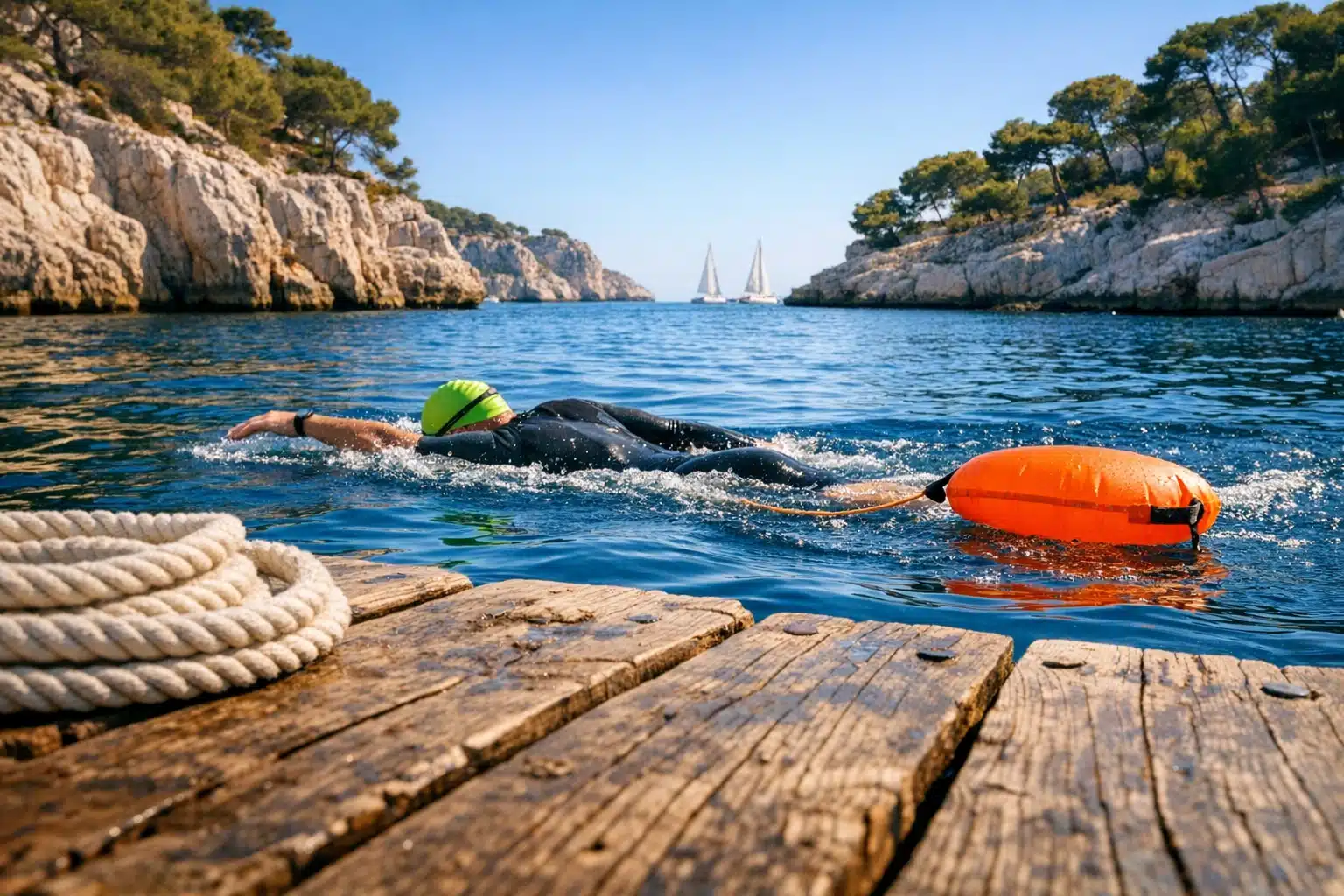
- Use visible swim buoys where appropriate in lakes or the sea
- Respect weather, temperature, and current conditions
- Take formal lessons if breathing, floating, or panic remain problems
The choice between pool swimming and open-water swimming is also significant. Pools offer consistency. Distances are marked, temperatures are controlled, lanes structure traffic, and lifeguards may be present. That makes pools ideal for learning technique, tracking workouts, and building confidence. Open water, by contrast, introduces uncertainty. There may be waves, chop, murky visibility, changing temperatures, and no black line on the bottom to follow. Some swimmers love that freedom; others find it unnerving. Neither setting is inherently better. They simply demand different habits.
Lessons can accelerate progress dramatically, especially for adults who taught themselves. A qualified instructor may notice dropped elbows, mistimed breathing, or inefficient kicking patterns that a swimmer cannot easily detect alone. Sometimes one careful correction saves months of frustration. The image of swimming as natural is misleading. Humans are not born knowing how to float calmly, breathe rhythmically, or convert effort into speed. Those skills are learned, refined, and maintained. Good instruction shortens the distance between effort and understanding.
Conclusion for Beginners, Fitness Swimmers, and Curious Readers
If you are standing at the edge of swimming from any angle, as a beginner, a returning adult, a parent, or a fitness-minded reader, the most helpful idea is this: start with the version of swimming that matches your present reality, not your idealized future self. Many people delay the first lesson or first session because they imagine they should already be less afraid, fitter, faster, or more graceful. Water rarely rewards that kind of pressure. It rewards patience, repetition, and honest self-assessment.
For beginners, progress may begin with surprisingly small milestones. Floating without gripping the wall, exhaling calmly underwater, or completing one length without panic can matter more than distance totals in the early stage. For fitness swimmers, the next step may be adding structure through intervals, stroke work, or technique feedback instead of merely accumulating laps. For experienced athletes, long-term improvement often depends on details that look modest from the deck: tighter turns, cleaner entries, smarter pacing, and more consistent recovery.
Swimming also asks readers to think beyond performance. Water confidence is valuable in travel, family life, boating, beach visits, and community recreation. Parents who learn to swim set a powerful example. Adults who return to the pool after years away often discover that the experience is different from school memories: less judgment, more choice, and greater appreciation for steady improvement. Older swimmers may find that the pool offers movement that feels both challenging and forgiving, a rare combination in later life.
If you want a practical roadmap, keep it simple:
- Choose one realistic goal, such as learning freestyle breathing or swimming twice a week
- Use lessons or coaching sooner rather than later
- Track consistency before chasing speed
- Respect safety as part of the skill, not as an afterthought
- Let technique and comfort grow together
In the end, swimming is compelling because it meets people where they are and still gives them room to grow. It can be playful on one day and disciplined on the next. It can support health, sharpen focus, and build resilience without pretending to solve everything at once. For readers willing to approach it with curiosity and regular practice, the water offers a rare kind of education: immediate, humbling, and quietly transformative every time you push away from the wall.