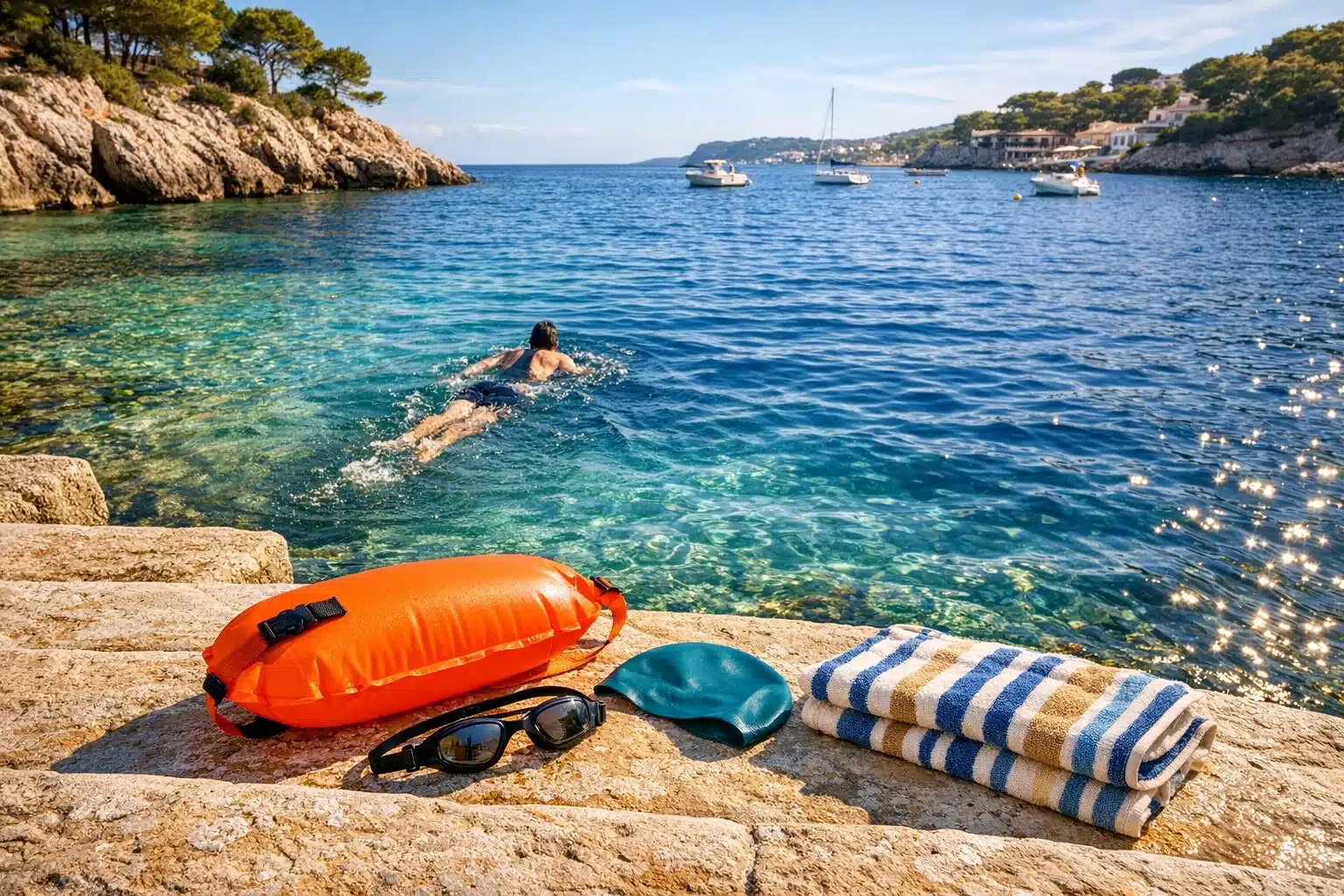
Explore the world of swimming
Swimming occupies a rare space between necessity and joy: it can save a life, build endurance, ease stress, and open the door to everything from childhood play to elite competition. Because it suits many ages and fitness levels, it remains one of the most accessible full-body activities in the world. Understanding how swimming works, why it helps, and how to practice it safely makes every visit to the water more rewarding.
Outline:
- The meaning and modern relevance of swimming
- Physical and mental health benefits
- Core strokes and technical foundations
- Safety, training methods, and essential gear
- How different people can use swimming for lifelong progress
Swimming as a Life Skill, Sport, and Form of Recreation
Swimming is more than a pastime. It is a practical life skill, a competitive discipline, a training method, and for many people, a source of pleasure that begins in childhood and lasts for decades. Few activities have this range. A person may first learn to float for safety, later join a school team, then return to the pool years later for fitness or recovery. That flexibility helps explain why swimming remains relevant across cultures and age groups.
At its most basic level, swimming is the ability to move through water with control. Yet even that simple definition hides a rich variety of purposes. Recreational swimmers may value comfort and relaxation. Competitive swimmers focus on speed, efficiency, and race strategy. Open-water swimmers must read currents, temperature, and navigation cues. Lifeguards and rescue professionals treat swimming as a functional skill linked directly to survival. The same body enters the same water, but the goal changes the experience.
Swimming also stands apart from many land-based activities because water changes the rules. Buoyancy supports the body, while resistance comes from every direction. Water is far denser than air, so even gentle movement becomes work for the muscles. That is why a short session in the pool can feel surprisingly demanding without the pounding impact associated with some forms of running or court sports. The water does not flatter poor technique, but it also rewards patience. Small adjustments in body position, timing, and breathing can produce visible improvement.
Its modern relevance is easy to see:
- It is taught as a safety skill in many schools and community programs.
- It supports general fitness for people with different body types and abilities.
- It serves as a major international sport, from local meets to the Olympic Games.
- It offers recreation in pools, lakes, rivers, and coastal waters.
Swimming’s appeal is also emotional. For some, the pool is a place of discipline, with clocks, drills, and split times. For others, it is a softer world where sound dulls, breathing settles, and attention narrows to the line on the pool floor. That combination of utility and atmosphere gives swimming unusual depth. It is not merely exercise with water added. It is a setting where physics, skill, and feeling meet.
In that sense, swimming matters because it answers several needs at once. It teaches confidence in an environment that can be dangerous if misunderstood. It provides a scalable physical challenge. It can be social, solitary, playful, or highly structured. Whether someone is training for a race or simply hoping to feel stronger and calmer, swimming offers a path that is both demanding and welcoming.
Health and Fitness Benefits: Why Swimming Works So Well
Swimming has earned its reputation as a powerful form of exercise because it combines cardiovascular training, muscular engagement, mobility work, and stress relief in one session. Public health guidance often recommends at least 150 minutes of moderate aerobic activity per week for adults, and swimming can contribute meaningfully to that target. What makes it especially useful is that the effort can be adjusted with unusual precision. A beginner can move slowly with frequent rests, while an experienced swimmer can perform intense intervals that challenge the heart and lungs.
From a physical perspective, swimming recruits many large muscle groups at once. The shoulders, back, chest, core, glutes, and legs all contribute, though the emphasis changes by stroke. Freestyle tends to be efficient and continuous, backstroke encourages alignment and shoulder endurance, breaststroke relies heavily on timing and leg action, and butterfly demands powerful coordination. Because the water resists motion in every phase, even technical drills can build strength. Unlike lifting weights, the resistance is smooth and constant rather than fixed in a heavy object.
One of swimming’s most valued advantages is lower impact. The support of water reduces the stress placed on joints during movement, which can make swimming attractive for older adults, people returning to exercise, or those managing certain orthopedic limitations. That does not mean it is effortless or risk-free. Shoulder overuse, poor breathing habits, and excessive volume can still create problems. But compared with activities involving repeated hard ground contact, swimming often feels kinder to the body while still being demanding.
The mental benefits deserve equal attention. Repetitive movement, controlled breathing, and immersion in water can produce a calming effect similar to what some people experience during long walks, cycling, or yoga. Many swimmers describe a session as mentally clearing. Part of that comes from rhythm. Part comes from focus. In the water, distractions shrink. You count strokes, watch the wall approach, and organize your breath. The mind has less room for noise.
A useful comparison helps show why swimming is so versatile:
- Compared with running, swimming usually creates less impact on knees and ankles.
- Compared with cycling, it trains the upper body far more directly.
- Compared with gym machines, it requires whole-body coordination and breath control.
- Compared with casual walking, it can deliver a stronger cardiovascular challenge in less time.
Swimming may also support body composition goals when paired with consistent habits, sensible nutrition, and adequate rest. It is not magic, and no single activity is. Still, regular swimmers often improve endurance, muscular tone, posture awareness, and overall fitness. For people who dislike repetitive indoor workouts, the sensory quality of water can be the difference between quitting and staying consistent.
Ultimately, swimming works well because it is efficient, adaptable, and sustainable. It can push athletes, welcome beginners, support rehabilitation, and offer relief on stressful days. When an activity strengthens the body without feeling identical every time, it becomes easier to return to. That may be swimming’s greatest health benefit of all: people are often willing to keep doing it.
Understanding the Main Strokes and the Foundations of Good Technique
Swimming looks graceful when it is done well, but that grace is built from mechanics. Technique matters in the water far more than many beginners expect. A person can be strong on land and still struggle in the pool if body position is poor or breathing is mistimed. The encouraging part is that technical gains often come quickly once a swimmer learns what to feel. A better line through the water can improve speed, reduce fatigue, and make the entire experience more enjoyable.
The four competitive strokes are freestyle, backstroke, breaststroke, and butterfly. Freestyle, usually swum with the front crawl, is the fastest and most common for fitness. It relies on a streamlined body, rhythmic side breathing, and a flutter kick that supports balance more than brute force. Backstroke uses a similar alternating arm pattern while the swimmer lies on the back, making breathing easier for some people but demanding strong spatial awareness. Breaststroke is slower and more timing-dependent, with a simultaneous pull and kick that must be coordinated carefully. Butterfly is the most physically demanding for many swimmers, requiring symmetrical arm recovery, a wave-like body motion, and precise timing between kick and breath.
Several technical principles apply across strokes:
- Body position should stay long and balanced rather than stiff or sinking.
- Breathing should be timed to the stroke, not forced in panic.
- The head should remain calm, because unnecessary lifting disrupts alignment.
- Pulls and kicks should move water effectively rather than simply create splash.
For beginners, freestyle usually becomes the first major focus. Common errors include lifting the head too high to breathe, kicking from the knees instead of the hips, and crossing the hands over the centerline during entry. These flaws waste energy. Better freestyle often begins with a simpler idea: travel forward as though sliding through a narrow corridor. Keep the body long, rotate smoothly, and let the breath fit inside the motion rather than interrupt it.
Drills help translate theory into habit. Kick drills with a board can isolate leg action, though they should not dominate training. Side-kicking can teach alignment and rotation. Catch-up drill slows the stroke to highlight timing. Single-arm swimming exposes balance problems and reveals whether one side works differently from the other. Good drills are not random accessories; they are tools for solving specific problems.
Technique also changes with purpose. A sprinter may use a higher turnover and stronger kick, while a distance swimmer prioritizes efficiency and pacing. Pool swimmers can rely on walls for turns and rhythm. Open-water swimmers need sighting skills and steadier control when conditions shift. Still, the core truth remains the same: water rewards economy. The smoother swimmer is often the faster swimmer.
Learning technique takes humility. Progress may come in inches, not headlines. Yet that is part of the appeal. In swimming, improvement is tactile. You feel the hand hold the water better. You notice fewer breaths are needed across the pool. The wall arrives sooner. Those quiet signs of progress are deeply satisfying because they are earned, not guessed.
Safety, Training Structure, and the Gear That Actually Matters
Swimming is enjoyable and beneficial, but water always deserves respect. Confidence should never be confused with carelessness. Even strong swimmers can get into trouble through fatigue, cold exposure, poor supervision, overestimation of ability, or unfamiliar conditions. That is why safety is not an optional chapter added at the end of swimming education. It is part of the skill itself.
Pool safety starts with basics that sound simple because they are effective. Swim where lifeguards are present when possible. Learn depth before diving. Understand lane etiquette to avoid collisions. Children and inexperienced swimmers need active supervision, not occasional glances from across the deck. In open water, the list grows: currents, waves, visibility, temperature, weather, and boat traffic all matter. A calm lake can become uncomfortable quickly, and the sea can humble skilled athletes within minutes if conditions change.
Useful safety habits include:
- Never overestimate your endurance in unfamiliar water.
- Use bright swim caps or visibility aids in open water.
- Tell someone your route or swim plan before entering the water.
- Stop if you feel sharp pain, dizziness, intense cramping, or unusual shortness of breath.
Training structure matters almost as much as safety. Many swimmers improve more through consistency than heroic effort. A balanced session may include a warm-up, drills, a main set, and an easy cool-down. The warm-up prepares joints, heart rate, and breathing rhythm. Drills refine skill. The main set targets endurance, speed, or pacing. The cool-down helps the body settle. This structure works for beginners and advanced swimmers alike because it creates purpose. Random laps can build familiarity, but intentional practice builds progress.
For example, a beginner session might feature short repeats with generous rest, such as several lengths of easy freestyle broken up by kick work and breathing drills. An intermediate swimmer may use interval sets, perhaps ten repeats at a steady pace with controlled rest. Competitive swimmers often add race-pace efforts, pull work, kick sets, and dryland training. The difference is not only intensity; it is specificity.
Gear should support learning rather than distract from it. A well-fitted swimsuit and comfortable goggles are essential. A swim cap can reduce drag and keep hair controlled. Kickboards, pull buoys, fins, paddles, and snorkels each have training uses, but they are not shortcuts to mastery. Fins can help beginners feel body position more easily. A pull buoy can isolate the upper body. Paddles increase resistance and reveal flaws in the catch, though they should be used with care to avoid shoulder strain.
The best equipment is often the simplest:
- Goggles that do not leak
- A suit that stays secure through movement
- A cap for comfort and visibility
- A towel, water bottle, and realistic training plan
In the end, safe and effective swimming comes from judgment more than gadgets. Respect the environment, train with structure, and choose equipment that serves a clear purpose. Water can be generous, but it is always honest. Preparation turns that honesty into confidence.
Swimming for Different Goals: A Practical Conclusion for New and Returning Swimmers
One reason swimming remains so enduring is that people come to it for different reasons and still find value. A child may need basic water confidence. A busy adult may want a joint-friendly workout after long office hours. An older swimmer may prefer movement that feels smooth rather than jarring. A former athlete may return to the pool to rebuild endurance without rushing the body. Swimming can meet all of these needs, but it works best when the goal is clear.
For beginners, the first milestone is not speed. It is comfort. Learning to float, exhale underwater, and move calmly from one end of the pool to the other builds a foundation that matters more than lap counts. Adults who start later in life sometimes feel self-conscious, yet swimming communities are often full of people on similar paths. Progress in the pool rarely looks dramatic at first, but it accumulates. Better breathing, smoother balance, and reduced fear are major achievements.
For fitness-oriented swimmers, consistency matters more than complexity. Two or three sessions each week can produce noticeable improvements in stamina and technique. Variety helps. One day might emphasize easy aerobic swimming, another drills and form, and another short intervals. This approach keeps training interesting while preventing the common mistake of swimming every lap at the same medium effort. The body adapts better when training has range.
For competitive swimmers, goals become more exact: stroke efficiency, pacing, starts, turns, race plans, recovery, and seasonal planning. Even here, the lesson is not simply to work harder. Smart swimmers build habits around sleep, mobility, and technical review. A faster time often comes from cleaner execution, not just greater suffering. The stopwatch matters, but the details feed the stopwatch.
Swimming is also useful beyond formal sport. It can become family recreation, travel activity, rehabilitation support, or personal thinking time. Some people love the quiet repetition of lane swimming. Others prefer the unpredictability of rivers, lakes, or the ocean, where every session feels like a conversation with the elements. There is no single correct relationship to the water.
If you are deciding whether to begin or return, a few practical steps can help:
- Choose a realistic schedule you can maintain.
- Focus on comfort and technique before chasing distance.
- Ask for instruction if breathing or body position feels difficult.
- Respect safety rules, especially in open water.
- Measure progress in skill and confidence, not only time or calories.
The best audience for swimming is, in a sense, almost everyone: the cautious beginner, the curious learner, the fitness seeker, the competitor, and the person simply looking for a healthier rhythm. Start where you are. Let the water teach patience. Over time, what begins as effort often becomes fluency, and what begins as exercise can grow into a lifelong practice.