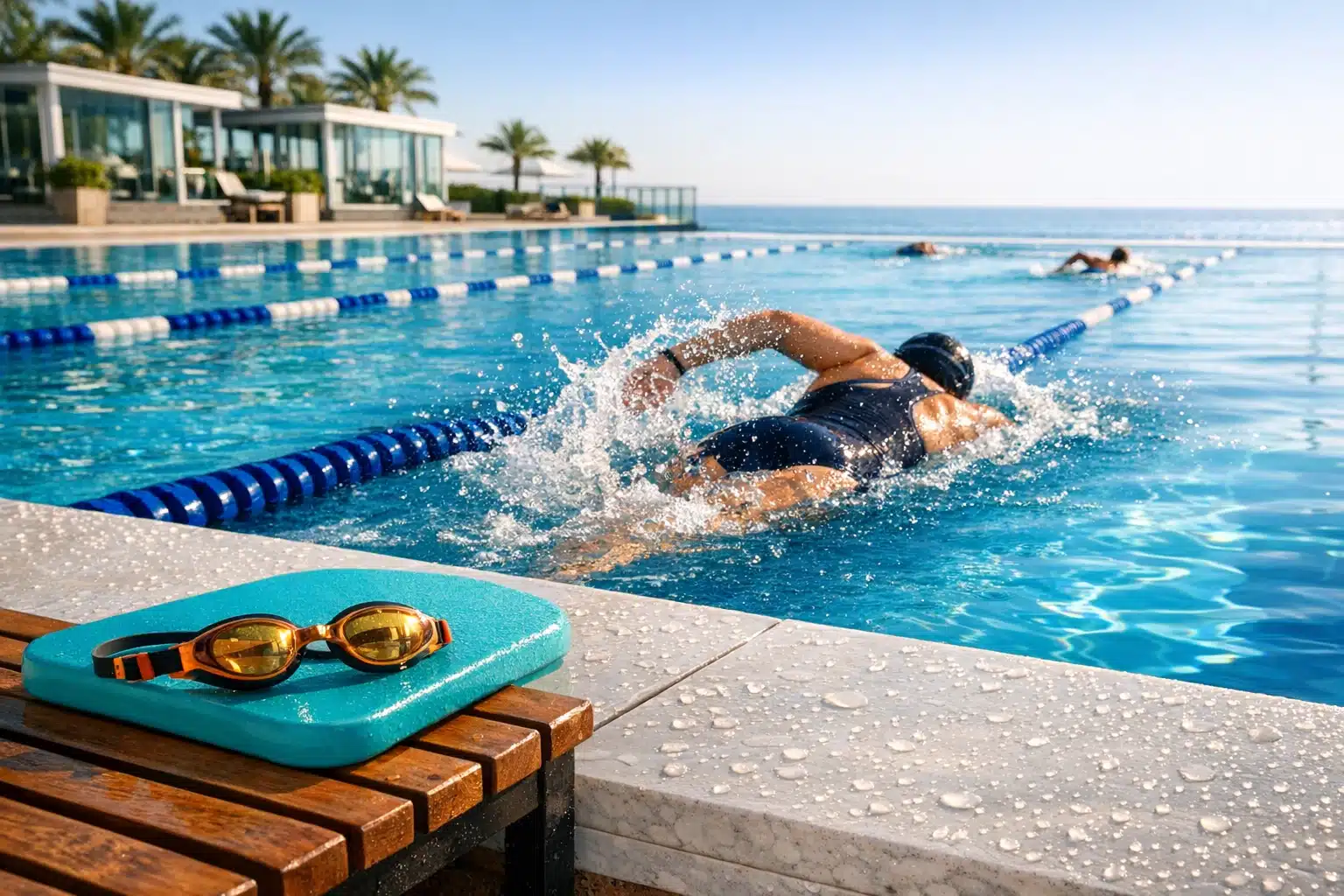
Explore the world of swimming
Introduction and Article Outline
Swimming is one of those rare activities that feels playful on the surface while asking for real skill beneath it. It matters because it combines cardiovascular work, muscular effort, breath control, and water confidence in a single practice that suits many ages and ability levels. Whether you enter a lap pool, a community class, or a quiet beach, the abilities you build can support both fitness and personal safety. This article begins with a clear outline and then moves through benefits, technique, training, and everyday relevance.
Before diving into details, it helps to know the path this article will take. The outline below is designed to make the topic easy to follow, whether you are a complete beginner, a recreational swimmer, or someone returning to the water after years away.
- Why swimming matters for health, mobility, and mental well-being
- How the main strokes differ in rhythm, difficulty, and energy demand
- Which training habits, safety rules, and equipment choices make the biggest difference
- How swimming fits into real life for children, adults, older swimmers, and people with different goals
- A practical conclusion aimed at readers who want to start or improve with realistic next steps
Swimming is relevant far beyond sport. For some people, it begins as a life skill learned in childhood. For others, it becomes a low-impact workout after an injury, a social routine at the local pool, or a personal challenge measured in lengths, minutes, and smoother breathing. That range is one reason swimming keeps its appeal. It can be gentle or demanding, solitary or communal, technical or simply refreshing. Few activities can move so comfortably between therapy, recreation, and competition.
There is also something quietly captivating about water itself. On land, effort often feels obvious and heavy. In water, resistance is everywhere, yet movement can seem light, almost borrowed from another set of physical rules. That contrast is part of the magic, but it is also why swimming deserves to be understood properly. Good technique saves energy. Safety knowledge prevents avoidable risk. Thoughtful training turns random lengths into progress. The sections that follow aim to give swimming the depth it deserves, from the first splash to the long view of why so many people keep coming back to the pool.
Why Swimming Matters for Body, Mind, and Daily Life
Swimming is often praised as a full-body workout, and that description is accurate without being empty praise. Water is far denser than air, which means every kick, pull, and turn meets resistance from all directions. Unlike many land-based activities that load the joints with repeated impact, swimming uses buoyancy to support body weight while still challenging the heart, lungs, and muscles. That combination makes it attractive to people who want serious exercise without the pounding that can come from running on pavement or repeatedly jumping in a gym class.
From a cardiovascular perspective, swimming can help improve endurance, circulation, and breathing efficiency. Health authorities commonly recommend at least 150 minutes of moderate aerobic activity per week for adults, and steady lap swimming can contribute meaningfully to that target. Intensity matters, of course. A relaxed technique session is very different from fast interval work, but both can serve a purpose. One builds comfort and movement quality; the other builds speed, stamina, and resilience under fatigue.
Its muscular benefits are equally broad. Swimming recruits the shoulders, back, chest, core, hips, and legs in coordinated patterns. Freestyle emphasizes rotation and pulling power, breaststroke depends heavily on timing and leg drive, and butterfly demands strong core control and rhythm. Even backstroke, which can look serene from deck level, asks for stable alignment and persistent effort. Because the resistance is continuous rather than sudden, swimmers often develop endurance-oriented strength and body awareness alongside their aerobic capacity.
Mental benefits deserve space in the discussion too. Many swimmers describe the water as a reset button. Repetitive strokes, measured breathing, and the muffled acoustics of the pool can create a focused, almost meditative state. That does not mean every session feels peaceful; hard sets can be bluntly exhausting. Still, the structure of swimming often helps people separate from screens, deadlines, and noise for a while. A short session can leave the mind feeling clearer, not because water is magical, but because attention narrows to movement, breath, and rhythm.
Swimming also has practical value that many workouts do not.
- It can increase confidence around pools, lakes, and beaches.
- It offers an exercise option for people managing joint sensitivity or returning from certain injuries.
- It supports lifelong activity because intensity can be adjusted without abandoning the sport.
- It encourages skills that matter in emergencies, such as floating, controlled breathing, and calm movement in water.
Compared with cycling, swimming places less direct pressure on the saddle, wrists, and spine, though it asks more of breathing control and technique. Compared with walking, it can involve more total-body coordination. Compared with running, it is usually gentler on knees and ankles, yet harder for beginners to perform efficiently without instruction. That last point matters: swimming rewards technique more strongly than many other forms of exercise. The better you move, the more enjoyable and sustainable the experience becomes. In that sense, swimming is not just exercise; it is a skillful form of exercise, and that difference changes everything.
Understanding the Main Strokes and the Skill of Moving Well in Water
To an inexperienced observer, swimming can look simple: enter water, move arms, kick legs, reach the other side. In practice, each stroke has its own architecture, and efficiency depends on small details that are easy to miss. Body position, timing, breathing, and balance matter as much as strength. That is why two swimmers of similar fitness can produce very different results. One glides through the lane with clean lines and steady breathing; the other works just as hard and seems to get only half as far.
Freestyle, often called front crawl, is the fastest and most common stroke for fitness swimming. It uses alternating arm pulls, flutter kicks, and side breathing. Its main advantage is efficiency at moderate and fast speeds, which is why it dominates races and lap sessions. The common mistakes are equally familiar: lifting the head too high, crossing the arms over the center line, kicking wildly from the knees, or holding the breath until a rushed gasp becomes necessary. When freestyle feels awkward, the problem is often not strength but alignment. A long body line, steady exhalation into the water, and controlled rotation usually improve the stroke quickly.
Backstroke is the only competitive stroke performed on the back, and that changes the experience immediately. Breathing is less pressured because the face stays out of the water, but staying straight becomes more difficult without visual reference. Swimmers must learn to trust body position, shoulder rotation, and a stable kick. For many beginners, backstroke feels freeing at first and disorienting a minute later. That is normal. The ceiling may look still, but the stroke is all about subtle correction.
Breaststroke moves to a different rhythm entirely. It is often the first stroke casual swimmers imitate because the head can come forward more naturally, yet proper breaststroke is highly technical. The pull, breath, kick, and glide need careful sequencing. Done well, it can be graceful and economical. Done poorly, it becomes a tiring cycle of drag. The whip kick also demands hip and ankle mobility that not everyone has right away.
Butterfly is the most dramatic stroke, powerful and visually striking, but it is not merely freestyle with both arms together. It relies on a wave-like body motion, coordinated breathing, a strong pull, and dolphin kicks that link the entire trunk to the legs. It looks explosive because it is. For newer swimmers, butterfly usually appears last in the learning process, and that is sensible.
A quick comparison helps clarify the landscape:
- Freestyle: fastest, versatile, ideal for most fitness swimmers
- Backstroke: good for posture awareness and breathing comfort, harder to steer
- Breaststroke: slower, technical, often comfortable recreationally, demanding competitively
- Butterfly: powerful, advanced, highly taxing, rhythm-dependent
Beyond the named strokes, real swimming skill includes floating, streamlining, pushing off the wall, treading water, and turning efficiently. These are not side topics. They are part of what makes a swimmer capable rather than simply mobile. Water rewards patience and punishes hurry. When technique starts to click, the sensation can be remarkable: resistance is still there, but it stops feeling like a fight and starts feeling like something you can shape.
Training, Equipment, and Safety: What Turns Random Laps into Real Progress
Many people begin swimming with a simple plan: get in, swim until tired, and get out. There is nothing wrong with that as a starting point, but progress usually comes faster when sessions have structure. A balanced swim workout often includes a warm-up, a technique-focused portion, a main set, and a short cool-down. The warm-up prepares the shoulders, raises heart rate gradually, and helps the body settle into the feel of the water. Technique drills slow things down so specific problems can be addressed before fatigue makes them worse. The main set then becomes the place to build endurance, speed, or pacing skill with purpose rather than guesswork.
For example, a beginner session might include easy freestyle lengths mixed with kickboard work and short rest periods. An intermediate swimmer might add intervals such as 8 x 50 meters at a steady pace with 20 seconds rest. More advanced athletes may use threshold sets, stroke work, pull buoy training, or race-pace repetitions. The details vary, but the principle stays the same: training works better when it has a reason behind it.
Equipment can help, though it should support skill rather than replace it. A well-fitted swimsuit and comfortable goggles are basics, and they matter more than flashy extras. Caps reduce drag and keep hair contained. Kickboards isolate lower-body work. Pull buoys reduce leg involvement so swimmers can focus on the pull and body position. Paddles increase resistance but should be used carefully, especially by swimmers who already struggle with shoulder mechanics. Fins can improve ankle flexibility and help swimmers feel speed and alignment, but they can also mask poor technique if used too often.
Safety deserves equal attention. Swimming is healthy, but water is never casual in the way a treadmill can be. Pools have lane etiquette, slippery decks, depth changes, and crowding. Open water adds temperature, waves, currents, poor visibility, and navigation challenges. Even confident pool swimmers can feel suddenly humbled in a lake or ocean. That is not weakness; it is a reminder that environment matters.
- Never overestimate your comfort in unfamiliar water.
- Use lifeguarded areas whenever possible.
- Learn to float, rest, and regain calm if breathing becomes panicked.
- Tell someone your plan when swimming outdoors.
- Choose bright caps or visible gear in open water.
Common mistakes in training are surprisingly consistent. Swimmers often start too fast, tense the neck and shoulders, ignore breathing patterns, or skip rest because it feels unproductive. In reality, short rests can improve quality, and quality improves adaptation. Another frequent error is chasing distance while neglecting technique. A thousand meters of poor movement teaches the body exactly what you do not want it to learn. Better practice is often less glamorous: shorter repeats, sharper attention, cleaner lines, and enough patience to improve one detail at a time. That is how random laps become meaningful training.
Conclusion for New and Returning Swimmers
If you are new to swimming, returning after a long break, or wondering whether it deserves a place in your routine, the most useful conclusion is also the simplest: swimming is worth learning well. It is not only a sport for competitors or an exercise option for already-fit people. It can be a practical life skill, a reliable form of conditioning, a low-impact path back into movement, and, for many, a source of genuine enjoyment that survives changes in age, schedule, and goals.
What makes swimming especially valuable is its flexibility. A child may begin with water confidence and basic safety. A busy adult may use early morning lap sessions to protect both fitness and sanity before the workday starts. An older swimmer may appreciate the support of buoyancy while still enjoying a serious workout. Someone rehabbing from an injury may use the pool to rebuild capacity with less joint stress than land exercise allows. The sport does not demand a single identity from its participants. It simply asks for respect, consistency, and a willingness to learn.
For readers deciding what to do next, a realistic approach works best.
- Start with lessons or a coached session if breathing and technique feel intimidating.
- Choose short, regular swims instead of occasional heroic efforts.
- Track one or two simple markers such as total time, number of lengths, or comfort level with breathing.
- Prioritize safety before distance, especially in open water.
- Let improvement come from repetition and awareness rather than impatience.
It is also worth remembering that swimming progress can be deceptive. Because technique affects performance so strongly, improvement may arrive first as easier breathing, smoother strokes, or less fatigue at the same pace rather than dramatic speed gains. Those quieter signs matter. They show that the body is learning how to cooperate with the water instead of fighting it.
In the end, swimming offers something unusually complete. It trains the body, steadies the mind, and builds competence in an environment that can be both joyful and unforgiving. That blend gives it lasting relevance. If you have been waiting for the perfect moment to begin, there is good news: you do not need a perfect moment. You need a sensible first session, a bit of instruction, and the curiosity to return. The water will do the rest slowly, honestly, and without shortcuts.