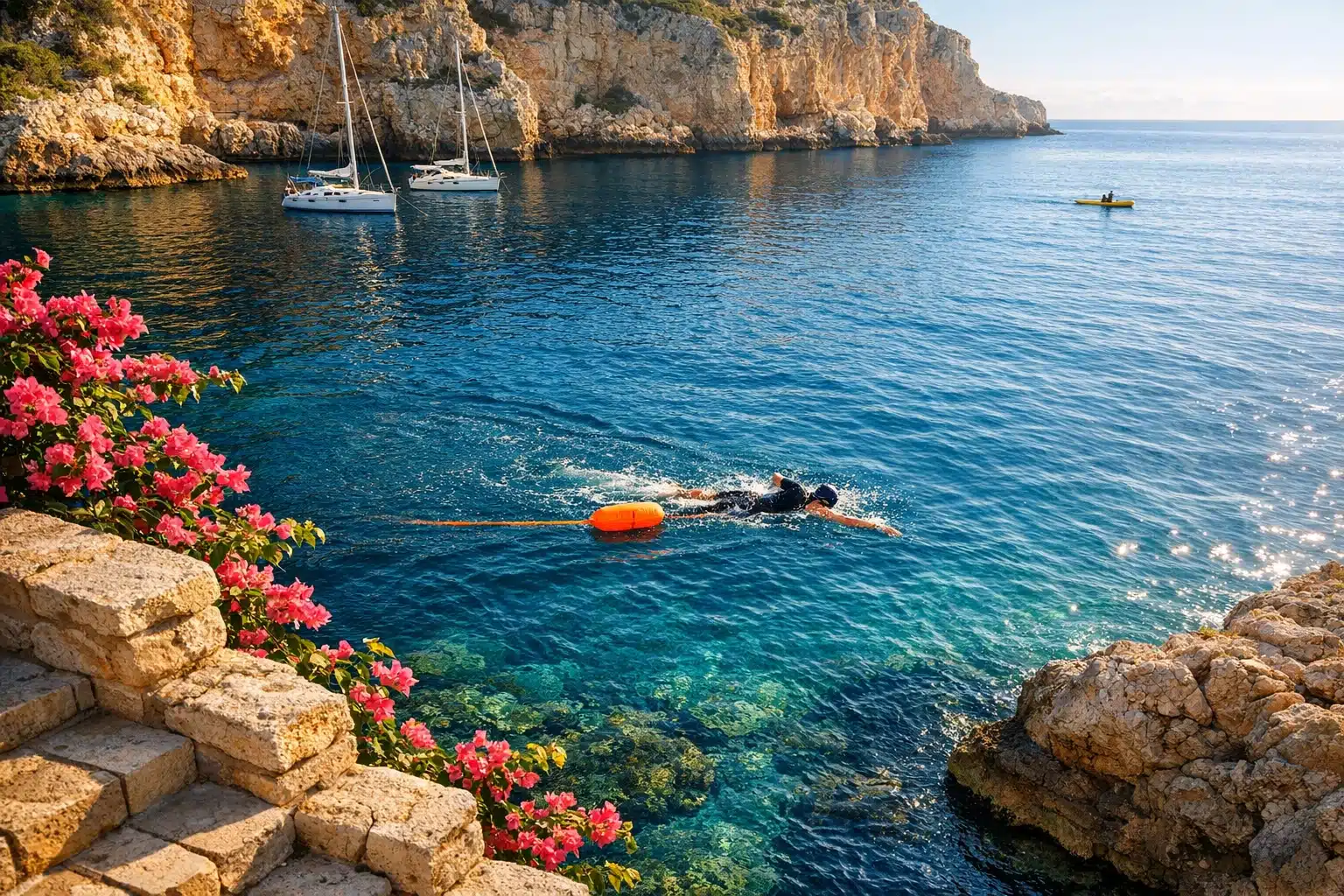
Explore the world of swimming
Swimming sits at a rare crossroads where survival skill, exercise, competition, and pure leisure all share the same water. It welcomes children, older adults, and serious athletes alike, while training the body with far less impact than many land-based activities. A quiet pool can feel like a classroom, a gym, and a refuge in the same hour. That unusual range makes swimming both timeless and deeply relevant today.
This article follows five lanes through the subject: the foundations of swimming, the logic behind the main strokes, the physical and mental benefits of regular practice, the essentials of training and safety, and a final guide for readers who want to make swimming part of everyday life.
The Foundations of Swimming: More Than a Sport
Swimming often gets introduced as a sport, but that description is too narrow. Long before marked lanes, stopwatches, and medal ceremonies, people swam because water stood between them and where they needed to go. Rivers had to be crossed, coastlines explored, and accidents survived. Across ancient civilizations, swimming appeared in practical training, recreation, and even art. That long history matters because it explains why swimming still carries several identities at once. It is a life skill, a form of exercise, a competitive discipline, and, for many people, one of the simplest ways to feel free.
Modern swimming grew into organized competition during the nineteenth century, and it became part of the early modern Olympic program. Since then, the sport has expanded into lap swimming, open-water racing, diving, water polo, artistic swimming, and recreational fitness. Yet the strongest argument for swimming is not found in elite sport at all. It is found in access, safety, and long-term usefulness. Knowing how to float, tread water, and move efficiently can reduce the risk of drowning. Learning to stay calm in water is not dramatic in the moment, but it can be life-changing in the real world.
Swimming also stands apart because it invites participation across age groups and ability levels. A beginner can start by learning breath control at the pool wall. A recovering athlete can use the water to stay active while limiting impact on joints. A child can discover confidence through small, repeatable skills. An older adult may find that the pool offers movement that feels possible on days when hard surfaces do not. In that sense, swimming is democratic in a practical way: the water does not ask for speed first; it asks for rhythm, balance, and patience.
Of course, access is not equal everywhere. Pool costs, lesson availability, transport, and cultural familiarity all shape who learns to swim early and who does not. That is why community pools, school programs, and affordable lessons matter so much. When a town invests in swimming, it is not only supporting sport. It is supporting public health, confidence, and a skill that can stay useful for life. That wider view helps explain why swimming deserves attention beyond the medal table. It is a discipline with history behind it and real-world value in front of it.
Understanding the Main Strokes and What They Teach
One of the easiest ways to enter the world of swimming is to understand the major strokes, because each one teaches a different relationship with the water. Freestyle, usually swum with the front crawl, is the fastest and most common stroke in training and competition. Its alternating arm action and flutter kick reward efficiency, body rotation, and controlled breathing. When swimmers talk about finding a smooth rhythm, freestyle is often where they mean it. Once the timing clicks, the stroke can feel less like fighting the water and more like sliding through it.
Backstroke offers a useful contrast. It shares some mechanics with freestyle, especially the alternating arm pattern and flutter kick, but the swimmer stays face-up. That changes orientation, breathing, and balance. For some beginners, backstroke feels more relaxed because the face remains out of the water. For others, it feels strange because direction is harder to judge. It teaches trust in body position and helps swimmers understand alignment along the surface.
Breaststroke is slower in racing terms, yet it remains one of the most popular recreational strokes. The movement uses a pull, breath, kick, and glide sequence that feels distinct from the constant turnover of freestyle. Because the stroke allows clear moments to lift the head and reset timing, many casual swimmers find it approachable. At the same time, breaststroke demands technical precision. A mistimed kick or rushed glide can waste energy quickly.
Butterfly is the most visually dramatic of the four and usually the most demanding. Both arms recover together, the body undulates, and the kick comes from a dolphin motion driven by the hips and core. Butterfly is powerful, but it is also unforgiving when rhythm breaks down. For that reason, coaches often use it to teach whole-body coordination rather than pure brute force.
- Freestyle favors speed, endurance, and efficient rotation.
- Backstroke builds alignment and offers easier breathing for many swimmers.
- Breaststroke rewards timing and is widely used in casual swimming.
- Butterfly develops coordination, power, and body awareness.
No stroke is automatically “best” for every person. Freestyle usually dominates fitness sessions because it is efficient over distance. Breaststroke may suit someone seeking a gentler pace. Backstroke can relieve the mental pressure of face-down swimming. Butterfly, in short sets, can sharpen technique and strength. Learning the differences does more than prepare a swimmer for races. It reveals that swimming is not one motion repeated forever. It is a collection of methods, each with its own logic, challenge, and quiet beauty.
Why Swimming Is So Effective for Body and Mind
Swimming earns its reputation as excellent exercise because water changes the rules of movement. On land, gravity and impact dominate many activities. In the pool, buoyancy supports much of the body, which reduces stress on joints while still demanding effort from muscles. That combination is rare. A swimmer can work the shoulders, back, core, hips, and legs in one session without the repetitive pounding that often comes with running. Water also provides resistance in every direction, so even simple movements ask the body to control and stabilize itself.
From a cardiovascular perspective, swimming can be highly effective. Easy laps build aerobic endurance, while interval sessions can raise intensity substantially. Public health guidelines commonly recommend that adults aim for at least 150 minutes of moderate aerobic activity each week, and swimming can absolutely count toward that goal. The exact training effect depends on pace, stroke choice, rest time, and the swimmer’s experience. A relaxed breaststroke session feels very different from repeated freestyle sprints, yet both can play a useful role in overall fitness.
Another strength of swimming is adaptability. People recovering from injury often use the pool because it allows movement with less joint loading. Older adults may find that water-based exercise feels safer and more comfortable than high-impact alternatives. For athletes in other sports, swimming can serve as cross-training, improving endurance while giving overworked tendons a break. Even body composition discussions are more sensible in the pool when framed around consistency rather than hype. Calorie burn varies with size, effort, temperature, and technique, so no honest article should promise a magic number. What matters more is that swimming makes sustained movement possible for many people who struggle to enjoy other forms of exercise.
The mental side is just as compelling. Swimming encourages controlled breathing, repeated patterns, and focused attention. That can create a meditative quality, especially during steady laps. The world narrows to bubbles, strokes, and the next wall. For some swimmers, that rhythm reduces stress and sharpens concentration. For others, the pool becomes a place to rebuild confidence after illness, injury, or burnout. There is also a plain emotional truth that statistics cannot fully measure: water often changes mood. A tough day can feel less heavy after twenty quiet minutes moving through a lane.
In simple terms, swimming is effective because it combines resistance, endurance, skill, and recovery in one environment. It can challenge elite athletes, support rehabilitation, and offer ordinary people a sustainable way to stay active. That versatility is not marketing language. It is the reason pools stay busy with everyone from schoolchildren to retirees.
Learning, Training, and Staying Safe in the Water
Swimming looks graceful when done well, but the path to that point is usually built from small skills practiced patiently. Beginners often imagine they need to master a full stroke immediately. In reality, strong swimming starts with comfort in the water. That means learning how to exhale underwater, float on the front and back, glide, kick with control, and recover calmly after a mistake. A good lesson program does not rush these foundations, because fear and tension waste far more energy than inexperience. When the body stiffens, the water feels heavier. When the body relaxes, the water starts to carry its share.
Once the basics are in place, training becomes more structured. Swimmers often break practice into drills, main sets, and recovery work. Drills isolate details such as head position, catch timing, kick rhythm, or body rotation. A main set might focus on endurance, speed, or pacing. Recovery swimming then lowers effort while keeping technique tidy. Equipment can help, but it should support learning rather than replace it. Goggles improve visibility and comfort. Kickboards isolate leg work. Pull buoys reduce kicking so swimmers can focus on the upper body. Fins may help body position and ankle mobility, though they should be used with purpose.
- Beginners benefit from short, repeatable distances and frequent rest.
- Intermediate swimmers often improve fastest by refining technique before adding volume.
- Advanced swimmers usually balance endurance, speed, and race-specific skills.
Safety deserves equal attention. Pools are controlled environments, but water always requires respect. New swimmers should practice in supervised areas and, when possible, learn with a qualified instructor. Children need close, active supervision rather than distant observation. In open water, the risk picture changes again: currents, temperature, visibility, weather, and navigation all matter. A calm-looking lake can behave very differently from a pool. Wetsuits, brightly colored caps, tow floats, and swimming with a partner are common precautions, not decorations.
Simple habits make a difference:
- Warm up before hard efforts.
- Do not overestimate your distance capacity.
- Rest if breathing becomes erratic or panic rises.
- Follow pool rules, lane directions, and lifeguard instructions.
- Learn basic rescue awareness, but do not attempt risky saves beyond your skill level.
The best training plan in the world loses value if it ignores safety or technique. Swimming rewards consistency more than drama. A careful learner who shows up regularly often outlasts the impatient person who tries to muscle through everything in week one. In the water, progress is usually quiet. Then one day a length that once felt endless suddenly feels manageable, and the pool begins to feel less like an obstacle and more like familiar ground.
Conclusion: Making Swimming Work for Your Goals
If you are the kind of reader who is curious but not yet committed, swimming offers a forgiving place to start. You do not need Olympic ambitions to benefit from it. You need a clear reason, a realistic entry point, and enough patience to let technique grow over time. For some people, the goal is fitness. For others, it is confidence around water, joint-friendly exercise, improved endurance, stress relief, or simply the pleasure of learning a skill that once felt intimidating. Swimming can meet all of those goals, but not in the same way for everyone.
A practical approach helps. If you are brand new, look for lessons that teach water comfort before speed. If you already know the basics, consider setting one focused target for the next month: swim twice a week, learn bilateral breathing, complete a continuous set without rushing, or improve your backstroke balance. Parents may want safe, structured classes for children. Recreational exercisers may prefer lap sessions during quieter hours. Competitive personalities might enjoy masters swimming, timed sets, or local meets. Older adults and people returning from injury may benefit most from steady sessions that prioritize mobility and aerobic work over intensity.
Swimming also becomes more rewarding when it fits real life. Choose a pool you can actually reach. Pack your bag the night before. Start with sessions short enough that you can repeat them next week. Track progress in simple ways, such as comfort level, number of lengths, or how quickly you recover between efforts. Improvement in swimming is often subtle. Better balance, smoother breathing, and cleaner timing may arrive before obvious speed gains, but those changes matter. They are signs that the water is beginning to make sense.
For the target audience of this article, the biggest takeaway is straightforward: swimming is not only for elite athletes or naturally confident people. It is for learners, busy adults, cautious beginners, returning exercisers, and anyone who wants a sustainable activity that strengthens both body and attention. Start where you are, respect the environment, and let skill build one length at a time. The pool has a way of rewarding steady effort. At first it asks for humility, then it offers rhythm, and eventually it gives back something many activities cannot: the feeling that hard work and calm can exist together.