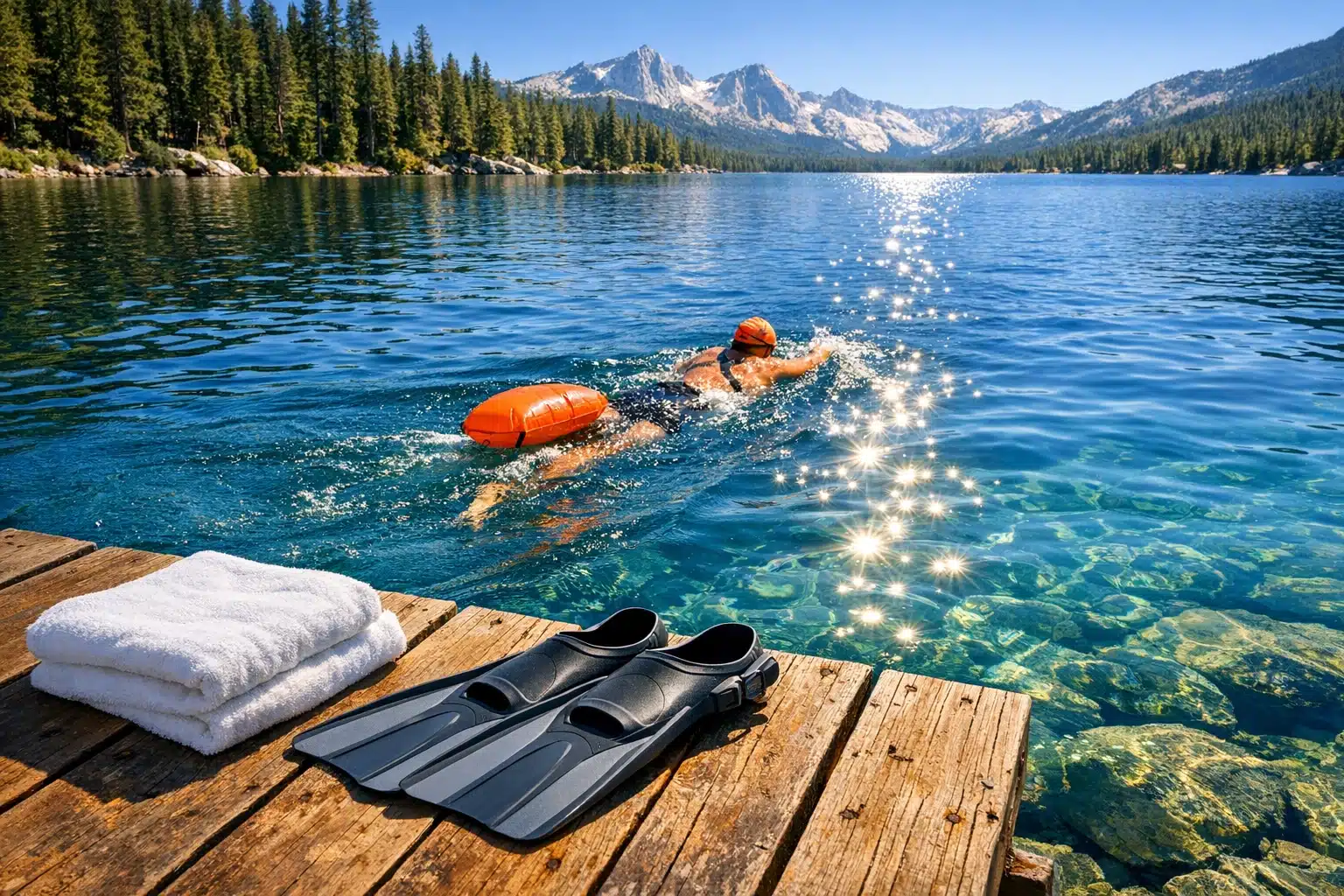
Explore the world of swimming
Swimming is one of those rare activities that can feel playful and serious at the same time. A child testing the water, a lap swimmer counting strokes, and an older adult rebuilding strength after injury are all using the same element in completely different ways. That range explains its enduring relevance: swimming improves fitness, teaches safety, supports recovery, and offers a path to recreation or competition that can last for decades.
Outline: The article begins with swimming’s history and broad social value. It then examines physical and mental health benefits, compares the main strokes and their techniques, and explains training, equipment, and safety in pools and open water. The final section brings the discussion back to readers by showing how different age groups and goals can make swimming part of everyday life.
Swimming Through Time: Why This Skill Has Always Mattered
Swimming is older than organized sport, older than modern fitness culture, and older than most of the games people watch on television. Humans have entered the water for survival, transport, work, ritual, and recreation for thousands of years. Ancient artworks from Egypt show swimming-like movements, and historical records from Greece and Rome suggest that water competence was once considered part of a well-rounded education. In many coastal and river communities, knowing how to float, dive, and move efficiently through water was never a luxury; it was woven into daily life. That long history matters because it reminds us that swimming is not merely an exercise trend. It is a practical human skill with cultural, physical, and social importance.
As a modern sport, swimming became more formal in the nineteenth century, especially in Britain and Australia, where clubs, standardized races, and codified strokes began to take shape. It entered the first modern Olympic Games in 1896 for men, while women’s Olympic swimming events followed in 1912. Today, the sport ranges from neighborhood learn-to-swim lessons to elite competition governed internationally by World Aquatics. Yet even with stopwatches, touchpads, and data-heavy training plans, the central appeal remains simple: water changes the rules of movement. Gravity feels quieter, resistance comes from every direction, and technique often matters as much as strength. A fast runner cannot simply jump into a pool and dominate; the water asks for timing, balance, and patience.
Swimming also has unusual reach across society. It can be recreational, therapeutic, competitive, or lifesaving all at once. A public pool might serve schoolchildren in the morning, fitness swimmers at lunch, rehabilitation patients in the afternoon, and club athletes in the evening. Few activities adapt so easily to different needs. There is also a safety argument that should never be overlooked. The World Health Organization has estimated that more than 230,000 people die from drowning worldwide each year, making water safety education an urgent public health issue. Learning to swim does not eliminate risk, but it improves a person’s ability to respond calmly and effectively around water.
In that sense, swimming sits in a special category. It is a sport, certainly, but it is also a life skill. It can sharpen competitive ambition, offer a peaceful break from crowded routines, and provide the confidence to enjoy beaches, lakes, and rivers more responsibly. Water has no interest in status, age, or ego; it simply responds to how well a body moves through it. That quiet honesty may be one reason swimming continues to endure.
The Benefits of Swimming: Fitness, Recovery, and Mental Clarity in One Activity
Swimming has earned a reputation as one of the most complete forms of exercise, and that reputation is largely justified. Unlike activities that emphasize one major muscle group or repeatedly load the same joints, swimming recruits the shoulders, back, core, hips, and legs in a coordinated pattern. The body must propel itself forward while maintaining alignment, managing breath, and staying balanced in an unstable environment. This combination turns even a moderate swim into full-body work. Water also provides constant resistance, which means each stroke asks the muscles to pull or press against a denser medium than air. That resistance is smooth rather than jarring, making the effort challenging without feeling as abrasive as pounding pavement.
For many people, the biggest advantage is low-impact movement. When the body is immersed, water supports a large share of body weight, reducing stress on knees, ankles, and hips. That makes swimming attractive for older adults, people returning from injury, and anyone who wants cardiovascular training without repetitive impact. Compared with running, swimming is generally gentler on the joints. Compared with cycling, it uses the upper body more directly and demands more active breathing control. The Centers for Disease Control and Prevention recommends at least 150 minutes of moderate-intensity aerobic activity per week for adults, and swimming can absolutely fill that role. Depending on intensity, body size, and stroke choice, it can also burn a substantial number of calories while building endurance and muscular stamina.
The mental effects deserve equal attention. Many swimmers describe the pool as a place where noise fades and focus sharpens. There is good reason for that feeling. Repetitive rhythmic movement, controlled breathing, and sensory isolation can produce an almost meditative state. For people who spend long days on screens or in crowded work environments, the structure of lap swimming can feel restorative. It demands attention but not chaos. Research in exercise science has repeatedly linked regular physical activity to reduced stress and improved mood, and swimming offers those benefits in a setting that many find especially calming.
Its advantages are broad:
– cardiovascular conditioning without heavy impact
– muscular endurance across multiple major muscle groups
– breath control that strengthens respiratory efficiency
– flexibility and range of motion, especially in the shoulders and torso
– a mental reset that combines effort with rhythm
Of course, swimming is not perfect for every goal. Someone focused on maximal bone loading may benefit more from weight training or running, because water reduces impact. A pure strength athlete will still need dry-land resistance work. But as a sustainable foundation for long-term health, swimming is remarkably versatile. It meets beginners gently, challenges advanced athletes deeply, and gives the body a workout that often feels more graceful than punishing.
Understanding the Strokes: Technique, Efficiency, and What Each Style Teaches
To watch skilled swimmers is to realize that speed in water rarely looks like struggle. The most efficient athletes seem to slide rather than fight, and that illusion comes from technique. Each major stroke teaches a different relationship with the water, which is why learning more than one style can make a swimmer stronger overall. Freestyle, usually referring to the front crawl, is the fastest and most common stroke for fitness and competition. It relies on a streamlined body position, alternating arm recovery, a steady flutter kick, and breathing timed to the side. Because it is efficient at higher speeds, freestyle dominates lap swimming and distance training. When beginners improve their body rotation and learn not to lift the head too high for air, they often become dramatically faster without getting dramatically stronger.
Backstroke is sometimes underestimated because it looks relaxed, but it demands real precision. Swimmers must stay horizontal while facing upward, maintain a consistent kick, and keep the stroke symmetrical without being able to see where they are going. For some people, backstroke is easier on the neck because breathing is unrestricted. It can also help improve posture awareness and shoulder coordination. Breaststroke offers a different rhythm entirely. Its pull, breath, kick, and glide create a pattern that many casual swimmers find approachable, especially at slower speeds. However, breaststroke is not automatically easy. Done poorly, it can place awkward stress on the knees or lower back. Done well, it becomes a highly technical stroke built on timing rather than brute force.
Butterfly is the most demanding of the four competitive strokes for many swimmers. It uses simultaneous arm recovery, a dolphin kick, and coordinated body undulation. When butterfly clicks, it looks almost theatrical, as though the swimmer is briefly negotiating with gravity before returning to the water. When it does not click, it becomes exhausting very quickly. That contrast teaches an important lesson: swimming rewards efficiency more ruthlessly than many land sports. Wasted motion is expensive.
Comparing the strokes reveals how varied swimming can be:
– freestyle: fastest, efficient, ideal for endurance and racing
– backstroke: open breathing, strong for alignment and shoulder rhythm
– breaststroke: technical, accessible at easy pace, slower but useful for control
– butterfly: powerful, high-energy, best for advanced coordination and strength
Technique fundamentals cross all styles. A streamlined position reduces drag. A stable core helps transfer force from the arms and legs. Breathing should support rhythm, not interrupt it. Good swimmers learn to feel the water with their hands and forearms rather than simply slapping through it. Drills are valuable because they isolate details: kicking with a board, single-arm practice, catch-up freestyle, or sculling work can expose habits that full-speed swimming hides. In the pool, seconds are often saved not by thrashing harder but by moving more cleanly. That truth gives swimming unusual depth. It is physical, yes, but also deeply technical, almost like solving a puzzle one lap at a time.
Training, Equipment, and Safety: How to Build a Sustainable Swimming Practice
Beginning a swimming routine can feel intimidating because the environment itself is part of the challenge. In a gym, the floor stays still and the air is free. In water, every breath and movement must be managed. The good news is that a practical swimming habit does not require expensive equipment or elite ability. Most beginners need only a swimsuit, goggles, and access to a supervised pool. A swim cap can improve comfort, especially for longer hair, and a kickboard or pull buoy can help structure drills. What matters most at the start is not distance but consistency. Two or three sessions a week, even if short, usually produce better results than one heroic workout followed by long gaps.
A simple session can be organized in clear parts: warm-up, skill work, main set, and cool-down. For a newer swimmer, that might mean 5 to 10 easy minutes, followed by short technique drills, then a modest block of repeat lengths with rest between efforts. Interval training is useful because it adds structure without requiring expert pace control. More experienced swimmers often mix endurance, speed, and stroke-specific sets across the week. Pool training also allows reliable measurement. You know the lane length, can track times, and can compare progress over months in a precise way. Open-water swimming offers a different appeal. Lakes, rivers, and oceans add scenery, adventure, and changing conditions, but they also remove the predictability of the pool. There are no walls for rest, no lane lines for guidance, and sometimes no easy sense of pace.
Safety is where discipline matters most. Strong swimmers can still make poor decisions, and weak swimmers can improve quickly with instruction and caution. A sensible approach includes:
– learn in a supervised setting when possible
– avoid swimming alone, especially in open water
– understand weather, currents, and water temperature
– use bright visibility gear in natural settings
– stop immediately if pain, cramping, dizziness, or panic appears
Formal lessons are valuable for adults as well as children. Many adults carry embarrassment about not swimming well, but water does not reward pride. It rewards preparation. Good instruction can correct breathing patterns, reduce anxiety, and teach survival skills such as floating, treading water, and safe entry and exit. For families, water safety should go beyond rules shouted from the deck. It should include repeated practice, close supervision, and realistic respect for depth and fatigue.
Training wisely also means recognizing swimming’s limits. Shoulders can become overused if stroke mechanics are sloppy or volume increases too quickly. Dry-land exercises for mobility, posture, and strength often make swimmers more resilient. The best routine is usually balanced: time in the pool for technique and endurance, time out of it for stability and recovery. That balance helps swimming remain sustainable rather than seasonal.
Who Swimming Is For: A Practical Conclusion for Beginners, Families, and Lifelong Athletes
Swimming suits an unusually wide audience, which is perhaps its strongest argument. For children, it builds comfort in the water, coordination, and a basic layer of safety that can matter for life. For busy adults, it offers efficient exercise that can be adapted to short lunch-hour sessions or longer weekend workouts. For older adults, it provides movement that is often more forgiving than high-impact routines. For competitive personalities, it delivers measurable progress through pace, distance, stroke count, and racing. Even for people who do not think of themselves as athletes, swimming can become a dependable form of self-care: quiet, structured, and surprisingly satisfying once the early awkwardness fades.
If you are a beginner, the goal should not be elegance on day one. It should be comfort, breath control, and repetition. Start shallow, learn to exhale in the water, and take lessons if technique feels confusing. If you are returning after years away, resist the urge to compare yourself to a former version of your body. Water is an honest training partner, but it is also patient. Small gains matter. Ten calm lengths with good breathing can be more valuable than twenty rushed lengths fueled by tension. If you are a parent, the most important lesson to teach is that water deserves respect, not fear and not carelessness. Confidence grows best alongside supervision and skill.
For readers deciding whether swimming is worth the effort, the answer depends on what they want from exercise. If the goal is a lifelong activity that combines fitness, recovery potential, technical interest, and practical safety value, swimming makes a strong case. It may not replace every other kind of training, and it does not need to. In many lives, its role is even better: it complements walking, strength work, cycling, team sports, and rehabilitation by offering what those activities cannot. Few forms of movement let someone push the heart and lungs while feeling held up rather than hammered down.
A useful way to begin is simple:
– choose one realistic time slot each week and protect it
– focus on lessons or fundamentals before chasing distance
– measure progress by ease and control, not only speed
– keep safety habits as part of the routine, not an afterthought
In the end, swimming rewards curiosity. The first victory may be a relaxed exhale, then a smoother turn, then an extra lap that once felt impossible. Progress arrives in quiet ways, almost like the water itself. For beginners, families, fitness seekers, and seasoned athletes alike, that is the lasting invitation of swimming: step in, learn steadily, and discover how much strength can be built in a place that first feels unfamiliar.