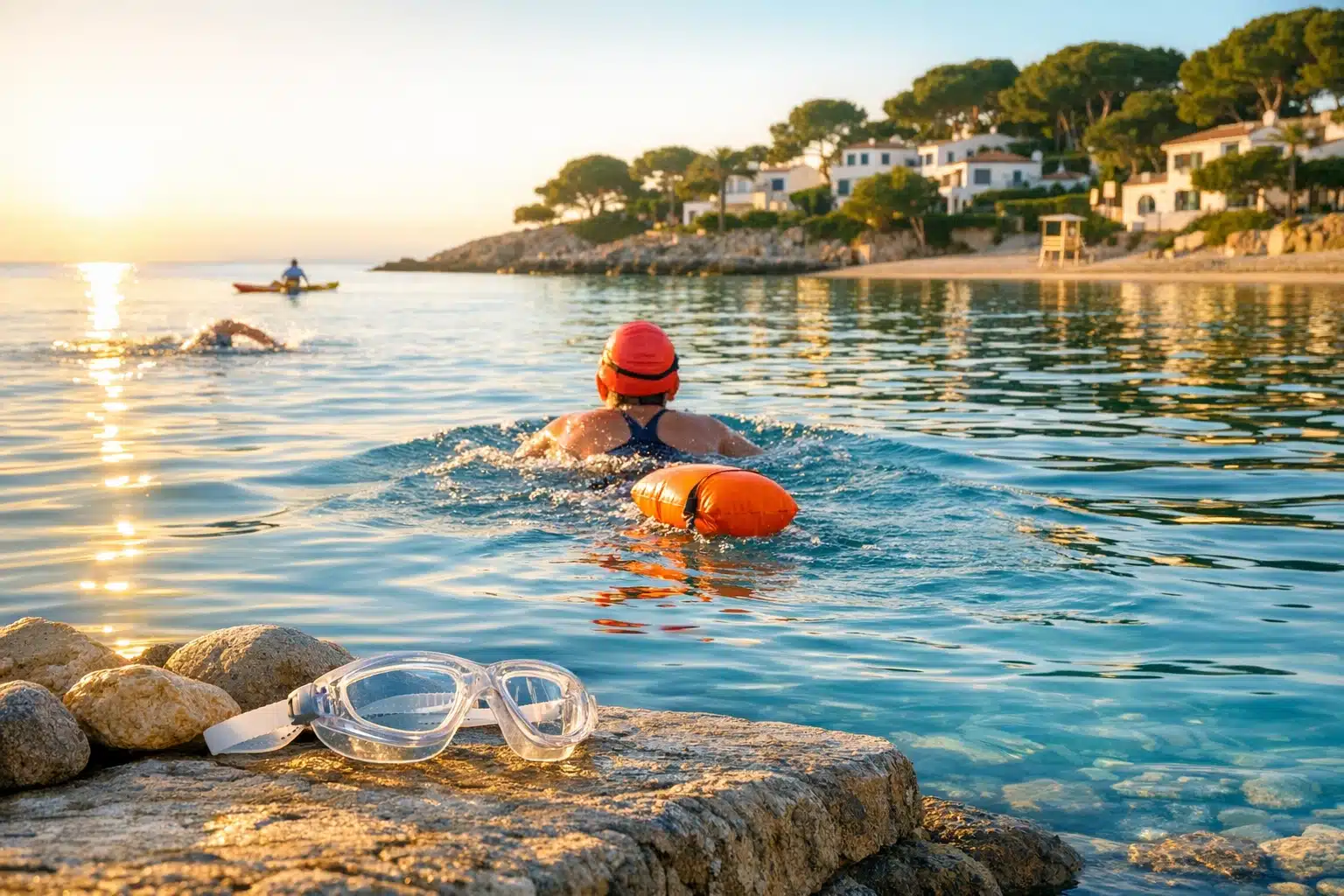
Explore the world of swimming
Swimming is one of those rare activities that feels both ancient and current: a survival skill, a competitive sport, and a calming form of exercise in one. It matters because it can build endurance, sharpen technique, and offer children, adults, and older people a low-impact path to regular movement. From Olympic lanes to school pools and open water, its relevance stretches far beyond competition. This article explores that world in a practical, readable way.
Article Outline
- The meaning and history of swimming, and why it remains a basic life skill.
- The four main strokes, how they differ, and what each asks of the body.
- The physical and mental benefits of swimming, with realistic limits and useful comparisons.
- Training methods, safety habits, and equipment choices for pools and open water.
- How everyday swimmers can turn knowledge into a lasting routine for health, confidence, and enjoyment.
Swimming as Skill, Sport, and Cultural Tradition
Swimming has a wider identity than many people first assume. It is not only a sport with medals, lane ropes, and stopwatches. It is also a practical life skill, a form of recreation, a tool used in rehabilitation, and in many places a social ritual tied to summer, travel, and community. Human beings have been moving through water for thousands of years, long before formal competitions existed. Ancient artworks from several civilizations show swimmers using recognizable body positions, and historical accounts suggest that the ability to cross rivers, fish, or survive in changing environments made swimming useful long before it became structured leisure.
Modern competitive swimming took shape in the nineteenth century as clubs, indoor pools, and governing bodies became more common. It entered the first modern Olympic Games in 1896, and women’s Olympic swimming events followed in 1912. That timeline matters because it shows how swimming evolved from necessity into organized performance. Today the sport includes sprint races, distance events, diving, water polo, artistic swimming, open-water marathons, and learn-to-swim programs that sit far away from elite competition but are arguably even more important for everyday life.
Part of swimming’s staying power comes from the environment itself. Water changes movement. It supports the body while also resisting it, which means even simple actions can become a workout. A short swim can feel gentle on the joints and surprisingly demanding on the lungs. That combination helps explain why swimming appeals to such different people: a child learning to float, a triathlete chasing efficiency, an older adult rebuilding mobility, or a parent simply wanting a safe family activity.
Its value becomes even clearer when viewed through four overlapping roles:
- As a safety skill, swimming can reduce risk around pools, lakes, and beaches.
- As exercise, it develops endurance, coordination, and muscular control.
- As sport, it rewards discipline, pacing, and technical precision.
- As leisure, it offers play, refreshment, and a break from gravity-heavy routines on land.
Few activities carry this blend of utility and pleasure. A football match ends when the whistle blows, and a gym session usually starts with a deliberate plan. Swimming is different. Sometimes it is serious, sometimes restorative, and sometimes it is simply the feeling of cutting through cool water while the outside world goes quiet for a while.
The Main Strokes and What Makes Each One Unique
To understand swimming, it helps to look closely at its four main competitive strokes: freestyle, backstroke, breaststroke, and butterfly. Each one has its own rhythm, technical demands, and practical uses. Learning the differences is like learning the personalities of four related but very distinct languages. They all move a person through water, yet each asks the body to solve the problem in a different way.
Freestyle, usually swum as the front crawl, is the fastest and most common stroke in both training and racing. Alternating arm pulls, a steady flutter kick, and side breathing make it efficient when technique is sound. Because the body stays long and relatively streamlined, freestyle is often the first stroke people associate with lap swimming. It is excellent for building aerobic fitness, but beginners often discover that breathing, not arm strength, is the real challenge. Lifting the head too high can sink the hips and create drag, turning a smooth stroke into a tiring struggle.
Backstroke uses a similar alternating arm pattern, but the swimmer lies on the back and keeps the face above water. Many beginners enjoy it because breathing feels less stressful, yet the stroke brings its own complications. Swimmers must maintain body alignment without being able to see where they are going. In racing, backstroke is the only stroke that starts in the water. It encourages shoulder mobility, core control, and awareness of balance.
Breaststroke is often seen as the most natural-looking stroke, though it is technically demanding. The arms sweep outward and inward while the legs perform a whip kick. Timing matters more here than raw force. If the kick and pull do not match, the swimmer loses momentum quickly. Breaststroke is slower than freestyle, but it allows better visibility forward, which is one reason it has been useful in recreational and open-water situations. For some learners, it feels friendly; for others, it feels like trying to pat your head and rub your stomach at the same time.
Butterfly is the most dramatic of the four. Both arms recover together over the water, and the legs use a dolphin kick powered from the core. When done well, it looks almost unreal, as if the swimmer is rising and falling with the water instead of fighting it. It is also extremely taxing, which is why many swimmers learn it later and practice it in short repeats.
A simple comparison makes the differences clearer:
- Freestyle: fastest, efficient, widely used for fitness.
- Backstroke: face-up, rhythm based, good for body position awareness.
- Breaststroke: slower, timing heavy, easier for forward sighting.
- Butterfly: powerful, technical, and physically demanding.
Knowing these contrasts helps swimmers choose goals intelligently. Not everyone needs to master butterfly immediately, and not every session should look like a race. Sometimes progress starts with one clean length of freestyle and one less panicked breath.
Health Benefits, Performance Gains, and Realistic Limits
Swimming has earned its reputation as a valuable form of exercise for good reason. It challenges the cardiovascular system, engages multiple muscle groups, and does so with less impact than many land-based activities. Public health guidance from organizations such as the World Health Organization recommends regular moderate or vigorous physical activity for adults, and swimming can fit those targets well. A steady lap session can raise heart rate, improve breathing efficiency, and train endurance while sparing knees and ankles from the repeated pounding that comes with some forms of running or court sport.
One of swimming’s biggest strengths is that resistance is built into the environment. Water pushes back on every movement, so the arms, shoulders, back, core, and legs all contribute. Even a technically easy session can become a full-body workout. That does not mean every swimmer leaves the pool exhausted; intensity still depends on pace, stroke choice, and rest intervals. A gentle recovery swim and a race-pace set may happen in the same pool, but they are very different experiences.
Swimming is also widely used by people who need a more joint-friendly option. Water supports the body and can reduce loading, which is why pool exercise is common in rehabilitation and active aging programs. For individuals managing arthritis, recovering from certain injuries, or carrying extra body weight, the pool can feel less punishing than a treadmill. At the same time, it would be misleading to describe swimming as perfect for everyone. Access can be limited by facility costs, weather, transport, cultural factors, or confidence in deep water. Chlorinated pools may irritate some skin or airways, and because swimming is not weight-bearing in the same way as walking or resistance training, it should not automatically replace every other kind of exercise.
Its mental benefits deserve attention too. The repetitive rhythm of strokes, bubbles, and turns can be soothing. Many swimmers describe the pool as one of the few places where phones, noise, and everyday demands fade into the background. While swimming is not a cure for stress or anxiety, it can be part of a broader routine that supports emotional well-being.
A balanced view looks like this:
- Excellent for cardiovascular fitness and muscular endurance.
- Useful for many people who need lower-impact movement.
- Supportive of coordination, breath control, and body awareness.
- Less effective on its own for some goals, such as maximal bone-loading or strength development.
In other words, swimming is powerful not because it does everything, but because it does several important things very well.
Training Smarter: Safety, Equipment, and Good Habits in the Water
Swimming rewards consistency far more than heroic single sessions. A beginner who swims two or three times a week with modest structure usually improves faster than someone who dives in once, overworks, and disappears for a month. Good training starts with a realistic plan. Most sessions benefit from a simple sequence: warm up, drill, main set, and easy cooldown. The warm-up prepares the shoulders and breathing. Drills sharpen technique. The main set builds fitness or speed. The cooldown lets the body settle and often gives the swimmer a chance to notice what changed.
Technique matters so much in swimming because poor mechanics create drag, and drag is expensive. A runner can sometimes muscle through sloppy form for a while. In the water, wasted movement quickly turns into fatigue. That is why coaches often focus on details that look tiny from the pool deck: head position, relaxed recovery, steady kick, clean hand entry, and exhaling underwater instead of holding the breath. These small corrections often make the sport more enjoyable because they reduce struggle.
Safety deserves equal attention. Swimming is fun, but water is never casual in the wrong setting. Drowning remains a serious public health concern, especially for young children, which is why supervision, barriers, and lessons matter. Even strong swimmers can get into trouble through cold water, panic, fatigue, currents, or overconfidence. Open water introduces another layer of complexity because lakes, rivers, and seas do not behave like pools. Visibility changes, depths vary, weather can shift, and currents ignore ego.
Useful safety habits include:
- Swim where lifeguards are present when possible.
- Use the buddy system in open water.
- Learn how to float, tread water, and rest without panic.
- Respect warning flags, posted rules, and weather forecasts.
- Increase distance gradually instead of guessing what you can handle.
Equipment can stay simple. A comfortable swimsuit, goggles that fit properly, and a towel are enough to begin. As goals grow, swimmers may add a cap, kickboard, pull buoy, fins, paddles, or a waterproof watch. None of these tools replace skill, but some can help isolate parts of the stroke or make training more varied.
The smartest approach is not to chase fancy gear or punishing workouts. It is to build water confidence, repeat sound movement, and leave each session with enough energy to come back. In swimming, progress often looks quiet before it looks impressive.
Conclusion: Finding Your Place in the Water
If swimming seems broad, that is because it truly is. It can begin as a childhood lesson, return later as adult exercise, and stay in a person’s life as a source of fitness, recreation, or calm. That flexibility makes it especially relevant for modern readers who want activities that are useful, sustainable, and adaptable. Not everyone wants to race, and not everyone needs a complex training identity. For many people, the real goal is simpler: feel safer around water, move more regularly, and enjoy an activity that does not punish the body every time it asks for effort.
For beginners, the best next step is usually modest and practical. Start with comfort before speed. Learn to float, breathe out underwater, and relax enough to let technique grow. If possible, take lessons from a qualified instructor; adult beginners are common, and good teachers know how to build confidence without embarrassment. For returning swimmers, the smart move is to respect the gap between memory and current fitness. The body often remembers the idea of swimming before it remembers the stamina.
A simple path forward might look like this:
- Begin with short sessions of 20 to 30 minutes.
- Alternate easy lengths with rest instead of forcing nonstop laps.
- Choose one technical focus per session, such as breathing or body position.
- Track consistency first, then distance, then pace.
- Add variety with backstroke, drills, or gentle kicking to avoid boredom.
Parents may view swimming through the lens of safety. Busy professionals may see it as efficient exercise. Older adults may value the lower-impact nature of the pool. Former athletes may appreciate the technical depth that keeps improvement interesting. All of these are valid entry points. The water does not ask everyone for the same story.
That is perhaps the best closing thought for the target audience of this article: swimming is worth exploring because it meets people where they are. It can challenge, restore, humble, and encourage, sometimes in the same week. If you approach it patiently, with respect for safety and curiosity about technique, it offers more than a workout. It offers a skill that can serve you for years, and on the best days, it offers something even rarer: the feeling that movement itself has become light, deliberate, and quietly joyful.