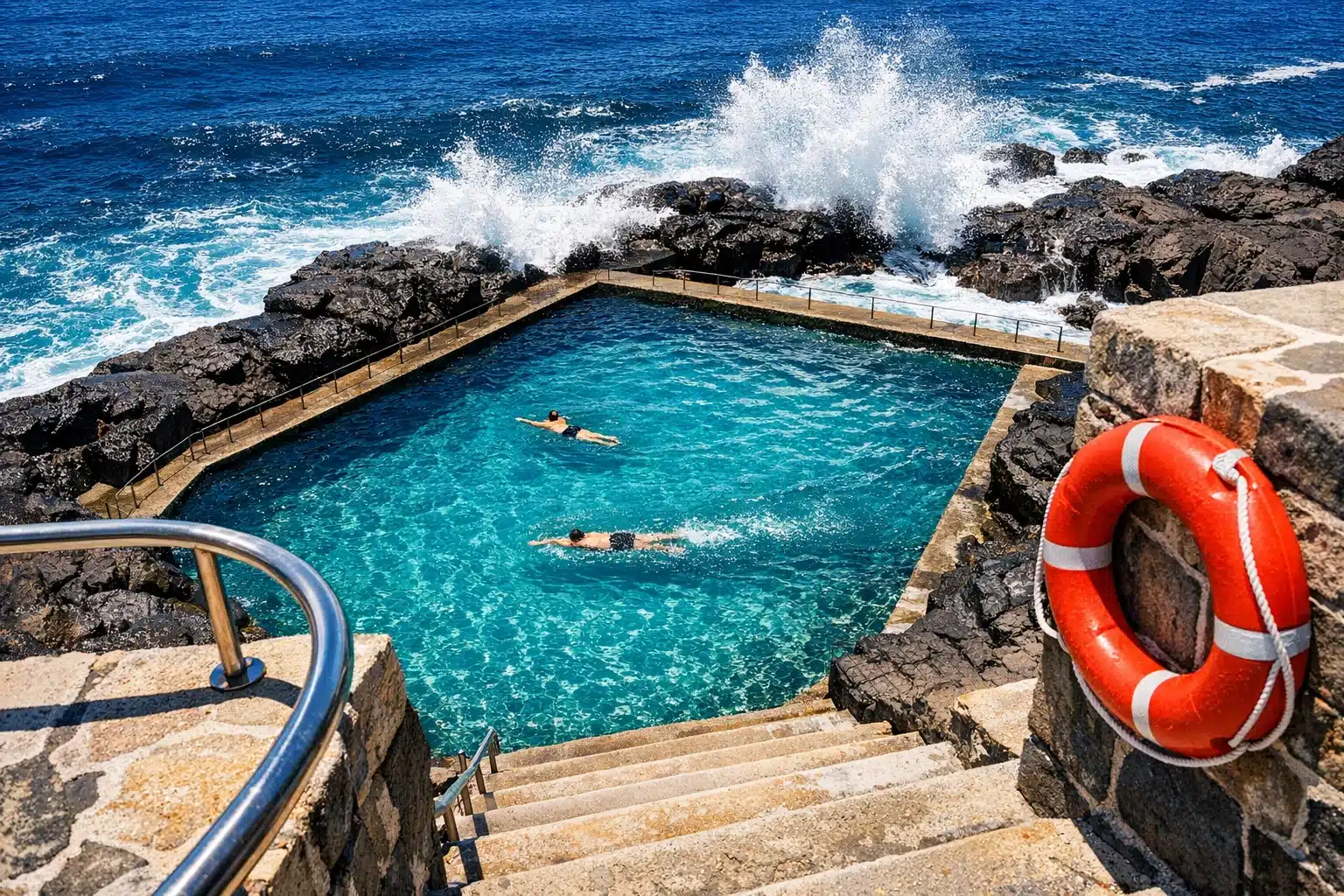
Explore the world of swimming
Swimming is one of those rare activities that feels playful, practical, and demanding at the same time. It can teach a child confidence, give an adult a low-impact workout, and offer older swimmers a way to stay active without punishing their joints. From neighborhood pools to open water races, it connects health, safety, sport, and sheer enjoyment in a single movement through water. This guide explores how swimming works, why it matters, and how different people can make it part of everyday life.
Article Outline
• Section 1 explains why swimming matters as a life skill, exercise option, and cultural practice.
• Section 2 breaks down the main strokes and compares how they feel, function, and challenge the body.
• Section 3 looks at physical and mental health benefits, with practical context for everyday swimmers.
• Section 4 covers learning, training structure, and equipment choices for beginners and improving athletes.
• Section 5 focuses on safety, swimming environments, and how to build a lasting relationship with the water.
Swimming as a Life Skill, Exercise, and Shared Human Experience
Swimming stands apart from many other sports because it begins as something more basic than competition: it is a survival skill. Knowing how to float, breathe calmly, and move through water can reduce fear and increase safety in pools, lakes, rivers, and coastal areas. That practical value alone gives swimming a special place in physical education and community health. Parents often enroll children in lessons for safety first, yet many families quickly discover a second benefit. The pool becomes a space where discipline, patience, and confidence grow almost quietly, one lap and one breath at a time.
Beyond safety, swimming is unusually inclusive. A person does not need to be young, fast, or naturally explosive to enjoy it. Water supports body weight, which means the joints often experience less impact than they would during running or many court sports. That is one reason swimming is frequently recommended for people recovering from injury, older adults managing stiffness, and beginners who want exercise without hard landings. At the same time, elite swimmers train at an extremely high level, proving that the activity scales from gentle movement to serious athletic performance. Few forms of exercise travel that full range so smoothly.
Swimming also has a strong social and cultural dimension. Across the world, access to water has shaped recreation, military training, transport, and sport. Modern competitive swimming developed through organized clubs and national federations, but everyday swimming still thrives in simpler settings: school pools, hotel pools, public recreation centers, summer camps, and local beaches. For some people, it is about racing the clock. For others, it is a peaceful break from crowded schedules. A lane line can feel like a boundary during training, yet water often acts more like an invitation than a barrier.
Several qualities explain why swimming remains widely valued:
• It teaches a practical life skill linked to safety.
• It offers cardiovascular exercise with relatively low impact.
• It suits children, adults, seniors, and many rehabilitation settings.
• It can be recreational, therapeutic, or highly competitive.
There is also a mental shift that happens in the water. Sound softens, vision changes, and movement becomes more deliberate. The body cannot bluff its way through a swim set with noise or haste; technique matters, rhythm matters, and breathing matters. That combination of usefulness and immersion is what gives swimming such lasting appeal. It is exercise, yes, but it is also an education in body awareness. Long after medals and stopwatches fade from view, that awareness tends to stay with a swimmer.
The Main Strokes and What They Reveal About Technique
Swimming may look simple from the bleachers, but once you enter the water, each stroke has its own logic. The four main competitive strokes are freestyle, backstroke, breaststroke, and butterfly. Freestyle, usually swum as front crawl, is typically the fastest because it creates a streamlined body position and a steady rhythm of alternating arm pulls and flutter kicks. Most beginners eventually gravitate toward it for lap swimming, not because it is instantly easy, but because it rewards practice with noticeable gains in speed and efficiency. A small improvement in breathing timing or hand entry can make a whole length feel smoother.
Backstroke flips the body face-up, changing both the sensory experience and the technical demands. Swimmers can breathe freely because the mouth stays above the surface much of the time, but staying straight in the lane becomes harder. That is why backstroke can feel liberating and awkward at once. It often helps swimmers improve body alignment and shoulder mobility, though it requires trust in the water beneath the spine. If freestyle feels like slicing forward through a corridor, backstroke feels more like learning to travel while looking at the ceiling and reading motion through touch and balance.
Breaststroke is often the first stroke casual swimmers recognize, yet it is more technical than it appears. The arms sweep outward and inward, the legs perform a whip kick, and the timing depends on a glide phase that rewards patience. Because the head can rise regularly, many new swimmers find it emotionally reassuring. However, strong breaststroke demands precise coordination. If the kick is too wide or the glide too short, the stroke loses efficiency quickly. In competitive settings, even small timing errors matter.
Butterfly is the most physically demanding of the four for many people. Both arms recover over the water together, while the body moves in a wave-like pattern supported by a dolphin kick. When done well, butterfly looks dramatic and almost musical. When done poorly, it feels like wrestling the pool. That contrast explains why experienced coaches often teach butterfly in pieces before asking swimmers to complete full lengths.
A useful comparison looks like this:
• Freestyle: fastest, efficient, widely used for fitness and racing.
• Backstroke: easier breathing, strong for posture and balance, tricky for navigation.
• Breaststroke: accessible to many learners, highly technical in timing, slower but controlled.
• Butterfly: powerful and demanding, excellent for rhythm and strength, difficult to sustain.
Technique matters in every stroke because water is about 800 times denser than air. That density provides resistance, which is helpful for training, but it also punishes sloppy movement. A rushed kick, a dropped elbow, or a lifted head can create drag that slows the swimmer immediately. Learning strokes, then, is not only about memorizing patterns. It is about understanding how the body meets the water and how efficiency turns effort into forward motion.
Health, Fitness, and the Quiet Power of Water-Based Training
Swimming has earned its reputation as a full-body workout for good reason. It asks the heart, lungs, muscles, and nervous system to cooperate in a setting that is constantly pushing back. Unlike exercise on land, where gravity and impact often dominate the experience, water adds resistance in nearly every direction. That means even moderate swimming can challenge the shoulders, back, core, hips, and legs at the same time. The result is a form of conditioning that feels smooth on the surface but works deeply underneath it.
For cardiovascular health, swimming can be highly effective. A steady lap session raises heart rate and builds endurance, while interval training can improve speed, recovery, and aerobic capacity. Health authorities commonly advise adults to aim for at least 150 minutes of moderate aerobic activity per week, and swimming can contribute meaningfully to that target. The exact energy cost varies by body size, stroke, and pace, but moderate to vigorous swimming often burns several hundred calories per hour. More important than the number on a fitness tracker, though, is the fact that many people can sustain swimming regularly because it feels less punishing than high-impact workouts.
The benefits are not limited to fitness metrics. Swimming can be especially useful for people with joint discomfort, arthritis, or a history of overuse injuries. Buoyancy reduces stress on knees, ankles, and hips, allowing movement that might feel difficult on dry land. Rehabilitation programs often include aquatic exercise for that reason. Even a water-walking or kickboard session can become meaningful training when performed consistently. In this sense, swimming is not just for those chasing performance; it is also for those rebuilding capacity.
Mental well-being is another major part of the story. The repetitive rhythm of strokes and breaths can calm the mind in a way that resembles moving meditation. Some swimmers describe the pool as a reset button after overstimulating days. There is a believable reason for that feeling. Repetition, focused breathing, and reduced external noise can lower mental clutter, making the activity restorative as well as demanding. It is hard to doomscroll while counting strokes.
Key health advantages include:
• Aerobic conditioning that supports heart and lung function.
• Muscular endurance developed through resistance from the water.
• Lower-impact movement for many people with joint sensitivity.
• Stress relief through breath control, rhythm, and sensory focus.
Still, swimming is not magically perfect for everyone. Shoulder irritation can occur with poor technique or excessive volume, and cold water or overtraining can make sessions unpleasant. Yet when approached with sensible progression, it offers a rare blend of challenge and gentleness. That blend is why swimmers often emerge from the water tired but refreshed, as if effort and recovery happened in the same hour.
Learning to Swim, Building a Routine, and Choosing Useful Equipment
Learning to swim can be humbling because progress is rarely linear. A beginner might feel comfortable floating one day and completely disorganized the next. That is normal. Water exaggerates tension, so the first major lesson is often not propulsion but relaxation. Many coaches begin with breath control, floating, and simple body position drills before adding full strokes. This approach makes sense because swimming is built on trust: trust that the water will support the body when the body stops fighting it. Once that trust develops, technique becomes easier to learn.
A practical beginner pathway usually follows a simple sequence. First comes water comfort and safe entry. Then comes floating on the front and back, followed by kicking with support, basic arm actions, and coordinated breathing. Only after those foundations settle does sustained lap swimming become realistic. Adults sometimes feel self-conscious about learning late, but they should not. In many classes, adult learners progress quickly because they listen carefully, follow instructions, and understand pacing. Their main obstacle is often tension, not ability.
Training structure matters for improving swimmers. Random laps can build familiarity, but a planned session creates better results. A balanced workout often includes:
• A warm-up to raise body temperature and loosen the shoulders.
• Drill work to improve one technical element at a time.
• Main sets for endurance, speed, or pacing practice.
• An easy cooldown to restore breathing and reduce stiffness.
Equipment can help, although it should not replace sound instruction. A well-fitted swimsuit and comfortable goggles are the basics. A swim cap is useful for streamlining, hygiene, and keeping hair managed. Kickboards isolate the legs, pull buoys shift emphasis toward the upper body, and fins can help swimmers feel body position and kick rhythm. Paddles add resistance, but they should be used carefully because they increase load on the shoulders. In short, gear works best when it solves a specific problem rather than when it simply makes the swimmer look serious.
Routine is where good intentions become progress. Two or three thoughtful swims per week usually teach more than one exhausting session followed by long gaps. Consistency builds feel for the water, and that “feel” is real even if it sounds poetic. Skilled swimmers sense pressure on the hands, alignment through the hips, and timing in the kick almost instinctively. That sensitivity grows through repetition, not force. The pool rewards patience more reliably than ego.
For families, beginners, and recreational athletes, the most effective plan is often the least glamorous: regular attendance, modest goals, and technique-first practice. Improvement in swimming does not always announce itself loudly. Sometimes it appears as one calmer breath, one longer glide, or one lap finished without panic. Those small wins are the architecture of long-term skill.
Safety, Swimming Environments, and Making the Sport Last a Lifetime
Swimming becomes far more enjoyable when safety is treated as part of the activity rather than an afterthought. Pool swimmers, beachgoers, triathletes, and children in lessons all face different conditions, but the principle stays the same: respect the water. Even confident swimmers can misjudge fatigue, temperature, current, or depth. That is why basic habits matter so much. Knowing where lifeguards are posted, checking water conditions, entering unfamiliar water carefully, and never assuming skill in one environment transfers perfectly to another are all signs of wisdom, not fear.
Pools are controlled settings, yet they still demand attention. Lane etiquette reduces collisions and frustration. Swimmers should choose the correct lane speed, circle swim when required, and leave space at the wall. Hygiene also matters more than many people admit. Showering before entering the pool helps water quality, and staying home when ill protects others. These are small courtesies, but they shape the experience for everyone sharing the lane.
Open water introduces a completely different personality. Lakes, rivers, and the sea remove lane lines, visible walls, and often clear depth perception. Temperature can change rapidly, currents may pull harder than expected, and visibility can be limited. That does not make open water undesirable; for many swimmers, it is unforgettable. It simply means preparation should rise with ambition. Bright swim buoys, training partners, local knowledge, and realistic distance choices are sensible steps, especially for newcomers. A beautiful horizon is not a safety plan.
Important safety habits include:
• Learn floating, treading water, and controlled breathing before chasing speed.
• Supervise children closely, even in shallow water.
• Treat open water as a separate skill set, not just a bigger pool.
• Stop early if cramps, chills, dizziness, or disorientation appear.
There is also a broader question worth asking: how does someone keep swimming in their life for years, not just for a season? The answer usually combines variety and purpose. Some people join masters clubs for structure and camaraderie. Others alternate lap sessions with aqua fitness, ocean dips, or technique classes. Parents may swim while children are in lessons. Retirees may use early-morning pool hours as both exercise and routine. Swimming adapts well because it does not demand one identity. You can be serious without being elite, casual without being careless, and ambitious without turning every swim into a test.
That flexibility is the sport’s quiet triumph. It can begin with fear, continue through discipline, and mature into pleasure. At first, the water may feel like a place to conquer. Later, it often becomes a place to return to. Not many physical activities offer that kind of lifelong arc.
Conclusion for Beginners, Fitness Swimmers, and Families
Swimming deserves attention from anyone looking for a skill that is useful, healthy, and durable. For beginners, it offers confidence and safety that reach far beyond the pool. For fitness-focused readers, it provides full-body conditioning with less impact than many land-based options. For families, it creates shared routines built around health, enjoyment, and practical learning. If you approach swimming with patience, respect for technique, and a steady schedule, it can become far more than exercise; it can become one of the most reliable activities you carry through life.