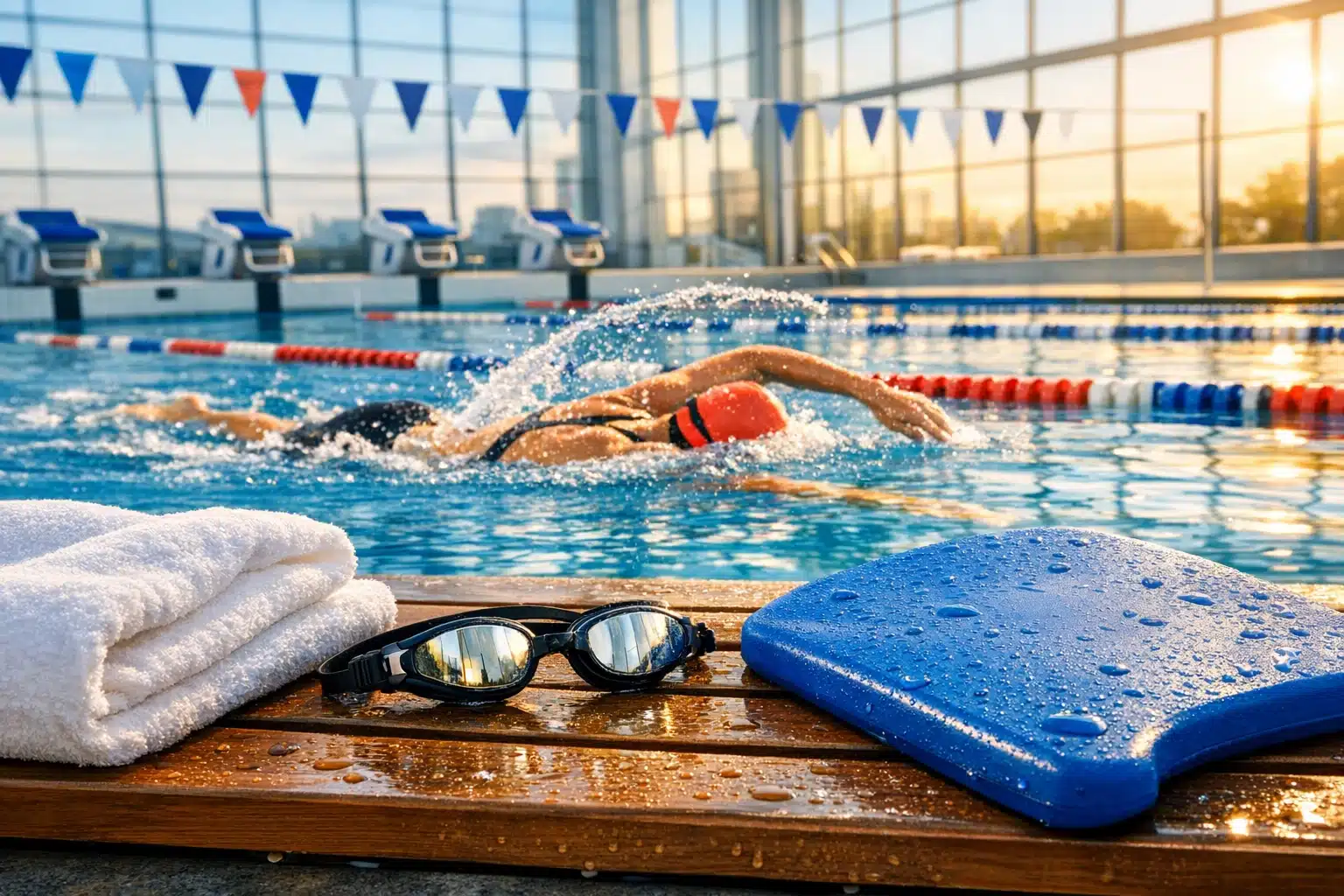
Explore the world of swimming
Swimming is one of the few activities that works as a sport, a survival skill, a form of therapy, and a quiet escape from noisy routines. In a pool it rewards technique and patience; in open water it asks for awareness, rhythm, and respect for nature. Children learn confidence through it, adults use it to stay active with less joint strain, and older swimmers often value its gentle consistency. That mix of usefulness and enjoyment makes swimming worth exploring from every angle.
Outline:
• Why swimming matters and what makes it different
• The main strokes and the technique behind them
• Training benefits and comparisons with other exercise
• Safety, equipment, and smart ways to learn
• How swimming becomes a lifelong habit for ordinary readers
Why Swimming Matters More Than Many People Realize
Swimming holds a rare place in human life because it combines recreation, physical conditioning, and personal safety in one activity. Many sports are useful in one lane only: they train speed, strength, or coordination. Swimming does all of that while also teaching a practical response to one of nature’s most powerful environments. Water can be playful, restorative, and unpredictable in the same afternoon, so learning to move through it is more than a hobby. It is a skill with real-world value. That alone gives swimming a wider relevance than many gym-based routines.
Part of swimming’s appeal comes from the nature of water itself. Water is about 800 times denser than air, which means every movement meets resistance. As a result, even controlled, graceful motions can create a meaningful workout. At the same time, buoyancy supports body weight, which reduces impact on joints compared with activities such as running. This is why swimming is often recommended for people seeking lower-impact exercise, including older adults and some individuals returning from injury, though medical guidance is always wise for specific conditions. The pool can feel like a workshop where the body learns without being constantly hammered by the ground.
Swimming is also strikingly inclusive. A competitive teenager chasing split times, a parent teaching a child to float, and a retiree doing steady laps may all share the same lane across a week. The goals differ, but the medium connects them. Public health guidelines in many countries recommend at least 150 minutes of moderate aerobic activity per week, and swimming can contribute meaningfully to that target. It improves cardiovascular endurance, challenges breathing control, and builds muscular stamina across the shoulders, back, core, and legs. Unlike some activities that depend heavily on one dominant muscle group, swimming tends to distribute the work more broadly.
There is a mental side as well. Repeated laps have a rhythm that many swimmers find calming. The sound of the outside world softens, breathing becomes structured, and attention narrows to movement, timing, and feel. Some people chase speed; others chase clarity. Both find something in the water. Swimming can teach humility too, because the water does not flatter poor technique. If your body line is inefficient, the pool tells you immediately. That honesty makes improvement rewarding. Small changes in posture, kick timing, or head position can produce surprisingly noticeable results, which gives swimmers a clear sense of progress even before race times or long distances enter the picture.
The Four Main Strokes and the Technique Behind Efficient Movement
To understand swimming properly, it helps to see it not as one skill but as a family of related skills. Competitive swimming is built around four main strokes: freestyle, backstroke, breaststroke, and butterfly. Each stroke asks the body to solve the same problem in a different way: how to move forward through resistant water with balance, propulsion, and controlled breathing. Freestyle, often the first stroke people learn for lap swimming, is usually the fastest and most energy-efficient. The body stays long and relatively flat, the legs provide a steady flutter kick, and the arms alternate in a smooth cycle. Breathing to the side keeps the body moving without lifting the head too high, which would otherwise drop the hips and create drag.
Backstroke turns that logic over, literally. Swimmers travel on their backs, using an alternating arm action and flutter kick while maintaining a stable body line near the surface. Because the face stays out of the water, backstroke removes the challenge of timed inhalation, but it introduces a different one: orientation. A swimmer must stay straight without looking forward in the ordinary sense. This is one reason backstroke can feel elegant and awkward at the same time. Breaststroke is slower but highly technical, relying on a simultaneous arm pull and a whip-like kick. Timing matters enormously. Done well, it looks economical and controlled; done poorly, it can feel like pushing through wet sand. Butterfly is the most demanding of the four for many swimmers. Its symmetrical arm recovery and dolphin kick require strength, mobility, and precise rhythm. Yet when skilled swimmers perform it, butterfly resembles a wave borrowing a human shape.
Across all strokes, technique matters more than beginners often expect. A stronger athlete with poor alignment may move less efficiently than a lighter swimmer with better balance and timing. Coaches frequently emphasize a few universal principles:
• Keep the body as long as possible
• Reduce unnecessary drag
• Match breathing to rhythm rather than panic
• Use the core to connect upper and lower body
These ideas sound simple, but they take time to internalize. Good swimming is not frantic. It is organized.
Starts, turns, and finishes also shape performance, especially in pools. A standard Olympic pool is 50 meters long, while many local pools are 25 meters, which means turns can influence overall pace significantly. A strong push off the wall creates free speed because the streamlined body travels faster underwater than it often does on the surface. That is why skilled swimmers treat walls as opportunities rather than interruptions. For recreational swimmers, mastering basic technique in all four strokes is not necessary to enjoy the water, but learning even one stroke well can transform the experience from mere effort into efficient motion. When that shift happens, swimming stops feeling like a struggle and starts feeling like travel.
Training Benefits, Health Value, and How Swimming Compares With Other Exercise
Swimming is often praised as a full-body workout, and that description is broadly fair, though the real value lies in how the body is challenged. The arms pull, the legs stabilize and drive, the core keeps alignment, and the respiratory system works continuously to match effort. Because breathing opportunities are structured by stroke rhythm, swimmers often become more aware of breath control than people doing many land-based exercises. Over time, regular swimming can improve aerobic fitness, muscular endurance, and movement coordination. It can also provide variety within training because intensity can be altered through pace, distance, drill work, kick sets, pull sets, and interval structure.
Compared with running, swimming generally places less impact stress on the ankles, knees, and hips. That does not make it “easy,” only different. Runners absorb repeated ground force; swimmers battle resistance on nearly every inch of motion. Compared with cycling, swimming often requires more total-body coordination, especially for beginners who are still learning timing and breathing. Compared with strength training, swimming usually develops endurance and movement efficiency more than maximal force, though sprint work in the water can be very demanding. Each activity has its strengths. Running is accessible and straightforward to measure, cycling covers distance efficiently, and weight training builds force production clearly. Swimming stands out because it combines aerobic work with technical refinement in a low-impact environment.
A simple swim session can be organized in a way that suits many goals:
• Warm-up to loosen shoulders, hips, and breathing rhythm
• Drill work to sharpen technique
• Main set for endurance, speed, or pacing
• Easy cooldown to lower effort gradually
This structure mirrors the logic of well-designed training in other sports. It also helps swimmers avoid the common mistake of starting too hard and fading quickly. In water, poor pacing becomes obvious fast. Even skilled athletes can find themselves punished by impatience.
The mental benefits deserve attention too. For some people, swimming creates a meditative focus that is harder to find during busy, high-noise exercise environments. The repetition of laps, the lane line sliding beside you, and the clean feedback of the clock can make training feel grounding rather than chaotic. Of course, swimming is not automatically relaxing; hard sets can be brutally honest. Still, the sport offers an unusual balance between effort and calm. For readers choosing an activity they can sustain, that balance matters. Exercise habits tend to last when the activity is challenging enough to feel worthwhile and pleasant enough to repeat. Swimming, for many people, sits right in that sweet spot.
Safety, Equipment, and the Smartest Way to Learn
Swimming is enjoyable, but it demands respect. That begins with safety, especially for beginners, children, and anyone moving from pool swimming into lakes, rivers, or the sea. Water conditions change quickly. A calm-looking surface can hide cold temperatures, strong currents, poor visibility, or depth changes. In pools, the environment is more controlled, yet rules still matter: knowing where diving is allowed, understanding lane etiquette, and avoiding overconfidence when tired. For children, active supervision is essential, not occasional glances from a distance. For adults, one of the wisest habits is also one of the simplest: do not swim beyond your present skill just because the water seems manageable from the edge.
Learning well usually starts with fundamentals rather than distance. Floating, breath control, body position, and relaxed kicking form the base on which everything else depends. Many new swimmers try to power through the water before they are comfortable putting the face in, exhaling underwater, or balancing horizontally. That often creates tension, and tension is the enemy of efficient swimming. Lessons with a qualified instructor can shorten the learning curve dramatically because an experienced eye spots mistakes that swimmers cannot easily feel on their own. Small corrections in head position, hand entry, or timing can save weeks of frustration.
Equipment should support learning, not distract from it. Useful basic items include:
• Goggles that fit comfortably without leaking
• A swimsuit designed for movement rather than fashion alone
• A swim cap if desired for comfort, warmth, or hair management
• A kickboard for focused leg work
• A pull buoy for body position and arm-focused sets
More advanced tools such as fins, paddles, and snorkels can be helpful when used purposefully, but they are not substitutes for core skill. The best gear in the world cannot fix poor balance in the water.
Open-water swimming adds another level of preparation. Swimmers need to account for weather, visibility, water temperature, and navigation. Bright swim caps and tow floats improve visibility, and swimming with a partner or organized group is far safer than going alone. Even strong pool swimmers can be surprised by waves, chop, or the absence of wall rests. Water also pulls heat from the body faster than air, so cold conditions require caution. For readers who are just starting, the smartest path is gradual: become confident in a pool, learn safe habits, build endurance slowly, and only then explore wider environments. In swimming, confidence is valuable, but informed confidence is what keeps the experience rewarding.
Swimming for the Long Haul: A Practical Conclusion for New and Returning Swimmers
One reason swimming lasts in people’s lives is that it can change roles without losing value. In one season it may be a competitive pursuit measured by seconds and splits. In another, it may become cross-training for a runner, gentle exercise during recovery, or a quiet ritual before work. That flexibility matters in the real world, where schedules shift and bodies change. Very few activities serve a child learning courage, a triathlete chasing efficiency, and an older adult protecting mobility with equal relevance. Swimming does not ask everyone to love it for the same reason. It simply keeps offering good reasons to stay.
For new swimmers, the key is to think in layers rather than leaps. First comes comfort in the water. Then comes technique. After that, distance and speed start to matter more. Many people quit too early because they judge themselves by lap counts before they have learned to move efficiently. A better approach is patient progression:
• Build ease before intensity
• Practice consistently rather than heroically
• Focus on one technical change at a time
• Treat fatigue as feedback, not failure
This mindset turns swimming from a test into a craft. Improvement rarely arrives in dramatic bursts; it usually appears as quieter signs such as smoother breathing, fewer strokes per length, or finishing a session feeling controlled instead of scattered.
Returning swimmers often discover another gift: memory lives in the water. Even after years away, the body can rediscover familiar patterns faster than expected. The first sessions may feel rusty, but rhythm often returns with steady practice. And with maturity comes perspective. Adults are sometimes more willing than teenagers to value efficiency, recovery, and consistency over ego. That shift can make swimming more enjoyable than it was before.
So, if you are the kind of reader wondering whether swimming is worth the effort, the answer is practical rather than dramatic: yes, because it teaches something useful, trains the body thoroughly, and can stay with you for decades. Start where you are. Learn the basics well. Respect the water without fearing it. Then let each session add a little more skill, ease, and confidence. Before long, the pool stops being just a place you visit and becomes a place where progress feels tangible, honest, and surprisingly satisfying.