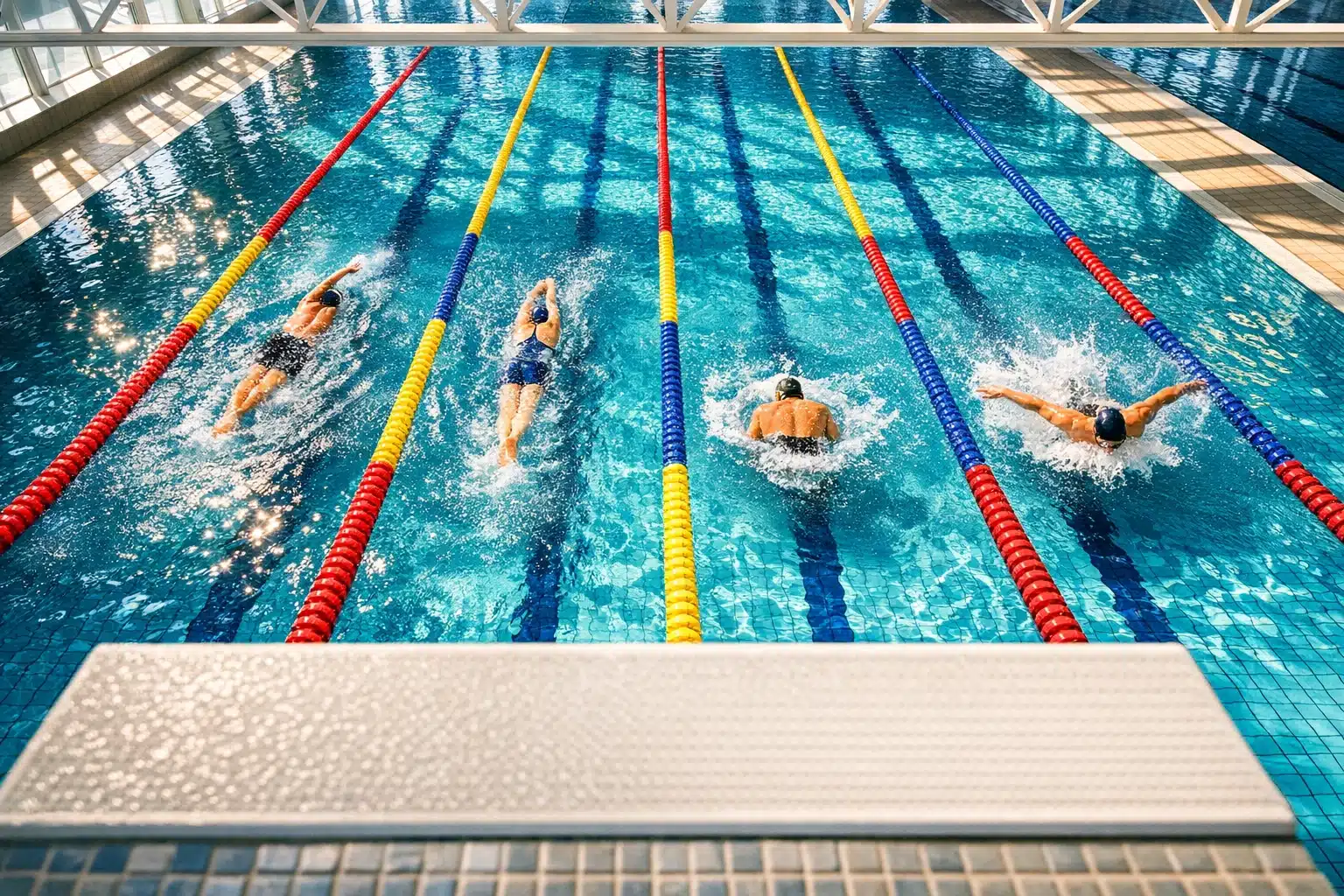
Explore the world of swimming
Swimming has a rare way of mixing calm and effort: the surface may look quiet while every stroke asks for timing, breath control, and steady nerve. It can be a competitive sport, a practical life skill, and a joint-friendly form of exercise that lasts well beyond youth. People enter the water for different reasons, yet many stay because progress feels both visible and deeply personal. This article maps the essentials, from technique and training to safety and long-term value.
Outline
- The wider importance of swimming for health, movement, and confidence
- The four main strokes and the technical habits that shape efficient swimming
- How training plans, conditioning, and pacing improve fitness in the water
- Why safety, supervision, and environment matter in pools and open water
- A practical conclusion for readers who want swimming to become part of daily life
Why Swimming Matters Beyond the Pool
Swimming is often described as a full-body workout, but that phrase only hints at its real value. In water, the body meets resistance from every direction, which means even simple movements ask the muscles to stabilize, coordinate, and generate force at the same time. Water is far denser than air, so a short set in the pool can feel demanding even when the motion looks smooth from the deck. At the same time, buoyancy supports much of the body, reducing stress on joints compared with high-impact activities such as running on pavement. That combination makes swimming unusually versatile. A teenager can use it to build conditioning for sport, a working adult can use it to manage stress, and an older person can keep moving without the pounding that sometimes limits land-based exercise.
The cardiovascular benefits are another major reason swimming holds its place in public health, recreation, and elite sport. Continuous laps can raise heart rate, train the lungs, and improve endurance over time. Depending on stroke choice, pace, and body size, a session may also use substantial energy, which is why swimmers often describe the sport as quietly tiring. The effort is not always dramatic; sometimes it arrives slowly, like a tide filling the room one inch at a time. Yet that hidden demand is part of the appeal. Swimming teaches economy. Waste a little movement, lift the head too high, or mistime a breath, and the water answers immediately.
Swimming also matters because it is tied to safety and confidence, not just fitness. Learning how to float, tread water, and move efficiently can make beaches, lakes, rivers, and pools less intimidating. For children, strong swim instruction can build respect for water early. For adults, lessons can replace fear with skill and practical judgment. In that sense, swimming is not only a sport but a life competency.
- It improves endurance without heavy joint impact.
- It develops coordination because arms, legs, breathing, and body position must work together.
- It increases water confidence, which has value far outside structured exercise.
Mental effects matter too. Many swimmers find that repeated laps create a focused, almost meditative state. There is little room for distraction when counting strokes, holding form, and controlling the breath. That concentration can be restorative in a noisy routine. Few activities invite the body to work hard while the mind settles into rhythm, and that is one reason swimming remains relevant across generations.
Understanding the Four Main Strokes and the Skills Behind Them
To an untrained eye, swimming may look like a simple matter of moving forward through water. In practice, technique shapes nearly everything. Strong swimmers do not just work harder; they reduce drag, align the body, time their breaths, and use the water for leverage. The four competitive strokes, freestyle, backstroke, breaststroke, and butterfly, each teach a different relationship between propulsion and control.
Freestyle, usually swum as the front crawl, is the fastest and most common stroke for fitness and racing. It relies on a long body line, steady flutter kick, body rotation, and alternating arm recovery. Many beginners assume the arms do most of the work, but effective freestyle depends just as much on balance and breathing. Lifting the head forward tends to drop the hips, creating drag. Rotating to the side for air is usually more efficient. Backstroke shares some principles with freestyle, especially body rotation and a flutter kick, but because the swimmer faces upward, it changes orientation and rhythm. Some people find it easier for breathing, while others struggle to stay straight without lane markers or flags.
Breaststroke is often the easiest stroke for casual swimmers to recognize because of its symmetrical arm pull and whip kick. It allows the head to rise more naturally, which can make it feel accessible at first. Still, good breaststroke is highly technical. Timing matters: pull, breathe, kick, glide. When rushed, it becomes exhausting and slow. Butterfly is the most demanding of the four. It uses simultaneous arm recovery and a dolphin kick driven through the core and hips. Done well, it looks almost theatrical, like the water itself is being folded and reopened. Done poorly, it drains energy quickly. That contrast explains why butterfly is admired even by swimmers who avoid it in training.
- Freestyle: fastest, efficient, widely used for endurance training
- Backstroke: useful for posture awareness and easier breathing pattern
- Breaststroke: technical timing, common in recreational swimming
- Butterfly: powerful, demanding, excellent for coordination and strength
Across all strokes, a few fundamentals matter more than people expect. Body position should remain as streamlined as possible. Kicking should support balance, not create splashing for its own sake. Breathing should be timed, not rushed. The underwater pull should feel connected rather than hurried. These habits separate effort from efficiency. A beginner who learns them early often improves faster than someone who only counts laps. In swimming, precision is not decoration; it is the engine.
Training, Conditioning, and Building Endurance in the Water
Swimming fitness does not come only from swimming farther. Good training blends technique, pacing, aerobic work, speed, and recovery. That is one reason structured sessions are so common, even for recreational swimmers. A typical workout may include a warm-up to loosen the shoulders and settle breathing, drill work to reinforce form, a main set built around pace or distance, and a cool-down to lower intensity gradually. This structure helps swimmers avoid the trap of doing every lap at the same medium effort, which can feel productive without driving clear improvement.
One useful difference between swimming and many land sports is how quickly the water exposes inefficiency. In running, it is possible to push through rough form for a while. In the pool, sloppy technique usually makes the swimmer slower and more tired almost at once. That is why drills matter. Catch-up freestyle can improve front-end timing. Single-arm practice can sharpen body rotation. Kick sets with a board can build leg endurance, though overreliance on kickboards can also change natural alignment, so balance is important. Pull buoys, paddles, fins, and snorkels all have training value when used intentionally rather than as shortcuts.
Endurance training in swimming is often measured by pace per 25, 50, or 100 meters or yards. More advanced swimmers may track intervals, stroke counts, and heart rate trends. Beginners can keep things simpler by using perceived effort. A practical weekly plan might include one easier technique session, one steady aerobic session, and one session with short, faster repeats. That approach creates variety and gives the body different reasons to adapt.
- Technique sets improve efficiency and reduce wasted motion.
- Interval training raises fitness by alternating work and recovery.
- Easy sessions support consistency and help prevent burnout.
- Dryland strength can improve posture, shoulder stability, and kick power.
Swimming also benefits from dryland work. Core strength helps hold a stable line in the water. Shoulder mobility supports a smoother range of motion. Leg and hip strength assist turns, starts, and kicking. Compared with cycling or running, swimming often places a greater technical demand on breathing and body position, which is why a very fit athlete from another sport may still feel humbled in the pool. That learning curve can be frustrating, but it is also what makes progress satisfying. When pace improves, it usually reflects both better fitness and better skill, a rewarding combination that few activities deliver so clearly.
Safety, Open Water, and Learning to Swim with Confidence
Swimming becomes far more enjoyable when safety is treated as a foundation rather than an afterthought. The most important rule is simple: confidence should be earned through skill, not assumed from enthusiasm. Pools, lakes, rivers, and oceans all present different conditions, and the body does not automatically know how to manage them well. Formal lessons remain one of the best investments a person can make, especially for children and adults who missed early instruction. Learning how to float, exhale underwater, recover to the wall, and tread water can change how someone responds under stress. These are not glamorous skills, but they are deeply practical.
Pool swimming offers controlled conditions, marked lanes, visible boundaries, and often lifeguard supervision, which makes it a strong environment for learning technique. Open water, by contrast, introduces temperature shifts, current, chop, wildlife, reduced visibility, and navigation challenges. A swimmer who feels relaxed in a 25-meter pool may be surprised by how different a lake or sea feels. There is no black line on the bottom to follow, no wall every few strokes, and sometimes no easy way to judge distance. That is why open-water swimmers practice sighting, draft awareness, entry and exit skills, and calm responses to crowding or unexpected contact.
Safety is also social. New swimmers should not train alone in risky settings. Parents need active supervision around water, not passive observation from a distance. Even strong swimmers benefit from checking weather, water quality, and local guidance before entering unfamiliar areas. Equipment helps, but it does not replace judgment. Bright caps improve visibility, tow floats can assist in open water, and properly fitted goggles make practice easier, yet the first layer of safety is still decision-making.
- Choose supervised environments when learning.
- Respect conditions that can change quickly, especially outdoors.
- Build skill step by step instead of rushing into deep or open water.
- Use equipment to support training, not to ignore limits.
For many adults, fear is the quiet barrier that keeps swimming at a distance. That fear deserves patience, not embarrassment. Progress may begin with standing comfortably in shallow water, then floating, then controlled breathing, then short movements with guidance. Confidence in swimming grows like a staircase, not a leap. Once that idea settles in, the water stops feeling like a test and starts becoming a place of learning.
Conclusion for New and Returning Swimmers: Why This Sport Stays With People
For readers thinking about starting, restarting, or deepening their relationship with swimming, the biggest takeaway is that this activity meets people where they are. You do not need to be fast, young, or naturally fearless to benefit from time in the water. A beginner may begin with simple breath control and short lengths. A former athlete may return for low-impact conditioning. A busy professional may use early morning laps to create structure before the day becomes crowded with other demands. The sport is flexible enough to serve each of these goals without losing its identity.
What keeps swimming compelling over the long term is the way it combines measurable progress with personal experience. You can count laps, record pace, improve technique, and follow a training plan, but there is also something less tidy and more memorable at work. The first clean turn, the first relaxed breath in freestyle, the first open-water swim without panic, these moments stay with people because they represent control earned through practice. Swimming rewards patience more reliably than drama. Show up, refine one detail, repeat, and the water gradually returns better movement.
If you are unsure where to begin, keep the first steps modest and specific. That usually works better than aiming for instant transformation.
- Take a lesson if technique or confidence is holding you back.
- Choose a realistic schedule, even if it is only two swims per week.
- Focus on one technical habit at a time, such as exhaling underwater or keeping a longer body line.
- Treat safety as part of progress, not as a separate concern.
Swimming is not only for competitors, although it can certainly satisfy those who love racing and performance. It is also for people who want resilience, mobility, mental focus, and a skill that may remain useful for life. If you are the target reader here, curious, cautious, or ready to commit, the most sensible conclusion is also the most practical one: start with guidance, stay consistent, and let improvement build in layers. The pool does not ask for perfection on day one. It asks for attention, respect, and willingness. Give it those, and swimming can become far more than exercise; it can become one of the most durable abilities you ever develop.