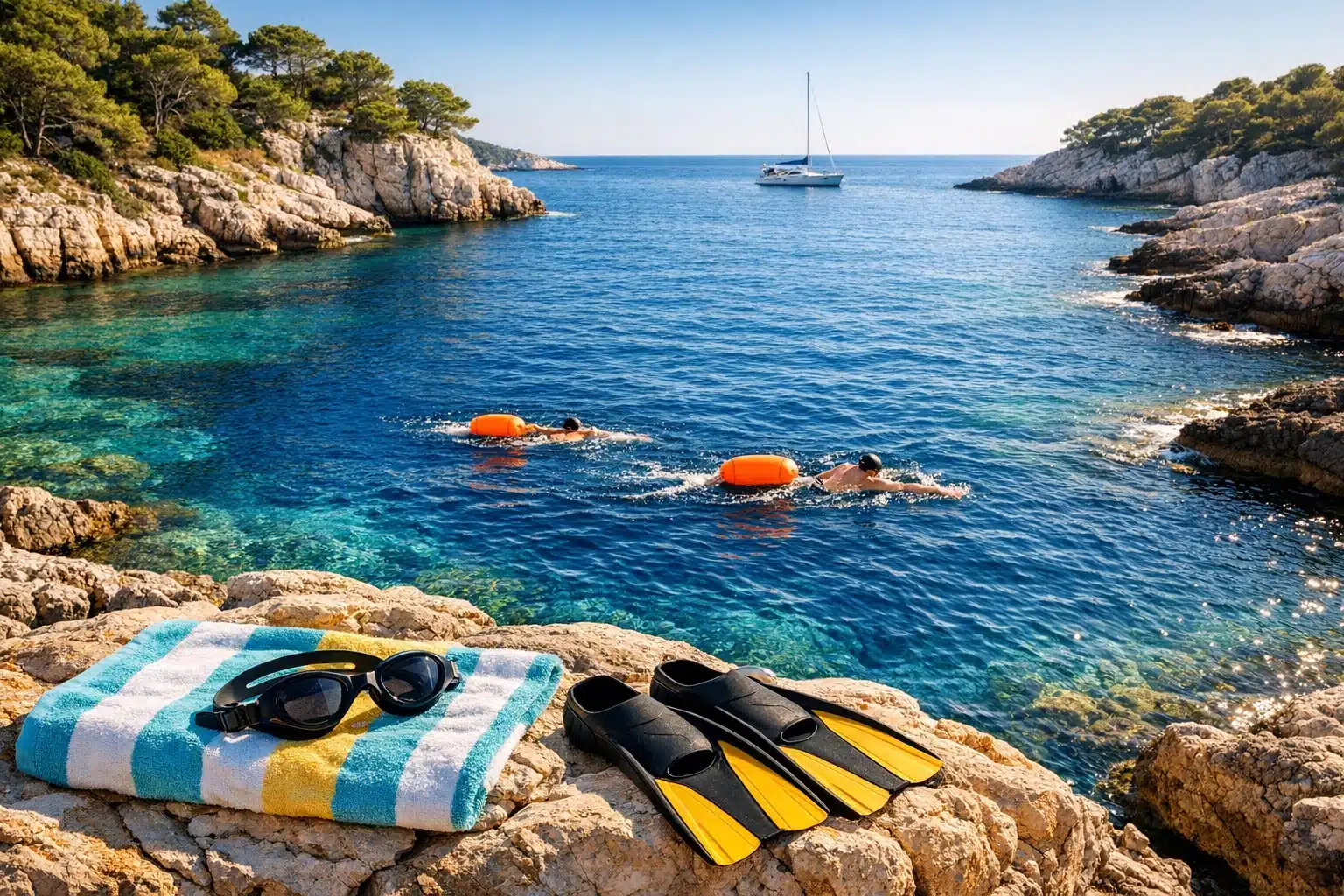
Explore the world of swimming
Swimming occupies a rare place in human life: it is a survival skill, a sport, a therapy tool, and a source of simple joy. Few activities can move from a toddler’s first splash to Olympic finals, from gentle rehabilitation to demanding endurance training, with such ease. Because water supports the body while resisting every motion, swimming teaches control in a setting that is both forgiving and exacting. This article maps the subject clearly, from core strokes and fitness gains to safety, training habits, and the lifelong appeal of moving through water.
1. Outline: Why Swimming Matters and What This Article Covers
Before diving into technique or training plans, it helps to understand why swimming holds such a wide and enduring appeal. Unlike activities that belong mostly to one age group or one setting, swimming crosses boundaries with unusual ease. A child may first meet it as play, an adult may use it for fitness, an older person may return to it for joint-friendly movement, and an athlete may pursue it as a highly technical competitive discipline. That range alone makes swimming worth serious attention, but there is more to it than versatility. Water changes the rules of movement. Buoyancy reduces the load placed on the body, while drag creates resistance in every direction. In plain terms, water supports you and challenges you at the same time.
This dual effect is one reason swimming is often compared with running, cycling, and gym-based exercise, yet never fully replaced by them. Running is accessible and highly effective for cardiovascular fitness, but it can be hard on knees and hips for some people. Cycling is efficient and scalable, but it does not engage the upper body to the same extent. Strength training builds muscle and power, yet usually separates body parts into targeted sessions. Swimming feels different because it tends to recruit the entire body in a single continuous action, while also demanding breath control and coordination. Water is an honest teacher: if timing slips, the stroke slows; if posture breaks, resistance immediately increases.
This article follows a practical five-part outline:
• first, the broad purpose and meaning of swimming
• second, the major strokes and how they compare
• third, the physical and mental benefits
• fourth, training principles, safety, and common mistakes
• fifth, a conclusion focused on how different readers can make swimming part of real life
Another reason swimming deserves a closer look is that it operates on several levels at once. It can be recreational, instructional, therapeutic, or competitive. In one lane, someone may be rehearsing race turns to shave fractions of a second; in another, someone may simply be rebuilding confidence after years away from the water. Both are participating in the same medium, but with different goals. That is part of swimming’s quiet beauty. It does not ask every person to want the same thing. It only asks for respect, patience, and a willingness to learn how the body behaves when gravity loosens its grip and rhythm becomes the key to moving forward.
2. The Main Swimming Strokes and How They Compare
To an untrained eye, swimming can seem like a set of repeating arm circles and kicks. In reality, each stroke is built on a specific mechanical logic, and learning that logic changes how a swimmer moves. The four primary competitive strokes are freestyle, backstroke, breaststroke, and butterfly. Each uses a different body position, breathing pattern, and rhythm of propulsion. Comparing them side by side helps explain why some strokes are ideal for beginners, why others demand advanced timing, and why no single stroke develops every skill equally.
Freestyle, usually referring to front crawl, is generally the fastest and most commonly practiced stroke. The body stays long and horizontal, the arms alternate in continuous recovery, and the flutter kick helps stabilize as much as it propels. Breathing is turned to the side, ideally without lifting the head. Freestyle is efficient over distance because it allows a relatively smooth transfer of force, but it can be frustrating at first. Many beginners assume strength is the main requirement, when balance and breath timing matter more. A swimmer who fights the water often tires quickly, while one who rotates well and maintains a narrow profile can travel farther with less effort.
Backstroke shares the alternating arm action of freestyle but reverses the body orientation. Because the face remains above water, breathing is simpler and often less stressful for learners. However, swimming on the back introduces another challenge: navigation and alignment. Without a visual reference in front, beginners drift sideways unless their pull and kick are even. Backstroke is useful for posture and shoulder awareness, though poor technique can lead to excessive hip drop and wasted energy.
Breaststroke is frequently described as more intuitive, especially for recreational swimmers, because the head can rise forward and the stroke cycle is slower. Yet it is not necessarily easier to perform well. The arm pull, breath, kick, and glide must be timed carefully. Unlike freestyle and backstroke, breaststroke uses a whip-like leg motion that requires mobility and precision. When done correctly, it feels smooth and economical. When done poorly, it becomes a stop-and-start struggle that strains the knees and slows momentum.
Butterfly is the most demanding of the four for many swimmers. Both arms recover together, the body undulates, and the dolphin kick must be synchronized with the pull. Butterfly rewards rhythm more than brute force. A graceful butterfly swimmer can look as though the water is lifting them in pulses, while a tense swimmer may feel pinned down by the surface. It is powerful, dramatic, and exhausting if technique falls apart.
A simple comparison helps:
• Freestyle: fastest, efficient for distance, technique heavily tied to rotation and breathing
• Backstroke: easier breathing, strong for body awareness, harder to steer
• Breaststroke: slower but strategic, timing-sensitive, popular in recreational settings
• Butterfly: most technical and taxing, excellent for power and rhythm
Beyond these four, strokes like sidestroke and elementary backstroke remain useful in instruction, lifesaving, and comfort swimming. They may not appear in major races, but they have practical value. Altogether, stroke variety is one of swimming’s great strengths. It gives the sport layers. A runner mostly changes pace. A swimmer can change pace, body position, breathing pattern, and movement philosophy all at once.
3. The Physical and Mental Benefits of Swimming
Swimming is often praised as a full-body workout, and that description is accurate, but incomplete. Its benefits are not limited to “working everything at once.” The real value lies in how swimming combines cardiovascular demand, muscular engagement, mobility, coordination, and controlled breathing in a single activity. Because water is roughly 800 times denser than air, even modest movement meets meaningful resistance. That means the swimmer is not only traveling forward; they are constantly managing pressure, alignment, and efficiency. In effect, the body is solving a moving puzzle while exercising.
From a fitness perspective, swimming can support heart and lung health, muscular endurance, and general stamina. Public health guidelines commonly recommend at least 150 minutes of moderate aerobic activity each week, and swimming can contribute to that target. Depending on pace, stroke, body size, and session structure, lap swimming can range from gentle aerobic work to highly vigorous training. Freestyle intervals may elevate heart rate steadily, while mixed-stroke sessions can spread the load across different muscle groups and reduce overuse from repeating one pattern. The shoulders, back, chest, core, hips, and legs all participate, though in varying degrees depending on technique.
Swimming also stands out because it is low impact. That phrase is often oversimplified, so it is worth clarifying. Low impact does not mean easy. It means the joints typically absorb less pounding than they would during activities like running or jumping. For people recovering from certain injuries, managing body weight concerns, or seeking a sustainable long-term exercise option, this can make swimming especially attractive. It is frequently used in rehabilitation settings for that reason, though individual medical advice still matters.
The mental side is just as important. Many swimmers describe the water as clarifying. The sensory environment is quieter, breathing becomes deliberate, and repetitive movement can create a meditative rhythm. Some people count strokes, some follow lane lines, some notice only the sound of bubbles and the brief pause before each turn. The effect is not magical, but it can be powerful. Structured movement paired with controlled respiration often helps reduce stress and sharpen focus.
There are also social and developmental benefits:
• children learn water confidence and basic safety
• adults can join clubs, masters groups, or community classes
• older swimmers often value the balance between effort and comfort
• team training can build accountability even in an individual sport
Compared with many forms of exercise, swimming is unusually scalable. A person can start with assisted floating, progress to short lengths with rest, and eventually build toward drills, intervals, or open-water events. That progression matters. It means swimming is not reserved for elite athletes or naturally fearless people. It can meet the participant where they are. Few activities offer that mix of challenge, adaptability, and long-term usefulness so neatly.
4. Training, Technique, and Safety: How Better Swimming Is Built
Improvement in swimming rarely comes from trying harder in a vague sense. It comes from learning how to reduce waste. A beginner often believes progress depends on pulling harder or kicking faster, but the bigger gains usually come from streamlining, timing, and relaxation. In water, excess effort can be counterproductive. Tight shoulders shorten the stroke, rushed breathing disrupts balance, and frantic kicking consumes energy without much return. Good swimming is not lazy, but it is economical. The body should work with intention, not panic.
A solid training approach begins with technique. Body position is fundamental. Hips that sink create drag, and drag is like carrying a backpack that gets heavier every second. Head placement matters, as does a long spine, steady kick, and a catch phase that anchors the hand before pulling. Drills are useful because they isolate parts of the stroke. Catch-up drill can improve front-end timing in freestyle, fingertip drag can encourage a cleaner recovery, and kick sets can reveal whether propulsion is coming from the hips or only from the knees. Tools such as kickboards, pull buoys, fins, and paddles can help, but they should support learning rather than disguise flaws.
Training structure matters too. Random lengths often feel productive, yet well-designed sessions produce clearer adaptation. A simple workout may include warm-up, drills, a main set, and cooldown. For example:
• warm-up: 200 to 400 easy meters to loosen breathing and rhythm
• drills: short repeats focused on one technical problem
• main set: intervals that target endurance, speed, or pacing
• cooldown: easy swimming to settle the heart rate and reinforce form
Beginners benefit from consistency more than heroics. Two or three manageable sessions per week usually build better habits than one punishing workout followed by long gaps. Rest intervals should be deliberate rather than accidental. Counting strokes, noting times, and keeping effort levels organized can help turn exercise into practice.
Safety deserves equal weight. In pools, that means understanding lane etiquette, respecting depth markers, entering water carefully, and never overestimating ability. For children and weak swimmers, close supervision remains essential; flotation devices are not substitutes for attentive adults. In open water, the rules become stricter. Conditions can change quickly, visibility may drop, and distance is harder to judge than it looks from shore. Wetsuits, bright caps, swim buoys, and swimming with a partner all improve safety. Cold water is another factor that should not be underestimated, because it affects breathing, coordination, and decision-making.
Perhaps the most practical training lesson is this: progress in swimming is often subtle before it becomes obvious. A smoother exhale, a calmer turn to breathe, or one fewer stroke per length may not look dramatic, but those are real signs of improvement. In swimming, efficiency is not a minor detail. It is the foundation on which speed, endurance, and confidence are built.
5. A Conclusion for Beginners, Fitness Seekers, and Lifelong Swimmers
Swimming rewards many kinds of people, but it does not reward all of them in the same way. For a beginner, the biggest milestone may be comfort in deep water or the first uninterrupted length of the pool. For a fitness-focused adult, success may mean using swimming as a reliable weekly workout that protects the joints while challenging the heart and lungs. For a former competitor, the draw may be precision, pace control, and the familiar satisfaction of shaving a few seconds from a repeat set. For parents, swimming may represent something even more fundamental: giving a child a skill that is practical, empowering, and potentially lifesaving.
That is why the best way to approach swimming is not to copy someone else’s goal blindly. A casual lap swimmer does not need the program of a sprinter, and a nervous adult learner should not judge their progress against a person who grew up on swim teams. The smarter question is simple: what do you want the water to do for you? Once that answer is clear, choices become easier. Stroke selection, lesson type, equipment, training volume, and even the right environment all begin to line up with purpose.
If you are deciding where to start, a practical path looks like this:
• learn or refresh water safety first
• build comfort with breathing and floating before chasing speed
• focus on one primary stroke, usually freestyle or backstroke
• swim consistently enough to let rhythm develop
• add variety only after the basics feel reliable
For readers who already swim, the next step may be refinement rather than expansion. Better body alignment, cleaner turns, more controlled pacing, or occasional video feedback can unlock progress that brute effort never finds. For those who feel intimidated, it helps to remember that swimming often looks effortless only after many small corrections have accumulated. Nearly every capable swimmer has gone through awkward, breathless, splash-heavy stages. Water remembers patience.
In the end, swimming remains relevant because it serves both immediate and lasting needs. It can cool a hot afternoon, build aerobic capacity, support recovery, sharpen discipline, and offer a rare form of movement that feels both technical and freeing. That combination is unusual. If you are just starting, begin with instruction and modest goals. If you already know the water, keep returning with curiosity. Swimming is not merely about crossing a pool. It is about learning how to move well in an element that demands respect and rewards skill for a lifetime.