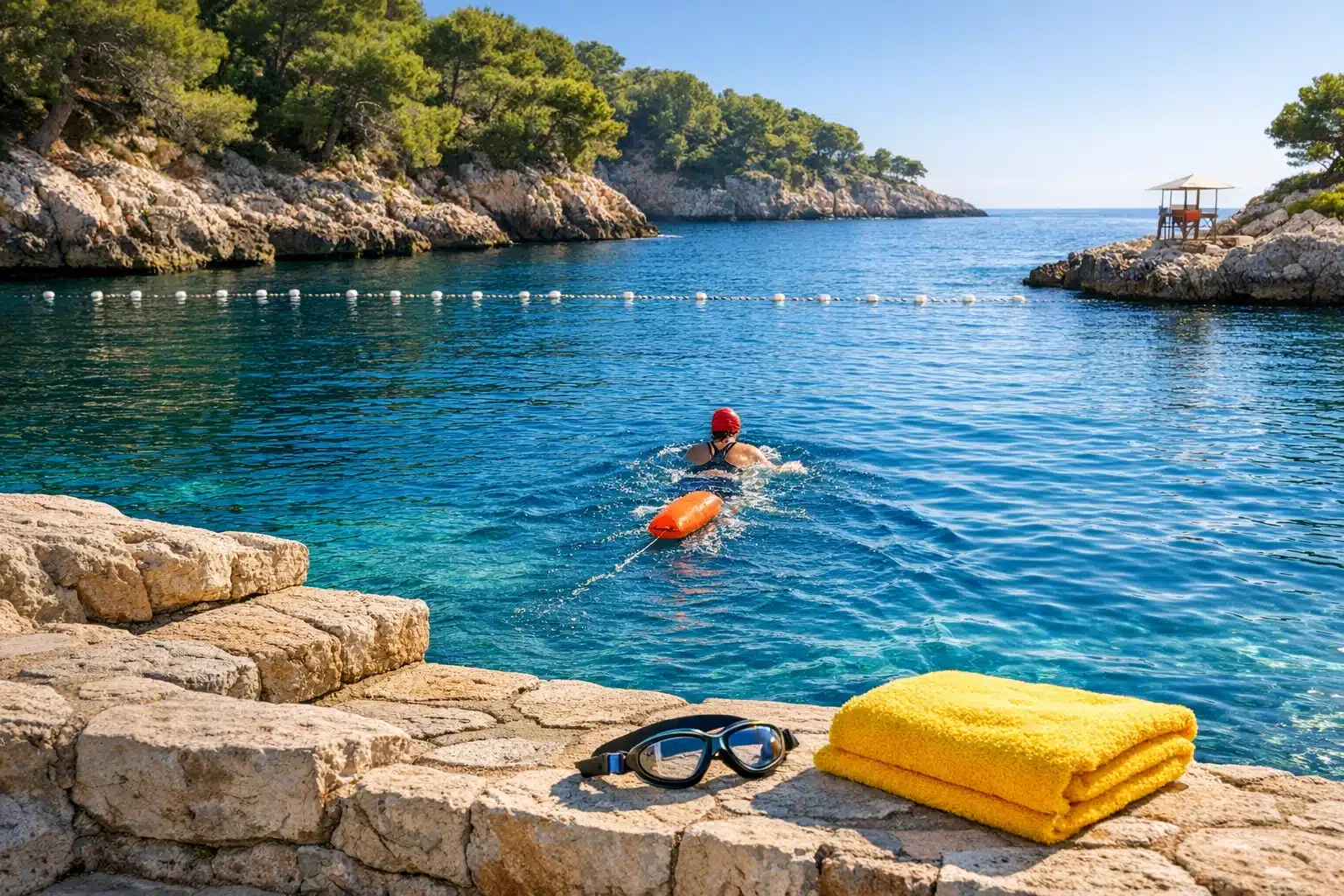
Explore the world of swimming
Swimming is one of those rare activities that feels equally at home in a school lesson, a therapy plan, a summer holiday, and an Olympic final. It teaches water confidence, develops fitness without the repeated impact of running, and rewards patience as much as power. Because it can be adapted for children, older adults, casual exercisers, and serious competitors, its relevance stretches far beyond sport. This article maps the essentials, from technique and health benefits to training, safety, and lifelong enjoyment.
Outline:
1. Swimming as a life skill, pastime, and sport
2. The four main strokes and how they differ
3. Physical and mental benefits in and out of the pool
4. Training habits, equipment, and safety principles
5. Conclusion: building a lasting relationship with the water
Swimming as a Life Skill, Sport, and Shared Human Experience
Swimming occupies a special place in human life because it is not limited to one purpose. For some people, it begins as a safety lesson, with the first goal being simple comfort in the water. For others, it becomes exercise, therapy, competition, or a way to relax after a long day. Few activities move this easily between necessity and pleasure. The World Health Organization has repeatedly described drowning as a major preventable public health issue, which helps explain why learning basic swimming and water safety matters beyond recreation. A person who can float, tread water, and move calmly through a pool or safe open water setting gains not just a hobby, but a practical capability.
Swimming also carries a long history. Ancient civilizations, including the Egyptians, Greeks, and Romans, recognized it as both a useful survival skill and a physical discipline. In the modern world, swimming evolved into a structured sport with standardized strokes, competitive events, coaching methods, and global governing bodies. Yet its popularity has never depended entirely on medals. A city pool on a weekday morning tells a broader story: one lane may hold a retired swimmer keeping joints mobile, another may carry a teenager training for a meet, while nearby a parent helps a child blow bubbles and learn trust. That scene says a lot about swimming’s enduring reach.
Compared with many land-based activities, swimming offers a distinctive combination of challenge and accessibility. Water supports body weight, which can reduce stress on joints, but it also creates constant resistance in every direction. That means even gentle movement can become meaningful exercise. Swimming can be social or solitary, playful or disciplined, highly technical or wonderfully simple. A quiet pool at dawn has its own language: the slap of a turn, the trail of bubbles, the steady rhythm of breath and effort.
Several features explain why swimming remains so widely valued:
• it is a genuine life skill with direct safety value
• it can serve rehabilitation, general fitness, and elite sport
• it trains the whole body rather than isolating a single region
• it offers year-round participation in many communities
• it can be scaled from beginner sessions to demanding race preparation
That broad usefulness is part of swimming’s appeal. A person does not need Olympic ambitions to benefit from it. The same water can welcome a cautious beginner, a fitness-minded adult, and a seasoned competitor, each pursuing a different goal. That is rare in sport, and it is one reason swimming continues to matter across generations.
Understanding the Four Main Strokes and How They Compare
If swimming were only about moving from one end of the pool to the other, technique would matter far less than it does. In reality, the way a swimmer moves through the water changes speed, efficiency, breathing pattern, fatigue, and even confidence. The four main competitive strokes are front crawl, backstroke, breaststroke, and butterfly. Each has its own rhythm and personality, almost like four dialects of the same language.
Front crawl is the stroke most people mean when they say freestyle. In competitive freestyle events, swimmers are free to choose any stroke, but front crawl is almost always used because it is typically the fastest. The body stays long and relatively horizontal, the legs flutter continuously, and the arms alternate in a smooth overwater recovery. Breathing happens to the side, ideally without lifting the head too high. Front crawl rewards balance, streamlining, and timing. For fitness swimmers, it is often the default choice because it can be sustained over many laps once breathing becomes comfortable. However, beginners sometimes find the breathing pattern challenging, especially if they rush or hold tension in the neck and shoulders.
Backstroke flips the swimmer onto the back, which changes both orientation and sensation. Many learners appreciate that the face stays above the surface most of the time, making breathing less stressful than in front crawl. The arms alternate, the kick remains continuous, and the body rotates from side to side. Because the swimmer looks upward rather than forward, staying straight in the lane takes practice. Backstroke can feel elegant when done well, but it also exposes flaws in body alignment. It is often described as a useful stroke for posture awareness and body control.
Breaststroke is frequently seen as beginner-friendly because the head can rise regularly and the pace is usually slower. Yet efficient breaststroke is more technical than it first appears. The pull, breath, kick, and glide must be timed precisely. A narrow, well-shaped kick and a patient glide make a major difference. Many recreational swimmers enjoy breaststroke because it feels measured and observant rather than frantic, but in racing it demands sharp coordination and disciplined timing.
Butterfly is the most physically demanding of the four for many swimmers. Both arms recover together, the body undulates, and the legs perform a dolphin kick. It requires power, rhythm, and strong technique. When executed well, butterfly looks almost theatrical, but it punishes poor timing quickly.
A simple comparison helps:
• front crawl: usually the fastest and most common for fitness laps
• backstroke: easier breathing, strong focus on alignment and rotation
• breaststroke: slower pace, distinct timing, popular for recreational swimming
• butterfly: highest technical and energy demands for most swimmers
No stroke is universally best. The right choice depends on goals, comfort, shoulder mobility, endurance, and experience. A well-rounded swimmer learns something from each one. Together, they build versatility and reveal that swimming is not just exercise, but a craft shaped by water, timing, and control.
Health Benefits of Swimming for the Body and Mind
Swimming is often praised as a full-body workout, and that description is accurate as long as it is understood properly. In the water, the arms pull, the legs kick, the core stabilizes, and the respiratory system works to coordinate effort with breathing. Unlike some gym routines that isolate one area at a time, swimming asks the body to function as an integrated system. Over time, that can improve cardiovascular endurance, muscular stamina, coordination, and movement efficiency. Public health guidelines commonly recommend at least 150 minutes of moderate aerobic activity per week, and swimming is one effective way to meet that target.
One reason swimming appeals to such a wide audience is its lower impact profile. Because buoyancy supports much of the body, many people find it more comfortable than repeated pounding on hard ground. That makes it attractive for older adults, people returning from certain injuries, and those who want aerobic exercise without the same mechanical stress associated with some land sports. It is important to be realistic, though: lower impact does not mean risk free. Poor technique, sudden increases in training load, or repetitive overhead movement can still contribute to overuse issues, particularly around the shoulders. Good instruction and gradual progression remain important.
The calorie cost of swimming varies widely by stroke, pace, body size, and skill level, but a moderate to vigorous session can be substantial. For many adults, an hour of swimming may burn roughly 400 to 700 calories, with intense efforts sometimes exceeding that range. More importantly, swimming can be sustained over time because it combines challenge with variety. A person may alternate fast and easy laps, switch strokes, use drills, or simply choose a relaxed continuous swim.
The mental benefits deserve equal attention. Water has a way of narrowing focus. When breathing falls into rhythm and outside noise fades, swimming can feel meditative. Many regular swimmers describe improved mood, reduced stress, and a satisfying sense of reset after a session. Group lessons and masters clubs also add a social dimension, which can help consistency.
Swimming’s benefits often include:
• improved aerobic fitness and heart health
• better muscular endurance across multiple muscle groups
• increased mobility and body awareness
• reduced joint loading compared with many impact-heavy activities
• a calming routine that can support stress management
For children, swimming can build confidence and coordination. For adults with busy schedules, it offers efficient conditioning. For older swimmers, it can support mobility and routine. The water does not solve every health problem, and it is not a substitute for medical advice, but it remains one of the most adaptable and rewarding ways to stay active across a lifetime.
How to Learn, Train, and Stay Safe in the Water
Swimming looks smooth from the deck, but learning it well usually depends on small skills built in the right order. Beginners often benefit most from formal instruction because good habits formed early are easier to keep than flaws corrected later. The foundation is not speed; it is comfort. Before a swimmer worries about lap times, it helps to master floating, exhaling into the water, basic kicking, body position, and simple movement from wall to wall. Confidence grows when the water stops feeling like an obstacle and starts behaving like a medium that can be understood.
Breathing is the turning point for many new swimmers. People who feel tired after a short distance are not always lacking fitness; sometimes they are simply holding their breath or lifting the head too much. Efficient swimming depends on a calmer pattern: exhale into the water, rotate or rise just enough to inhale, then return to a balanced position. Drills can make this process easier. Kicking with a board, side-balance drills for front crawl, single-arm work, and sculling exercises all help isolate pieces of the movement. A thoughtful session does not need to be complicated. It might include a warm-up, a short drill set, a main set for endurance or speed, and an easy cool-down.
Equipment can help, although none of it replaces technique. Goggles improve visibility and reduce irritation. A comfortable swimsuit matters more than a fashionable one. Caps keep hair more contained and may reduce drag slightly. Kickboards, pull buoys, fins, and paddles each have training uses, but they should be introduced with purpose rather than treated as magic fixes. Many swimmers also find that a waterproof watch or simple lap-counting habit brings useful structure to training.
Safety deserves constant attention, especially outside controlled pool settings. Open water introduces currents, visibility issues, changing temperatures, and navigation challenges. Even strong pool swimmers can be surprised by lakes, rivers, or the sea. Basic safety habits are not optional:
• swim in lifeguarded or supervised areas when possible
• avoid swimming alone, particularly in open water
• learn local conditions before entering unfamiliar water
• build distance gradually rather than guessing your limits
• use visible safety gear such as a bright cap or tow float when appropriate
Pool etiquette matters too. Circle swimming, resting at the wall without blocking others, and choosing a lane that matches pace all make shared spaces work better. For regular training, consistency beats heroics. Two or three purposeful sessions each week often produce more progress than rare all-out efforts. Improvement in swimming is famously subtle. A better catch, a quieter kick, or one less panicked breath may not look dramatic, but those details add up. That is how swimmers improve: not in one leap, but stroke by stroke.
Conclusion: Finding Your Own Way to Enjoy Swimming
For the reader wondering whether swimming is worth the time, the clearest answer is this: it offers unusual value because it can meet very different needs without losing its core appeal. You might approach it as exercise, stress relief, family recreation, skill development, rehabilitation support, or competitive sport. The path does not have to look the same for everyone. One person may love long, steady lap sessions before work. Another may prefer weekend pool visits with children. Someone else may build toward a triathlon, a masters meet, or an open water event. Swimming is flexible enough to hold all of those stories.
That flexibility is important because consistency usually depends on fit. A routine lasts when it matches real life. Beginners may do best with short lessons and low-pressure practice. Fitness swimmers often benefit from simple weekly structure, such as one technique-focused session, one endurance swim, and one easier recovery day. Competitive swimmers tend to add volume, race-pace sets, turns, and dryland strength work. There is no single correct version of the sport, only a version that matches your goals, schedule, access to facilities, and confidence in the water.
It also helps to remember what swimming teaches beyond conditioning. It asks for patience, since progress can be frustratingly invisible at first. It teaches body awareness, because small changes in head position or hand entry can transform efficiency. It encourages humility, as water exposes rushed movement immediately. At the same time, it rewards discipline in a quiet, satisfying way. A lane line does not care about excuses, but it does respond to practice.
If you are deciding where to start, keep the first step simple:
• take a lesson if your confidence is limited
• choose realistic sessions instead of extreme targets
• focus on technique before chasing speed
• treat safety as part of the sport, not an afterthought
• give yourself enough time to enjoy gradual progress
Swimming does not need to become your entire identity to become meaningful. Even a modest routine can improve fitness, expand water confidence, and create a dependable mental reset. For casual readers, new learners, and returning athletes alike, that may be the most persuasive point. Swimming is not only about moving through water well. It is about discovering a form of movement that can stay useful, challenging, and enjoyable for years.