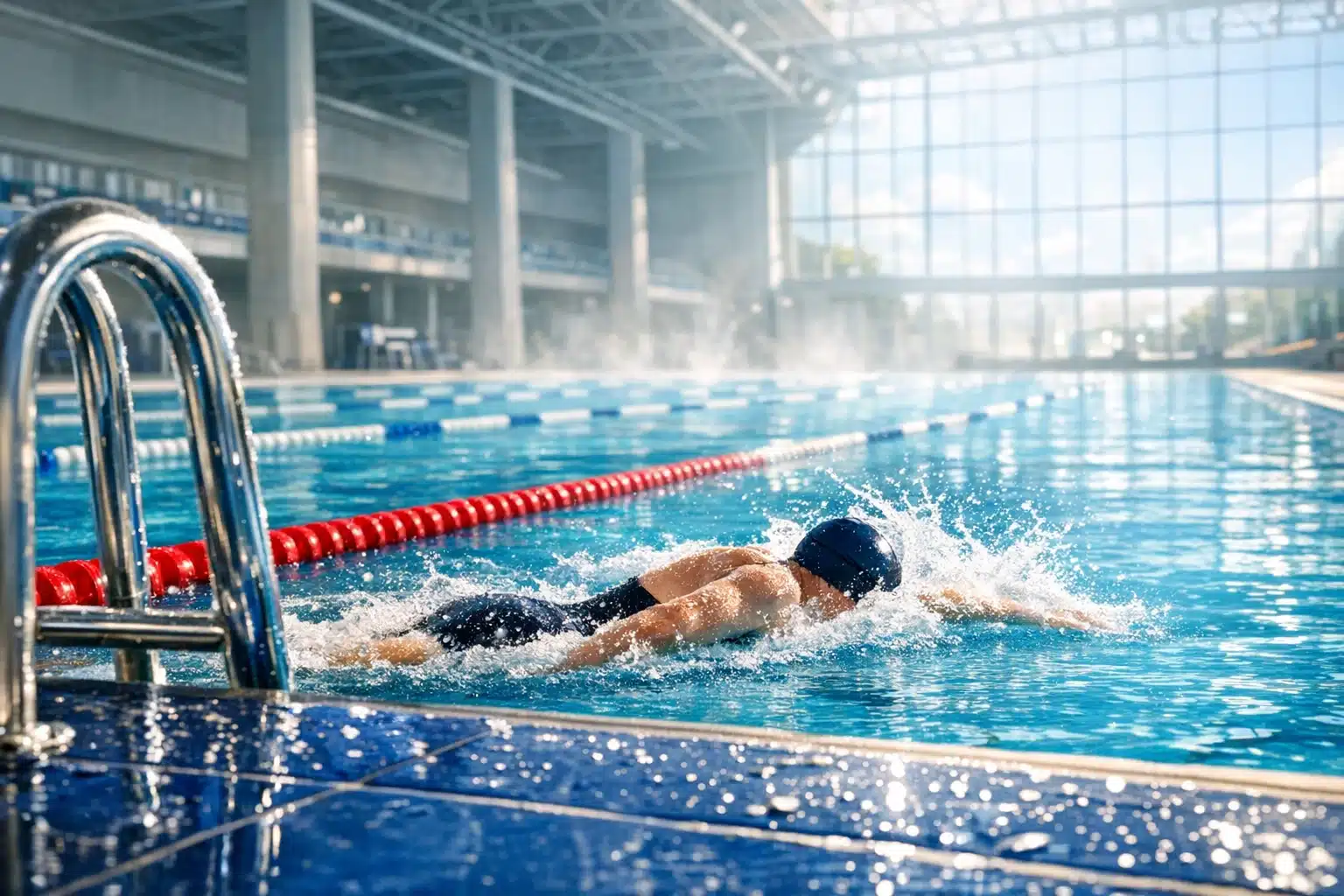
Explore the world of swimming
Swimming sits at the crossroads of sport, skill, and survival, which is why it remains one of the most useful activities a person can learn. It can test elite athletes, help beginners gain confidence, and provide a low-impact workout that feels kinder to the joints than many land-based options. Whether the goal is fitness, competition, stress relief, or safety in the water, swimming offers progress that is measurable, practical, and deeply satisfying.
Outline: this article begins with the wider value of swimming, then explains the main strokes and essential skills, examines the physical and mental benefits supported by training science, explores safety, gear, and environments, and closes with practical guidance for readers who want to build a lasting relationship with the water.
Why Swimming Matters Beyond the Pool
Swimming is often introduced as a sport, but that description only tells part of the story. It is also a life skill, a form of exercise, a therapeutic tool, and for many people, a doorway into confidence. Unlike activities that depend mainly on speed, force, or external equipment, swimming asks the body and mind to cooperate in a setting humans are not naturally built to master. The water resists every movement, changes the way we breathe, and demands balance in all directions. That challenge is precisely what makes swimming so valuable.
One of swimming’s biggest strengths is its accessibility across age groups. Children may start by learning to float and kick, adults may use it to improve general fitness, and older swimmers often appreciate the way buoyancy reduces the pounding placed on knees, hips, and ankles. Water is roughly 800 times denser than air, so even simple actions such as pulling the arm through the water create meaningful resistance. In practical terms, that means swimming can train the cardiovascular system and the muscles at the same time without the impact associated with running on pavement or jumping in court sports.
Swimming also carries a relevance that goes beyond exercise metrics. Knowing how to move calmly in water can increase personal safety during boating, beach trips, or unexpected accidents. In that sense, learning to swim has a protective value that few recreational skills can claim. It is one thing to enjoy laps in a lane; it is another to understand floating, breathing control, and how to remain composed when water becomes unpredictable.
Compared with other endurance activities, swimming creates a different relationship with effort. Runners hear their footsteps. Cyclists feel the road and wind. Swimmers move through a quieter world where rhythm replaces impact and breath becomes a kind of metronome. That environment can feel meditative, even on demanding sets. Many swimmers describe the lane as a place where stress gets filtered out by repetition: reach, pull, kick, breathe, repeat.
Several qualities help explain swimming’s broad appeal:
• it develops endurance without heavy joint stress
• it builds technical awareness alongside fitness
• it supports recreation, competition, and safety at the same time
• it can be scaled from gentle movement to very intense training
Because of this range, swimming remains relevant for far more people than the image of the competitive athlete might suggest. It belongs to the child in a lesson group, the adult recovering from a long workday, the triathlete chasing efficiency, and the retiree preserving mobility. Few activities manage to be so demanding and so forgiving at once.
Understanding the Main Strokes and Core Skills
To an untrained eye, swimming may look simple: move the arms, kick the legs, keep going. In reality, technique shapes everything. A swimmer with average fitness and efficient form can often travel farther and faster than a stronger person who fights the water. That is because water punishes wasted motion. Each lifted head, dropped elbow, mistimed kick, or rushed breath increases drag, and drag is the silent tax every swimmer pays.
The four competitive strokes—freestyle, backstroke, breaststroke, and butterfly—each teach a different conversation with the water. Freestyle, commonly used for fitness swimming, is usually the fastest and most economical over long distances. Its alternating arm action and flutter kick allow a continuous rhythm, and once breathing becomes controlled, it can feel almost smooth enough to glide. Backstroke shares some features with freestyle, but because the swimmer is face-up, it changes orientation and balance. Many beginners find breathing easier on the back, though swimming straight can be tricky without visual reference.
Breaststroke is slower in most cases, but it is often more intuitive for people learning coordination. The stroke uses a simultaneous arm pull and a whip-like kick, followed by a glide phase. Timing matters enormously here. When done well, breaststroke feels calm and deliberate; when done poorly, it turns into a stop-start struggle. Butterfly, by contrast, is powerful, athletic, and technically demanding. Its undulating body motion and simultaneous arm recovery require timing, strength, and rhythm. It is beautiful to watch when executed well, which is why it often looks almost theatrical in competition, as if the swimmer is negotiating with the surface rather than simply crossing it.
Beyond the named strokes, a few core skills matter for every swimmer:
• body position: staying long and balanced reduces drag
• breathing control: exhaling into the water prevents panic and tension
• kick efficiency: the legs should support movement, not create chaos
• feel for the water: effective pulling depends on pressure, angle, and timing
Comparisons help clarify technique. In running, poor form may waste energy; in swimming, poor form can stop momentum almost immediately. In cycling, a rider can coast; in swimming, the body slows quickly when propulsion drops. That is why lessons, drills, and patient repetition matter so much. A kickboard, pull buoy, or fins can isolate parts of the stroke, but tools never replace awareness. Swimmers improve when they learn what the water is telling them: where resistance increases, when balance slips, and how one small adjustment can make a lap feel unexpectedly light.
For beginners, this should feel encouraging rather than intimidating. Technique means improvement is not reserved for the naturally gifted. Smart practice can create noticeable gains, and sometimes the breakthrough comes from a tiny detail—a softer hand entry, a steadier exhale, a quieter kick—rather than brute effort.
Health, Performance, and the Science of Regular Swimming
Swimming earns much of its reputation from the way it combines aerobic conditioning, muscular work, and joint-friendly movement in a single activity. Public health guidance in many countries recommends at least 150 minutes of moderate aerobic activity per week for adults, and swimming can help meet that target effectively. Because the body must overcome water resistance while maintaining breathing rhythm, even moderate sessions can produce meaningful cardiovascular demand. At the same time, buoyancy reduces the impact that often limits people in running or high-intensity court sports.
One reason swimmers often report a full-body workout is that propulsion is distributed across large muscle groups. The shoulders, back, chest, core, glutes, and legs all contribute, though the exact emphasis changes by stroke. Freestyle and backstroke rely heavily on rotational control and shoulder-driven pulling. Breaststroke places more focus on hip mobility and the timing of the kick. Butterfly requires strong coordination through the trunk and hips as well as upper-body power. This variety makes swimming not just repetitive exercise, but a complex physical skill.
Energy expenditure depends on body size, intensity, and stroke choice, but a moderate to vigorous hour of swimming can burn several hundred calories, often roughly in the 400 to 700 range for many adults. That is not a promise or a universal formula, only a reminder that swimming can be a serious training tool rather than a leisurely dip. More importantly, its benefits are not limited to calorie burn. Regular swimming may improve heart and lung function, support muscular endurance, and help maintain mobility. Many people also find it easier to sustain as a habit because the cool water environment feels less punishing than overheated gym sessions.
The mental side matters too. Rhythmic exercise is often linked with lower stress and improved mood, and swimming has a special advantage here: it narrows attention. When each length asks for timing, breath control, and orientation, daily noise tends to fade into the background. The result is not magic, but it can feel close on a hard day. The lane becomes a place where thought settles into sequence.
Practical benefits of regular swimming include:
• improved cardiovascular endurance
• strength and muscular endurance across multiple regions of the body
• reduced impact stress on joints compared with many land-based workouts
• opportunities for rehabilitation or active recovery when approved by a clinician
• mental reset through structured, repetitive movement
Still, swimming is not automatically perfect for everyone. Shoulder overuse can occur with poor technique or too much volume, and beginners sometimes underestimate how exhausting water exercise can be. The healthiest approach is progressive: start with manageable sessions, prioritize skill, and increase distance or intensity gradually. When training is matched to ability, swimming becomes one of the rare activities that is both sustainable and challenging over the long term.
Training Smart: Equipment, Safety, and Different Swimming Environments
Swimming rewards enthusiasm, but it rewards preparation even more. A smart training approach balances ambition with safety, especially because water can hide fatigue until it becomes a problem. The basic gear list is simple—swimsuit, goggles, and a cap if preferred—but the way these items are used can shape comfort and consistency. Goggles that leak or pinch can ruin concentration. A suit that restricts movement becomes a distraction on every lap. Even small practical choices matter because swimming is so repetitive that minor irritations multiply quickly.
For structured training, many swimmers add tools such as kickboards, pull buoys, fins, paddles, or a pace clock. Each tool has a purpose. Kickboards isolate leg work. Pull buoys reduce lower-body involvement so a swimmer can focus on the pull. Fins can help body position and make drills easier to feel. Paddles increase resistance, but they should be used carefully because too much load can stress the shoulders. Good equipment should teach, not compensate. If a swimmer only feels smooth while using gear, the underlying technique probably still needs work.
Safety deserves equal attention. Pool swimming is generally controlled, but even there, lane etiquette and self-awareness matter. Swimmers should know how to circle swim, pass responsibly, and rest without blocking the wall. Open water adds far more variables: temperature, currents, waves, visibility, and navigation. A lake that looks calm from shore can feel entirely different once you are away from land. That is why experienced open-water swimmers emphasize planning over bravado.
A few safety principles are worth treating as non-negotiable:
• never overestimate your ability, especially in unfamiliar water
• use bright swim buoys or visible caps in open water
• check weather, water conditions, and local guidance before entering
• swim with a partner or under supervision whenever possible
• stop early if breathing, cramping, or orientation starts to feel off
Training structure matters as well. A beginner session may include a warm-up, technique drills, short repeats with rest, and an easy cool-down. Intermediate swimmers often benefit from alternating focus days: endurance on one day, technique on another, speed or threshold work later in the week. This variation reduces monotony and helps the body adapt without doing the same thing every session.
There is also an important comparison between pool and open-water swimming. Pools are ideal for precision. Distances are measured, pacing is clear, and walls break the effort into segments. Open water is less exact but often more adventurous. It asks swimmers to sight, manage uncertainty, and stay calm without lane lines or tiled bottoms. Neither is better in every situation. The pool builds discipline; open water builds adaptability. Together, they show the sport at its most technical and most expansive.
Conclusion: Building a Lifelong Relationship with Swimming
For most readers, the real value of swimming is not found in medals, personal records, or dramatic transformations. It is found in usefulness. Swimming can make you fitter, yes, but it can also make you calmer, more capable, and more confident in an environment that many people find both exciting and intimidating. That combination gives it unusual staying power. It is one of the few activities that can begin as a lesson, grow into a workout, and remain meaningful as a lifelong practice.
If you are a beginner, the smartest starting point is simple: learn comfort before chasing speed. Spend time on floating, breathing, and relaxed movement. A person who feels composed in the water builds a much stronger foundation than someone who rushes straight into hard laps. If you are returning after years away, expect your timing to come back in stages. Water has a way of revealing what has been forgotten, but it also rewards patience quickly. For fitness-focused readers, swimming works best when it is treated like any other training plan: show up consistently, progress gradually, and pay attention to technique rather than measuring success only by exhaustion.
Parents, recreational athletes, older adults, and competitive swimmers all have different reasons to swim, yet the core lesson is shared. Good swimming is economical, not frantic. It values rhythm over force and awareness over struggle. That is why progress can feel so satisfying. Improvement is not only faster times or longer distances; it is also the moment when breathing settles, the stroke lengthens, and the water stops feeling like an obstacle.
Keep these takeaways in mind as you move forward:
• start with skill and safety, then build fitness on top of them
• choose goals that fit your age, background, and environment
• use the pool for consistency and open water only with preparation
• think of swimming as a habit to refine, not a hurdle to conquer once
In the end, swimming offers something rare: challenge without constant impact, solitude without isolation, and discipline with a hint of freedom. The lane can be a place for hard work, but it can also be a place to reset. For anyone curious about beginning or improving, that is the invitation—step in carefully, learn steadily, and let the water teach its lessons one length at a time.