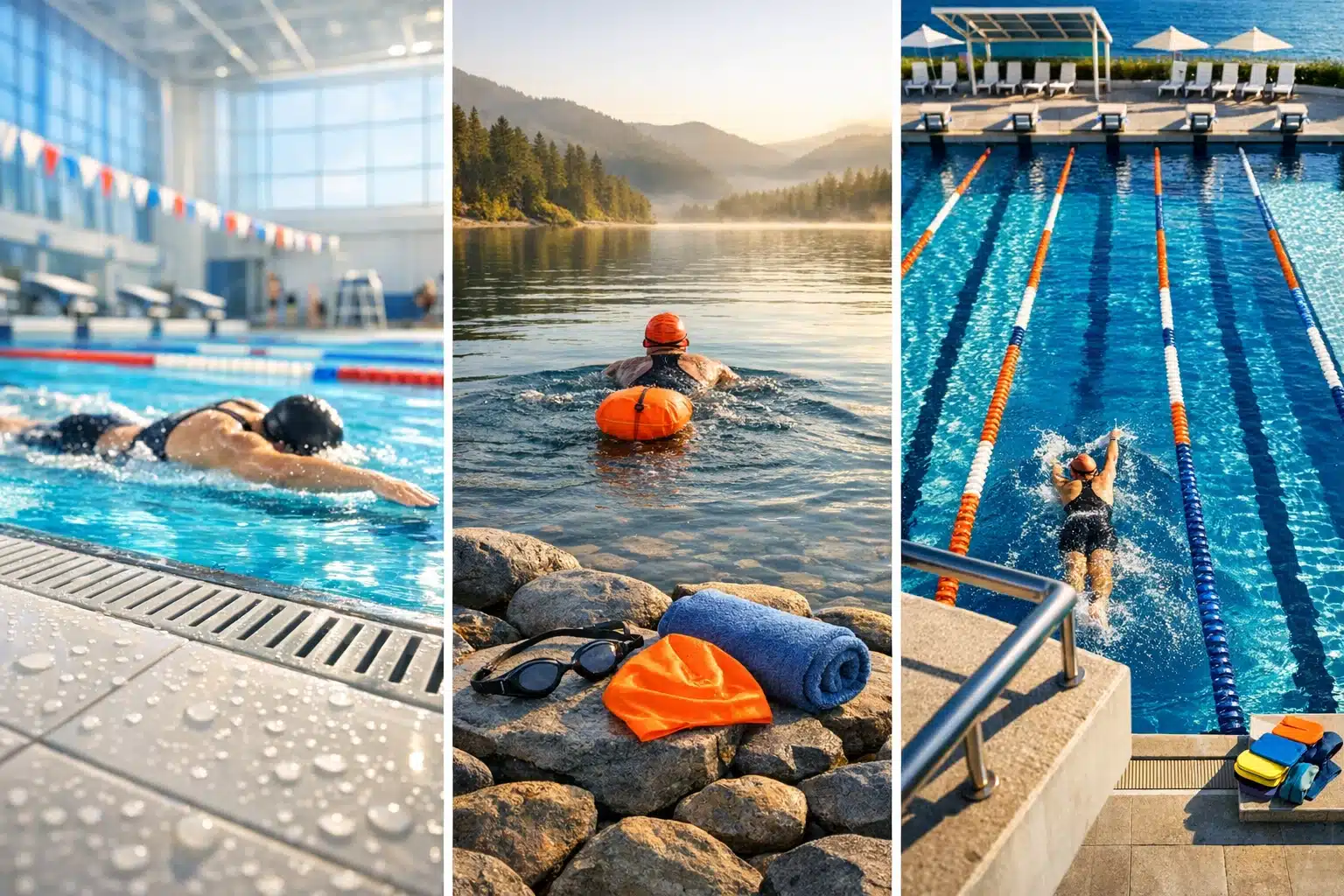
Explore the world of swimming
Swimming is one of the rare activities that blends survival skill, lifelong recreation, and demanding sport in a single stroke. It strengthens the heart, challenges the lungs, and works nearly every major muscle group while placing less strain on joints than many land-based workouts. From busy municipal pools to calm lakes at dawn, it also builds confidence, discipline, and respect for water. This article explores how swimming works, why it matters, and how beginners and experienced swimmers alike can improve.
Outline: 1. Why swimming matters for health and everyday life. 2. The main strokes and how technique shapes efficiency. 3. Training methods, gear, and smart progression. 4. Safety in pools and open water. 5. How to make swimming a lasting part of your life.
1. Swimming as Fitness, Skill, and Everyday Confidence
Swimming matters because it sits at the crossroads of health, movement, and personal safety. Few activities can claim the same range. A child who learns to float gains more than a party trick; that child gains a practical response to a risky environment. An adult who returns to the pool after years away often discovers something equally valuable: a form of exercise that feels demanding without being punishing. Water supports body weight, which can make movement more comfortable for people with joint pain, those returning from injury, or anyone who finds high-impact workouts hard to maintain. At the same time, swimming is not “easy” in the lazy sense. Water provides resistance in every direction, so even relaxed movement asks the body to coordinate, stabilize, and breathe with intention.
From a fitness perspective, swimming can contribute meaningfully to widely cited public health goals such as getting at least 150 minutes of moderate aerobic activity per week. Depending on pace and stroke, a session can raise heart rate, improve endurance, and strengthen muscles across the shoulders, back, core, hips, and legs. Unlike some gym routines that isolate one area at a time, swimming rewards integration. The body must act like a small team rather than a collection of separate parts. When technique improves, efficiency improves as well, which is why skilled swimmers often look smooth rather than frantic. The water exposes wasteful motion quickly.
Swimming also offers mental benefits that are harder to measure but easy to recognize. Many swimmers describe the lane as a place where noise fades and thoughts sort themselves out. Repetitive strokes create rhythm, and rhythm has a calming quality. The line at the bottom of the pool becomes a guide, almost like a moving horizon. For some people, that steadiness reduces stress. For others, it creates the kind of focus that daily life rarely grants.
Its appeal is also social and flexible. Swimming can be solitary, coached, competitive, playful, or rehabilitative. It suits different ages because intensity can be scaled without changing the basic activity. A gentle aqua session and a hard interval workout are both swimming, yet they meet very different needs. Some of the clearest advantages are easy to summarize:
• Low-impact movement with full-body involvement
• Cardiovascular training that can be adapted to many fitness levels
• A practical water-safety skill with lifelong relevance
• Options for recreation, competition, therapy, and stress relief
That combination explains why swimming remains important in schools, sports programs, community centers, and medical recovery settings. It is not only about speed. It is about capability, resilience, and learning how to move confidently in an environment that humans do not naturally master without practice.
2. Understanding the Strokes: Efficiency Before Speed
To watch skilled swimming is to watch technique turn effort into motion. Beginners often assume speed comes mainly from strength, but the water teaches a sharper lesson: efficiency matters first. A swimmer who pulls hard with poor alignment will spend precious energy fighting drag. A swimmer with cleaner timing may travel farther on each stroke with less apparent effort. That is why instruction usually begins with body position, breathing, and balance before it focuses on power. In the water, small mistakes multiply. A dropped elbow, a lifted head, or a rushed kick can slow the body more than many new swimmers realize.
Freestyle, often called front crawl, is usually the first stroke people associate with lap swimming. It is generally the fastest and most efficient stroke for distance, which is why it dominates training sets and long races. The body stays relatively streamlined, the arm action alternates smoothly, and the flutter kick supports balance and momentum. Good freestyle depends on rotation through the torso rather than pure arm strength. Breathing must fit naturally into that rotation; if the swimmer cranes the neck upward, the hips tend to sink and drag increases.
Backstroke shares some structural similarities with freestyle, yet it feels different because the face stays out of the water. That can make breathing easier for beginners, but balance becomes trickier because the swimmer cannot see where they are going. Backstroke encourages body alignment and shoulder mobility while teaching an important lesson about control. Splash may look dramatic, but stable rotation is what keeps the stroke effective.
Breaststroke is often the most familiar recreational stroke because it allows a calmer rhythm and easier forward sighting. However, it is not automatically simple. Timing is everything. The pull, breath, kick, and glide must fit together like a short sentence with correct punctuation. Done well, breaststroke is economical and smooth. Done poorly, it becomes tiring and jerky. It also places different demands on the hips, knees, and ankles than flutter-kick strokes do.
Butterfly is the most dramatic of the four competitive strokes and often the most physically demanding. It relies on coordinated arm recovery, a dolphin kick, and strong timing through the chest and core. To beginners, it can look like a battle with the water. To experienced swimmers, it becomes a powerful wave-like motion. The main comparisons are useful:
• Freestyle: fastest, efficient, and ideal for most endurance work
• Backstroke: great for balance, posture, and alternate shoulder patterns
• Breaststroke: slower, technical, and often more accessible for casual swimmers
• Butterfly: demanding, rhythmic, and highly dependent on timing
Learning these strokes is not just about variety. Each one teaches a different relationship with water. Together, they develop awareness, adaptability, and respect for the fact that movement in water rewards precision as much as determination.
3. Training, Gear, and Progression for Better Results
A good swimming routine is less about heroic effort and more about thoughtful progression. Many people enter the pool expecting to improve simply by completing laps, and regular practice certainly helps. Still, progress comes faster when sessions have structure. Swimmers benefit from the same training principles that guide other sports: consistency, recovery, technique feedback, gradual overload, and clear goals. One person may want to swim continuously for thirty minutes without stopping. Another may want to prepare for a triathlon, improve stroke efficiency, or feel less breathless after a few lengths. Different goals require different training emphasis, but all of them respond well to a plan.
A balanced session often includes four parts:
• Warm-up: easy lengths to raise body temperature and loosen movement patterns
• Drill set: short, focused repeats that target one technical skill
• Main set: the central workload for endurance, pace, or speed
• Cool-down: relaxed swimming to lower effort and finish with control
Drills are especially useful because they isolate problems that full-speed swimming can hide. For freestyle, a side-kick drill may help body rotation and breathing. Catch-up drill can highlight timing in the front of the stroke. Kicking with a board can build leg endurance, although swimmers should remember that excessive board use may alter natural body position if overdone. Fins, pull buoys, paddles, and snorkels can all be helpful tools, but they work best when they serve a purpose rather than acting as shortcuts. Equipment should clarify movement, not replace it.
Gear matters, though it does not need to be expensive. A comfortable swimsuit, well-fitted goggles, and a cap are the basics for most pool swimmers. Goggles that leak or pinch can ruin concentration surprisingly fast, so fit is more important than style. Training watches and heart-rate tools may add useful data, yet beginners usually gain more from learning pace awareness, rest intervals, and stroke count. In other words, the first upgrades should happen in skill, not shopping.
Progression should be gradual. Someone new to swimming may begin with alternating short swims and rests rather than forcing long, exhausting efforts. As comfort improves, rest periods can shrink and total distance can rise. More advanced swimmers often use interval sets, where a repeat begins at a fixed time, teaching both speed and recovery discipline. A simple example might be 8 x 50 meters with 20 seconds of rest between repeats, adjusted according to ability.
Technique remains the anchor of all training. If fatigue destroys form, practice can become a lesson in repeating errors. That is why shorter, cleaner repeats often beat sloppy marathon sessions. Improvement comes when swimmers learn to feel the water, hold alignment, and match effort to intention. Over time, the pool stops being a place where lengths are merely survived. It becomes a workshop where movement gets refined, one repeat at a time.
4. Safety, Water Awareness, and the Difference Between Pool and Open Water
Swimming is rewarding, but it should never be treated casually in matters of safety. Confidence in the water is useful only when it is matched with sound judgment. A pool may seem predictable, yet even there, accidents can happen through slipping, breath-holding games, diving into shallow areas, or simple overestimation of ability. Good pool habits start with basics that sometimes sound obvious precisely because they matter so much: know the depth, respect lane direction, avoid rough play, and pay attention to lifeguard instructions. For children, active supervision is crucial. Being near the water is not the same as watching the water.
Water competence includes more than stroke mechanics. A capable swimmer should know how to float, tread water, roll from front to back, rest without panic, and exit safely. These skills matter because real-life situations do not always resemble neat lap lanes. Clothing, waves, cold, fatigue, and poor visibility can change the difficulty of a swim very quickly. Lessons that include survival-oriented skills often give swimmers a broader foundation than technique alone.
Open-water swimming adds another layer of complexity. Lakes, rivers, and the sea are beautiful, but they are not controlled environments. Currents, tides, chop, weeds, changing weather, boat traffic, and temperature shifts all affect risk. A strong pool swimmer can feel surprisingly vulnerable in open water because the reference points disappear. There is no black line to follow, no wall every 25 or 50 meters, and no guarantee that the conditions will stay the same from one minute to the next. That difference is part of the appeal, but it also demands preparation.
Smart open-water habits include:
• Never swimming alone when conditions are uncertain
• Checking weather, water temperature, and local advisories
• Using a bright cap and, where appropriate, a visible safety buoy
• Entering gradually to assess cold shock and footing
• Knowing the route, exit points, and the plan for stopping early if needed
Cold water deserves special respect. Even strong swimmers can lose coordination and judgment when the body cools rapidly. Wetsuits may help in some settings, but gear is not a substitute for caution. Likewise, fitness on land does not automatically translate into safety in rough water. Open-water experience must be built progressively, preferably with knowledgeable groups, coaches, or organized events.
There is also a social side to safety. Pool etiquette keeps training smoother for everyone: choosing the correct lane speed, resting at the corners rather than blocking the wall, and passing carefully all reduce frustration and collision risk. In a wider sense, safety is a form of respect. It respects the water, other swimmers, and one’s own limits. That mindset is what turns swimming from a reckless challenge into a durable, enjoyable practice.
5. Conclusion: Making Swimming Part of Your Life
For most readers, the real question is not whether swimming is worthwhile. It is how to make it fit real life. The answer depends on age, goals, confidence level, access to facilities, and schedule, but the path is usually simpler than people expect. You do not need to begin with advanced technique or long workouts. You need a starting point that feels manageable and repeatable. A beginner may choose one or two short pool visits each week. A former athlete returning after years away may rebuild with gentle intervals. A parent may focus first on lessons for a child and discover personal motivation along the way. Swimming is flexible enough to meet all three of those people where they are.
Its long-term value comes from that flexibility. Young swimmers often gain coordination, discipline, and comfort in the water. Adults pressed for time can use swimming as efficient whole-body exercise. Older adults may appreciate the lower-impact nature of the activity, especially when joints no longer welcome pounding on hard surfaces. People recovering from injury sometimes find that water offers a route back to movement when land-based exercise feels too harsh. In each case, swimming adapts without losing its essential character.
To build a lasting habit, it helps to keep the process practical:
• Choose a realistic schedule instead of an ambitious one that collapses after two weeks
• Focus on skill and comfort before chasing speed
• Track small wins such as smoother breathing, better balance, or longer continuous swims
• Mix routine with variety through drills, different strokes, or occasional coached sessions
• Treat rest and recovery as part of improvement, not as signs of failure
There is also joy in swimming that should not be overlooked. Not every session needs a stopwatch. Sometimes the reward is simply the sensation of moving quietly through water, of feeling effort turn into glide. Sometimes it is the social energy of a masters group, a family swim, or a shared early-morning lane with regulars who nod more than they speak. Swimming can sharpen ambition, but it can also soften the edges of a hectic day.
If you are deciding whether to begin, return, or improve, the most useful step is the next practical one: book a lesson, visit a local pool, learn basic safety, or set a modest weekly goal. Swimming does not demand perfection before participation. It rewards patience, consistency, and curiosity. That makes it especially valuable for readers who want something sustainable rather than flashy. In the long run, the world of swimming opens not all at once, but length by length, breath by breath, until the water starts to feel less like an obstacle and more like a place you understand.