Explore the world of swimming
Swimming is one of those rare activities that feels playful and demanding at the same time. It can sharpen fitness, build confidence, and open the door to a lifelong sport that suits many ages. In pools, lakes, and oceans, the water changes how the body moves and how the mind responds. This article maps the basics, the science, the skills, and the culture of swimming so readers can understand it more deeply. Keep going, and the familiar splash starts to look like a world of technique, safety, and quiet endurance.
Outline:
– Why swimming matters as a life skill, exercise, and sport
– How the main strokes differ in rhythm, efficiency, and purpose
– What swimming can do for cardiovascular health, strength, mobility, and mental well-being
– Which safety rules, tools, and habits make practice smarter and more effective
– How different readers can turn occasional swims into a sustainable routine
Why Swimming Matters Beyond the Pool
Swimming matters because it sits at the meeting point of recreation, safety, health, and sport. For some people, it begins as a childhood lesson. For others, it starts later, perhaps after an injury makes high-impact exercise uncomfortable, or during a vacation when the sea looks more challenging than expected. In all these cases, swimming offers something unusually practical: it is not only an athletic activity but also a life skill. Knowing how to stay calm, float, breathe efficiently, and move through water can reduce risk in everyday settings, from public pools to open-water outings.
As exercise, swimming is distinctive because water changes the rules. The body is supported by buoyancy, which reduces stress on joints compared with many land-based activities. That is one reason swimming is often recommended for older adults, people returning to movement after injury, and those seeking a lower-impact form of cardiovascular work. At the same time, water creates resistance in every direction, so even controlled movements demand effort. A lap of steady freestyle does not just train the heart and lungs; it also asks the shoulders, back, core, hips, and legs to cooperate with remarkable precision. The result is a form of whole-body exercise that can feel gentle from the outside while being quietly intense within.
Swimming also carries social and cultural importance. It appears in school programs, rehabilitation plans, community centers, summer camps, triathlons, and international competition. At the elite end, races can be decided by hundredths of a second, showing how technical the sport becomes when speed is the goal. At the community level, however, the atmosphere can be completely different. Early-morning lap swimmers, parents teaching nervous children to kick, and retirees doing water exercise all share the same space for different reasons. Few activities welcome such a wide range of abilities without losing their identity.
There is another reason swimming stays relevant: it teaches patience. Water is honest. It magnifies rushed breathing, poor alignment, and wasted motion, yet it also rewards steady improvements quickly enough to keep people motivated. A swimmer who learns to relax the neck, lengthen the body line, and time an exhale more smoothly often feels the difference almost immediately. That feedback loop is powerful. It turns practice into discovery, and what begins as simple movement becomes a deeper understanding of control, efficiency, and confidence.
The Main Strokes and the Mechanics of Efficient Movement
To understand swimming, it helps to look closely at the four main competitive strokes: freestyle, backstroke, breaststroke, and butterfly. Each stroke asks the body to solve the same problem in a different way: how to move forward through dense resistance without wasting energy. The water may appear soft and forgiving, but from a technical perspective it behaves more like a demanding instructor. Every angle of the hand, every head movement, and every kick pattern influences speed, drag, and breathing rhythm.
Freestyle, often called front crawl, is usually the fastest and most commonly practiced stroke. Its alternating arm action and flutter kick make it efficient over many distances, which is why fitness swimmers often rely on it for longer sets. Good freestyle depends less on splashing power than many beginners assume. A streamlined body position, a relaxed but firm catch in the water, and a controlled side breath usually matter more than frantic effort. Backstroke uses a similar alternating rhythm, but because the swimmer is face-up, the challenge shifts toward body alignment and directional control. Many learners find backstroke less stressful for breathing, yet harder for maintaining a straight path.
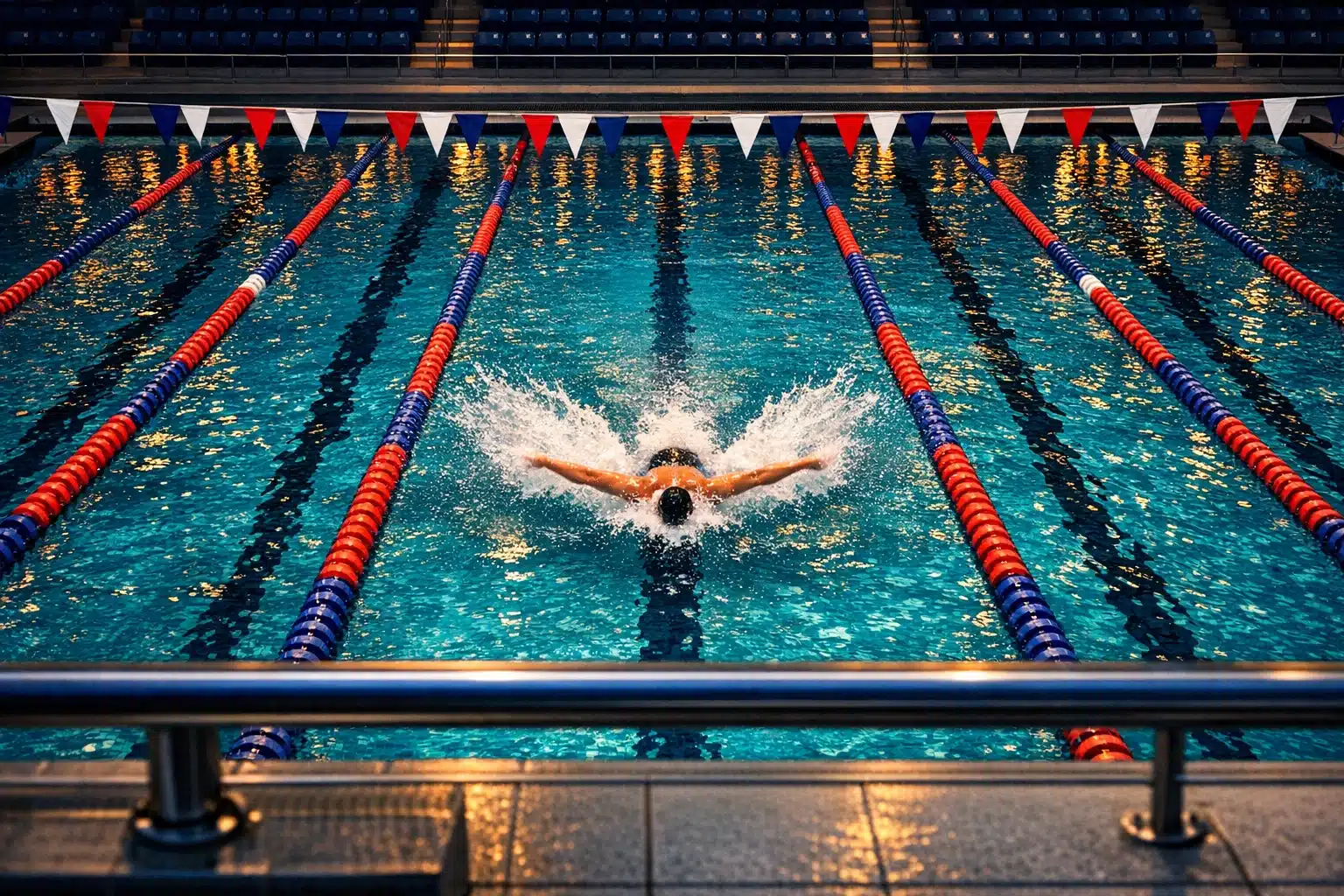
Breaststroke stands apart because its timing is more symmetrical. The arms sweep, the legs perform a frog-like kick, and the glide phase becomes crucial. It is often seen as approachable because the face comes out of the water regularly, but efficient breaststroke is highly technical. A mistimed pull or kick can slow the swimmer dramatically. Butterfly is the most demanding of the four for many people. Its simultaneous arm recovery and dolphin kick require strength, rhythm, and core coordination. When performed well, butterfly looks almost theatrical, rising and folding with wave-like continuity. When performed poorly, it becomes exhausting very quickly.
A useful comparison looks like this:
– Freestyle: best for sustained speed and general lap swimming
– Backstroke: helpful for balance, posture awareness, and varied training
– Breaststroke: slower but rhythm-focused, with clear glide phases
– Butterfly: powerful and advanced, demanding precise timing
Across all strokes, a few mechanical principles remain constant. Streamlining reduces drag. Exhaling into the water makes breathing calmer. Rotation or body timing helps larger muscle groups share the workload. Kicking supports balance as much as propulsion. Skilled swimmers are not simply stronger; they are better at moving as one connected shape. That is why lessons, drills, and video feedback can be so effective. Small corrections often unlock large improvements, turning hard laps into smoother ones.
Health Benefits: Fitness, Recovery, and Mental Clarity
Swimming is often praised as a full-body workout, but that phrase only becomes meaningful when broken into parts. Cardiovascular fitness is one major benefit. Repeated swimming at a moderate effort can help improve heart and lung function in the same broad way other endurance activities do. Public health guidance commonly encourages adults to aim for at least 150 minutes of moderate aerobic activity per week, and swimming can contribute directly to that goal. Because water supports body weight, many people can accumulate exercise time in the pool with less pounding on the knees, ankles, and hips than they might experience during running.
Muscular engagement is another advantage. Unlike some land exercises that concentrate effort in one region, swimming spreads the work widely. Freestyle recruits the shoulders, upper back, lats, core, hip flexors, and legs. Breaststroke changes the demand pattern, involving adductors and timing-heavy leg action. Backstroke encourages postural control, while butterfly challenges trunk strength and coordination. Resistance in water is constant, which means even technique drills have a strength element when performed attentively. The workload can be adjusted easily as well. A beginner may swim short intervals with plenty of rest, while an experienced athlete may use pace sets, pull buoys, paddles, or fins to change the training effect.
Swimming also has a strong recovery and mobility appeal. People who feel stiff after long workdays often describe the pool as a place where movement becomes easier. Hydrostatic pressure, buoyancy, and gentle range-of-motion patterns can make exercise feel more manageable, especially when heat or impact make land training uncomfortable. That does not mean swimming is effortless or suitable for every condition without guidance, but it does explain why rehabilitation and low-impact conditioning programs so often include water-based work.
The mental side deserves equal attention. Many swimmers report that the repetitive rhythm of laps creates a rare kind of focus. Breathing settles into a pattern, visual distractions fade, and the soundscape narrows to splashes and turns. For some, that becomes meditative; for others, it is simply a reliable break from crowded schedules and screens. Research on exercise and mental well-being broadly supports the idea that regular physical activity can improve mood, reduce stress, and support sleep quality. Swimming adds a sensory element that many people find especially calming.
Its benefits are practical as well:
– It can suit a wide age range
– It allows progression from gentle sessions to demanding training
– It often works for people seeking exercise variety
– It combines skill development with fitness, which keeps motivation high
In that sense, swimming does more than burn calories or build endurance. It gives people a structured way to move, recover, concentrate, and continue improving over time.
Safety, Equipment, and Training Habits That Make a Difference
Swimming is rewarding, but it is never a sport where safety should be treated casually. Water can be relaxing one minute and unforgiving the next, especially outside a controlled pool environment. That is why strong swimming practice combines skill with caution. Beginners need supervision and realistic self-assessment. More experienced swimmers still need to respect fatigue, temperature, weather, and water conditions. Confidence is helpful; overconfidence is not.
Pool safety begins with basics that sound simple because they are simple: know the depth, follow lane direction, avoid diving into shallow water, and never assume another person sees you coming. Open-water safety adds another layer. Lakes, rivers, and oceans bring variables that pools remove, including currents, waves, visibility issues, cold shock, boat traffic, and rapidly changing conditions. Even capable pool swimmers can feel surprised by open water because there are fewer visual reference points and more psychological pressure. A calm plan matters here:
– Swim with a partner or organized group
– Use visible gear such as a bright cap or tow float where appropriate
– Check weather, water temperature, and local guidance beforehand
– Enter gradually rather than rushing into unfamiliar conditions
Equipment does not replace skill, but it can improve comfort and learning. A well-fitting swimsuit reduces drag and distraction. Goggles protect the eyes and make technique work much easier because clear vision helps with orientation and confidence. Swim caps are useful in both recreational and training settings, especially in long hair or cooler water. Kickboards isolate leg work, pull buoys emphasize upper-body mechanics, and fins can help swimmers feel better body position, though they should be used purposefully rather than as a permanent crutch. Competitive swimmers may add pace clocks, snorkels, paddles, or tempo trainers, each of which changes the training stimulus.
Good habits matter just as much as gear. Warm-ups prepare the body and mind. Structured sessions prevent aimless laps. Rest intervals teach pacing. Technique drills keep form from collapsing under fatigue. Many coaches prefer a simple session structure:
– Easy warm-up
– Skill or drill segment
– Main set matched to the swimmer’s goal
– Cool-down to bring intensity down gradually
Hydration is often overlooked because swimmers do not feel sweat the same way they do on land, yet fluid loss still occurs. Nutrition matters too, especially for longer or harder training. Finally, progress should be measured with patience. In swimming, trying harder is not always the fastest path forward. Often the breakthrough comes when the swimmer learns to relax, hold alignment, and let efficiency carry more of the load.
Conclusion: How Different Swimmers Can Build a Lasting Practice
Swimming offers something useful to almost every kind of reader, but the best way to approach it depends on why you are drawn to the water in the first place. A beginner may need comfort, supervision, and a few reliable fundamentals before anything else. A parent may be thinking about water confidence and safety for a child. A fitness-focused adult may want a lower-impact workout that still feels substantial. A former athlete may be looking for a fresh challenge, while an older adult may value mobility, circulation, and a manageable form of aerobic exercise. The good news is that swimming can meet all of those needs, provided expectations are realistic and progress is built step by step.
If you are new to swimming, start with outcomes that are modest and clear. Learn to float, breathe without panic, and move across a short distance with control. Do not worry about looking polished. Early progress in swimming often comes from reducing tension, not from muscling through the water. If you already know the basics, your next gains may come from more structure. One or two technique lessons, a consistent weekly routine, or a simple training log can reveal patterns quickly. Many swimmers discover that once they stop guessing and start practicing with intention, the pool feels less like a test and more like a conversation.
For readers motivated by fitness, swimming works best when it becomes regular enough to develop rhythm. Two or three sessions per week can create noticeable improvements in stamina and comfort. For those interested in competition, details such as turns, pacing, stroke count, and start technique gradually become more important. For families and recreational swimmers, the priority stays simpler and equally valuable: safety, enjoyment, and confidence in real water settings.
The lasting lesson is straightforward. Swimming is not only about speed, medals, or endless laps. It is about learning how to move intelligently in an environment that rewards patience, awareness, and skill. Whether you want exercise, resilience, recovery, recreation, or a serious sport, the water has room for you. Start where you are, respect the basics, and keep returning. Over time, the splash that once felt unfamiliar can become one of the most dependable parts of your routine.