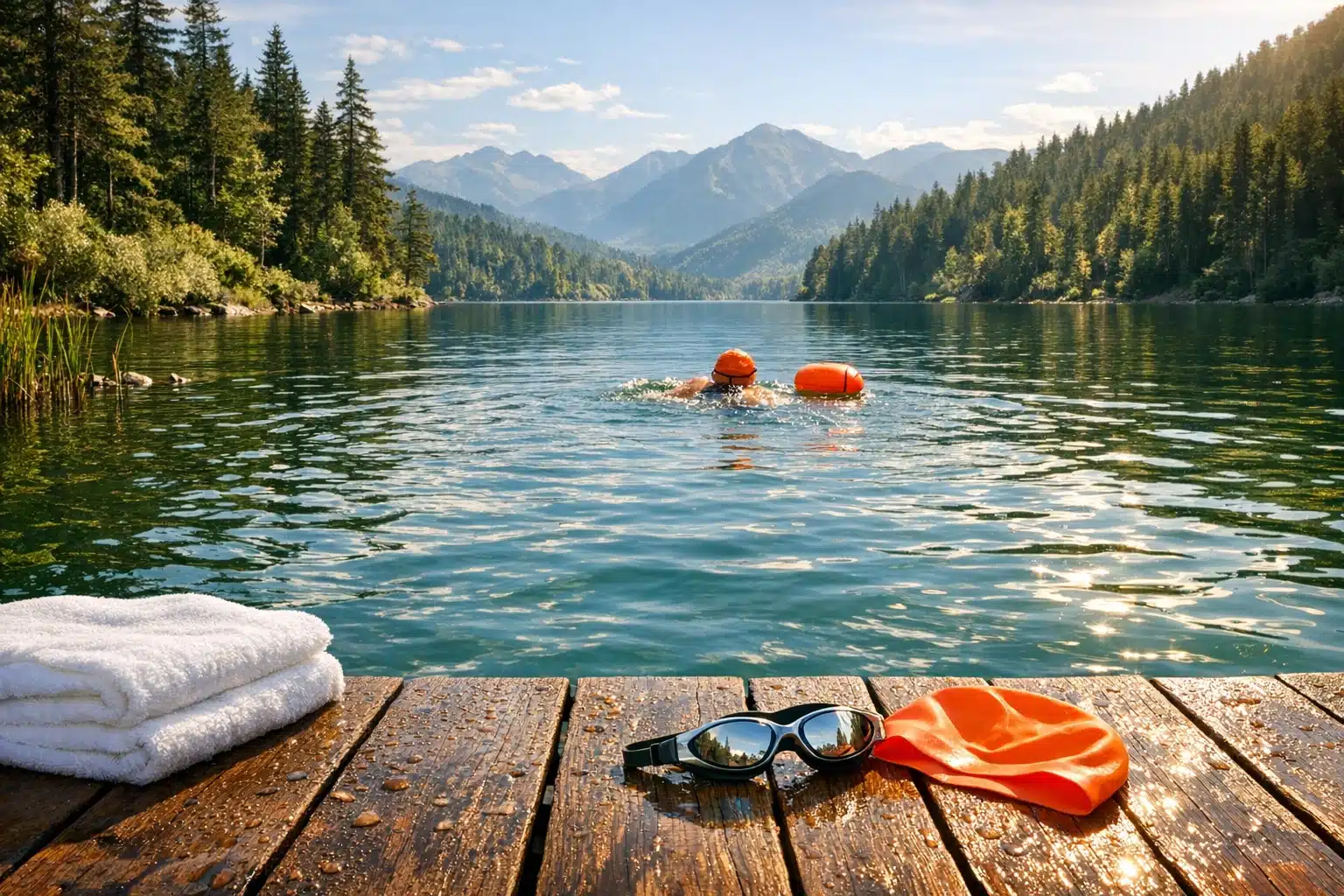
Explore the world of swimming
Swimming belongs to a small group of activities that combine play, discipline, and survival in a single skill. It can sharpen fitness without the constant impact of pavement, calm a busy mind, and open the door to pools, lakes, and coastlines that might otherwise feel off limits. Because it serves beginners, competitors, older adults, and people in rehabilitation alike, its relevance reaches far beyond sport. The sections ahead trace the basics, the benefits, the techniques, and the habits that turn a few uncertain strokes into lasting confidence.
Article outline:
– Why swimming has remained important across history, culture, and everyday life
– What regular time in the water can do for cardiovascular fitness, strength, recovery, and mood
– How freestyle, backstroke, breaststroke, and butterfly differ in mechanics and purpose
– Which safety rules, learning steps, and training habits matter most for beginners and improvers
– How readers can turn swimming into a practical lifelong activity rather than a short-lived resolution
Why Swimming Has Endured Across Time
Swimming has lasted for thousands of years because it answers several human needs at once. It is useful, enjoyable, physically demanding, and deeply connected to geography. Communities that lived near rivers, coastlines, and lakes often treated swimming as a basic skill rather than a niche hobby. In some places it was tied to fishing, transport, or military training; in others it grew into recreation and eventually organized sport. That long history helps explain why swimming feels familiar even to people who have never trained seriously. Water has always invited curiosity. A child splashing in the shallow end and an Olympian hunting hundredths of a second are separated by experience, not by the basic attraction of moving through water.
Modern swimming gained structure in the nineteenth and twentieth centuries as pools became more common, clubs formed, and competition rules were standardized. Today the sport includes sprint races, endurance events, synchronized disciplines, diving, water polo, triathlon segments, and open-water challenges. Few physical activities stretch across so many settings. A runner needs ground, a cyclist needs a bike, but a swimmer can practice in a public pool, a hotel lane, a calm sea, or a sheltered lake, as long as conditions are safe and supervision is appropriate. That flexibility adds to its global reach.
Swimming also endures because it meets people where they are. For some, it is a direct route to fitness. For others, it is one of the first sports they can continue after injury because buoyancy reduces strain on joints. Parents see it as a life skill. Older adults often value it for mobility and comfort. Competitive athletes appreciate its technical depth, because progress depends on far more than brute effort. Position in the water, timing of the breath, feel for resistance, and efficiency of the pull all matter. In that sense, swimming resembles a conversation with a difficult but honest teacher. The water gives immediate feedback. Fight it and you tire early. Work with it and the body begins to glide.
Its cultural appeal matters too. Swimming represents summer, freedom, travel, and confidence around natural environments. It appears in school programs, holiday plans, rehabilitation clinics, and elite championships. That broad presence is rare. Many sports belong strongly to one stage of life, but swimming remains relevant from childhood to older age. That is why it continues to hold attention: it is at once practical and poetic, serious and playful, intensely technical and wonderfully simple.
What Swimming Does for the Body and Mind
One of swimming’s strongest arguments is that it delivers substantial fitness benefits while sparing the body the repeated impact common in many land-based activities. The heart and lungs work steadily during sustained swimming, which is why lap sessions count toward widely recommended aerobic activity targets, including the common benchmark of at least 150 minutes of moderate exercise per week for adults. Because water creates resistance in every direction, the body also works against a constant force. That means swimmers are not only building cardiovascular endurance but also asking the shoulders, back, core, hips, and legs to cooperate in each stroke cycle.
Energy expenditure varies by pace, technique, and body size, but recreational lap swimming can burn several hundred calories in an hour, and harder sessions can push much higher. Freestyle intervals, for example, can feel very different from easy breaststroke recovery lengths. That range is part of the sport’s value. A person rehabbing an injury may move slowly and still get useful exercise, while a trained swimmer can turn the same pool into a demanding conditioning environment. Compared with running, swimming usually places less repetitive stress on ankles, knees, and hips. Compared with cycling, it asks the upper body to contribute far more actively. It is not necessarily better than other forms of exercise in every case, but it is unusually versatile.
The mental side deserves equal attention. Many swimmers describe the pool as one of the few places where constant digital noise finally drops away. The rhythm of breathing, kicking, and counting lengths can create a focused, almost meditative state. Research on physical activity more broadly has long linked regular movement to better mood and lower stress, and swimmers often notice those benefits in practical ways: improved sleep, steadier energy, and a clearer head after a session. There is also a confidence effect. Learning to manage breathing in the water can reduce fear and replace it with a sense of control that spills into other areas of life.
Several groups find swimming especially useful:
– People returning to exercise after a long break often appreciate the lower impact.
– Older adults may benefit from the support water provides during movement.
– Athletes in other sports use swimming for conditioning and active recovery.
– Individuals in supervised rehabilitation programs may use water-based exercise to rebuild function.
Of course, swimming is not magically easy. Poor technique can irritate shoulders, and cold water or overtraining can make sessions unpleasant. Yet when approached sensibly, it is one of the most accessible ways to build endurance, coordination, and resilience at the same time. In a world full of exercise trends that flare up and vanish, that practical combination gives swimming unusual staying power.
Understanding the Four Main Strokes and Core Technique
Swimming becomes more rewarding once the main strokes stop looking like a blur and start revealing their personalities. Freestyle, backstroke, breaststroke, and butterfly are the four competitive strokes, and each asks the body to solve movement in a different way. Freestyle, usually performed as front crawl, is the fastest and most efficient for most swimmers. The body stays long, the hips high, and the arm recovery moves over the water while the kick helps maintain balance and rhythm. Because breathing happens to the side rather than by lifting the head forward, good freestyle rewards alignment. A small technical improvement can feel like someone quietly removed a bucket from your shoulders.
Backstroke shares some structural ideas with freestyle but flips the swimmer onto the back. That changes orientation, breathing comfort, and balance. Many beginners enjoy the fact that the face stays above water, yet backstroke has its own challenge: without a visual line ahead, straight swimming depends on body awareness and lane markers overhead. It also exposes flaws in hip position. If the hips sink, the stroke becomes heavy and inefficient. Breaststroke is slower and more symmetrical, with a pull and kick that work in a repeated cycle. Recreational swimmers often find it approachable because the head can rise regularly for air, but strong breaststroke requires precise timing. Done poorly, it becomes a tiring sequence of stop-start motions. Done well, it feels like sliding through a narrow doorway again and again.
Butterfly is the most dramatic of the four, and often the most feared. Both arms recover together, the body undulates, and the kick usually comes as a dolphin motion from the hips. It is powerful, beautiful, and unforgiving. Beginners frequently assume butterfly is all strength, but experienced swimmers know rhythm is the real secret. Without timing, the stroke collapses under its own effort. With timing, it becomes surprisingly fluid.
Across all strokes, several technical principles matter:
– Keep the body as streamlined as possible to reduce drag.
– Exhale smoothly in the water so the breath itself does not create panic.
– Let the core support rotation and balance rather than relying only on the arms.
– Use drills to isolate one skill at a time, such as kicking, catch position, or breathing pattern.
For new swimmers, technique often matters more than raw fitness. A strong person with poor alignment may struggle, while a modestly fit person with efficient movement can travel farther with less fatigue. That is one of swimming’s most humbling lessons. The water does not reward noise or force alone; it rewards coordination, patience, and an ability to notice tiny details. Once that idea clicks, practice becomes less about surviving lengths and more about learning a language.
Safety, Learning, and Building a Sustainable Practice
Swimming’s elegance should never hide its risks. Water can be relaxing, but it always deserves respect. Learning to swim is not only about moving forward; it is also about floating, breathing calmly, understanding depth, and recognizing when conditions are unsafe. The World Health Organization has estimated that drowning causes more than 300,000 deaths globally each year, which is why water competence matters far beyond sport. Basic safety habits are not dramatic, yet they are powerful. Swim where lifeguards are present when possible, never overestimate your ability, pay attention to weather and currents in open water, and treat fatigue as a serious signal rather than a challenge to ignore.
For beginners, formal instruction is often the fastest route to confidence. Lessons shorten the trial-and-error phase and help correct mistakes before they harden into habits. Many adults delay lessons because they think swim classes are only for children, but adult instruction is common and often highly effective. A good teacher breaks the skill into manageable pieces: putting the face in the water, controlled exhalation, floating on front and back, gliding, kicking, and then adding arm action. That progression matters because fear usually shrinks when each step has a clear purpose. The first relaxed float can feel small from the pool deck, yet for the learner it is often the moment the entire environment changes.
Equipment can help, though it should stay simple at first. A comfortable swimsuit, goggles that seal well, and perhaps a swim cap are enough for most pool sessions. Kickboards, pull buoys, fins, and paddles can be useful later, but they are tools, not shortcuts. In open water, visibility becomes important, and many swimmers use brightly colored caps or tow floats to make themselves easier to spot. Safety also includes etiquette and awareness. Circle swimming in busy lanes, leaving enough space at the wall, and choosing the right lane speed reduce conflict and make sessions smoother for everyone.
A sustainable routine usually starts with modest goals:
– Two or three sessions a week are often enough to build consistency.
– Short sets with rest can be more effective than one exhausting continuous swim.
– Technique drills early in the workout often produce better form than waiting until fatigue sets in.
– Recording distance, time, or how the session felt can reveal progress that is otherwise easy to miss.
Improvement in swimming is rarely linear. One day the water feels generous; the next it feels thick as syrup. That is normal. Progress comes from repetition, feedback, and patience. A sustainable practice is not built by proving toughness in a single session. It is built by returning often enough that the body learns trust, the mind learns calm, and the skills begin to hold together even on ordinary days.
Conclusion for New and Returning Swimmers
If you are curious about swimming, or thinking about coming back after years away, the most useful takeaway is simple: start with realistic expectations and let competence grow step by step. You do not need the mileage of a club swimmer, the power of a sprinter, or the bravery of an open-water racer to benefit from time in the pool. What you need is a practical entry point. For one person that may be beginner lessons. For another it may be a quiet lane, twenty minutes, and the goal of finishing the session with better technique than when it began. Swimming rewards that patient approach more reliably than dramatic bursts of ambition.
This is also a sport with room to evolve alongside your life. Children may begin with water safety and play. Teenagers might discover competition. Adults often return for fitness, stress relief, or cross-training. Older swimmers may value routine, mobility, and the simple pleasure of moving well. There are many paths through the same water. Some people become masters competitors. Some join triathlon clubs. Others never race at all and still build a meaningful practice that improves health and confidence. That flexibility is one of swimming’s greatest strengths. It allows the activity to remain useful even as goals change.
When choosing how to proceed, think in layers. First comes safety: supervision, suitable conditions, honest judgment. Next comes comfort: breathing control, floating, and basic stroke mechanics. Then comes consistency: showing up often enough for skills to settle. Only after those pieces are in place does performance become a sensible focus. This order matters. It keeps frustration lower and progress clearer. It also protects the joy that draws many people to swimming in the first place. The pool should challenge you, but it should not feel like punishment.
For readers deciding whether swimming is worth the effort, the answer is that it offers unusual value for the time invested. It teaches a practical life skill, supports cardiovascular health, develops coordination, and can remain part of everyday life for decades. More than that, it creates a rare experience: the chance to move through an element that demands respect but offers grace in return. Begin small, learn carefully, and stay consistent. The world of swimming opens one length at a time, and that is exactly what makes it worth exploring.