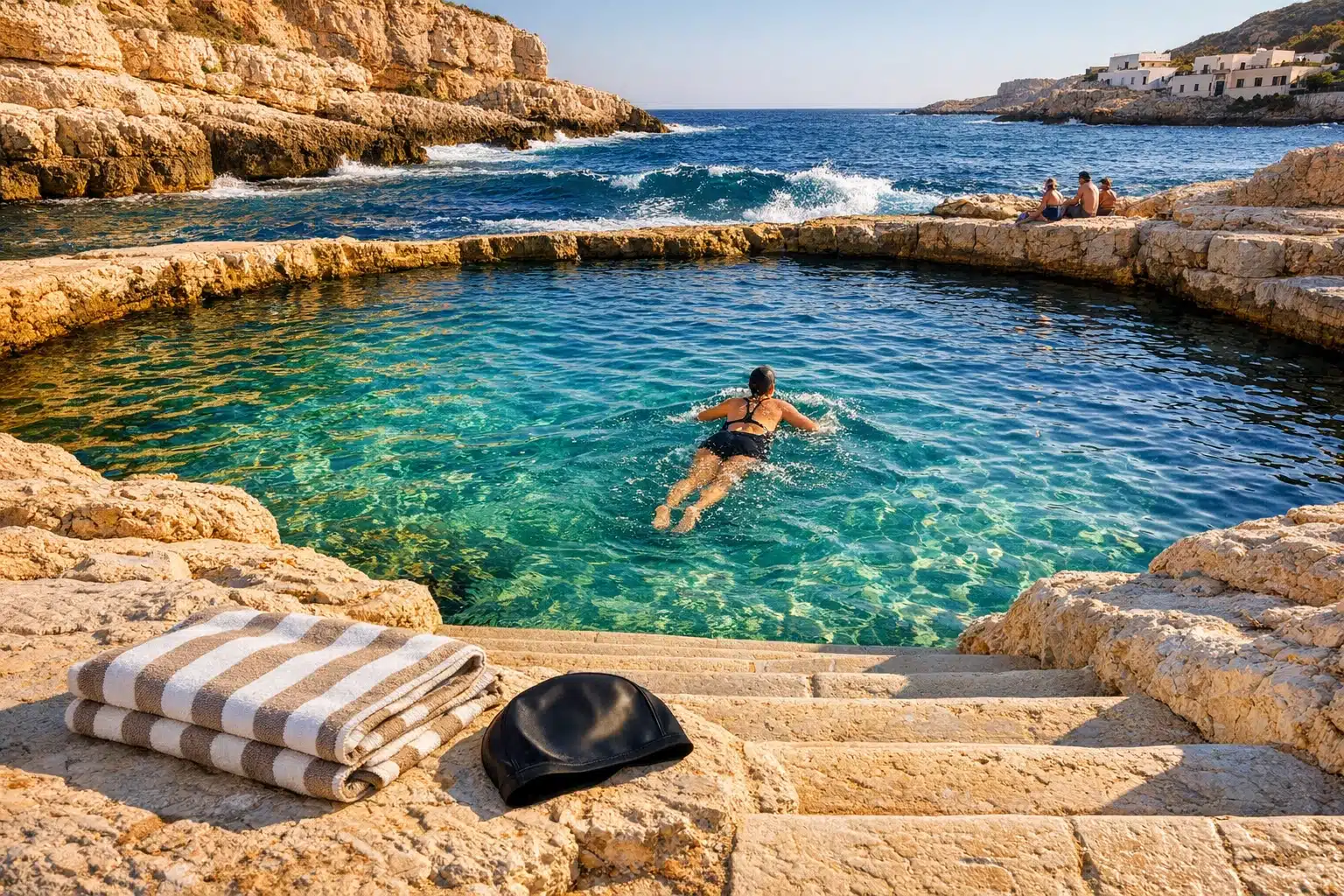
Explore the world of swimming
Swimming sits at the crossroads of sport, survival, fitness, and pure recreation, which is why it remains relevant from childhood lessons to elite competition. A pool can feel calm as glass one moment and demanding as a track the next, asking the body to move with rhythm, control, and trust in the water. This article explores how swimming benefits health, builds skill, and stays accessible across ages and experience levels. It also breaks down technique, training, and safety so readers can approach the water with more confidence and curiosity.
Article Outline
- The place of swimming in human life, sport, and culture
- The physical and mental health benefits of regular time in the water
- The main strokes, core techniques, and how they differ
- Training methods, beginner progressions, and useful equipment
- Safety, accessibility, and practical advice for long-term swimmers
Swimming as a Human Skill, Sport, and Cultural Tradition
Swimming is easy to label as a sport, yet that description only captures part of its importance. For millions of people, it is also a life skill, a social activity, a therapy tool, and a source of travel and leisure. Archaeological and literary evidence suggests that humans have been swimming for thousands of years, with references appearing in ancient Egypt, Greece, and Rome. Long before modern medals and lane ropes existed, people entered the water to fish, cross rivers, cool off, train soldiers, and simply enjoy being buoyed by something larger than themselves.
Its modern sporting identity is just as significant. Swimming has been part of the Olympic Games since 1896, and women’s events entered the program in 1912. Today, major competitions are governed internationally by World Aquatics, while national federations support school meets, club systems, and elite development pathways. This structure gives swimming a rare reach. A child splashing in a community pool, a triathlete preparing for open water, and an Olympian racing a 100-meter final all belong to the same broad aquatic world.
One reason swimming endures is that it works in many settings. It can happen in a heated indoor pool, a lake at sunrise, a coastline with rolling chop, or a rehabilitation center designed for careful movement. Few activities shift so easily between fun and discipline. A family may treat it as summer relief, while a coach measures it in splits, stroke counts, and training cycles. Water changes the usual rules of movement, and that novelty keeps the activity fresh even for experienced participants.
Swimming also holds a special place in public health and education. Many schools and local programs teach basic water safety because the ability to float, breathe calmly, and move to safety can save lives. That makes swimming different from sports that are purely optional. Knowing how to handle yourself in the water is not just recreational; it is practical knowledge.
There is also a quiet cultural appeal to swimming that is harder to measure but easy to feel. Pools often become neighborhood meeting points, beaches turn into shared memories, and masters clubs give adults a structured way to reconnect with exercise. In that sense, swimming is both deeply personal and widely communal. It asks each swimmer to find individual rhythm, yet it also creates spaces where people gather, learn, and improve together.
Why Swimming Is So Valuable for Physical and Mental Health
Swimming is often praised as a full-body workout, and that description is accurate without being exaggerated. Water provides resistance in every direction, so even smooth, graceful movement requires steady muscular work. Unlike a dumbbell, which resists along a single path, water pushes back against the hands, arms, core, and legs all at once. Because water is far denser than air, a swimmer feels that resistance immediately, even at moderate speed. The result is an activity that can improve cardiovascular endurance, muscular coordination, and movement efficiency in the same session.
For many people, the greatest advantage is reduced impact. Buoyancy supports part of the body’s weight, which can make swimming or water exercise more comfortable for people with joint discomfort, those returning from injury, older adults, or anyone who finds running too harsh. That does not mean swimming is effortless. It simply shifts the challenge. Instead of pounding against the ground, the swimmer manages breathing, posture, timing, and continuous resistance.
Regular swimming can help people meet widely accepted activity goals. The World Health Organization recommends at least 150 minutes of moderate-intensity aerobic activity per week for most adults, and swim sessions can contribute to that target. Energy expenditure varies with body size, technique, and intensity, but moderate lap swimming can burn a meaningful number of calories, while harder intervals raise the demand further. More importantly, the activity is sustainable for many people, and consistency usually matters more than dramatic short bursts of effort.
Mental benefits deserve equal attention. Water has a way of narrowing focus. The sound changes, the visual field simplifies, and breathing falls into a repeated pattern that many swimmers find calming. This does not turn swimming into magic, but it can support stress management and routine. Some swimmers describe the pool as a moving form of meditation, where the mind settles because the body has a clear task.
Common benefits associated with regular swimming include:
- Improved heart and lung function through aerobic work
- Greater muscular endurance in the shoulders, back, core, and legs
- Lower impact on joints compared with many land-based exercises
- Better mobility and body awareness through coordinated movement
- A structured outlet for stress, focus, and daily routine
Swimming is not perfect for every goal. Someone aiming to maximize bone-loading exercise, for example, may still want walking, resistance training, or other weight-bearing activity in the week. Yet as part of a balanced routine, swimming offers an unusually broad return. It challenges the body, often suits a wide age range, and rewards patience more than brute force.
Understanding the Main Strokes and the Craft of Moving Through Water
At first glance, swimming can look simple: jump in, move your arms, kick your legs, and keep going. In practice, technique shapes almost everything. A small change in head position or timing can mean the difference between smooth progress and exhausting struggle. Water punishes wasted motion more clearly than land does. When technique improves, swimmers do not just go faster; they often feel less tired because the body stops fighting the medium and starts cooperating with it.
Competitive swimming centers on four main strokes. In freestyle events, most swimmers use the front crawl because it is generally the fastest and most efficient option over many distances. The body stays long and horizontal, the arms alternate, and breathing usually happens to the side. Backstroke flips the body upward and changes orientation, but it still rewards a streamlined position and steady rotation. Breaststroke is more technical and timing-sensitive, with a pull, breath, kick, and glide sequence that can feel graceful when done well or awkward when rushed. Butterfly is the most demanding for many learners, combining simultaneous arm recovery with a dolphin kick and a wave-like body motion that requires strength and rhythm.
Each stroke teaches something different:
- Front crawl highlights efficiency, rotation, and controlled breathing
- Backstroke builds balance and shoulder coordination without face-down breathing
- Breaststroke emphasizes timing, glide, and symmetrical movement
- Butterfly develops power, rhythm, and whole-body connection
Beyond the named strokes, core skills matter just as much. Good swimmers learn to float calmly, streamline off the wall, exhale underwater, and keep the head aligned with the spine. Beginners often try to lift the head too much, which drops the hips and creates drag. Others kick furiously without gaining speed because the kick is bent, mistimed, or too wide. In swimming, more effort does not always produce more progress. Cleaner movement usually wins.
Breathing is where many new swimmers either gain confidence or lose it. Holding the breath creates tension, while steady exhalation underwater supports rhythm and makes the next inhale easier. This is one reason lessons matter. A coach or instructor can spot small issues that the swimmer cannot feel clearly alone.
Technique also differs by purpose. A triathlete may prioritize sustainable open-water front crawl, while a casual swimmer may want comfortable breaststroke for longer social swims. A sprinter trains explosive starts and turns, whereas a fitness swimmer may focus on pacing. The beautiful thing is that swimming has room for all of them. Under every variation lies the same principle: reduce drag, apply force cleanly, and let the body travel through the water rather than battle against it.
How to Learn, Train, and Choose the Right Swimming Equipment
Learning to swim well is usually less about bravery than about progression. Many adults assume they missed their chance if they did not learn early, but structured practice works at nearly any age. A sensible path begins with comfort in the water, then breathing control, floating, kicking, and simple arm coordination. Only after those foundations feel manageable does continuous lap swimming become truly enjoyable. Rushing the process often creates tension, and tension is the enemy of smooth movement.
For beginners, short and focused sessions usually work better than heroic attempts to swim long distances right away. Twenty to thirty minutes of quality practice can be more useful than an hour of exhausted survival strokes. A basic session might include a warm-up, one technical drill, a few short repeats with rest, and a gentle cool-down. Improvement in swimming is often measured in seconds and sensations: less panic, cleaner breathing, longer glide, and steadier pacing.
More experienced swimmers train with purpose. Some sessions target aerobic endurance, others build speed, and some are dedicated almost entirely to technique. Coaches often use interval sets because rest periods help swimmers maintain form while gradually increasing workload. A simple example is 8 x 50 meters at a controlled pace with 20 seconds of rest, followed by easy recovery swimming. That format is flexible and easy to scale.
Equipment helps, but it should support good habits rather than replace them. Common items include:
- Swimsuit or jammers designed for comfort and reduced drag
- Goggles that fit well and do not leak under mild pressure
- A swim cap, especially useful for long hair or regular pool training
- A kickboard for focused leg work and body-position drills
- A pull buoy to isolate upper-body work and highlight alignment
- Fins, used carefully, to build feel for the water and support kick drills
Training conditions also matter. Pools offer measured distances, lane lines, and predictable temperatures, making them ideal for skill development. Open water, by contrast, teaches navigation, sighting, and comfort with waves, currents, and reduced visibility. Many swimmers love the freedom of lakes and seas, but those environments ask for stronger judgment and added safety planning.
A useful comparison is this: pool swimming is like practicing music with a metronome, while open-water swimming resembles playing outdoors where wind and terrain add complexity. Both can be rewarding. For a reader deciding where to start, the answer is simple. Begin where instruction, consistency, and safety are easiest to find. Build confidence first, then expand your aquatic world.
Safety, Accessibility, and a Practical Conclusion for Everyday Swimmers
Swimming is enjoyable, but water deserves respect. Confidence should grow from skill, not from guesswork. Whether someone swims in a municipal pool or a coastal bay, basic safety habits remain essential. New swimmers should learn how to float, tread water, and recover calm breathing before worrying about speed. Children need close, attentive supervision around water, and adults should remember that familiarity does not eliminate risk. Even capable swimmers can be affected by cold water, fatigue, currents, poor visibility, or overconfidence.
Several simple habits make a significant difference:
- Swim in supervised areas when possible
- Follow posted rules, flags, and lifeguard instructions
- Do not swim alone in open water
- Use bright caps or visible gear outdoors
- Enter unfamiliar water carefully and check depth conditions
- Stop early if technique falls apart or breathing becomes distressed
Accessibility is another reason swimming matters. It can serve young children learning safety, adults seeking fitness, older people wanting low-impact exercise, and athletes needing cross-training. Adaptive and para swimming have also expanded opportunities for people with disabilities, proving that water can be a space of performance and freedom rather than limitation. Access is not equal everywhere, of course. Pool availability, lesson costs, transport, and local infrastructure all influence who gets to participate. That is why public pools, school programs, and community instruction remain valuable social investments.
For readers who are curious but hesitant, the best approach is refreshingly modest. Start with one lesson, one quiet lane, or one short visit to the pool. Replace the idea of “being good at swimming” with a more useful goal: becoming more comfortable, more capable, and more informed. Skill grows in layers. A swimmer who can breathe calmly, float with control, and complete a few relaxed lengths is already building something meaningful.
In the end, swimming offers more than exercise. It teaches composure, rewards precision, and opens doors to recreation, sport, and safety. For beginners, it is a smart skill to learn. For returning adults, it is a gentle but serious way to rebuild fitness. For regular exercisers, it adds variety and durability to a training routine. If the water has ever seemed inviting from a distance, consider this your nudge to step closer, learn deliberately, and discover how much possibility can exist between one breath and the next.