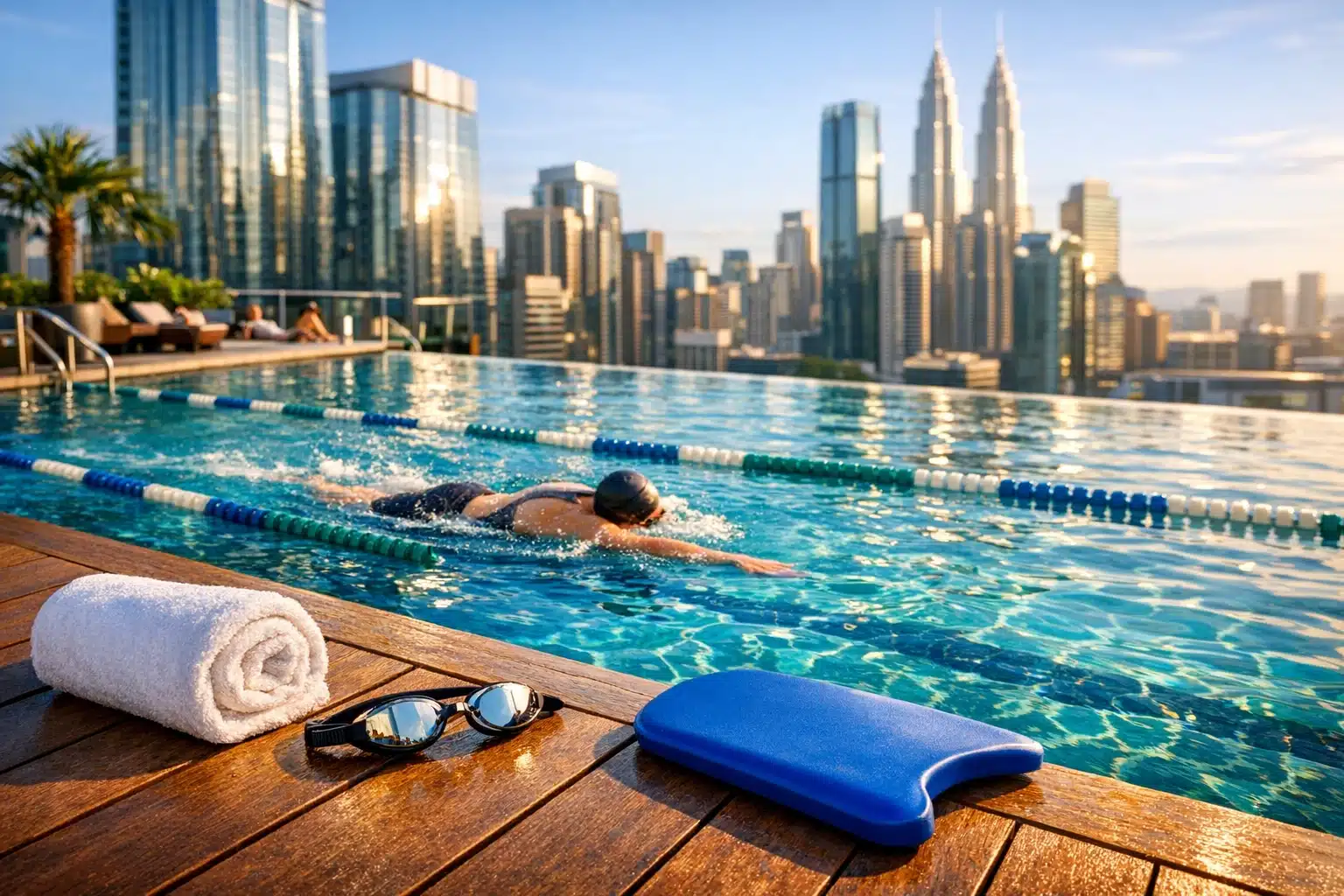
Explore the world of swimming
Swimming is one of those rare pursuits that feels playful and exacting at the same time. It can function as a survival skill, a competitive discipline, a rehabilitation aid, and a welcome break from noisy schedules. Whether practiced in a school pool, a lap lane before sunrise, or a calm lake in summer, it develops control, stamina, and confidence through steady repetition. The discussion below starts with a clear outline and then moves through technique, health effects, training, equipment, and safety.
Outline
This article is organized into five main parts so readers can move from broad understanding to practical action.
- The place of swimming in culture, sport, and daily life
- The core mechanics of efficient movement in water
- The physical and mental benefits that make swimming widely relevant
- Training methods, useful equipment, and ways to build progress
- Safety principles, open-water judgment, and a conclusion for everyday swimmers
Swimming as a Skill, Sport, and Part of Human Life
Swimming matters because it is more than a pastime. It is one of the oldest physical skills humans have practiced, first out of necessity and later for travel, exercise, military training, recreation, and competition. Ancient art from several civilizations depicts people moving through water, and that early record reminds us that swimming has never belonged to a single culture or social class. It has been practical, ceremonial, joyful, and demanding in different settings. Today, that wide identity still shapes how people relate to it. One person sees a safety lesson for a child, another sees a precise Olympic event, and someone else sees the most comfortable form of cardio available after a knee injury.
Its modern forms are equally varied. In competitive pool swimming, races are held over standardized distances, usually in 25-meter or 50-meter pools, and performance can be measured down to tiny margins. Freestyle sprints reward explosive power and technical sharpness, while longer events reward pacing, efficiency, and calm decision-making under fatigue. Open-water swimming changes the picture entirely. There, the lane lines disappear, the bottom may vanish from sight, and a swimmer must manage direction, temperature, and changing conditions. The contrast between these formats is part of what keeps the sport interesting. A pool race is controlled and clock-driven; a sea swim is fluid, strategic, and slightly untamed.
Swimming also has unusual social value. Few activities combine personal challenge with broad usefulness so effectively. Learning to float, tread water, and move confidently can reduce fear and improve safety around pools, rivers, and beaches. Public health organizations and water safety groups consistently stress that basic swim ability is an important life skill, especially for children. At the same time, swimming can remain relevant deep into adulthood because it adapts well to different ages and fitness levels.
Still, access is not equal everywhere. Safe pools, qualified instructors, and affordable lessons are not universally available. That gap matters because the benefits of swimming depend on opportunity as much as motivation. When communities invest in aquatic programs, they are not simply funding leisure. They are supporting fitness, skill development, confidence, and prevention. In that sense, swimming is both intensely personal and quietly public: a private rhythm of breath and movement that can also strengthen the fabric of a community.
Technique and the Art of Moving Efficiently Through Water
If strength were the only factor in swimming, many first-time athletes from other sports would dominate immediately. Instead, water teaches a humbling lesson: technique often beats raw effort. A swimmer who fights the water gets tired fast, while a swimmer who aligns with it seems to slide forward with less drama and better results. Efficient swimming begins with body position. The ideal is not rigid stiffness, but streamlined balance. When the head lifts too high, the hips tend to sink. When the legs drop, drag increases. Water tells the truth quickly; every unnecessary movement becomes resistance.
Breathing is another dividing line between smooth swimming and chaotic splashing. On land, breathing is automatic and unconstrained. In the pool, timing matters. A freestyle swimmer usually turns the head just enough to inhale without disrupting alignment, then exhales steadily underwater. Beginners often hold their breath too long, which creates tension and makes every stroke feel rushed. A calmer pattern usually improves endurance more than people expect. In many cases, the first breakthrough in swimming is not a stronger kick but a quieter exhale.
The four competitive strokes also reveal how varied aquatic movement can be. Freestyle is generally the fastest and most commonly practiced because it allows continuous propulsion and relatively economical breathing. Backstroke shares some body-line principles with freestyle but adds the challenge of swimming without seeing directly ahead. Breaststroke is slower for many swimmers, yet it feels intuitive to some learners because the breathing pattern is more direct and the head position can feel more controlled. Butterfly is the most rhythm-dependent of the four, demanding coordinated timing between the arms, kick, and torso. It is powerful and visually dramatic, but it is also unforgiving when the sequence falls apart.
Several technical habits help almost every swimmer:
- Keep the body long and level instead of reaching upward with the head
- Use the core to stabilize rotation rather than twisting from the shoulders alone
- Let the hands enter cleanly instead of slapping the water
- Kick from the hips with relaxed ankles rather than from the knees only
- Practice drills slowly enough to notice what changes
Technique improves through repetition, but not mindless repetition. A swimmer who completes twenty rushed lengths may gain fatigue without learning much. A swimmer who alternates easy laps with focused drills often improves faster. Tools such as kickboards, pull buoys, and fins can help isolate parts of the stroke, though they work best when used with purpose. The goal is not to collect gadgets or imitate elite swimmers perfectly. It is to build a stroke that is efficient, sustainable, and appropriate for the swimmer’s level. In that respect, good technique is less like forcing speed and more like tuning an instrument until the movement finally sounds right.
Health Benefits, Fitness Gains, and Why Swimming Feels Different
Swimming earns its reputation as a full-body activity because it combines aerobic work, muscular engagement, coordination, and breath control in a single session. Public health guidance often recommends at least 150 minutes of moderate-intensity aerobic activity per week for adults, and swimming can contribute meaningfully to that goal. Unlike some land-based exercise, it does so without repeated impact on the joints. That difference makes it attractive to a broad range of people, from young athletes building capacity to older adults looking for a sustainable routine.
Cardiovascular fitness is one of the clearest benefits. Sustained swimming asks the heart and lungs to supply oxygen efficiently over time, particularly during longer sets or interval training. Because water provides constant resistance, even moderate paces can create a steady training effect. At the same time, swimmers recruit multiple muscle groups at once. The shoulders, back, chest, core, glutes, and legs all contribute, though the emphasis shifts with the stroke. Freestyle often highlights rotation and upper-body coordination, breaststroke involves a distinct whip-like leg action, and butterfly demands strong timing through the whole chain of movement.
There is also a strong recovery and rehabilitation dimension. Water’s buoyancy can reduce stress on painful joints, which is why swimming and aquatic exercise are often recommended as options for people returning from injury or managing chronic discomfort. That does not mean every stroke suits every condition, but it does explain why aquatic therapy is widely respected. A pool can become a training space when the track or the gym feels too punishing.
The mental side deserves equal attention. Swimming creates an unusual sensory environment: repetitive motion, regulated breathing, reduced noise, and a clear physical task. For many people, that combination feels meditative. A lane line can become its own quiet corridor, and the mind tends to settle when the body falls into rhythm. Some swimmers seek hard intervals and race pace; others seek the almost hypnotic calm of continuous, easy lengths. Both experiences have value.
It is useful, however, to avoid oversimplified claims. Swimming can support weight management, but calorie use varies according to body size, stroke choice, intensity, and duration. It is effective, not magical. Its real strength is durability. Many people can continue swimming across decades because it adapts well to changing goals. A runner dealing with shin pain may cross-train in the pool. A retiree may use aqua sessions to maintain mobility. A child may gain confidence that carries into summer travel and beach outings. Few activities remain this practical, this challenging, and this forgiving at the same time.
Training, Equipment, and Building Real Progress
Improvement in swimming rarely comes from random effort. It usually comes from structure, even if that structure is simple. A beginner trying to become comfortable in the water has very different needs from a triathlete preparing for a long event, yet both benefit from clear goals and repeatable practice. The first decision is purpose. Are you swimming to learn basic technique, improve endurance, increase speed, support rehabilitation, or simply stay active? Once that answer is clear, sessions become easier to design and easier to evaluate.
A balanced swim workout often contains a warm-up, a technical component, a main set, and a short recovery period. The warm-up raises body temperature and helps the stroke settle. Technical work might include kicking, single-arm drills, sculling, or breathing patterns. The main set is where the day’s objective becomes clear. For endurance, that may mean longer repeats with short rest. For speed, it may mean shorter distances with higher effort and more recovery. For beginners, even alternating one easy length with one more deliberate length can create productive structure.
Equipment is helpful, but only when it serves a purpose. A few items make a noticeable difference:
- Well-fitted goggles improve comfort and reduce distraction
- A proper swimsuit or jammers reduce drag and allow freer movement
- A swim cap can help manage hair and sometimes improves comfort in chlorinated water
- A kickboard isolates leg work and body alignment drills
- A pull buoy highlights upper-body mechanics and body position
- Fins can assist ankle flexibility and help beginners feel momentum
More advanced swimmers may add paddles, snorkels, tempo trainers, or waterproof watches, but these are not mandatory for meaningful progress. In fact, too much equipment too soon can distract from the basics. Consistency matters more than accessories. Swimming two or three times per week with attention usually beats one heroic session followed by long gaps.
Progress should also be measured in more than pace alone. Can you swim farther before your stroke breaks down? Do turns feel less frantic? Is your breathing calmer? Are you leaving the pool tired but not wrecked? Those are strong signs of development. Many swimmers improve in waves rather than straight lines. One week the catch feels better; another week the kick suddenly syncs with the body roll. This is normal. Water is technical, and progress often arrives as a series of small unlocks.
For readers starting from zero, the best plan is refreshingly modest: learn to float, exhale underwater, glide, and travel short distances with control. For intermediate swimmers, purposeful intervals and technique feedback tend to produce the biggest gains. For experienced athletes, the challenge shifts toward refinement, pacing, and race-specific preparation. Different levels, same principle: progress in swimming belongs to those who practice with patience and curiosity.
Safety, Open-Water Judgment, and a Conclusion for Everyday Swimmers
Swimming is enjoyable partly because water can feel welcoming, but that same environment demands respect. Safety is not an optional side note; it is central to the activity. Even strong swimmers can make poor decisions when they overestimate their endurance, ignore weather, or enter unfamiliar water without preparation. In pools, the risks may seem smaller because the setting feels controlled. Yet slips on wet surfaces, unsupervised children, diving into shallow water, and overexertion remain genuine concerns. In lakes, rivers, and the sea, conditions become even more complex. Currents, temperature shifts, low visibility, boat traffic, and distance from shore can turn a pleasant outing into a difficult situation very quickly.
For that reason, basic swim ability and water judgment should grow together. A swimmer who can complete pool laps is not automatically prepared for open water. Pool lanes offer walls, markings, stable temperatures, and predictable surfaces. Open water removes most of those supports. Sighting becomes important, wetsuit choices may matter, and understanding entry and exit points becomes part of the plan. Many experienced swimmers recommend never swimming alone in open water and using visible safety equipment, such as a bright cap or an inflatable tow float, when conditions call for it.
A practical safety checklist includes the following:
- Choose supervised environments when possible, especially for beginners
- Learn the depth before diving or jumping in
- Check weather, currents, and local advisories before open-water sessions
- Swim with a partner or group rather than alone
- Know your limits and stop before fatigue turns technique into panic
- Make children’s lessons and close supervision a priority around any body of water
For the target audience of this article, the most important takeaway is encouragingly simple. You do not need to become a racer to benefit from swimming, and you do not need expensive gear to begin. What you need is a safe setting, patient instruction, and enough consistency to let the water become familiar instead of intimidating. If you are a beginner, start with confidence-building basics and celebrate control before speed. If you already swim casually, consider adding structure so each session has a purpose. If you are returning after time away, let technique and comfort lead the pace.
Swimming rewards people who stay humble, attentive, and willing to learn. It can challenge the fittest athlete and still welcome the hesitant newcomer. That broad appeal is rare. In one lane, someone is chasing seconds; in the next, someone is learning to trust the water for the first time. Both journeys matter, and both are worth taking with care.