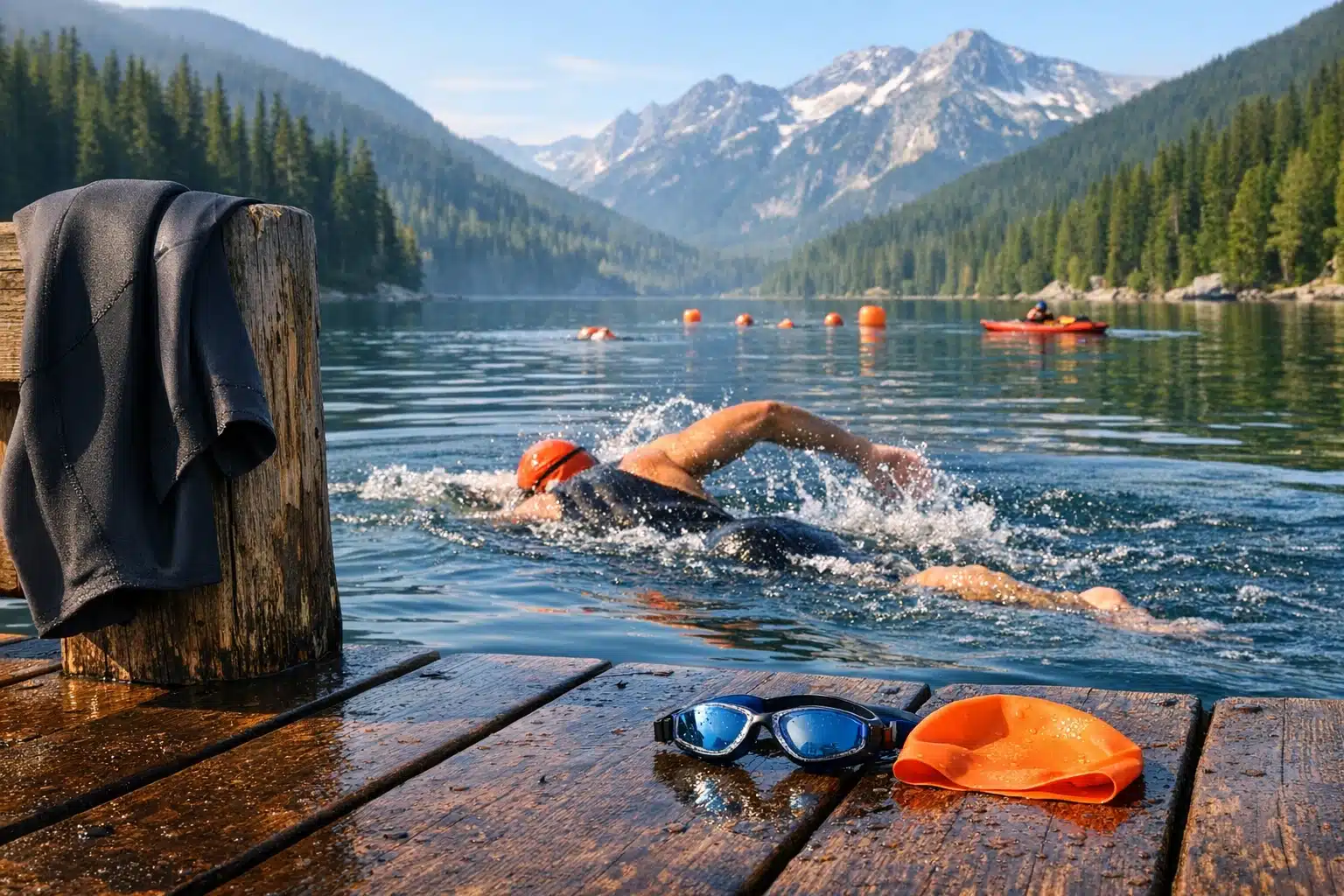
Explore the world of swimming
Swimming sits at the crossroads of sport, survival, and sheer pleasure, which is why it remains one of the most relevant physical skills a person can learn. It builds endurance without the pounding impact of many land-based workouts, welcomes children, older adults, and elite athletes alike, and turns water into both playground and training ground. From lap pools to open lakes, it offers a rare mix of discipline, freedom, and practical safety.
Outline
1. The first section explains why swimming matters in modern life, from fitness and mobility to confidence in and around water. 2. The second section compares the major strokes and shows how technique shapes efficiency, comfort, and speed. 3. The third section focuses on training methods, workout structure, and steady improvement for different goals. 4. The fourth section covers safety, equipment, pool habits, and open-water considerations. 5. The final section brings everything together with practical guidance for beginners, returning swimmers, and readers looking for a sustainable routine.
Why Swimming Matters: Health, Skill, and Everyday Relevance
Swimming has a special place in the world of physical activity because it works on several levels at once. It is exercise, yes, but it is also a life skill, a confidence builder, and for many people a source of calm that few workouts can match. When someone enters the water, gravity seems to loosen its grip. That change is not just poetic; it has practical value. Water’s buoyancy supports the body and reduces impact on joints, which is one reason swimming is often recommended for people who want cardiovascular exercise without the repeated pounding that can come with running on hard surfaces. For older adults, people returning from injury, and anyone carrying extra body weight, that difference can turn exercise from something uncomfortable into something approachable.
The physical benefits are broad. Swimming challenges the heart and lungs, asks large muscle groups to work together, and develops coordination from head to toe. The shoulders pull, the core stabilizes, the hips rotate, and the legs contribute rhythm and propulsion. Because water is far denser than air, every movement meets resistance, which means even controlled, graceful swimming can be surprisingly demanding. A steady session in the pool can improve aerobic capacity, muscular endurance, and body awareness all at once. For adults aiming to meet public health guidelines such as 150 to 300 minutes of moderate activity each week, swimming can cover a significant part of that target while feeling less repetitive than some gym routines.
Its relevance goes beyond fitness. Knowing how to swim can reduce fear around water and increase personal safety during travel, family outings, or time near beaches, lakes, and pools. Public health experts routinely frame swimming ability as a safety asset, not merely a pastime. That matters in a world where water is everywhere: summer camps, hotel pools, fishing trips, boating holidays, and neighborhood recreation centers. A few key reasons swimming remains valuable are easy to list:
• It combines cardiovascular work with low joint stress.
• It teaches practical water competence.
• It can be social, solitary, playful, or competitive.
• It adapts well across age groups and fitness levels.
There is also a mental dimension that should not be underestimated. The repetitive rhythm of strokes, the muffled sound beneath the surface, and the concentration required for breathing can create a quiet, almost meditative experience. Some people leave the pool more refreshed than they would after an hour on land because swimming forces attention into the present moment. You cannot send emails while holding a streamline. You cannot overthink every detail of the day when timing your breath between strokes. In that sense, swimming is a rare activity that strengthens the body while offering the mind a temporary change of scenery.
Understanding the Strokes: Technique, Efficiency, and Smart Comparisons
If swimming were only about effort, the strongest person in the lane would always move fastest. In reality, technique often matters more than raw force. Water is roughly 800 times denser than air, so small mistakes in alignment create large amounts of drag. A dropped elbow, a lifted head, or a kick that splashes more than it drives can waste energy quickly. This is why good swimmers sometimes appear effortless: they are not fighting the water as much as they are negotiating with it. Learning that difference is one of the most satisfying parts of the sport.
The four competitive strokes each have a distinct personality. Freestyle, usually swum as front crawl, is the fastest and most common for fitness swimming. It allows continuous propulsion and, once learned well, offers an efficient mix of speed and endurance. The trade-off is that beginners often struggle with breathing rhythm. Turning the head too far or too late can throw off body position and lead to fatigue. Backstroke solves part of that problem because the face stays above water, making breathing easier and giving nervous newcomers a welcome sense of control. At the same time, it demands balance and body awareness; without a straight line through the torso, the swimmer may zigzag down the lane.
Breaststroke is often seen as friendly and approachable because the pace can be gentler and the stroke allows regular forward visibility. Many recreational swimmers enjoy it for exactly that reason. Yet it has its own technical challenges. Timing the kick, pull, breath, and glide requires coordination, and poor mechanics can strain the knees or lower back. Butterfly sits at the other end of the spectrum: powerful, visually striking, and physically demanding. It relies on timing, core strength, shoulder mobility, and a wave-like body action that is hard to fake. Done well, it looks almost theatrical. Done poorly, it feels like dragging a sofa through surf.
Several fundamentals link all strokes:
• A streamlined body position reduces drag.
• Controlled breathing supports rhythm and relaxation.
• Propulsion should come from coordinated movement, not frantic splashing.
• A well-timed kick helps balance the body, even when it is not the main source of speed.
For most learners, improvement comes from mastering details rather than chasing distance too early. A swimmer who glides well, rotates smoothly in freestyle, and finishes each stroke fully will often outperform someone who simply thrashes harder. Comparisons between strokes also reveal how different goals shape choices. Freestyle is ideal for lap training and triathlon. Backstroke can improve posture and shoulder awareness. Breaststroke suits relaxed pace work and mixed sessions. Butterfly develops power and timing but is best added gradually. The smartest path is not choosing a single “best” stroke. It is understanding what each one teaches, then using that knowledge to become more adaptable and efficient in the water.
Training for Progress: Endurance, Speed, and Better Form
Swimming rewards consistency more than dramatic effort. A single brutal workout may leave a swimmer exhausted, but steady practice builds the things that matter: technique under fatigue, pacing awareness, cardiovascular fitness, and confidence. Training in the pool is also highly scalable. A true beginner may start with short lengths and frequent rest, while an experienced athlete may structure sets around heart rate, race pace, and stroke count. Both are still doing the same essential work of learning how to move through water more economically.
A useful session usually has a simple architecture: warm-up, skill focus, main set, and cooldown. The warm-up prepares the shoulders, lungs, and nervous system. The skill block might isolate body rotation, breathing, kicking, or catch mechanics. The main set then applies those skills under a little pressure. That pressure might mean more distance, shorter rest intervals, or a higher pace. The cooldown helps the swimmer finish with better quality rather than climbing out of the pool completely fried. This structure may sound formal, but it makes practice more productive and less random.
Different goals lead to different designs. Someone swimming for general fitness might aim for 20 to 40 minutes of moderate work, building gradually until it contributes meaningfully to weekly activity goals. A triathlete may emphasize freestyle endurance and sighting practice. A sprinter will spend more time on explosive repeats and starts. A recreational swimmer who simply wants to feel smoother in the water may benefit most from drills and short intervals with plenty of rest. Here is a practical example of a balanced session:
• 200 meters easy warm-up
• 4 x 50 meters drill work with rest between repeats
• 6 x 100 meters at a steady pace
• 4 x 25 meters faster efforts with full recovery
• 100 to 200 meters easy cooldown
Progress can be measured in more ways than speed. Time matters, but so do stroke efficiency, breathing comfort, and how long a swimmer can maintain good form. Many coaches encourage tracking strokes per length because a lower, more controlled count often signals better movement through the water. Another useful marker is recovery: if a set that once felt punishing becomes manageable after a few weeks, fitness is improving. Calorie burn is sometimes used as motivation, and estimates vary widely, but moderate to vigorous swimming can use substantial energy depending on stroke, body size, and intensity. The better long-term question is not “How much did I burn today?” but “Can I return next week feeling eager to improve?”
Dryland work also helps. Shoulder stability, core strength, hip mobility, and ankle flexibility all influence technique. Even ten minutes of mobility exercises can make kicking looser and rotation cleaner. The magic of swimming is that small technical gains compound. A better exhale, a quieter head position, or a more deliberate pull may not feel dramatic in one practice, yet over months those details add up to smoother, faster, and far more enjoyable swimming.
Safety, Equipment, and the Difference Between Pool and Open Water
Swimming is often associated with freedom, but safe freedom depends on judgment. The water does not care whether someone is confident, competitive, or just having a casual day. Good habits are therefore part of the sport itself, not an optional extra. In pools, many risks are manageable through rules and routine: obey lane direction, avoid diving where it is not permitted, respect lifeguards, and keep an eye on fatigue. In open water, conditions become less predictable. Temperature, visibility, waves, currents, boat traffic, and entry or exit points can change the experience quickly. A strong pool swimmer may still feel surprisingly unsettled in a lake or sea because the environment removes familiar reference points.
That contrast matters. Pools offer measured distance, stable temperature, marked lanes, and usually immediate supervision. They are ideal for learning technique and tracking progress. Open water adds adventure and variety, but it demands extra preparation. Swimmers may need to practice sighting so they can keep a straight course without lane lines. They must also understand weather and local conditions. Cold water deserves special caution because it can trigger a sudden gasp reflex and rapid discomfort in people who are unprepared. Even experienced swimmers often use a buddy system, bright swim caps, tow floats, or organized venues to improve visibility and safety.
Equipment can be simple or highly specialized. For most people, the essentials are modest: a comfortable swimsuit, well-fitting goggles, and access to a safe place to swim. From there, tools can support specific goals. Common items include:
• Kickboards for isolating leg work
• Pull buoys for upper-body focus
• Fins for technique and ankle flexibility
• Paddles for strength and water feel, used carefully
• Caps for hair control, warmth, or visibility
• Wetsuits for buoyancy and insulation in cooler open water
It is easy to collect gear, but equipment should serve technique rather than distract from it. A swimmer does not need a bag full of gadgets to improve. In fact, beginners often benefit more from fewer variables. Well-chosen goggles that do not leak can do more for a practice session than any expensive accessory. Hygiene and comfort matter too. Showering before entering the pool, respecting local rules, and treating shared spaces considerately help everyone. Lane etiquette, although not glamorous, prevents frustration: choose the appropriate lane speed, let faster swimmers pass at the wall, and avoid stopping in the middle of a turn zone.
Perhaps the most useful safety rule is also the least dramatic: know your limits on the day, not just in theory. Fatigue, heat, dehydration, illness, and stress can change performance. Turning back early is not failure. It is good decision-making. In swimming, wise restraint often keeps the door open for future progress.
Finding Your Lane: A Practical Conclusion for New and Returning Swimmers
If you are the kind of reader standing at the edge of this topic, not yet sure whether swimming is for you, the most encouraging truth is that it can meet you almost anywhere. You do not need to be young, naturally fast, or already comfortable in deep water to begin making progress. Some people arrive through fitness goals, others through family reasons, rehabilitation, triathlon, stress relief, or the simple wish to feel less awkward at the beach. Swimming has room for all of them. That is one of its quiet strengths: it does not demand a single identity from the person entering the pool.
For beginners, the smartest start is controlled and unglamorous. Choose a safe environment, ideally with instruction or supervision. Work first on breathing, floating, and relaxation before worrying about speed. Adults returning after years away often discover that fear and tension consume more energy than the stroke itself. Once they exhale steadily into the water and stop trying to overpower every length, the experience changes. The body learns. Confidence grows. A lane that looked long from the deck begins to feel manageable from the wall.
A practical path forward can be surprisingly simple:
• Start with two or three short sessions each week.
• Focus on one skill at a time, such as breathing or body position.
• Use easy intervals instead of nonstop swimming if endurance is still developing.
• Ask for feedback from a coach, instructor, or experienced swimmer.
• Keep expectations realistic and measure improvement over months, not days.
For parents, swimming offers children more than exercise. It can build respect for water, listening skills, routine, and resilience. For busy adults, it can become a reliable mental reset and a full-body workout in one session. For older swimmers, it may be one of the most sustainable ways to stay active while being kind to the joints. For competitive personalities, the sport offers endless refinement through pace, technique, and distance. In every case, swimming gives back in proportion to patience. It is not always instantly comfortable, but it is deeply teachable.
The broad lesson of this article is aimed at readers who want something useful as well as enjoyable. Swimming delivers both. It asks for attention, humility, and repetition, yet rewards them with fitness, skill, and a more capable relationship with water. If you have been curious, consider that curiosity a good starting point. The first few lengths may feel clumsy, but that is not a sign to stop. It is the beginning of learning a movement language that can stay with you for life.